Writer’s dementia chronicle compelling
Advertisement
Read this article for free:
or
Already have an account? Log in here »
To continue reading, please subscribe:

Digital Subscription
One year of digital access for only $205*
- Enjoy unlimited reading on winnipegfreepress.com
- Read the E-Edition, our digital replica newspaper
- Access News Break, our award-winning app
- Play interactive puzzles
*First annual payment billed as $205.00 + GST for one year. This annual subscription will automatically renew at $233.00 + GST every 52 weeks (10% off the regular annual price of $259.35). Offer available to new and qualified returning subscribers only. Cancel any time.
To continue reading, please subscribe:
Add Free Press access to your Brandon Sun subscription for only an additional
$1 for the first 4 weeks*
- Enjoy unlimited reading on winnipegfreepress.com
- Read the E-Edition, our digital replica newspaper
- Access News Break, our award-winning app
- Play interactive puzzles
*Your next Brandon Sun subscription payment will increase by $1.00 and you will be charged $17.95 plus GST for four weeks. After four weeks, your payment will increase to $24.95 plus GST every four weeks.
Read unlimited articles for free today:
or
Already have an account? Log in here »
Hey there, time traveller!
This article was published 30/06/2017 (3330 days ago), so information in it may no longer be current.
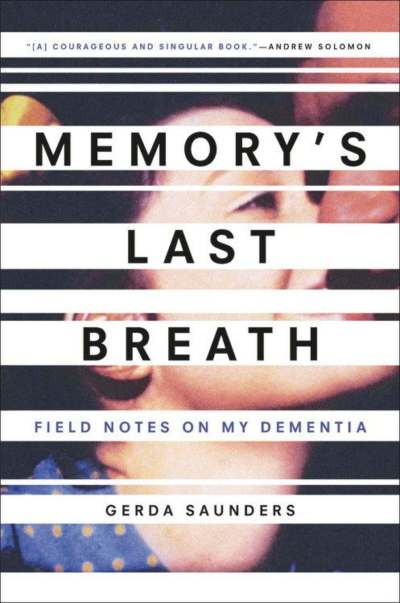
JUST before her 61st birthday in 2010, writer Gerda Saunders was diagnosed with early-onset dementia. That diagnosis triggered this book.
Instead of sinking into despair, Saunders, a University of Utah associate director of gender studies, chose to robustly chronicle and investigate the awfulness of what she faced.
This is one fine record of how the disease attacks the brain of even the best and the brightest.

It’s a hybrid work — part memoir, part episodic journal entries she calls “Dementia Field Notes,” and part treatise on the neuroscience of her misfiring brain.
It’s also unbearably sad. We’re made to bear witness to a fiercely intellectual woman’s chronicle of how her brain betrays her.
Saunders, of Dutch Afrikaner descent, was born and raised in apartheid-era South Africa, but immigrated with her husband and two young children to the United States in 1984.
Her childhood memories of life in South Africa are splendidly recalled. But one of her recurring fears is that as dementia cripples her brain, she’ll revert to the unfiltered racism she learned as a child.
Her fear isn’t just speculative. Her late mother, a modest and civilized lady, also had dementia and the breakdown of her mental faculties occasioned some racist and unbecoming behaviour.
Saunders draws on workaday examples to chart the progress of her disease. She locks herself in a department store stairwell because the exit signage is no longer comprehensible to her. She gets lost while driving a short distance in her own neighbourhood because local streets and houses have become alien places. She steps out of a women’s-wear store fitting room and preens in front of a large public mirror, all the while never noticing she’s only half dressed.
It’s as if all her normal signposts, unthinking routines and familiar landscapes have vanished or been rendered unintelligible.
Saunders observes “both scholarly and popular writing frequently refers to persons with dementia as zombies.”
She confronts the brutal truth of that label.
“The disease progressively destroys the very self that used to be capable of love and its expression,” she writes.
“It eats its way into your brain, into the front and temporal lobes where (in a healthy brain) language is logically interpreted and reproduced… as the disease waxes, so you wane; as it burgeons, so you contract.”
Not wanting to ever number herself among the “living dead,” she embarked on extensive research on assisted-suicide techniques and law (inclusive of the five American states and the European countries that sanction it). Aided by legal counsel and unanimously supported by her husband and adult children, she has mapped out a plan to end her life.
The book’s only glaring weak spot lies in its final half-dozen pages. Saunders closes out her extraordinary account with a lyrical-cum-metaphysical meditation that, though clearly dear to her, comes off as affected and confusing.
But that quibble aside, this is an unflinching self-portrayal by a woman losing the key markers of her identity — her writing and speaking voices.
Absent them, she — and we — are left to wonder: is she still Gerda Saunders?
Douglas J. Johnston is a Winnipeg lawyer and writer.