Legacy lives on in Tolkien book
Advertisement
Read this article for free:
or
Already have an account? Log in here »
To continue reading, please subscribe:

Digital Subscription
One year of digital access for only $205*
- Enjoy unlimited reading on winnipegfreepress.com
- Read the E-Edition, our digital replica newspaper
- Access News Break, our award-winning app
- Play interactive puzzles
*First annual payment billed as $205.00 + GST for one year. This annual subscription will automatically renew at $233.00 + GST every 52 weeks (10% off the regular annual price of $259.35). Offer available to new and qualified returning subscribers only. Cancel any time.
To continue reading, please subscribe:
Add Free Press access to your Brandon Sun subscription for only an additional
$1 for the first 4 weeks*
- Enjoy unlimited reading on winnipegfreepress.com
- Read the E-Edition, our digital replica newspaper
- Access News Break, our award-winning app
- Play interactive puzzles
*Your next Brandon Sun subscription payment will increase by $1.00 and you will be charged $17.95 plus GST for four weeks. After four weeks, your payment will increase to $24.95 plus GST every four weeks.
Read unlimited articles for free today:
or
Already have an account? Log in here »
Hey there, time traveller!
This article was published 08/07/2017 (3347 days ago), so information in it may no longer be current.
J.R.R. Tolkien is, arguably, the most prolific posthumous author of the 20th and 21st centuries. His body of work, most notably The Hobbit and The Lord of the Rings trilogy, cemented his legacy as the father of the modern fantasy genre. But it’s his son, Christopher, who is to thank for the ongoing publications of Tolkien’s writing.
In Beren and Lúthien, Christopher Tolkien gathers the definitive collection of materials related to his father’s story of the exiled hunter Beren and his love, the elvish princess Lúthien. While the details of the tale changed over Tolkien’s lifetime, the basic structure remains the same.
Beren, while wandering in the woods, sees Lúthien dancing and falls in love with her. Lúthien’s father, the elvish king Thingol, frowns upon their union and tells Beren that the only way he can marry his daughter is if he brings him a Silmaril, a sacred jewel that resides in the crown of Morgoth.
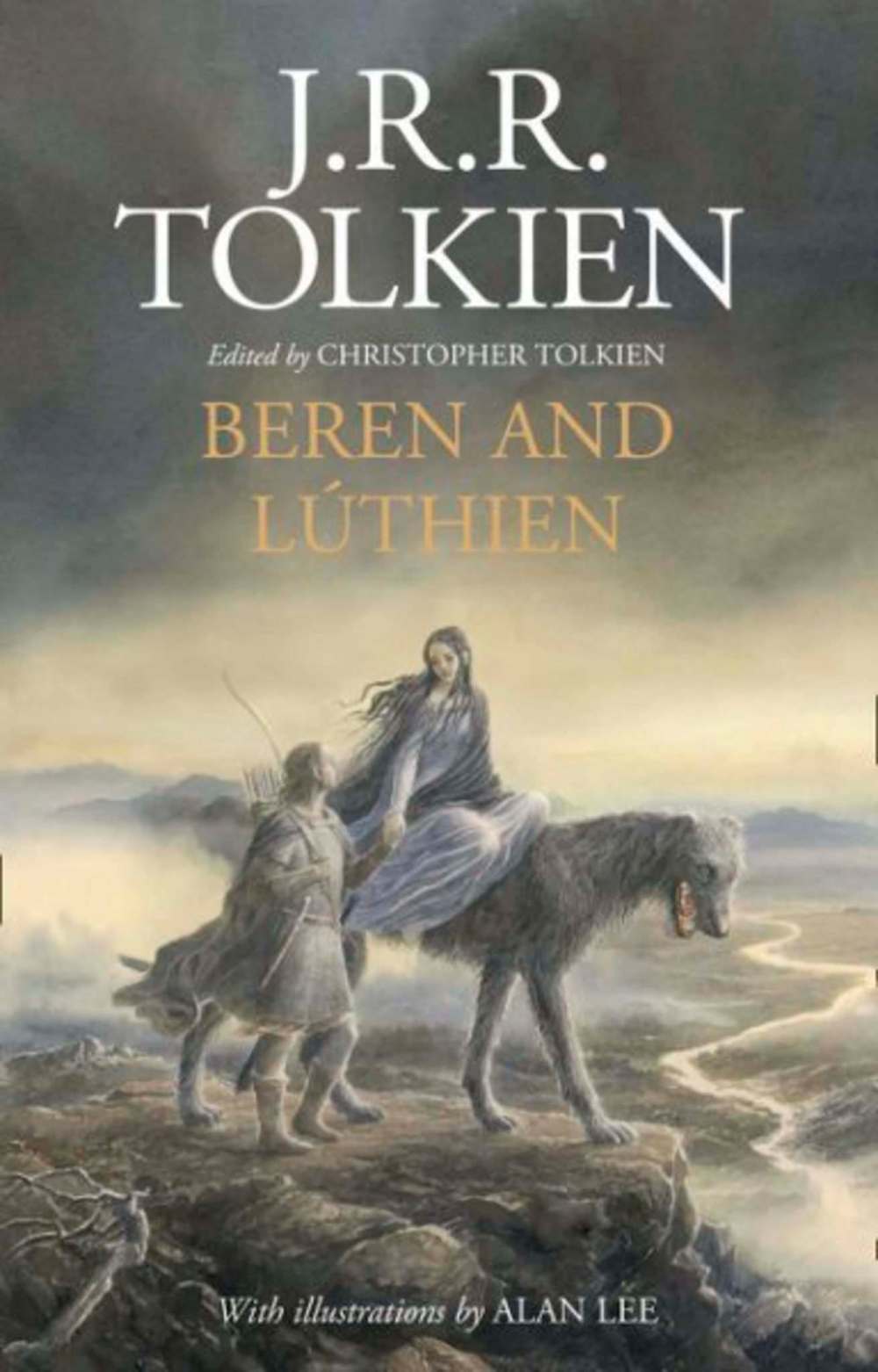
What follows is a quest to gain the Silmaril that involves imprisonment, elven magic, dismemberment and one of literature’s great dogs, Huan.
The earliest known version of Beren and Lúthien was written in 1917 and is a love story inspired by the author’s wife, Edith Mary Tolkien. The characters were of such import to Tolkien that their names are inscribed on the gravestone he shares with his wife.
Christopher Tolkien pulls pieces of the Beren and Lúthien myth from The Silmarillion, which he published in 1977, four years after his father’s death. There are sections copied from The History of Middle-earth, a 12-volume set Christopher published between 1983 and 1996. These passages appear in Beren and Lúthien in prose or, at times, in thousands of lines of rhyming couplets — further evidence of Tolkien’s incomparable genius.
Alan Lee’s beautiful illustrations only highlight the quality of this text. His full-colour plates bring to life the dark halls of Morgoth and the enchanted woods where Lúthien dances.
At times exhilarating, at times tedious, Beren and Lúthien reads more like a medieval chronicle than a literary narrative. It contains an endless list of names and deeds from the First Age of Middle-earth, and each retelling of the tale builds upon the foundations of what came before.
Every new addition includes more detail about Beren’s history, Lúthien’s descendants, the battle to free Beren from Thû (a necromancer who goes on to become Sauron of The Lord of the Rings fame) and the eventual confrontation with Morgoth and his evil wolf companion, Carcharoth.
While this book can certainly be read by those unfamiliar with Tolkien’s previous work, it often feels academic — a tome dedicated to the preservation of an old, but nonetheless important, piece of Tolkien lore.
After a lifetime of preserving his father’s legacy, this marks the end of Christopher Tolkien’s own literary life; in the preface, he acknowledges the book will likely be the last of his own editorial publications. At 93, he acknowledges his own mortality, which gives the collection a melancholic feel.
J.R.R. Tolkien died in 1973, but lives on thanks to the tireless efforts of his son. Like Lúthien’s elvish kinsfolk who fade from memory, while they may physically disappear from this realm, the legacy of both Tolkiens lives on in their shared tales of Middle-earth.
Lauren Chochinov holds a PhD in medieval literature and blames Tolkien for that predicament.