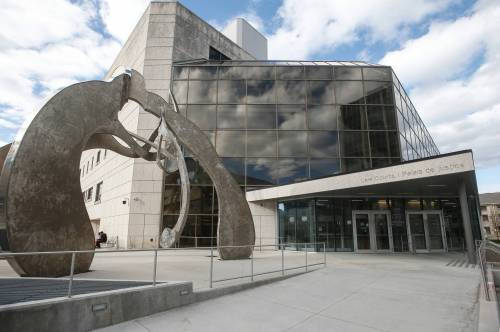
Shallow gallows

History of hanging lacks weight to tackle heavy topic

Advertisement

Advertise with us

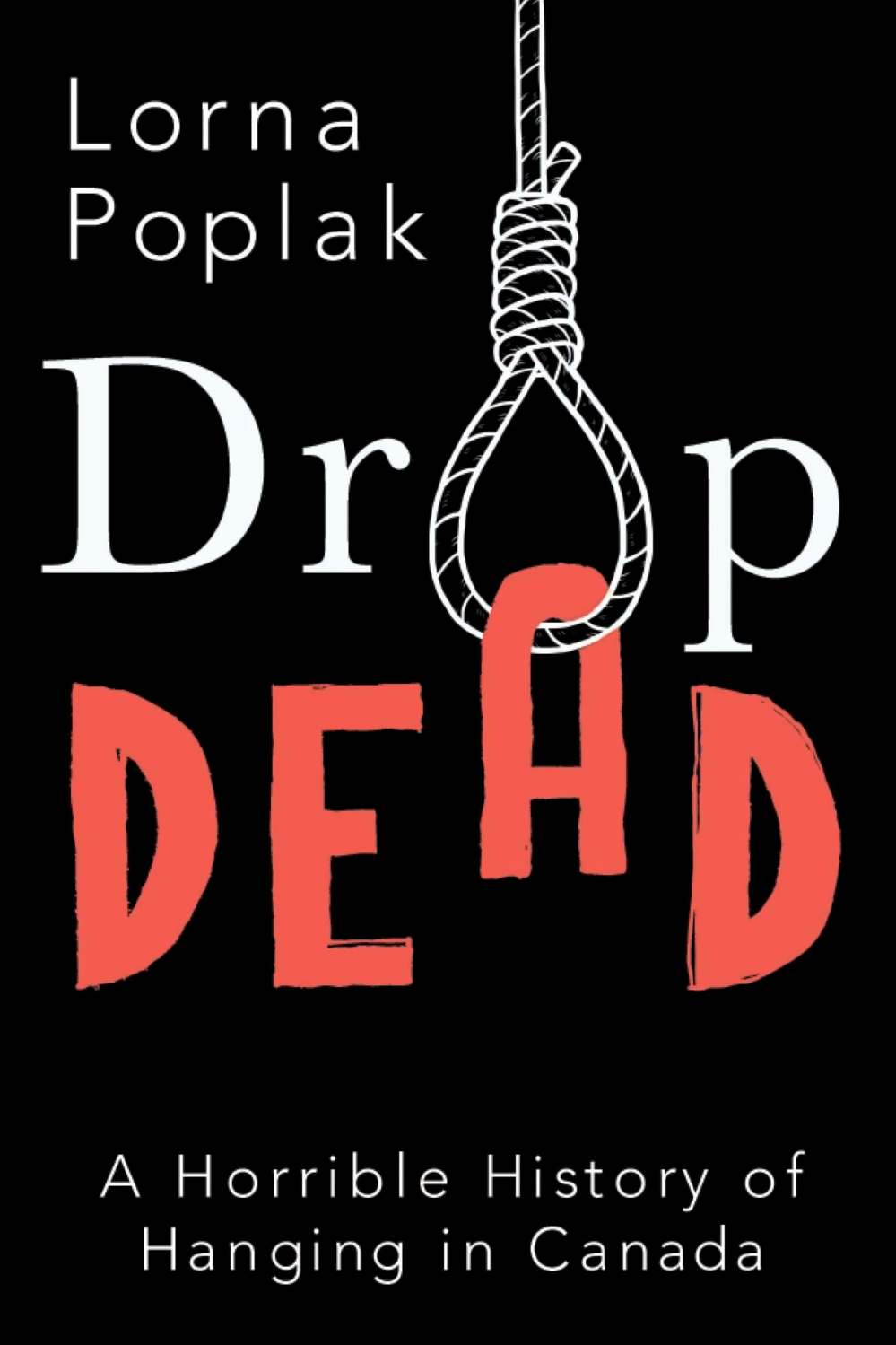
This is an easy-to-read historical survey of execution by hanging in Canada, written in a breezy, even jaunty, style. As odd as it might sound, it’s a book about capital punishment you could easily take to the beach for a summer read.

Read this article for free:


or

Already have an account? Log in here »

To continue reading, please subscribe:

Subscribe and receive a limited-edition Free Press branded hat or tote.

Digital Subscription

One year of digital access for only $205*

  • Enjoy unlimited reading on winnipegfreepress.com
  • Read the E-Edition, our digital replica newspaper
  • Access News Break, our award-winning app
  • Play interactive puzzles

*First annual payment billed as $205.00 + GST for one year. This annual subscription will automatically renew at $233.00 + GST every 52 weeks (10% off the regular annual price of $259.35). Offer available to new and qualified returning subscribers only. Cancel any time.

To continue reading, please subscribe:

Add Free Press access to your Brandon Sun subscription for only an additional

$1 for the first 4 weeks*

  • Enjoy unlimited reading on winnipegfreepress.com
  • Read the E-Edition, our digital replica newspaper
  • Access News Break, our award-winning app
  • Play interactive puzzles
Start now

*Your next Brandon Sun subscription payment will increase by $1.00 and you will be charged $17.95 plus GST for four weeks. After four weeks, your payment will increase to $24.95 plus GST every four weeks.

Hey there, time traveller!
This article was published 05/08/2017 (3318 days ago), so information in it may no longer be current.

This is an easy-to-read historical survey of execution by hanging in Canada, written in a breezy, even jaunty, style. As odd as it might sound, it’s a book about capital punishment you could easily take to the beach for a summer read.

But that lightweight quality is also its weakness.

Author Lorna Poplak is a Toronto writer and editor, and a board member of the Canadian Society of Children’s Authors, Illustrators and Performers.

National Archives of Canada
Author Lorna Poplak writes about Canada’s capital punishment and execution history in Drop Dead.
National Archives of Canada Author Lorna Poplak writes about Canada’s capital punishment and execution history in Drop Dead.

And while her writing is lucid, too often her accounts of hangings don’t rise much above a regurgitated daily newspaper story.

There’s often a dearth of detail, nuance, context or analysis in her narrative. For example, the chapter devoted to female murderers, The Petticoat and the Noose, could have been enlivened by greater socio-historical insight into the status of women in Victorian- and Edwardian-era Canada. (Of the 704 people hanged in Canada, 11 were women.)

Poplak’s background as a children’s author also surfaces in small, yet annoying, ways. Near one chapter’s end, she deftly references a George Orwell quote about most people approving of capital punishment, but few wanting the job of hangman. But she then immediately follows the quotation, and closes the chapter, with a too cutesy question to readers: “Would you?”

This kind of interrogative-cum-instructional closing of a chapter may work for an adolescent audience or middle-school curriculum materials, but it’s out of place in a book intended for adult readers.

Her chapter devoted to “the end of the rope” gives a nice account of the political to-ing and fro-ing that led to Parliament’s narrow 1976 vote to end capital punishment (131 for abolition, 124 against).

It includes some adroitly chosen excerpts of speeches by John Diefenbaker, Lester Pearson and Pierre Elliott Trudeau, all three of whom opposed the death penalty.

One of the book’s better stories is about Diefenbaker recounting his role as criminal defence counsel in a 1930 Prince Albert, Sask., murder trial. His client was convicted at trial, all appeals were dismissed and the man went to the gallows.

Six months later, the prosecution’s star witness recanted his testimony, and admitted he himself had committed the murder and fabricated the case against Diefenbaker’s client.

As a result, Diefenbaker became a lifelong opponent of the death penalty, and during his term as prime minister (1957-1963) commuted 52 of 66 death sentences imposed by the courts to life imprisonment. One of those commutations was granted to a 14-year-old Clinton, Ont. schoolboy named Steven Truscott.
However, conspicuously absent from Poplak’s account of the movement to abolish capital punishment is mention of the pivotal role of the Canadian Bar Association and late and legendary Winnipeg criminal defence counsel Harry Walsh.

Walsh was co-chair of the Committee for the Abolition of Capital Punishment in Canada, and instrumental in the Canadian Bar Association’s 1975 plenary session passage of a resolution to abolish capital punishment. A year later, Parliament voted to abolish capital punishment (except for certain military offences, which lost capital-crime status in 1998).

Drop Dead is an engaging popular history of hangings, hangmen and capital crime, writ light. But a tad too light, both in the writing and the research.

An ostensibly dark history of a brutal mode of lawful execution merits more depth, and more gravity.

Douglas J. Johnston is a Winnipeg lawyer and writer.

Report Error Submit a Tip

More Stories

Neighbours relieved after fire strikes Quickie Mart

Morgan Modjeski 4 minute read Preview

Neighbours relieved after fire strikes Quickie Mart

Morgan Modjeski 4 minute read Wednesday, Sep. 2, 2026

As Janina McNaughton watched the Quickie Mart on River Avenue go up in flames on Tuesday, she felt relieved.

“The first thing I see is flames, like a fireball of flames inside,” McNaughton said about watching the blaze from her bedroom across the street.

On Wednesday, the bright green building, at 292 River Ave., was boarded up and charred on the outside.

Crews from the Winnipeg Fire Paramedic Service responded at 8:13 p.m. Tuesday to battle the blaze, said the city in a news release. It was under control within the hour.

Read
Wednesday, Sep. 2, 2026

Mayoralty candidate Vogiatzakis decries war of words

Joyanne Pursaga 4 minute read Preview

Mayoralty candidate Vogiatzakis decries war of words

Joyanne Pursaga 4 minute read Yesterday at 5:28 PM CDT

A mayoral candidate took aim at personal insults among two of his competitors Friday, stressing the election campaign should focus on city issues instead.

“I’m really embarrassed by the mayoral candidates slinging mud at each other. We should be more professional … I don’t think we need to bring up people’s past or garbage that they’ve been involved in. I think this needs to be about the City of Winnipeg and what we’re going to do for the City of Winnipeg,” Mike Vogiatzakis said at a press conference Friday.

He confirmed he was referring specifically to skirmishes between Scott Gillingham, who is seeking re-election as mayor, and Kevin Klein, a former city councillor and provincial cabinet minister who registered for the race this week.

Within a few hours of Klein’s Tuesday announcement that he would enter the mayoral contest, Gillingham issued a statement labelling Klein “toxic,” a “Caribbean political fixer” for Peter Nygard and a supporter of U.S. President Donald Trump.

Read
Yesterday at 5:28 PM CDT

Woman died while getting wisdom teeth out; case raises questions about transparency of dental association

Nicole Buffie 5 minute read Preview

Woman died while getting wisdom teeth out; case raises questions about transparency of dental association

Nicole Buffie 5 minute read Yesterday at 7:19 PM CDT

The parents of a 23-year-old southwestern Manitoba woman who died after receiving a local anesthetic during a wisdom tooth extraction say they are in the dark about the investigation into their daughter’s death.

Dulaney and Victoria Blatz say the Manitoba Dental Association has been unwilling to give them information about the probe into their daughter’s death, saying the self-governing regulatory body must be more transparent with the public.

“We have pushed through various channels trying to get information, but it’s nothing but stalling and sidelining,” Victoria said Friday. “This has crashed our world to pieces and we just want answers.”

Virginia Blatz went to Boundary Trails Dental Centre in Morden on Nov. 27, 2024, to have her wisdom teeth removed, but never returned home.

Read
Yesterday at 7:19 PM CDT

$8.7-million detox centre called ‘high-priced drunk tank’

Carol Sanders 4 minute read Preview

$8.7-million detox centre called ‘high-priced drunk tank’

Carol Sanders 4 minute read Updated: Yesterday at 6:08 PM CDT

The new facility to detain people in a drug psychosis for up to 72 hours is operating the way it should, the government said Friday, even though just 26 people have been held for that purpose since it opened.

“The (protective care centre) is doing what it’s meant to do: support people, meet them where they’re at, provide a caring environment,” Addictions Minister Bernadette Smith said after updated data were posted online.

The vast majority of those detained at the 20-room facility at 190 Disraeli Fwy. were recovering from alcohol intoxication, the update shows.

In total, 4,425 people were detained from the time the site opened on Dec. 2, 2025, until June 30, for an average of less than five hours.

Read
Updated: Yesterday at 6:08 PM CDT

QDoc patients in tight spot over billing dispute

Chris Kitching 6 minute read Preview

QDoc patients in tight spot over billing dispute

Chris Kitching 6 minute read Thursday, Sep. 3, 2026

Manitobans have been pulled into a dispute between QDoc — a Winnipeg-based virtual health-care platform — and the NDP government over fees billed to the province for patient care.

An Aug. 24 email from QDoc to its users prompted concern or calls for clarity from Manitobans who use the 24-7 platform to see a physician or nurse practitioner through encrypted video calls.

“When I first read it, like many others, I assumed they were going to be nixing the service altogether because that’s the way it was presented,” Tyndall resident Stephanie Pituley said.

“Upon further research, obviously that’s not the case, but I am still concerned to be honest. How many people did that research, I don’t know.”

Read
Thursday, Sep. 3, 2026

Discourse we’d rather avoid

Tory McNally 8 minute read Preview

Discourse we’d rather avoid

Tory McNally 8 minute read 2:01 AM CDT

We have all been there. A colleague says something that bothers us. A manager is not addressing an issue everyone can see. An employee’s behaviour is becoming increasingly difficult. A misunderstanding has taken on a life of its own. Or perhaps we simply need to have a conversation that we know is going to be uncomfortable.

Our first instinct is often to avoid it.

Honestly, that instinct is understandable. Difficult conversations can make us nervous. We worry about upsetting someone, damaging a relationship, saying the wrong thing or making a situation worse.

Sometimes we tell ourselves the problem will resolve itself. We decide to wait for a better time. We send the email instead of having the conversation. We hope if we give it a little more time, somehow it will become easier.

Read
2:01 AM CDT