Books on tap at The Forks
McNally Robinson hopes to open outlet before Christmas
Advertisement
Read this article for free:
or
Already have an account? Log in here »
To continue reading, please subscribe:

Digital Subscription
One year of digital access for only $205*
- Enjoy unlimited reading on winnipegfreepress.com
- Read the E-Edition, our digital replica newspaper
- Access News Break, our award-winning app
- Play interactive puzzles
*First annual payment billed as $205.00 + GST for one year. This annual subscription will automatically renew at $233.00 + GST every 52 weeks (10% off the regular annual price of $259.35). Offer available to new and qualified returning subscribers only. Cancel any time.
To continue reading, please subscribe:
Add Free Press access to your Brandon Sun subscription for only an additional
$1 for the first 4 weeks*
- Enjoy unlimited reading on winnipegfreepress.com
- Read the E-Edition, our digital replica newspaper
- Access News Break, our award-winning app
- Play interactive puzzles
*Your next Brandon Sun subscription payment will increase by $1.00 and you will be charged $17.95 plus GST for four weeks. After four weeks, your payment will increase to $24.95 plus GST every four weeks.
Read unlimited articles for free today:
or
Already have an account? Log in here »
Hey there, time traveller!
This article was published 14/09/2017 (3289 days ago), so information in it may no longer be current.
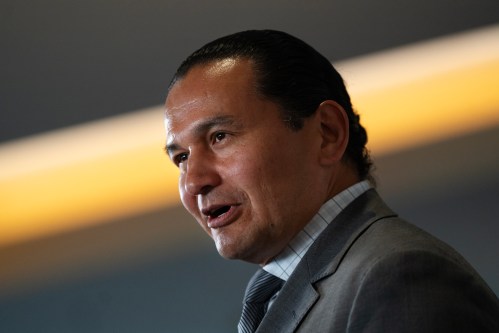
It’s a given that Paul Jordan, the guy who started at The Forks mowing the grass 26 years ago and became its chief executive officer, knows most of the recent secrets at the ancient Indigenous meeting place.
Sitting in the facility’s Food Hall, in the bar area known as the Common, talking about what he calls “the secret” to the unconventionally reinvented destination’s success, Jordan said it was now OK to speak about something else that had been hush-hush.
McNally Robinson Booksellers is opening a second Winnipeg location at The Forks, hopefully before Christmas. It will be a boutique bookstore, about 900 square feet, situated on the second floor overlooking the Common. It will have a large Indigenous and local writers presence, plus a special space for children and families.
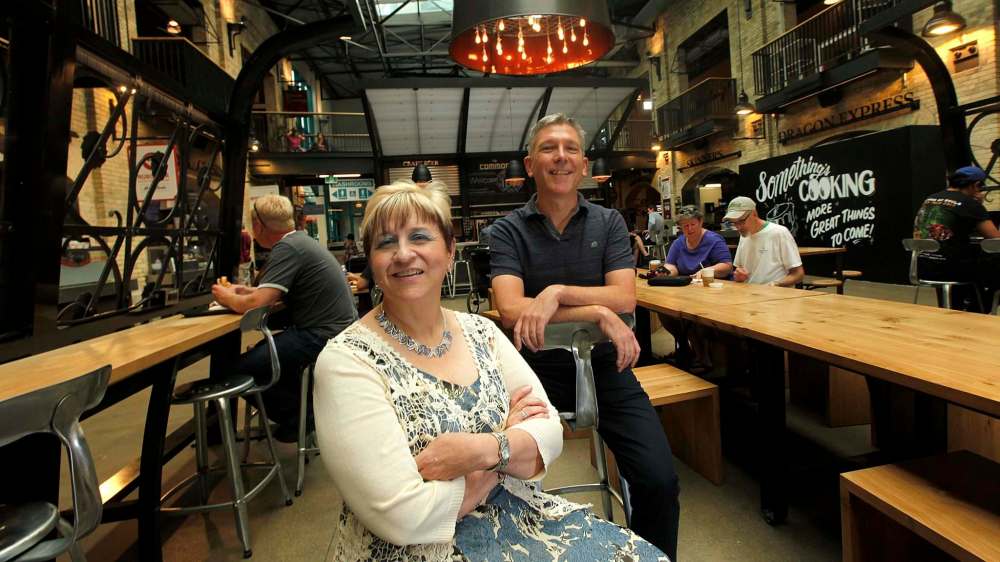
Chris Hall, who co-owns the iconic Winnipeg business with Lori Baker, acknowledged they had been looking to expand into the Exchange District. Then they took a closer look at The Forks — and its four million visitors a year — and calculated much of that traffic is what he refers to as “local tourists” who make the trek from the suburbs, whether it be summer or winter.
What particularly impressed Hall was the Food Hall. McNally Robinson wasn’t interested in opening another big store in the age of Amazon and, with the food court and bar already on site, there was no need to have an in-store restaurant for events.
Which brings us to “the secret” of why the space works and how it came to be in a uniquely Winnipeg way.
The concept began in 2014, around the time Jordan was promoted to CEO.
The Forks North Portage Partnership board chairman Rick Bel — driven in part by the need to finally make a self-funded organization self-sustaining — was already imagining the reinvention of the uninspiring hodgepodge of food court kiosks. Jordan didn’t have to imagine what Bel had in mind, after the CEO extended his annual spring bicycle tour in the south of France and took a side trip to Scandinavia, where, in places such as Helsinki and Oslo, he kept seeing combination food and beer halls full of families.
“All these winter cities were already doing it,” Jordan said. “And I’m going, ‘Why can’t we do it here?’”
Well, actually, there was one major reason they couldn’t: restrictive liquor laws that made European-style food halls impossible in Winnipeg because you had to buy a meal to buy a beer.
“Then the legislation changed. That allowed us to be able to do it. The bar didn’t have to produce food; the food just had to be available,” Jordan explained.
The Forks liquor licence could be expanded to the entire main-floor area. But Bel had more in mind than the basic European food hall model — he needed to create a uniquely Winnipeg model to make it work financially.
Bel started by sourcing local, proven restaurants, including a food truck and coffee shop that had quality product.
“So,” Jordan said, “he was fine with dark places and empty spaces while we created this thing.”
Insisting on quality is part of the secret of the Food Hall’s success. But there was an added clever ingredient that seemed so far outside the traditional model of landlord and tenant that, at first, wasn’t an easy sell.
“We had to start looking at different ways of doing things,” Jordan said of the Food Hall, in reference to year after year of losing money. “And, in the past, we were trying to do it on the expenses side. Trying to do it on the cheap; get the tenants to pay for it. That’s where Rick made a breakthrough. Let’s spend some money and get the tenants coming in where they didn’t have to spend money. He wanted them not to fail.”
That led to the model.
The Forks would create and pay an average of $200,000 for a space in the Food Hall with high-quality equipment; offer a three-year lease that was renewable if the operation was doing well; then collect the “rent” on the back end, by taking 15 per cent of the gross or, if it was higher, a basic operating and common-cost minimum rent.
Doing it that way had a huge upside for the tenant; the risk — of investing their money in a startup and then eating the expenditure if the concept failed — had been eliminated.
“It’s more a partnership than a landlord-tenant relationship,” Jordan said. “We are now working with you, as hard as you are, trying to increase your sales.”
So how successful has it been?
After investing over $2 million on Phase 1, The Forks is in the midst of spending another $2 million on two more restaurant setups opening mid-October, a dish-washing pit so food can be served on real dishes rather than paper plates, plus new washrooms.
“And what’s interesting,” Jordan said, by way of answering the question directly, “is that $4-million outlay from the board — the board has to approve all of this — is being paid back at the rate of 25 to 30 per cent… Within four years, we’ll have all the money back.”
Not only that, Jordan said, The Forks is now getting inquiries about “the secret” from Edmonton and Calgary. And where Bel and Jordan initially had to convince and coax reluctant restaurants to give the Food Hall a try, other chefs and family-run operations are beginning to line up in hopes of being granted the next available space.

Coincidentally, on Wednesday afternoon, Jordan was able to proudly show off The Forks’ success when he played host and gave the welcoming address to delegates of the International Downtown Association. They may not realize it, because Jordan may not tell the visitors, but what Bel, he and the board at large have created is a food hall variation of a Field of Dreams theme.
If we build it — and pay for it — they will come. Both the restaurants and customers.
McNally Robinson is coming, too, of course, but using the traditional tenant-rental model because of the nature of its business. Still, Hall calls the concept Bel conceived and Jordan has been implementing, “really brilliant.”
“If any city needs to play by different rules,” Hall said as the voice of experience, “it’s Winnipeg.”
gordon.sinclair@freepress.mb.ca
History
Updated on Thursday, September 14, 2017 6:36 AM CDT: Adds photo