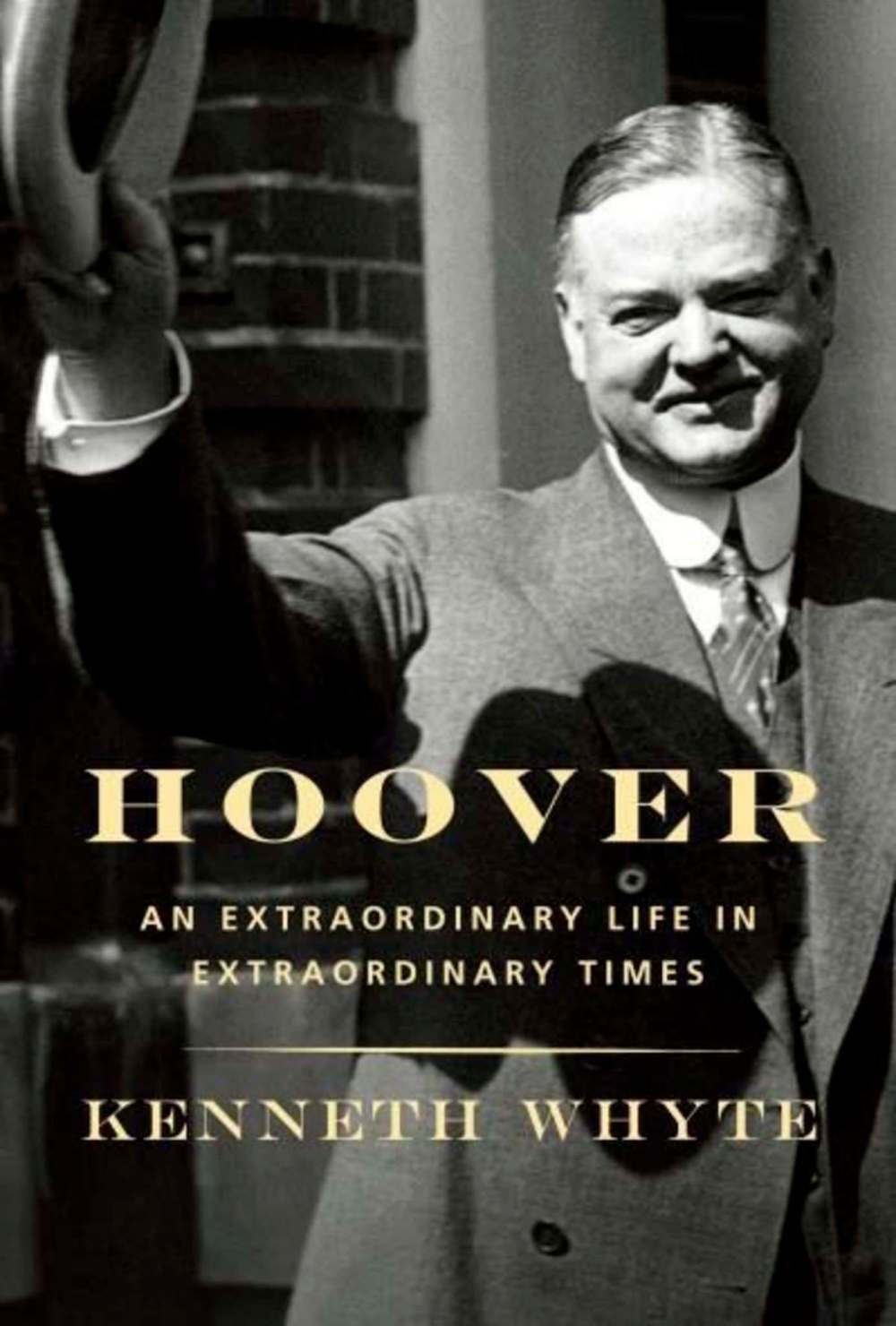
Portrait of a president
Whyte's latest biography tackles Hoover's remarkable life
Advertisement
Read this article for free:
or
Already have an account? Log in here »
To continue reading, please subscribe:

Digital Subscription
One year of digital access for only $205*
- Enjoy unlimited reading on winnipegfreepress.com
- Read the E-Edition, our digital replica newspaper
- Access News Break, our award-winning app
- Play interactive puzzles
*First annual payment billed as $205.00 + GST for one year. This annual subscription will automatically renew at $233.00 + GST every 52 weeks (10% off the regular annual price of $259.35). Offer available to new and qualified returning subscribers only. Cancel any time.
To continue reading, please subscribe:
Add Free Press access to your Brandon Sun subscription for only an additional
$1 for the first 4 weeks*
- Enjoy unlimited reading on winnipegfreepress.com
- Read the E-Edition, our digital replica newspaper
- Access News Break, our award-winning app
- Play interactive puzzles
*Your next Brandon Sun subscription payment will increase by $1.00 and you will be charged $17.95 plus GST for four weeks. After four weeks, your payment will increase to $24.95 plus GST every four weeks.
Read unlimited articles for free today:
or
Already have an account? Log in here »
Hey there, time traveller!
This article was published 04/11/2017 (3252 days ago), so information in it may no longer be current.
Canadian editor and author Kenneth Whyte’s sprawling biography of William Randolph Hearst, The Uncrowned King, won numerous awards and landed on many other short lists; he has been the editor of Maclean’s, Saturday Night and the National Post.
In this 752-page biography of former U.S. Republican president Herbert Hoover, Whyte has little trouble holding our attention and delivering a book that is an enjoyable read.
Whyte introduces us to a man who was remarkably successful in all his endeavours — except for his four years as president of the United States, the most prestigious of all his jobs, which he held from 1929 to ’33.
In his 90 years, Hoover managed to be present and an actor in a surprising number of the great events of his time, including the Boxer Rebellion in late 19th-century China and the Marshall Plan that saw much-needed resources transferred from the U.S. to postwar western Europe in the late 1940s. He was a man who valued public service and knew and worked with many of the important characters of his time.
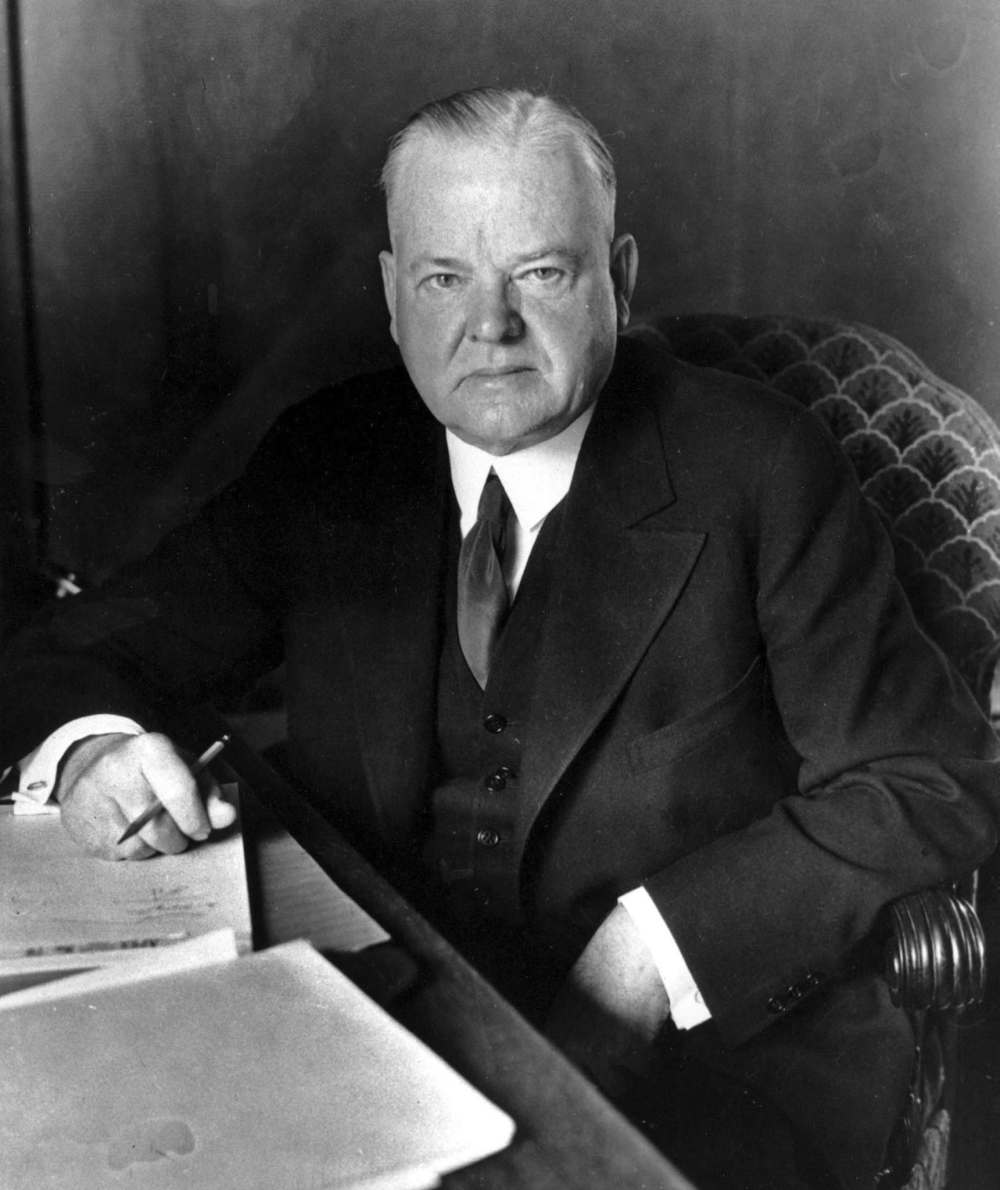
Herbert Clark Hoover was born in 1874 in West Branch, Iowa, a village of 350. His Quaker father was the local blacksmith and his mother a deeply religious woman who was in demand as a sermonizer in rural Iowa.
By the time Hoover was eight, both his parents had died, and he grew up living with relatives in homes where he never felt part of the family. This left him with insecurities and feelings of low self-worth that haunted him throughout his life.
Hoover studied geology at Stanford University and became a mining engineer, making the beginnings of a great fortune at mines in western Australia, China and beyond. Some of his business coups were not models of ethical behaviour, such as when he and his English partners illegally wrested control of large Chinese mining properties from the Chinese owners. They were later sued and lost that control.
It seems that when Hoover was in absolute control of a project and aided by a devoted brain trust of hand-picked men — such as in leading the effort to feed the entire Belgian population during the First World War — he could carry it off.
Hoover happened to be in Belgium on business when the Great War broke out. He leaped into action and took up the challenge of feeding the population of German-occupied Belgium — 7.5 million people — throughout the war. He organized a relief committee that had to negotiate with both the Germans and the Allies and raise the millions of dollars needed, and was named director of the U.S. Food Administration in 1917. The techniques developed in saving lives in the Belgian effort would be used in later disasters such as the Great Mississippi Flood of 1927.
In his Belgian relief operation, he would often work far into the night to master the masses of information he needed. He wrote succinct, clear and well-organized reports, products of a truly brilliant mind, but was also suspicious of, and antagonistic toward, anyone who seemed to be a rival, and was tortured by worries about failure.
In Washington, during the Warren G. Harding and Calvin Coolidge presidencies of the early 1920s, he was a successful secretary of commerce because he was able to turn the department into one of his Hoover-centred, highly productive organizations.
But as the 31st president, Hoover did not have the same kind of control. He had to deal with senators and congressmen, but did not have experience brokering deals to arrive at the kinds of compromises Washington politics required. He likely also failed in hiding the contempt he felt for politicians and their unproductive antics.
Hoover collected many devoted assistants and experts who were happy to work for him. His wife, Lou, an intelligent woman with a long list of her own accomplishments, has been compared to Eleanor Roosevelt. Lou stayed by his side, supporting and participating on an equal basis in his work as well as pursuing her own interests.
Whyte, in describing Hoover’s strategies for ending the Great Depression that plagued his presidency, quotes one of Roosevelt’s aides, who admitted that “the New Deal owed much to what he (Hoover) had begun.” The problem was that Hoover lacked Roosevelt’s political skills.
During the 1932 election campaign, Roosevelt attacked Hoover, blaming him for the Depression and painting him as a rich man indifferent to the suffering of Americans. The unfair accusations stuck, and after being defeated by Roosevelt, Hoover never really recovered the reputation he had built through endeavours such as the Belgian relief efforts. But he chaired commissions of inquiry for presidents Harry Truman and Dwight Eisenhower, and consulted with later presidents such as John F. Kennedy and Richard Nixon. Hoover died in 1964 at age 90.
Kenneth Whyte presents us with a complicated and driven man, shy and unable to show the warmth and empathy politicians need, but impressive in his ability to understand complex problems and solve them. Winter is coming, and this book offers a fascinating and satisfying way to spend quite a few cold winter evenings.
Jim Blanchard is a retired librarian and local historian.