Animals’ emotions unevenly explored
Advertisement
Read this article for free:
or
Already have an account? Log in here »
To continue reading, please subscribe:

Digital Subscription
One year of digital access for only $205*
- Enjoy unlimited reading on winnipegfreepress.com
- Read the E-Edition, our digital replica newspaper
- Access News Break, our award-winning app
- Play interactive puzzles
*First annual payment billed as $205.00 + GST for one year. This annual subscription will automatically renew at $233.00 + GST every 52 weeks (10% off the regular annual price of $259.35). Offer available to new and qualified returning subscribers only. Cancel any time.
To continue reading, please subscribe:
Add Free Press access to your Brandon Sun subscription for only an additional
$1 for the first 4 weeks*
- Enjoy unlimited reading on winnipegfreepress.com
- Read the E-Edition, our digital replica newspaper
- Access News Break, our award-winning app
- Play interactive puzzles
*Your next Brandon Sun subscription payment will increase by $1.00 and you will be charged $17.95 plus GST for four weeks. After four weeks, your payment will increase to $24.95 plus GST every four weeks.
Read unlimited articles for free today:
or
Already have an account? Log in here »
Hey there, time traveller!
This article was published 25/11/2017 (3170 days ago), so information in it may no longer be current.
It was French Enlightenment philosopher René Descartes who began the slander that animals, although alive, are merely automatons without ability to feel, plan or care. Even in Descartes’s day, this claim was disputed. But it was up to Charles Darwin in 1872’s The Expression of Emotions In Man and Animals to prove that lower animals are capable of great feeling. This led to moral questions around eating, experimenting with and imprisoning them — questions that continue to this day.
German woodland manager Peter Wohlleben, who had an unlikely bestseller with The Hidden Life of Trees, has followed up with a gumbo of observations on animal behaviour which, as the title suggests, are meant to surprise in the depth of animals’ capacity to feel things, including pain.
The book was written in German and translated effectively by Jane Billinghurst, but the prose is pedestrian. And many of the observations, despite the author’s day job, are second-hand. The problem is that in English, there are already a fair number of books that cover this topic, and many are elegantly written and recent. In fact, the back cover of this book contains gushing advance reviews from a few of those writers. A quick search of Amazon’s website brings up even more writers tackling topics from the feelings of elephants to the heartbreak of octopi.
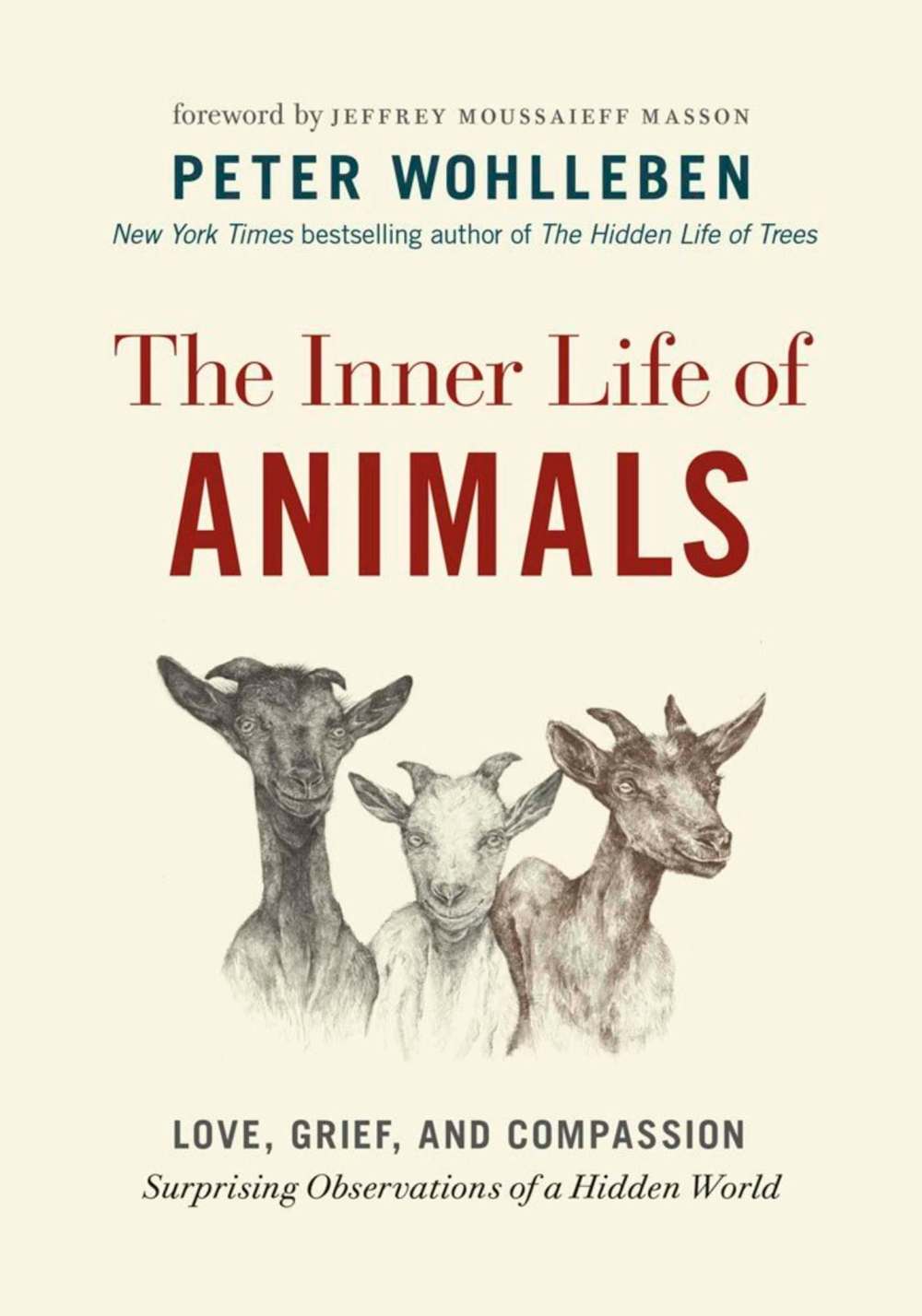
What we are left with is a breezy review gleaned from research papers, personal observations, scientific studies and from other (and better) general non-fiction titles on this well-trodden topic.
Chapters are brief and try to cover a lot of ground. For example, in the three-page chapter Grief, we learn a female alpha deer will return to the site of her dead doe and cry in pain long after the hunter has removed the corpse. Elephant grief is much more complex, but only deer are mentioned.
More disappointing, despite the volume of research available on emotions in lower mammals, the book often meanders away from emotions into the sensory and cognitive. Is sleep an emotion? Smell? And despite a desire to avoid it, anthropomorphism populates the prose. Can animals be embarrassed? Mark Twain said: “Man is the only animal that blushes, or needs to.”
It’s hard not to agree. Sometimes, we are asked to take things as writ. The author shares a story of some crows who, having been fed by a child, later find and return her mother’s lost camera lens cap to her backyard.
“Is this gratitude, perhaps?” asks the author, later adding, “In this case, it seems they (the crows) liked Gaby (the child) very much, and perhaps they were grateful and thanking her for looking after them all those years.”
Perhaps. But one swallow does not a spring make, nor does one crow’s actions describe an inherent corvid trait. Besides, crows need no looking after.
Later, Wohlleben writes: “Horses seem to get more fearful as the year’s advance.” How do we know that? This declaration comes in a chapter about what physically happens to horses when they age, including developing dementia. Interesting enough, but if physical decline is an emotion, this reader is not feeling it.
Lara Rae lives with her two rats, Nina and Frida, whom she treats like people.