Going under

History of anesthesia, while foggy, remains fascinating

Advertisement

Advertise with us

In this, her first memoir, Australian journalist and novelist Kate Cole-Adams describes anesthesia as “perhaps the most brilliant and baffling gift of modern medicine: the disappearing act that enables doctors and dentists to carry out… procedures that would otherwise be impossibly, often fatally, painful.”

Read this article for free:

or

Already have an account? Log in here »

To continue reading, please subscribe:

Digital Subscription

One year of digital access for only $1.44 a week*

  • Enjoy unlimited reading on winnipegfreepress.com
  • Read the E-Edition, our digital replica newspaper
  • Access News Break, our award-winning app
  • Play interactive puzzles

*Billed as $5.77 plus GST every four weeks. After 52 weeks, price increases to the regular rate of $19.95 plus GST every four weeks. Offer available to new and qualified returning subscribers only. Cancel any time.

To continue reading, please subscribe:

Add Free Press access to your Brandon Sun subscription for only an additional

$1 for the first 4 weeks*

  • Enjoy unlimited reading on winnipegfreepress.com
  • Read the E-Edition, our digital replica newspaper
  • Access News Break, our award-winning app
  • Play interactive puzzles
Start now

*Your next Brandon Sun subscription payment will increase by $1.00 and you will be charged $17.95 plus GST for four weeks. After four weeks, your payment will increase to $24.95 plus GST every four weeks.

Hey there, time traveller!
This article was published 13/01/2018 (3095 days ago), so information in it may no longer be current.

In this, her first memoir, Australian journalist and novelist Kate Cole-Adams describes anesthesia as “perhaps the most brilliant and baffling gift of modern medicine: the disappearing act that enables doctors and dentists to carry out… procedures that would otherwise be impossibly, often fatally, painful.”

For nearly two decades, Cole-Adams has explored the history, science, mysteries and failings of general anesthesia. She has travelled widely to interview researchers and patients and to observe surgical subjects who have been put into “chemical comas.”

As much as Cole-Adams’ interest in anesthesia is professional, it is also personal. Contemplating her own spinal surgery, she develops “a dread of the moment when the anesthetic drugs would take effect and I would cease to be.” As well, she worries that upon awaking, she won’t “be the same in some essential way.”
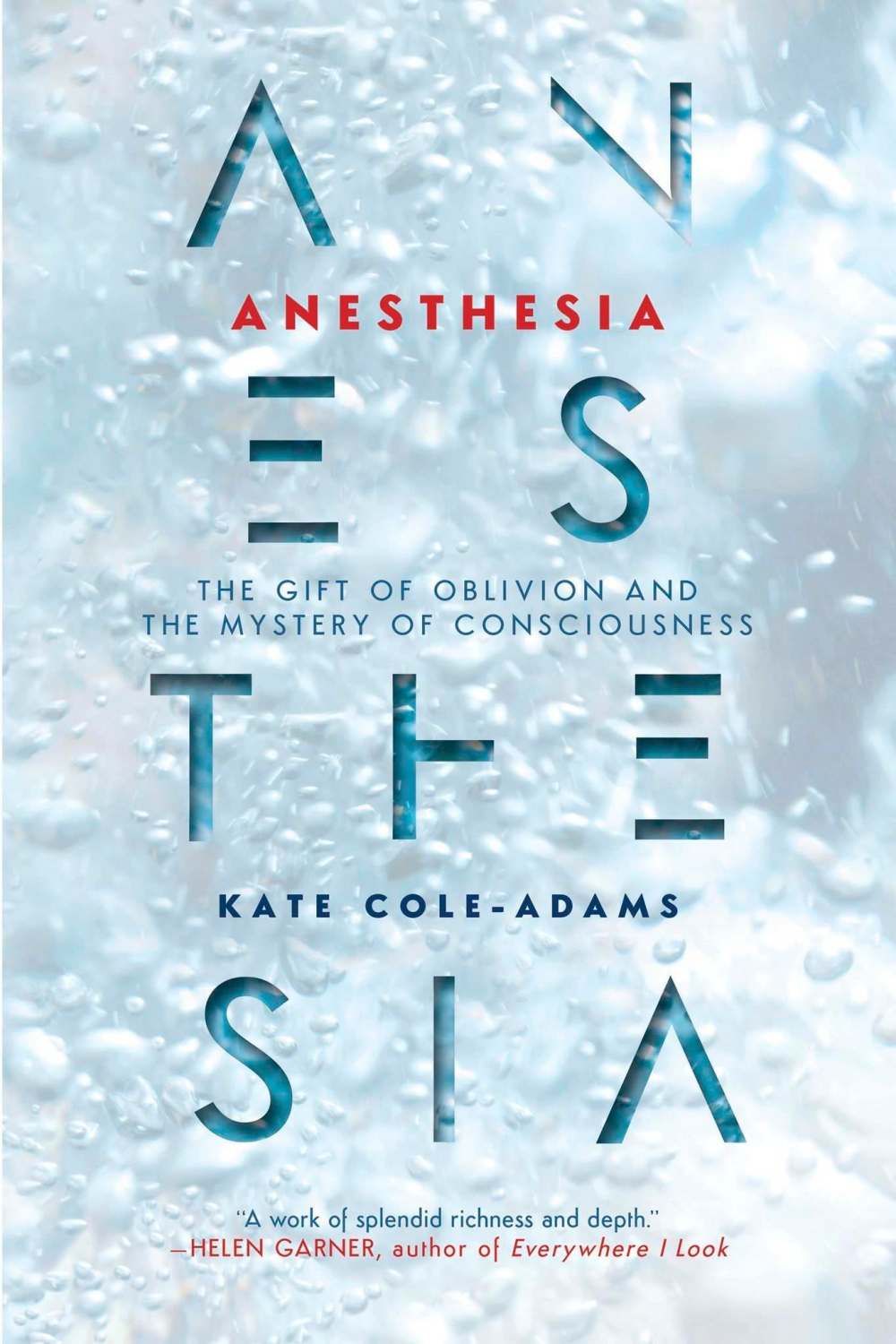
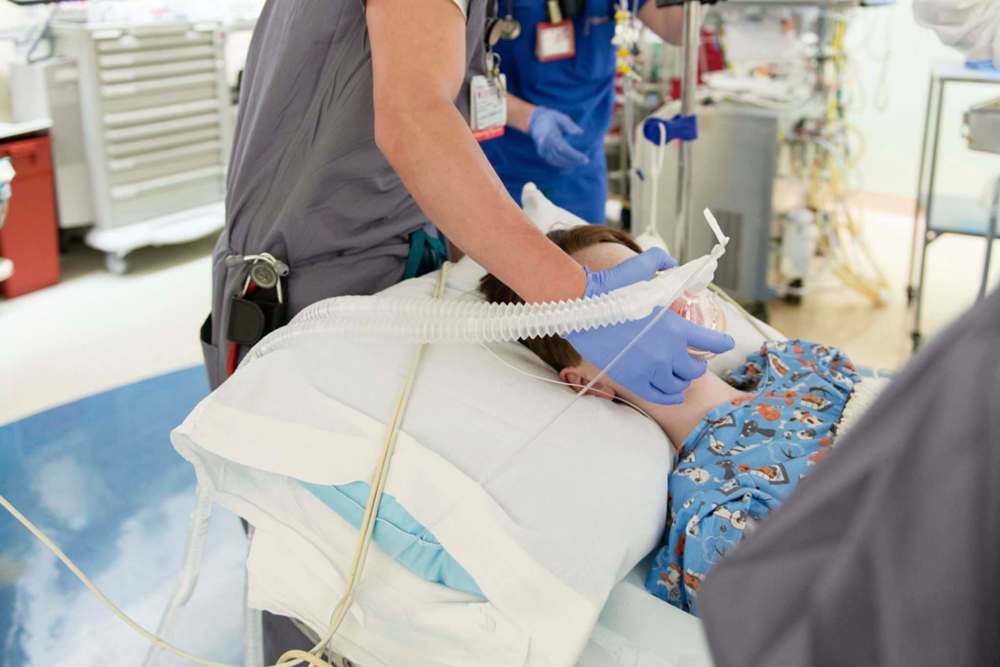
Although anesthesia has been practised for nearly two centuries, Cole-Adams’ concerns are understandable given that it is “an inexact science” and “a sophisticated form of guesswork.” In fact, practitioners cannot ascertain with absolute accuracy that a patient is anesthetized at all, never mind how deeply.

The reader quickly comes to understand that the practice of anesthetizing patients is rife with philosophical and ethical dilemmas. Cole-Adams highlights the issues by relating the stories of Rachel Benmayor and Carol Weihrer, women who endured the ordeal of “accidental intraoperative awareness.”

Benmayor came to consciousness during a caesarean, but because she had been given a paralytic as part of her anesthetic cocktail, could not alert the doctor to her distress. The aftereffects continue to ripple through her life, sometimes in surprising ways.

Similarly, Weihrer couldn’t communicate with her surgical team when she “awoke just as doctors prepared to remove her diseased right eyeball… she felt her eye being… wrenched from its socket, and then the fibres of the optic nerve being severed.”

Weihrer, who continues to experience post-traumatic stress disorder, went on to found the Anesthesia Awareness Campaign, a patient advocacy group.
Heidi de Marco / TNS files
For nearly two decades, Kate Cole-Adams has explored the history, science, mysteries and failings of general anesthesia.
Heidi de Marco / TNS files For nearly two decades, Kate Cole-Adams has explored the history, science, mysteries and failings of general anesthesia.

Notably, when Benmayor and Weihrer were able to share their experiences with their doctors, they were largely met with indifference, a reaction corroborated by others who have known the torture of waking during surgery.

So, does anesthesia render a patient an object rather than a subject? If so, is empathy lost during surgery? Can the memory of pain prove more damaging than the experience of it? Conversely, is pain problematic if a patient doesn’t remember it? When anesthesia “interrupts the self,” can words, feelings, even beliefs get left behind? What is the nature of consciousness?

As Cole-Adams hunts for answers to these and other questions — relating, as she goes, current research regarding the prevention of patient distress — she also shares her long experience of melancholy and her quest, both conscious and unconscious, to become “whole.”

Elegantly and, at times, heart-breakingly parsing the murky space between presence and absence, Cole-Adams has crafted a mesmerizingly unique memoir that is bound to haunt readers well beyond the last page.

Jess Woolford reads and writes in Winnipeg.

Peter Kenneally photo
For nearly two decades, Kate Cole-Adams has explored the history, science, mysteries and failings of general anesthesia.
Peter Kenneally photo For nearly two decades, Kate Cole-Adams has explored the history, science, mysteries and failings of general anesthesia.
Report Error Submit a Tip

More Stories

Swan River lifts mandatory evacuation order as floodwater recedes

Chris Kitching 6 minute read Preview

Swan River lifts mandatory evacuation order as floodwater recedes

Chris Kitching 6 minute read Updated: Yesterday at 3:47 PM CDT

Swan River lifted a mandatory evacuation order for residents of flooded homes Saturday, while the military and volunteers from a disaster aid organization prepare to join the response.

Mayor Lance Jacobson welcomed the federal government’s announcement, which came late Friday night, that personnel were being deployed to the Parkland region, following an official request from the Manitoba government.

“This is something we were asking for on Wednesday, and it takes time to mobilize, but we’re pretty happy to hear that,” Jacobson said early Saturday afternoon, when he did not yet have a timeline for the military’s arrival.

Team Rubicon Canada had a liaison officer in the region Saturday to better understand the situation before the arrival of additional volunteers.

Read
Updated: Yesterday at 3:47 PM CDT

Forever 21, Bluenotes exit CF Polo Park; Thrifty’s steps in

Aaron Epp 4 minute read Preview

Forever 21, Bluenotes exit CF Polo Park; Thrifty’s steps in

Aaron Epp 4 minute read Thursday, Jul. 2, 2026

Toronto-based retail conglomerate YM Inc. is closing its Forever 21 and Bluenotes stores in CF Polo Park to make way for Thriftys.

Read
Thursday, Jul. 2, 2026

Letters, July 4

6 minute read Yesterday at 8:09 AM CDT

Appropriate accountability, appropriate support

Re: Police, agencies at odds over drug sweep (June 27); Downtown crackdown necessary (Editorial, July 2)

The editorial states that with regard to the increasing use of drugs on our streets “doing nothing is not an acceptable option.”

The executive director of the West Central Women’s Resource Centre states that “there is no path,” meaning there is no housing and only inadequate shelter space, drop-in space, and treatment beds.

‘Forward guidance’ on Canadian climate targets

David McLaughlin 5 minute read Preview

‘Forward guidance’ on Canadian climate targets

David McLaughlin 5 minute read Yesterday at 2:02 AM CDT

At last, some honesty in Canadian climate policy

Prime Minister Mark Carney spoke the truth last week about where greenhouse gas emissions were going in Canada: up, not down. This is the first time any prime minister has stated the reality of the country’s emissions trajectory. Until now, it’s all been about putting a positive gloss on far-off reduction goals and unrealistic ambitions.

The prime minister’s second instalment of “forward guidance”, as he calls it, focused on what’s ahead on energy and climate. It was a refreshing and overdue pivot in crafting a more realistic and durable climate policy for the country.

Here’s what he said: “I want to be clear on this point. The changes we have made will mean that our emissions will be higher in the next few years than they were projected to be under the previous government’s plan. But in my judgment, that plan was not sustainable over the long term.”

Read
Yesterday at 2:02 AM CDT

Former Shared Health CEO worked one month in 2025 before firing, got nearly $1M in compensation

Nicole Buffie 5 minute read Preview

Former Shared Health CEO worked one month in 2025 before firing, got nearly $1M in compensation

Nicole Buffie 5 minute read Friday, Jul. 3, 2026

The former CEO of Shared Health received nearly $1 million in salary and other pay last year, despite working for only one month before being fired following a provincial health-care system audit.

Read
Friday, Jul. 3, 2026

Flooding leaves rail line near Roblin teetering

Morgan Modjeski 3 minute read Preview

Flooding leaves rail line near Roblin teetering

Morgan Modjeski 3 minute read Friday, Jul. 3, 2026

Richard Suidak said it will be a long time before the trains near Roblin get rolling again after a portion of CN Rail track was left hanging following severe flooding in Manitoba this week.

Suidak, a 67-year-old land owner who has a cattle herd, had a front-row seat Tuesday as the earth beneath the railway track, located between Roblin and Deepdale, gave way in front of him.

“I was just watching the waterfall coming over … and then I heard this bang,” he said. “I looked at the water, and I just jumped on my quad, put it in high and got out of there as fast I could.”

He said floodwater filled the valley where the track had been established and said he saw kilometres of water being held back by the earth before it gave way.

Read
Friday, Jul. 3, 2026