A question of trust

Social media metrics becoming measuring stick for our trustworthiness, author argues

Advertisement

Advertise with us

Two recent news stories perfectly illustrate economist Rachel Botsman’s argument in her new book, Who Can You Trust?: in late October, Amazon announced its “Amazon Key” service, which would see its drivers gain access to customers’ houses — in their absence — to drop off purchases. Barely a week later, Facebook suggested that, in order to prevent the spread of “revenge porn,” users should pre-emptively submit nude photos of themselves to the tech giant, the unique digital fingerprints of which would detect and prevent attempts by others to distribute them.

Read this article for free:

or

Already have an account? Log in here »

To continue reading, please subscribe:

Subscribe and receive a limited-edition Free Press branded hat or tote.

Digital Subscription

One year of digital access for only $205*

  • Enjoy unlimited reading on winnipegfreepress.com
  • Read the E-Edition, our digital replica newspaper
  • Access News Break, our award-winning app
  • Play interactive puzzles

*First annual payment billed as $205.00 + GST for one year. This annual subscription will automatically renew at $233.00 + GST every 52 weeks (10% off the regular annual price of $259.35). Offer available to new and qualified returning subscribers only. Cancel any time.

To continue reading, please subscribe:

Add Free Press access to your Brandon Sun subscription for only an additional

$1 for the first 4 weeks*

  • Enjoy unlimited reading on winnipegfreepress.com
  • Read the E-Edition, our digital replica newspaper
  • Access News Break, our award-winning app
  • Play interactive puzzles
Start now

*Your next Brandon Sun subscription payment will increase by $1.00 and you will be charged $17.95 plus GST for four weeks. After four weeks, your payment will increase to $24.95 plus GST every four weeks.

Hey there, time traveller!
This article was published 27/01/2018 (3111 days ago), so information in it may no longer be current.

Two recent news stories perfectly illustrate economist Rachel Botsman’s argument in her new book, Who Can You Trust?: in late October, Amazon announced its “Amazon Key” service, which would see its drivers gain access to customers’ houses — in their absence — to drop off purchases. Barely a week later, Facebook suggested that, in order to prevent the spread of “revenge porn,” users should pre-emptively submit nude photos of themselves to the tech giant, the unique digital fingerprints of which would detect and prevent attempts by others to distribute them.

Botsman guides the reader on an enjoyably accessible, but cautiously skeptical, tour through this hugely transformative, but barely recognized, shift in our sometimes-irrational approach to trust. Among other things, this shift has unleashed the sharing economy (Uber negating the need to own a car, for example) and the increasing — and for some, unnerving — reliance on computers and robots to make decisions for us (such as autonomous vehicles negating the need for human drivers altogether).

An instructor at Oxford, Botsman is a widely recognized expert on the economics of trust who previously explored some of these themes in popular TED Talks and in the 2010 book What’s Mine Is Yours: The Rise of Collaborative Consumption, co-authored with American entrepreneur Roo Rogers.
Seth Wenig / The Associated Press files
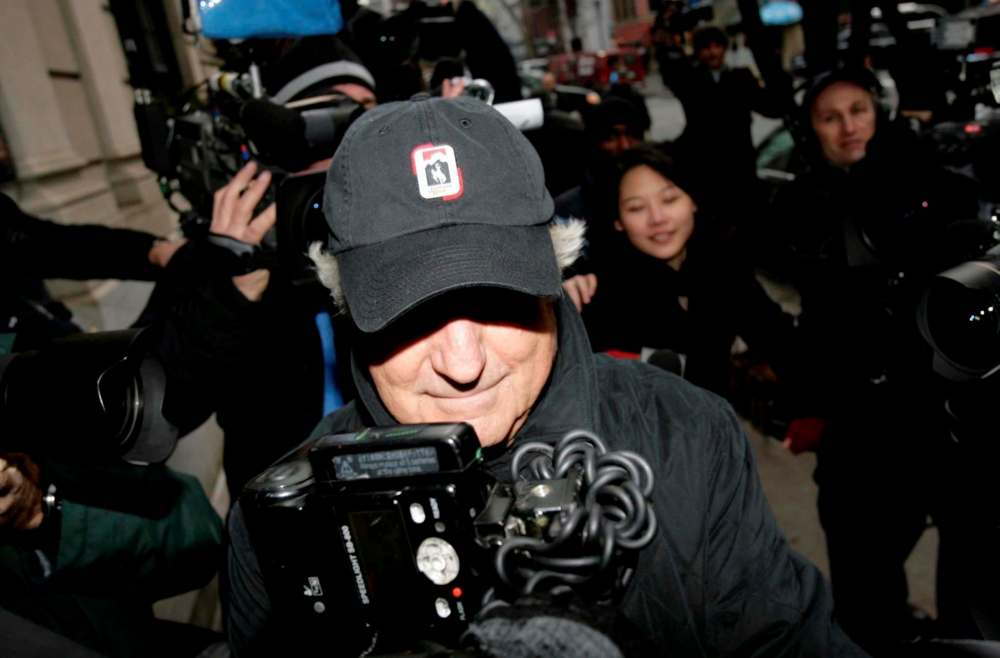
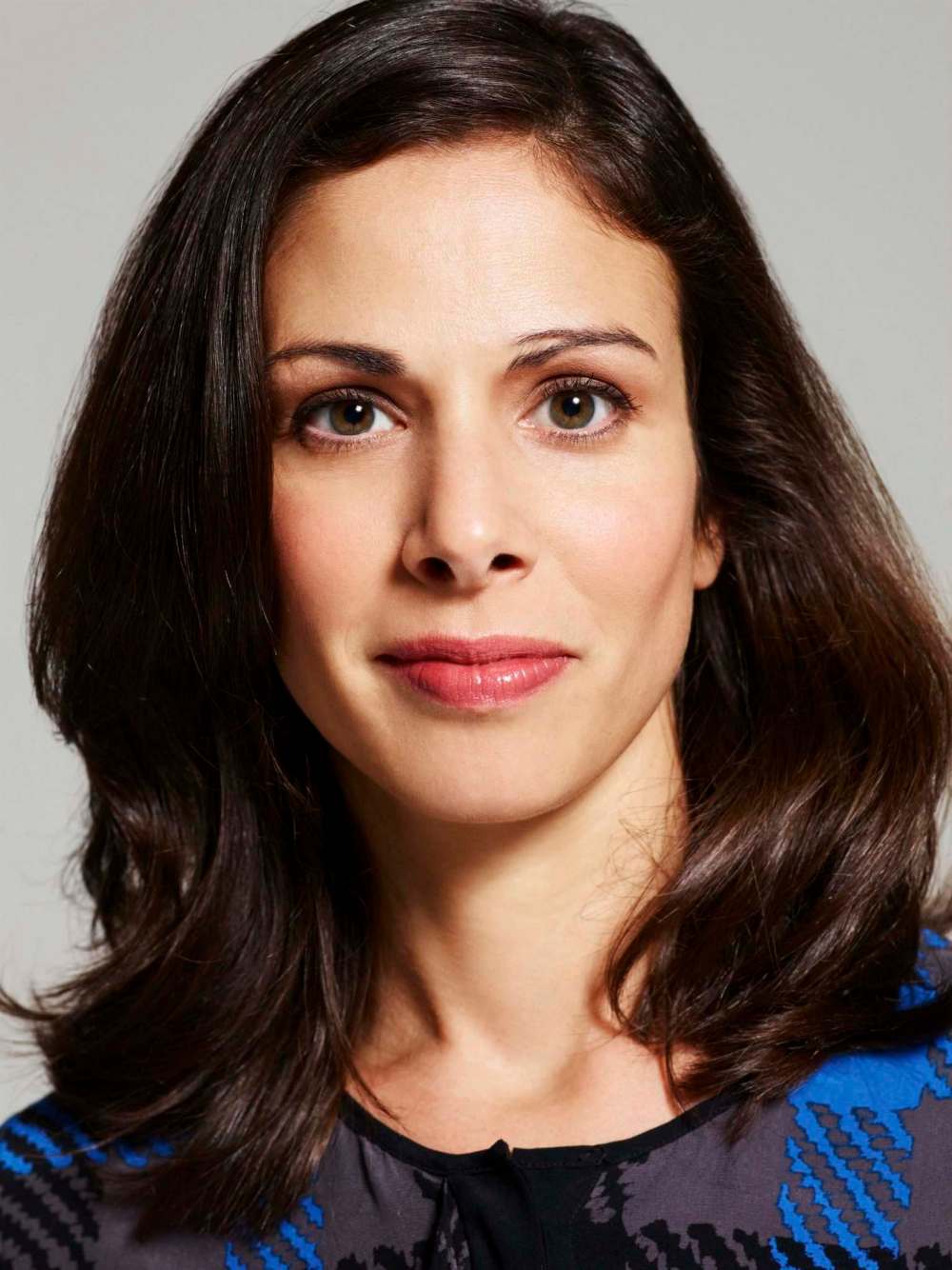
The fraud trial of former stockbroker Bernard Madoff (above) and the 2008 financial meltdown saw peoples’ trust abused; the result, says author Rachel Botsman (below), is the tendency to use social media to distribute trust to total strangers.
Seth Wenig / The Associated Press files The fraud trial of former stockbroker Bernard Madoff (above) and the 2008 financial meltdown saw peoples’ trust abused; the result, says author Rachel Botsman (below), is the tendency to use social media to distribute trust to total strangers.

Botsman begins by distinguishing between trust (which she defines as a “confident relationship with the unknown”) and trustworthiness, and how our trust has often been abused or misplaced — most notoriously in the case of Bernie Madoff and investment banks prior to the 2008 financial meltdown.

As a result, instead of depending upon traditional institutions, such as governments, banks and newspapers, we are now using social media platforms to distribute trust to complete strangers.

She explains how we have, in the process, become products in a global economy of “likes” and starred ratings denoting our trustworthiness, be it as social agents whose personal preferences are sold to advertisers (Facebook), buyers and sellers (eBay), guests and hosts (Airbnb) or drivers and passengers (Uber).

She points out that not only can these regimes be gamed, but our fear of being ranked poorly ourselves can curtail our honesty regarding others in the system. Worse, they risk creating a society of mutual surveillance in which everyone is continually ranking each other to boost their own trustworthiness rankings.

Botsman shows how this dystopian outcome is already unfolding in China, where the government is well on its way to a 2020 launch of its disturbingly Orwellian “Social Credit System,” a massive trust ranking scheme which will grade all its citizens according their credit history, behaviour, preferences and personal relationships, with the resulting “trust score” then becoming the basis of all privileges and opportunities, including one’s education and career.

Not that there will be many career choices open to many of us: Botsman cites a 2013 report by two Oxford economists which estimates that, as early as 2030, 47 per cent of American jobs could be lost to computerization and automation via artificial intelligence (AI) or actual robots, whom we are trusting with more and more decision-making tasks.

The ultimate outsourcing of our trust appears to be emerging in the form of blockchains — tamper-proof, distributed (i.e. ownerless) digital ledgers that are capable of proving the provenance of everything from Bitcoin transactions to baby formula production to diamonds. Once they gain mainstream acceptance, Botsman warns, they have the potential to make obsolete almost every current intermediating profession and institution including banks, lawyers and real estate agents.
Max Doyle photo
.
Max Doyle photo .

With our local networks of interdependence long since gone, expertise forsaken for filtered social media bubbles built around our preconceptions, and traditional institutions exposed as corrupt or rendered obsolete, we may find ourselves instead trusting our daily lives, commerce, livelihoods and governance to algorithms, AI and the immutable perfection of the blockchain.

Who Can You Trust is an excellent — and apparently trustworthy — primer to this fundamentally upturned society in which we may be spending the rest of our lives.

Michael Dudley is a librarian at the University of Winnipeg.

Report Error Submit a Tip

More Stories

Toronto’s alternative crisis response model deemed a success

Scott Billeck 4 minute read Preview

Toronto’s alternative crisis response model deemed a success

Scott Billeck 4 minute read 2:01 AM CDT

A Toronto emergency response program that helped inspire Winnipeg’s proposed alternative crisis response model has already expanded city-wide, just four years after launching as a pilot project.

The Toronto Community Crisis Service, launched in 2022, has become the city’s fourth emergency service, providing a 24-7, community-based response to people experiencing mental health crises. The service has handled nearly 50,000 calls through 911 and 211, dispatched mobile crisis teams to more than 41,000 incidents, made more than 11,600 referrals to health and social services and resolved the majority of eligible 911 calls without police involvement.

Winnipeg Mayor Scott Gillingham last week proposed creating a similar “fourth crisis response pathway” that would allow 911 calls that aren’t violent or criminal in nature to be transferred to community-based crisis teams.

Under the proposal, which has support from both the Winnipeg Police Service and the Winnipeg Fire Paramedic Service, a centralized crisis dispatch and co-ordination hub would receive triaged calls and match them with citywide response teams, staffed in part through existing community organizations, including the Downtown Community Safety Partnership and The Link’s mobile crisis teams. The goal is to divert appropriate calls away from the WPS and WFPS.

Read
2:01 AM CDT

Stampeding to Starlette’s

David Sanderson 7 minute read Preview

Stampeding to Starlette’s

David Sanderson 7 minute read Saturday, Aug. 1, 2026

ELMA — Build it and they will come.

Lee and Star Giesbrecht are the owners of Starlette’s Burger Saloon, a western-themed, outdoor eating spot situated on the married couple’s 40-acre spread, immediately north of Elma.

Seated at one of a half-dozen picnic tables that dot the grounds, Star recalls a conversation she and Lee had prior to the May 2025 grand opening of their locale, which, with its weathered-wood exterior and rustic swinging doors, wouldn’t look out of place in an episode of Yellowstone.

Because they are “literally in the middle of nowhere,” Star says Lee thought it would be advantageous to mount a TV in one corner of the kitchen, for those occasions when they’d be twiddling their thumbs for hours on end, with little to do.

Read
Saturday, Aug. 1, 2026

Use summer’s hard truth to mend your heart

Maureen Scurfield 4 minute read Yesterday at 2:15 AM CDT

Dear Miss Lonelyhearts: I refused to go stay at my girlfriend’s cabin in July, because her alcoholic ex-husband still owns the lot beside her. He’s building a big fancy cabin this summer and she’s more than OK with that, even though they’re divorced.

I seriously criticized him — calling him a drunk and a loser — and she actually dumped me before she went off to the lake for all of July!

When she finally came back home I went to see her. She told me I “just wasn’t enough of a lake person” for her.

Then the fight began! I said, “So are you back with him permanently?” and she said, “What do you think? You let me go!”

55th Folklorama kicks off

Photos by John Woods 1 minute read Preview

55th Folklorama kicks off

Photos by John Woods 1 minute read Sunday, Aug. 2, 2026

Photo gallery: 55th Folklorama kicks off

Read
Sunday, Aug. 2, 2026

Building bridges for the next generation

Zoe Pierce 8 minute read Preview

Building bridges for the next generation

Zoe Pierce 8 minute read 6:00 AM CDT

Change has been the motivation behind Clayton Sandy’s work for decades.

A member of Sioux Valley Dakota First Nation, Sandy is an Indigenous knowledge keeper, cultural advisor and community advocate. His work has taken him into newcomer organizations, schools, hospitals and workplaces across Manitoba, where he teaches Indigenous history, mentors youth and helps build relationships between communities.

Sitting down for an interview with the Free Press, Sandy arrived with a busy calendar in hand, a reflection of the many projects and initiatives that continue to fill his days as he works to create change for future generations.

“I have two boys and I have five grandchildren. The racism I put up with was really bad,” Sandy said. “And I don’t want my grandchildren to put up with that garbage.”

Read
6:00 AM CDT

Book gives patients tools for navigating the Canadian health-care system and getting treatment they need

Janine LeGal 8 minute read Preview

Book gives patients tools for navigating the Canadian health-care system and getting treatment they need

Janine LeGal 8 minute read 6:00 AM CDT

More than a few of us have been known to complain about the Canadian health-care system: the lack of staffing, the long ER waits, the challenge of finding a family physician, the lengthy waiting lists for specialized tests and surgeries. There’s been an outcry for answers for a long time.

The publication of The Canadian Health Care Guerrilla Handbook: How to Fight for What You Need is welcome news for anyone seeking those answers.

Written by Michael Decter, who served as cabinet secretary in Manitoba before his move to Ontario — and Mike McCarthy, patient advocate and consultant who brings a personal story of living with hemophilia, the book is a must-have, packed with answers to commonly asked questions that will help the reader navigate a complex and fractured system.

The book, written in plain language, talks about how to get what you want and need: a family doctor, diagnostic tests, appropriate medications, a second opinion, long-term care, home care, mental-health care — all of that and more is easily accessible in its 217 pages.

Read
6:00 AM CDT