In Conversation: Kathleen Venema
Advertisement
Read this article for free:
or
Already have an account? Log in here »
To continue reading, please subscribe:
Digital Subscription
One year of digital access for only $1.44 a week*
- Enjoy unlimited reading on winnipegfreepress.com
- Read the E-Edition, our digital replica newspaper
- Access News Break, our award-winning app
- Play interactive puzzles
*Billed as $5.77 plus GST every four weeks. After 52 weeks, price increases to the regular rate of $19.95 plus GST every four weeks. Offer available to new and qualified returning subscribers only. Cancel any time.
To continue reading, please subscribe:
Add Free Press access to your Brandon Sun subscription for only an additional
$1 for the first 4 weeks*
- Enjoy unlimited reading on winnipegfreepress.com
- Read the E-Edition, our digital replica newspaper
- Access News Break, our award-winning app
- Play interactive puzzles
*Your next Brandon Sun subscription payment will increase by $1.00 and you will be charged $17.95 plus GST for four weeks. After four weeks, your payment will increase to $24.95 plus GST every four weeks.
Read unlimited articles for free today:
or
Already have an account? Log in here »
Hey there, time traveller!
This article was published 14/04/2018 (3117 days ago), so information in it may no longer be current.
After a childhood in Winnipeg, Kathleen Venema left home, first to teach junior high in northern Manitoba and then to volunteer at a teacher-training college in Uganda.
It was 1986 and Uganda was rebuilding after a ruinous civil war. Kathleen received 800 letters from friends and family during the three years she was away, but her most frequent correspondent was her mother, Geeske.
In the years that followed, Kathleen became an English professor at the University of Winnipeg, focusing on early colonial texts and especially women’s letters. Geeske was diagnosed with Alzheimer’s. As Geeske’s family cared for her through the stages of her illness, Kathleen’s work shifted. She started researching conflict, aging and disability. She also started writing a memoir that became Bird-Bent Grass.

Kathleen will launch her first book at McNally Robinson on Friday, April 20.
Free Press: What do you want people to know about Bird-Bent Grass?
Kathleen Venema: Bird-Bent Grass is, at its core, a story about how much my mother and I loved each other, but it’s also more complicated than that. The book has two main narratives: the first emerges through the letters that my mom and I exchanged 30 years ago, while I was living in Uganda; the other dips in and out of the weekly conversations that my mom and I had for five years after she was diagnosed with Alzheimer’s. Interwoven into these primary narratives are stories about my mother’s family’s history in the Netherlands and shattering losses during the years that Mom and I recorded our Friday afternoon conversations. Because it was impossible to talk with or write to my mother without addressing the existential, spiritual, theological and political questions that fuelled her, the book grapples regularly with large questions about living and dying with intention and integrity.
FP: What are your goals for this memoir?
KV: Most of all, I hope people will read Bird-Bent Grass and be reminded that friends and family members diagnosed with Alzheimer’s or other dementias have not stopped being the vivid, intense, engaged, charismatic people they once were. Someone’s memories and identities and experiences and histories may not be fully accessible, but that doesn’t mean they’ve stopped being a person we love. By spending time with, paying attention to, entering into the realities of people with dementia, the rest of us can help to ease the terror and bafflement and disorientation and loneliness of the illness. I hope that people who knew my mother will read Bird-Bent Grass and say, “Yes, that’s her exactly!” And I hope that people who didn’t ever know my mom will wish they had.
FP: In the years you were in Uganda, your mother Geeske wrote you 200-plus letters. Between those letters, your mother’s diaries and the transcripts of your conversations with her in the years immediately preceding her death, you had a wealth of material to work with. What organizing principles did you use to shape the book?
KV: “Building” this book by selecting from among its myriad elements was the indisputably most difficult part of the project and the main reason that the writing phase took more than five years. Deciding to let the letters form the book’s core chronology was a key breakthrough and one I’m glad I stuck with. That still left a hundred decisions about which letters to include, but over the course of multiple revisions, particular themes emerged and gradually organized themselves into the book’s five parts. Except for the letters, which proceed (almost entirely) chronologically, the book is hard-headedly non-linear, to reflect both the whimsical breadth of my mother’s engagements with the world and the (enraging) unpredictability with which Alzheimer’s fractures memories, languages, conversations, identities and relationships.

FP: You’ve published a great deal of academic work as a professor of English. How was Bird-Bent Grass similar to and different from that work?

KV: I was originally going to include another whole narrative thread in the book, which would have been a kind of scholarly theorizing of the memoir as it unfolded. Luckily, one of my earliest and most dedicated readers let me know that the academic material was slowing the story down to a crawl. Her astute questions about audience helped me decide to hive off the analysis and let it stew separately. I’ve published two scholarly articles specifically on this project, one of which is included in the 2012 collection, Basements and Attics, Closets and Cyberspace: Explorations in Canadian Women’s Archives (edited by Linda Morra and Jessica Schagerl, published by Wilfrid Laurier UP); the other has just appeared in a special issue of the journal Death Studies.
FP: What are you reading right now? What are you writing?
KV: I recently finished reading Jennifer Nansubuga Makumbi’s astonishing Ugandan epic, Kintu, after which I recalibrated with short stories by Haruki Murakami and Tom Hanks. Now I’m immersed in Guy Delisle’s graphic memoir Jerusalem and Zadie Smith’s NW. And my partner and I have been savouring Richard Wagamese’s Embers: One Ojibway’s Meditations together since we received it as a Christmas gift. I’m glad to be reading again with pleasure after brain surgery in January. Although I’m recovering well, I don’t often have the energy to write extensively. When I return to my academic life, I’ll dive into a project that examines graphic narratives of dementia, an unexpected and deeply moving sub-genre of life writing about illness.
Ariel Gordon is a Winnipeg writer.
Related Articles
Winnipeg bestsellers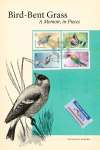
Advertisement Advertise With Us
Advertisement Advertise With Us