

Taking the lead
Veteran journalist recalls half-century of reporting
Advertisement
Read this article for free:
or
Already have an account? Log in here »
To continue reading, please subscribe:
Digital Subscription
One year of digital access for only $1.44 a week*
- Enjoy unlimited reading on winnipegfreepress.com
- Read the E-Edition, our digital replica newspaper
- Access News Break, our award-winning app
- Play interactive puzzles
*Billed as $5.77 plus GST every four weeks. After 52 weeks, price increases to the regular rate of $19.95 plus GST every four weeks. Offer available to new and qualified returning subscribers only. Cancel any time.
To continue reading, please subscribe:
Add Free Press access to your Brandon Sun subscription for only an additional
$1 for the first 4 weeks*
- Enjoy unlimited reading on winnipegfreepress.com
- Read the E-Edition, our digital replica newspaper
- Access News Break, our award-winning app
- Play interactive puzzles
*Your next Brandon Sun subscription payment will increase by $1.00 and you will be charged $17.95 plus GST for four weeks. After four weeks, your payment will increase to $24.95 plus GST every four weeks.
Read unlimited articles for free today:
or
Already have an account? Log in here »
Hey there, time traveller!
This article was published 30/06/2018 (2893 days ago), so information in it may no longer be current.
News junkies of all stripes will find something to cackle over in this exhaustive, informative and surprisingly entertaining memoir of life in the trenches of American investigative journalism.
Author Seymour M. Hersh, now 81, is less well-known to the general public than, say, Bob Woodward, Morley Safer and Mike Wallace.
But inside the profession, he is regarded as a muckraker’s muckraker, having notched his belt with dozens of prizes and the bloodied scalps of countless politicians and power brokers.
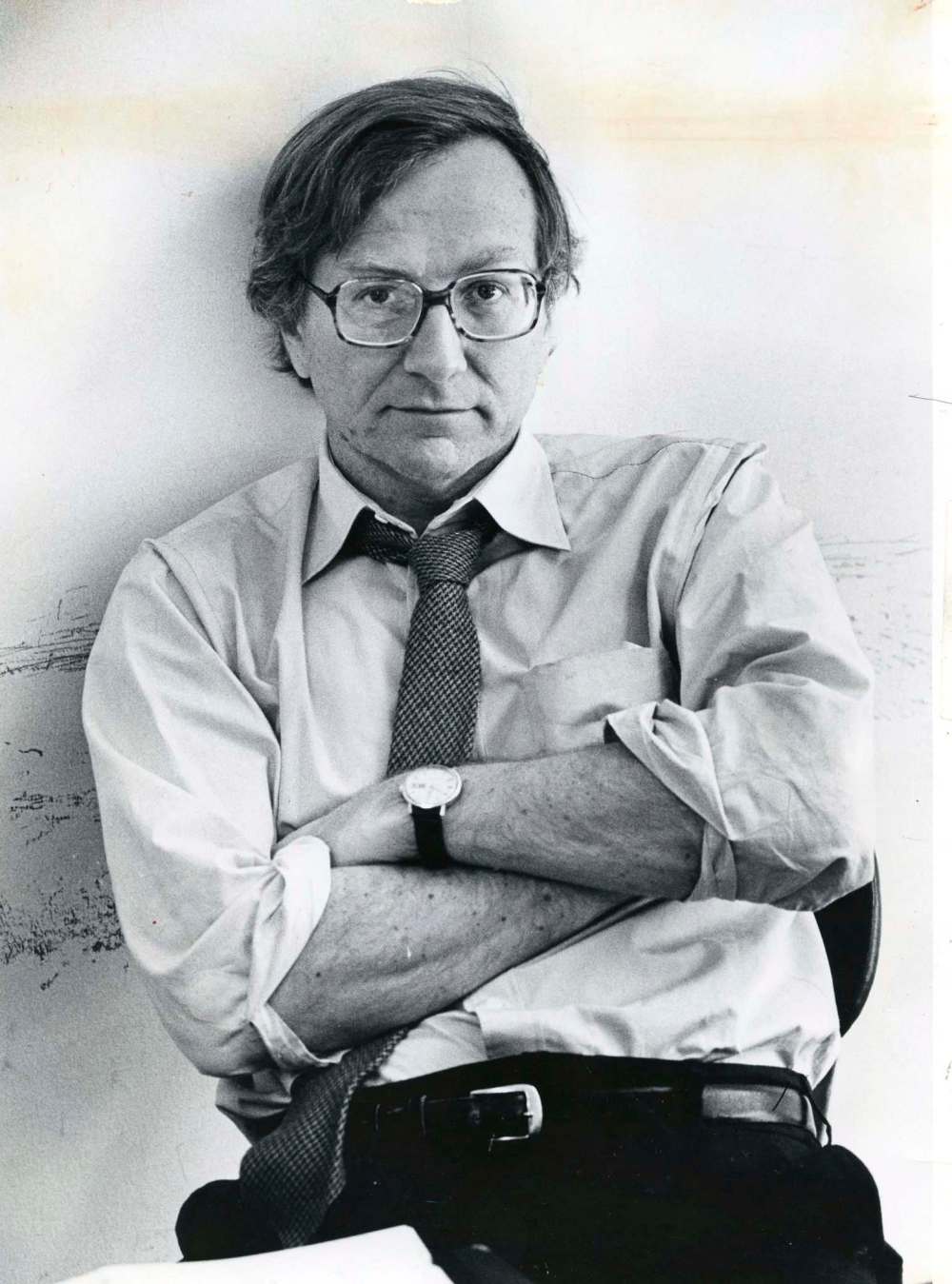
Hersh made his reputation almost 50 years ago when he broke the notorious My Lai massacre story.
Since then he has written numerous books and millions of words of print journalism, driving to distraction politicians and bureaucrats, not to mention his own editors, with revelations about government crimes at home and abroad, from Cambodia to Abu Ghraib.
“It was then for me, and still is,” he writes, “all about the story.”
Hersh’s early years read like something from a Saul Bellow novel. With his twin brother, and twin sisters five years older, he is the Chicago-born son of Eastern European Jewish immigrants who struggled to adapt to life in America.
Getting a college education went unquestioned in the Hersh household. After sleepwalking through an undergraduate degree in English lit followed by an aborted stint at law school, he stumbled into his calling when a friend suggested he apply for a job at a Chicago news service.
Hersh hopped from job to job for several years, learning his trade. He spent six months in the army and three as the head of Sen. Eugene McCarthy’s 1968 campaign for the Democratic Party leadership.
Always a “difficult” employee and “not very interested in rules” — traits common to top-flight journalists — he often departed on bad terms with his bosses because of his inability to suffer fools gladly.
But he was also serious, skeptical, tireless and thorough. Instinctively, he understood the journalist’s role was to afflict the comfortable and comfort the afflicted.
Hersh was perilously self-employed in 1969, married with young children, when he got a “career-changing tip” about an alleged incident of mass murder by U.S. soldiers in South Vietnam being hushed up by the military.
He chased the story,despite its absurd difficulty, he writes, largely because he was convinced his sedate colleagues couldn’t be bothered.
His chapter recounting the shoe leather he expended to track down Lt. William Calley, being secretly held at an army base in Georgia, offers a master class in reportorial process.
In the following chapter, perhaps even better, Hersh rails at the difficulty he had getting the cautious press to publish his scoop.
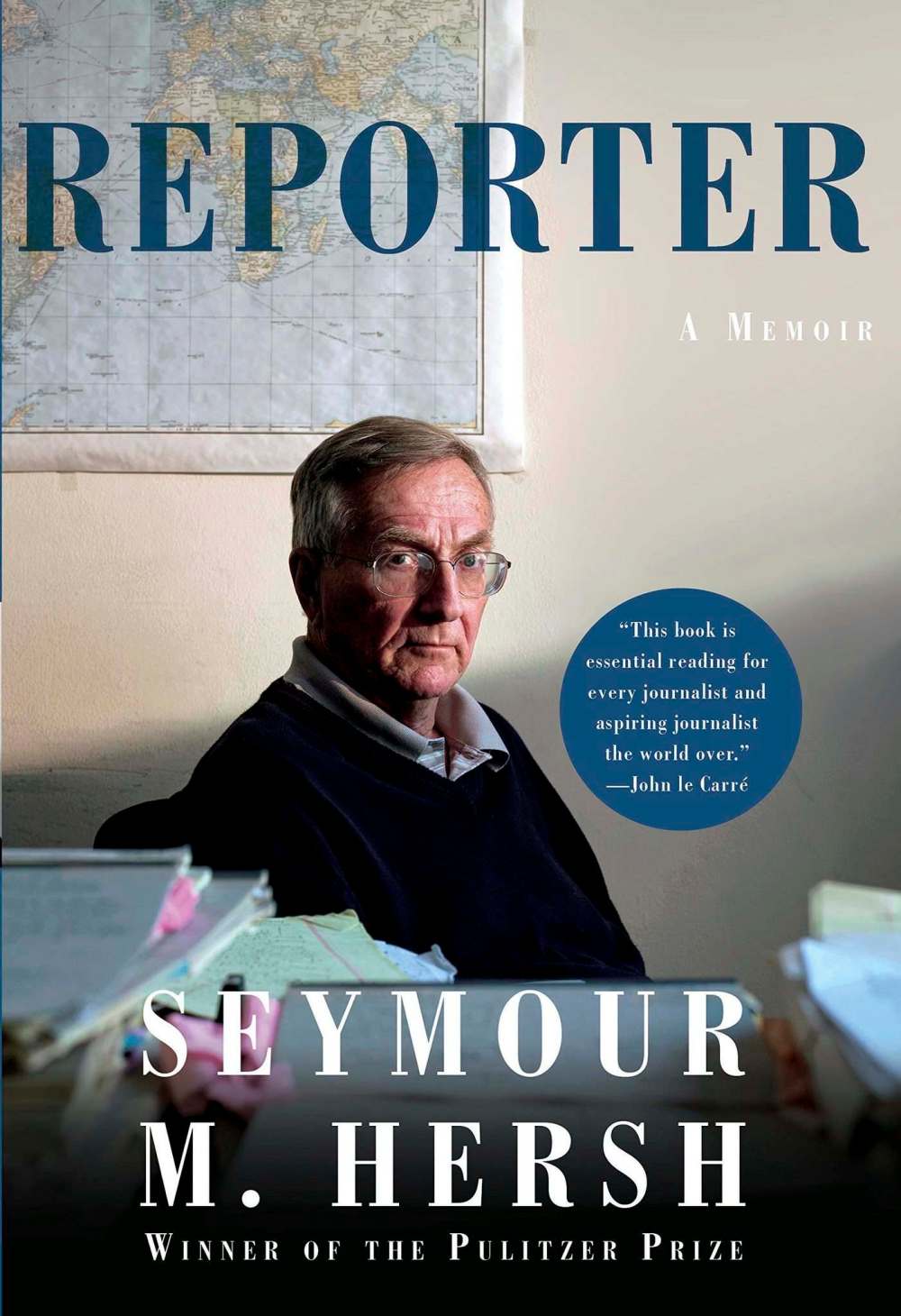
But the memoir contains much more than this. Hersh recounts another 50 years of his journalism exploits, emphasizing his efforts to affect public policy, but still with an eye for the human detail.
He delights in describing his “testy” relationship over several decades with fabled New York Times executive editor Abe Rosenthal.
He is equally candid about the strengths and weaknesses of the famous editors he worked for at The New Yorker magazine, from William Shawn and Robert Gottlieb through Tina Brown and David Remnick.
Nor does he shy away from acknowledging his own mistakes. In 1974, he failed to follow up on a tip that Patricia Nixon had been hospitalized with injuries suffered at the hands of her husband, the freshly resigned president.
“All I could say was that at the time I did not — in my ignorance — view the incident as a crime. My reply was not satisfactory.”
In his introduction, Hersh bemoans the current challenges facing institutional journalism. He acknowledges he benefited from being in the right place at the right time.
As such, writing this memoir, against his instinct to make himself the story, was the right decision. It is possible American journalism will not see his likes again.
Morley Walker is a retired Free Press writer and editor.