Growth negligence

Chronicle of massive B.C. tree has roots in ecological activism

Advertisement

Advertise with us

In a province where few trees grow taller than a three-storey house and scrub oak and short-lived aspen are the norm, it’s hard for Manitobans to imagine an ancient tree as tall as a 20-storey building.

Read this article for free:

or

Already have an account? Log in here »

To continue reading, please subscribe:

Subscribe and receive a limited-edition Free Press branded hat or tote.

Digital Subscription

One year of digital access for only $205*

  • Enjoy unlimited reading on winnipegfreepress.com
  • Read the E-Edition, our digital replica newspaper
  • Access News Break, our award-winning app
  • Play interactive puzzles

*First annual payment billed as $205.00 + GST for one year. This annual subscription will automatically renew at $233.00 + GST every 52 weeks (10% off the regular annual price of $259.35). Offer available to new and qualified returning subscribers only. Cancel any time.

To continue reading, please subscribe:

Add Free Press access to your Brandon Sun subscription for only an additional

$1 for the first 4 weeks*

  • Enjoy unlimited reading on winnipegfreepress.com
  • Read the E-Edition, our digital replica newspaper
  • Access News Break, our award-winning app
  • Play interactive puzzles
Start now

*Your next Brandon Sun subscription payment will increase by $1.00 and you will be charged $17.95 plus GST for four weeks. After four weeks, your payment will increase to $24.95 plus GST every four weeks.

Hey there, time traveller!
This article was published 15/09/2018 (2879 days ago), so information in it may no longer be current.

In a province where few trees grow taller than a three-storey house and scrub oak and short-lived aspen are the norm, it’s hard for Manitobans to imagine an ancient tree as tall as a 20-storey building.

Canada’s tall-tree capital on the west coast of Vancouver Island used to have plenty of them. But a relentless and often unrestrained forestry industry has reduced them to only a few. Big Lonely Doug: The Story of One of Canada’s Last Great Trees by Salt Spring Island-born, Toronto-based Harley Rustad is about one of them.

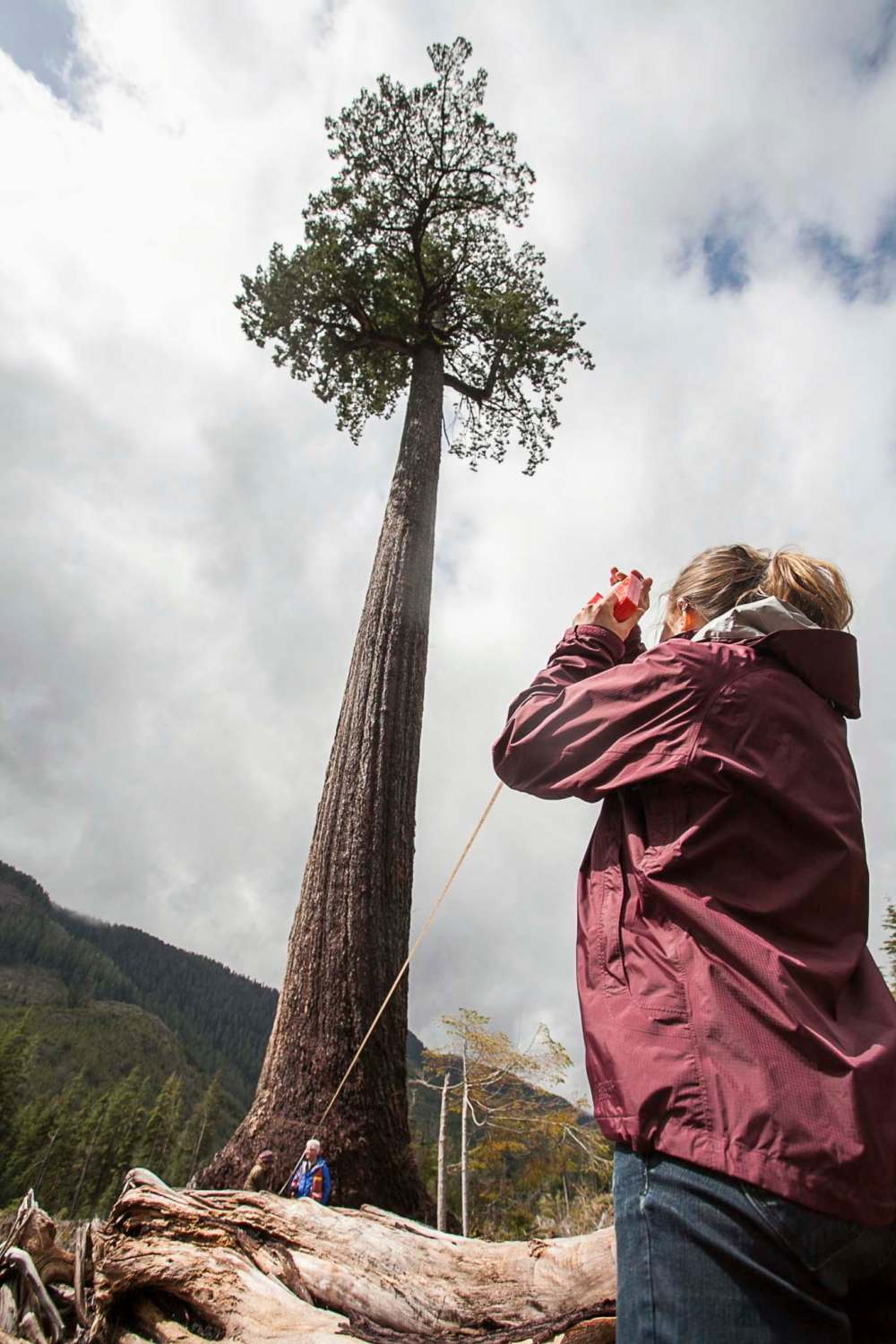
Big Lonely Doug is the second-largest tree in Canada. At 70 metres tall with a circumference of 12 metres, Doug is “dwarfed” only by the Red Creek Fir (74 metres) only 20 kilometres away. It’s lonely because it stands erect and alone in a valley the size of 12 football fields that was clear-cut of all other vegetation. That it’s famous and still standing is a testament to luck and the work of three dedicated forest denizens.
TJ Watt / The Canadian Press files
Cutline here
TJ Watt / The Canadian Press files Cutline here

This awe-inspiring Douglas-fir (note the hyphen — it’s not a true fir) still survives because in 2011 it was marked by a green ribbon instead of a neon orange one by forest engineer Dennis Cronin. His job was to indicate which trees were to be cut and which ones would be spared for the logging company that employed him. Ironically, his decision spared the thousand-year-old tree, but left it more vulnerable.

Doug is famous because of the talents and tireless work of two environmental activists. Ken Wu was working for the Western Canada Wilderness Committee and growing tired of being a “serial protester.”

So, he began searching for a cause that would make people care about nature. TJ Watt, an adventurous wildlife photographer, included his exquisite photographs of Doug in a portfolio he brought to Wu.

They realized immediately that they had found a worthy cause, an icon and a story. Every cause needs a vivid image, a symbol. Doug became for them a symbol of hope.

Big Lonely Doug is not just the story of three small men and one big tree. It’s also a pocket history of the forests of Vancouver Island and the business and politics of a logging industry grown more rapacious with each new technological invention.

Rustad includes a brief treatise on the ecology of old-growth forests as well as the problems involving ecotourism, resource management and First Nations rights. It’s a thorough account of Doug’s place in the land and its past.

The book will inevitably be compared to The Golden Spruce: A True Story of Myth, Madness and Greed by John Vaillant. That’s the story of a Sitka spruce with a genetic mutation that was venerated by the Haida Gwaii people. It benefits from a suspenseful story arc and a crazy villain, things that Rustad’s book lacks.

Big Lonely Doug expands an award-winning essay by Rustad originally published in the Walrus magazine. This makes an important story more available to a wider audience.

But like many essay expansions, it sometimes feels padded out. Though all the elements are woven together with some deftness, it does seem at times to be jumpy, to lack focus and coherence.

Clearly supportive of the work of Wu and the Ancient Forest Alliance he runs, Big Lonely Doug is not a passionate call to arms.

Rustad is not an activist or a man with deep woodland experience; he is a gifted researcher and writer and a valuable enabler whose book is a must-read for anyone interested in ecology.

Gene Walz is saddened that only one per cent of B.C.’s thousand-year-old trees remain.

Report Error Submit a Tip

More Stories

Growth negligence

Reviewed by Gene Walz 4 minute read Preview

Growth negligence

Reviewed by Gene Walz 4 minute read Saturday, Sep. 15, 2018

In a province where few trees grow taller than a three-storey house and scrub oak and short-lived aspen are the norm, it’s hard for Manitobans to imagine an ancient tree as tall as a 20-storey building.

Canada’s tall-tree capital on the west coast of Vancouver Island used to have plenty of them. But a relentless and often unrestrained forestry industry has reduced them to only a few. Big Lonely Doug: The Story of One of Canada’s Last Great Trees by Salt Spring Island-born, Toronto-based Harley Rustad is about one of them.

Big Lonely Doug is the second-largest tree in Canada. At 70 metres tall with a circumference of 12 metres, Doug is “dwarfed” only by the Red Creek Fir (74 metres) only 20 kilometres away. It’s lonely because it stands erect and alone in a valley the size of 12 football fields that was clear-cut of all other vegetation. That it’s famous and still standing is a testament to luck and the work of three dedicated forest denizens.

This awe-inspiring Douglas-fir (note the hyphen — it’s not a true fir) still survives because in 2011 it was marked by a green ribbon instead of a neon orange one by forest engineer Dennis Cronin. His job was to indicate which trees were to be cut and which ones would be spared for the logging company that employed him. Ironically, his decision spared the thousand-year-old tree, but left it more vulnerable.

Read
Saturday, Sep. 15, 2018

55th Folklorama kicks off

Photos by John Woods 1 minute read Preview

55th Folklorama kicks off

Photos by John Woods 1 minute read Yesterday at 6:48 PM CDT

Photo gallery: 55th Folklorama kicks off

Read
Yesterday at 6:48 PM CDT

Rollins becomes fifth councillor to bow out of fall election

Malak Abas 5 minute read Preview

Rollins becomes fifth councillor to bow out of fall election

Malak Abas 5 minute read Friday, Jul. 31, 2026

Sherri Rollins says she’s withdrawing her bid to keep her city hall seat after eight years, citing her concerns about the “gradual erosion of the role played by council” and the struggle to work co-operatively with the mayor’s office.

Read
Friday, Jul. 31, 2026

Long journey to home ownership for Eritrean couple

Zoe Pierce 4 minute read Preview

Long journey to home ownership for Eritrean couple

Zoe Pierce 4 minute read Saturday, Aug. 1, 2026

Solomon Ghebru and his family have been building a life together in Winnipeg for the past three years after years of living apart in various countries. Now, they are working toward a new goal: owning a home.

Their story is the focus of this year’s Habitat for Humanity Manitoba Cycle of Hope fundraising ride, a seven-day cycling event through southern Manitoba that begins Monday. The ride aims to raise $150,000 to support Ghebru, his wife, Mehret Awate, and their two daughters as they work toward affordable homeownership.

The couple’s journey to Canada started in Eritrea, where they grew up and attended the same church together. They left Eritrea separately, hoping to build a better life together out of the country. Ghebru travelled through Sudan and Libya before reaching Malta, while Awate travelled to Sudan and then Uganda.

After he found work in Malta, he tried to have his family join him, but government policies prevented them from reuniting. The couple married in Uganda in 2016, and their first daughter, Peniel, was born there the following year.

Read
Saturday, Aug. 1, 2026

Brighter days ahead after Camp Arnes

Joshua Frey-Sam 5 minute read Preview

Brighter days ahead after Camp Arnes

Joshua Frey-Sam 5 minute read Saturday, Aug. 1, 2026

Keishna Abenstein remembers what it was like to be a teenager who was stuck in her shell.

She also recalls how much going to summer camp at Camp Arnes helped her spread her wings.

Abenstein has watched her middle child, Teagen, go through a similar roller-coaster as a teenager. Teagen, described as a social butterfly in his childhood, has become a bit more reserved in his adolescence after many of his closest elementary school friends went to a different middle school, forcing him to make new friends as he began the next chapter of his education.

Abenstein saw an opportunity for a similar experience at Camp Arnes that could impact her son the same way it did for her.

Read
Saturday, Aug. 1, 2026

News briefs for Sunday, August 2, 2026

1 minute read Updated: Yesterday at 12:13 PM CDT

A collection of breaking news briefs filed on Sunday, August 2, 2026

35-year-old charged in bus stop stabbing

12:13 PM

A man was stabbed while waiting for a bus near The Forks Saturday in a random act of violence, Winnipeg police say.