Family matters

While Rooster Town lacked basic amenities, Métis residents' shared experiences brought them together

Advertisement

Advertise with us

Where do you establish your home when you have no property, little income, and are part of a marginalized racial minority?

Read this article for free:


or

Already have an account? Log in here »

To continue reading, please subscribe:

Subscribe and receive a limited-edition Free Press branded hat or tote.

Digital Subscription

One year of digital access for only $205*

  • Enjoy unlimited reading on winnipegfreepress.com
  • Read the E-Edition, our digital replica newspaper
  • Access News Break, our award-winning app
  • Play interactive puzzles

*First annual payment billed as $205.00 + GST for one year. This annual subscription will automatically renew at $233.00 + GST every 52 weeks (10% off the regular annual price of $259.35). Offer available to new and qualified returning subscribers only. Cancel any time.

To continue reading, please subscribe:

Add Free Press access to your Brandon Sun subscription for only an additional

$1 for the first 4 weeks*

  • Enjoy unlimited reading on winnipegfreepress.com
  • Read the E-Edition, our digital replica newspaper
  • Access News Break, our award-winning app
  • Play interactive puzzles
Start now

*Your next Brandon Sun subscription payment will increase by $1.00 and you will be charged $17.95 plus GST for four weeks. After four weeks, your payment will increase to $24.95 plus GST every four weeks.

Hey there, time traveller!
This article was published 27/10/2018 (2858 days ago), so information in it may no longer be current.

Where do you establish your home when you have no property, little income, and are part of a marginalized racial minority?

This was the situation for many Métis living in Winnipeg in the early 1900s: a population dislocated due to economic change, land speculation and the influx of non-Indigenous settlers.

Compounding the problem was the social stigma of being Indigenous and, by being Métis, having no recognized treaty rights to fall back on. In this situation, many families resorted to living on the city’s fringe, with no paved roads, sewers or running water. The benefit, however, was having access to cheap land, shared experiences and cultural values, and having access to jobs in nearby farms and neighbourhoods.
Donald Laramee photo / supplied
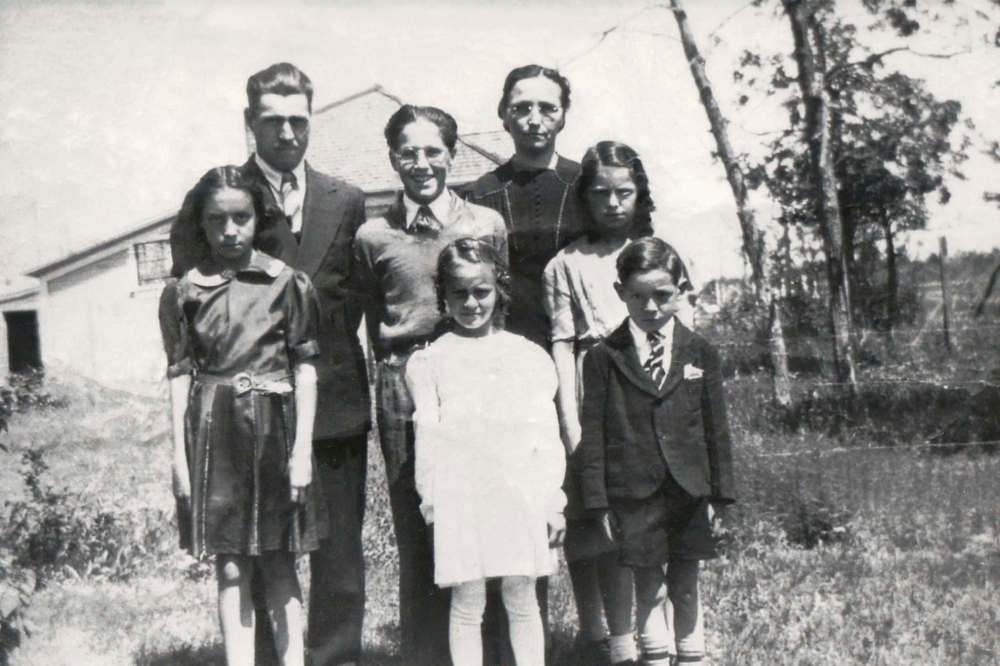
In this photo taken in the 1940s, the Laramee family is seen in front of their house on Ash Street. Joseph Noel and wife Mary are in the back, Mary, Joseph Jr., and Adrianne are in the middle, and Yvonne and Hubert are in the front.
Donald Laramee photo / supplied In this photo taken in the 1940s, the Laramee family is seen in front of their house on Ash Street. Joseph Noel and wife Mary are in the back, Mary, Joseph Jr., and Adrianne are in the middle, and Yvonne and Hubert are in the front.

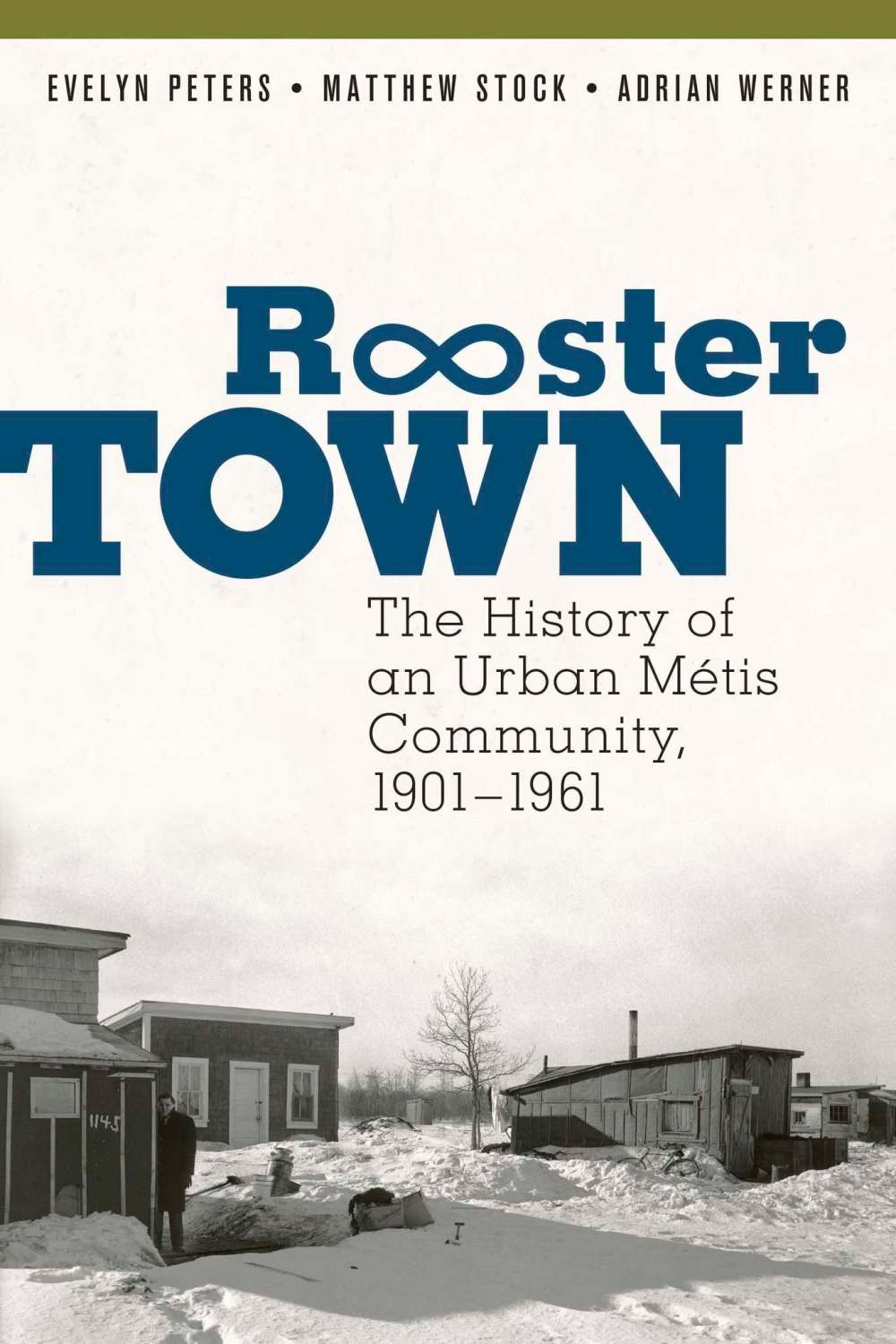
The three authors of Rooster Town: The History of an Urban Métis Community, 1901-1961 are Evelyn Peters, Matthew Stock and Adrian Werner. They bring together their research skills in urban and social policy analysis to provide an interesting account of just one of the many fringe communities that existed in different parts of Canada during this time.

“Rooster Town” was located on the edge of the Fort Rouge area of Winnipeg. The origins of the community’s name, according to the authors, remain unknown. Others have their theories about how it came to be. In a full-length article published in the Winnipeg Free Press on Jan. 30, 2016, Randy Turner wrote: “According to legend, the name Rooster Town was derived from the fact many residents owned chickens. Other unsubstantiated reports claimed the name originated from illegal cockfights that were said to be held in the community.”

What Rooster Town provides is a highly readable account about the community’s history, the nature of the dwellings and the families that lived there. It also follows its changing location from 1901 to 1959 as residential development — with its paved roads, sewers, and water lines — expanded further south and west into Fort Rouge. Over time, Rooster Town gradually shifted its location towards what is now the area around Grant Park Shopping Centre, Grant Park High School and the Pan Am Pool.

Throughout Rooster Town, the authors provide many interesting photographs including houses, family portraits, weddings and class photos. While the families were poor, they maintained their properties, often improving on the initial buildings. Children attended nearby schools including St. Ignatius School, operated by the Roman Catholic parish of the same name.

The community was not isolated from broader historical forces. When the 1930s Depression hit the Prairies, so too did it hit Rooster Town, causing job losses and unemployment. During the Second World War, many of its residents went to war, leaving young families behind.

Supplied photo
With co-authors Matthew Stock and Adrian Werner, Eveln Peters (above) undertook exhaustive research to bring together the story of Rooster Town.
Supplied photo With co-authors Matthew Stock and Adrian Werner, Eveln Peters (above) undertook exhaustive research to bring together the story of Rooster Town.

In the 1940s, the number of households peaked at 50. During the 1950s, with widespread developments occurring throughout North America, Rooster Town fell victim to urban sprawl. What helped further its demise were negative portrayals in the local press, which described residents as irresponsible land squatters and a threat to public health.

The authors rely on an exhaustive number of sources, including newspapers, Métis land scrip records, genealogies, censuses, Henderson directories, voter registration lists, building permit records, aerial photos and Winnipeg fire insurance maps.

The stories of the Rooster Town families, their genealogies, and detailed maps together provides an important and interesting study for those seeking to better understand Winnipeg’s history, in particular that of Fort Rouge. It also provides insights into the ongoing impact of colonialism in terms of the settling of the Prairies, the priority placed on suburban land development by local governments and the displacement of the urban Métis population.

Christopher Adams is the co-editor of Metis in Canada: History, Identity, Law and Politics published by the University of Alberta Press, and rector of St. Paul’s College at the University of Manitoba.
Gerry Cairns / Winnipeg Free Press Collection, Archives of Manitoba
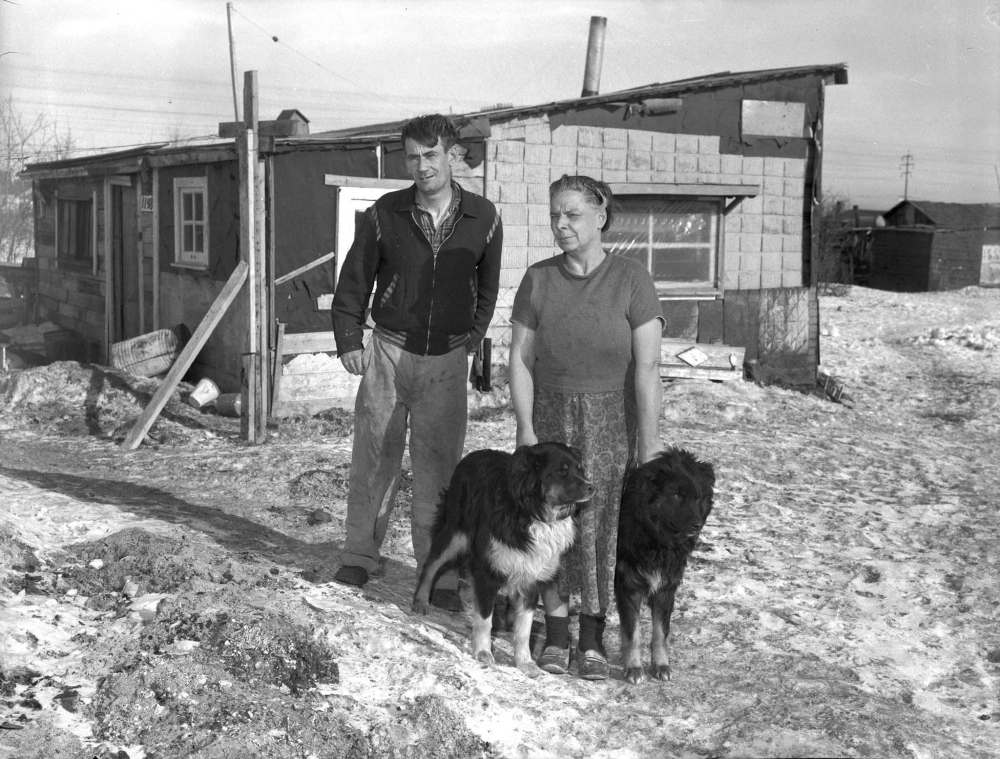
In this 1959 photo, Ernest and Elizabeth Stock are seen standing in front of a Rooster Town residence.
Gerry Cairns / Winnipeg Free Press Collection, Archives of Manitoba In this 1959 photo, Ernest and Elizabeth Stock are seen standing in front of a Rooster Town residence.
Darrell Sais / supplied photo
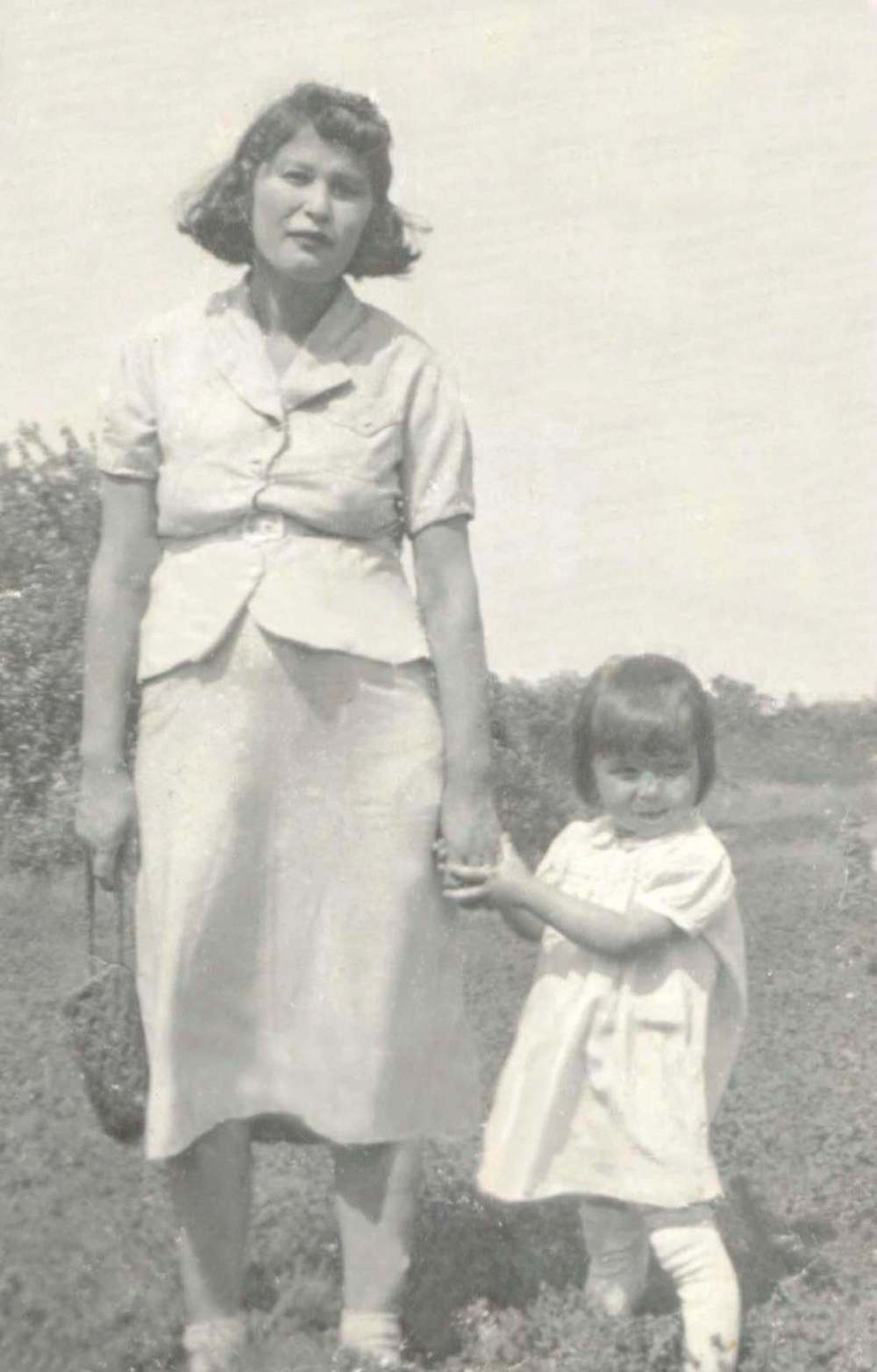
Elise Sais and her daughter Mary in Rooster Town circa 1940.
Darrell Sais / supplied photo Elise Sais and her daughter Mary in Rooster Town circa 1940.
Candace Hogue / supplied photo
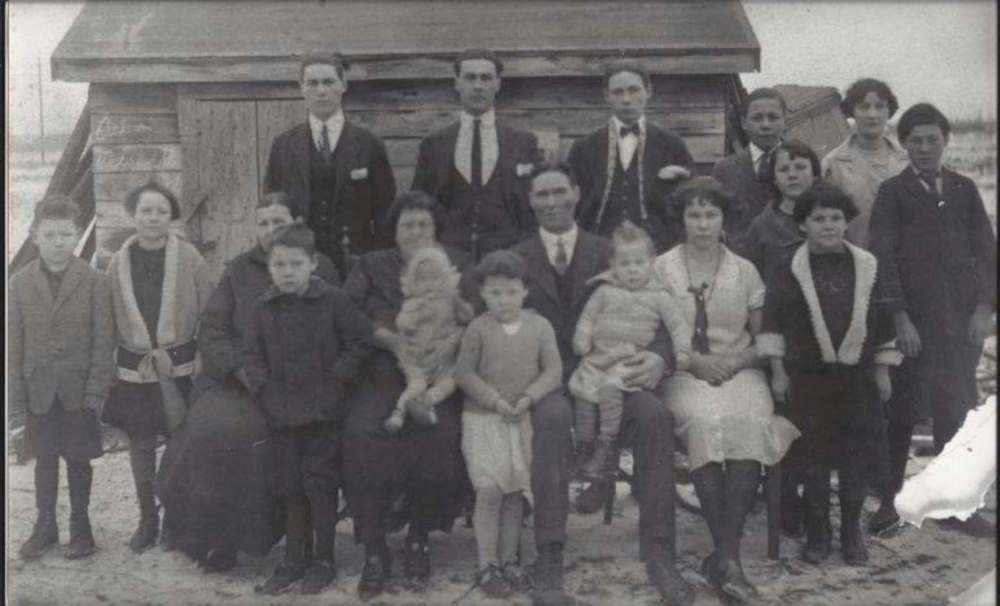
In this photo taken circa 1926, Alexander Smith (centre) and his wife Agnes (centre left) pose with their 15 children.
Candace Hogue / supplied photo In this photo taken circa 1926, Alexander Smith (centre) and his wife Agnes (centre left) pose with their 15 children.
Report Error Submit a Tip

More Stories

Woman stabbed in Spence neighbourhood

1 minute read Yesterday at 4:08 PM CDT

A woman was stabbed in the Spence neighbourhood Saturday and Winnipeg police are investigating.

The stabbing happened before 4:45 p.m. Aug. 22 in the 600 block of Ellice Avenue, and a passerby called 911 when the injured victim, in her 30s, asked for help. The victim was taken to hospital in unstable condition with an upper-body wound and was later upgraded to stable.

General patrol officers canvassed the area and the Winnipeg Police Service's major crimes unit took over the investigation. Police are asking anyone with information to contact major crimes at 204-986-6219, or leave an anonymous tip at Crime Stoppers: 204-786-8477 or winnipegcrimestoppers.org.

Swede leads Manitoba Open, Winnipegger sits 33rd

Mike McIntyre 6 minute read Preview

Swede leads Manitoba Open, Winnipegger sits 33rd

Mike McIntyre 6 minute read Saturday, Aug. 22, 2026

From Lars-Erik Sjoberg to Thomas Steen to Viggo Bjorck, there’s no shortage of Swedish athletes who have quickly become fan favourites here in Winnipeg.

Daniel Svard is hoping to add his name to the growing list.

Although he wields a golf club and not a hockey stick, the 23-year-old from Stockholm is opening plenty of eyes this week at Elmhurst. He carries a two-shot lead into Sunday’s final round of the Manitoba Open, looking to close out his first professional victory in his just his fourth career tournament.

Svard fired a six-under 66 on Saturday to move to 14-under through 54 holes of the PGA Tour Americas event.

Read
Saturday, Aug. 22, 2026

Options for selling U.S. alcohol in Canada

Charles S. Shaver 5 minute read Preview

Options for selling U.S. alcohol in Canada

Charles S. Shaver 5 minute read 2:00 AM CDT

“Don’t buy it. Let it sit on the shelves.” — Manitoba Premier Wab Kinew

U.S. President Donald Trump had threatened to impose tariffs of 50 per cent by Aug. 19 on over 500 Canadian items worth $28 billion. This would threaten 56,000 Canadian jobs and five per cent of our exports.

These tariffs were justified by Sec. 338 of the Smoot-Hawley Tariff Act of 1930. Unfortunately, Trump forgets that President Herbert Hoover signed it despite the objection of over 1,200 economists. A trade war escalated so that U.S. exports and imports both fell by two-thirds. This exacerbated the Great Depression.

A major cause for Trump’s new tariffs is supposedly the irritant that most Canadian provinces no longer sell U.S. alcohol.

Read
2:00 AM CDT

‘Pie Lady’ was a straight-shooter and the life of the party

Nicole Buffie 6 minute read Preview

‘Pie Lady’ was a straight-shooter and the life of the party

Nicole Buffie 6 minute read Saturday, Aug. 22, 2026

Betty Gyles went by many names over the years: Mom, Grandma, hostess — and later in life, “Pie Lady.”

Elizabeth, known as Betty to most, was born in Winnipeg’s River Heights neighbourhood to Bill and Elizabeth Armstrong. She was the youngest child in her family, with three siblings: Bill, Bob and Barb.

Gyles grew up soaking up the sun in northwest Ontario, where her parents owned a cottage; it was there she learned to love to swim and sunbathe and sit on the “reading rock” with her sister.

Gyles would write stories and after each page was finished Betty would read them and it counted toward her summer reading goal.

Read
Saturday, Aug. 22, 2026

H.P. Tergesen & Sons General Market surpasses 127 years as family-run business in Gimli

Aaron Epp 7 minute read Preview

H.P. Tergesen & Sons General Market surpasses 127 years as family-run business in Gimli

Aaron Epp 7 minute read 6:00 AM CDT

GIMLI — Walk into the store. Meander past the clothing, candy and candles. Find him in the corner, his eyes scanning the bookshelves, a smile on his face as a half-dozen people explore this side of the shop.

Wearing grey shorts and a light blue shirt, Stefan Tergesen, the fourth-generation proprietor of H.P. Tergesen & Sons General Market, is explaining his vision for what’s widely recognized as the oldest general store in Western Canada.

“First and foremost, I want everybody to enjoy being in here,” he says. “I want you at some point to look and go, ‘Oh, cool!’ after seeing something that gets your blood flowing.”

If you ever find yourself on the west side of Lake Winnipeg, some 80 kilometres north of Manitoba’s capital, and you realize you forgot to pack something, there’s a good chance you’ll find it at Tergesen’s.

Read
6:00 AM CDT

Cool spots for more summer sweets

AV Kitching 3 minute read Preview

Cool spots for more summer sweets

AV Kitching 3 minute read 6:00 AM CDT

You scream, I scream, we all scream for ice cream. Missed seeing your favourite ice cream joint in last month’s Chill Out feature? Cheer up: we’ve compiled our reader suggestions below.

Despite the cooler weather and slight drizzle, it’s still summer and there’s time to to grab a scoop or two of your favourite flavours. So what are you waiting for?

Living up to its name Not a Waffle (2-709 Corydon Avenue) serves ice creams not in traditional waffle cones but heaped into Japanese taiyaki, a fish-shaped sturdy cake. Ice cream flavours on offer include the ever-popular ube, sakura and matcha in soft serve and for hard scoops there are vanilla, chocolate brownie, cookie dough and something called heavenly heart, which is a chocolate and almond combo. The soft serves are on until October this year so there’s still time if you’d like to give this a try.

Our readers simply adore Dug & Betty’s (309 Rue Des Meurons) for their ice cream fix. Made in small batches, popular flavours include sour cherry and chocolate, strawberry balsamic honey and black pepper and lemon meringue pie. There are seven dairy-free options, including soy chocolate caramel cookie dough and oatmeal apple caramel crunch.

Read
6:00 AM CDT