High standards
Beauchemin's charming new novel can't escape the shadow of his masterpiece
Advertisement
Read this article for free:
or
Already have an account? Log in here »
To continue reading, please subscribe:

Digital Subscription
One year of digital access for only $205*
- Enjoy unlimited reading on winnipegfreepress.com
- Read the E-Edition, our digital replica newspaper
- Access News Break, our award-winning app
- Play interactive puzzles
*First annual payment billed as $205.00 + GST for one year. This annual subscription will automatically renew at $233.00 + GST every 52 weeks (10% off the regular annual price of $259.35). Offer available to new and qualified returning subscribers only. Cancel any time.
To continue reading, please subscribe:
Add Free Press access to your Brandon Sun subscription for only an additional
$1 for the first 4 weeks*
- Enjoy unlimited reading on winnipegfreepress.com
- Read the E-Edition, our digital replica newspaper
- Access News Break, our award-winning app
- Play interactive puzzles
*Your next Brandon Sun subscription payment will increase by $1.00 and you will be charged $17.95 plus GST for four weeks. After four weeks, your payment will increase to $24.95 plus GST every four weeks.
Read unlimited articles for free today:
or
Already have an account? Log in here »
Hey there, time traveller!
This article was published 03/11/2018 (2816 days ago), so information in it may no longer be current.
Yves Beauchemin’s scabrous 1981 masterpiece The Alleycat (in its original French, Le Matou, and now translated into at least 15 languages) is, to date, the all-time bestselling novel from Quebec for good reason: no one before or since has given us such a darkly comical Montreal, so crackling with energy, its madcap forces so powerfully pulsing through its characters and streetscapes, its arcane plot unwinding with such nervy verve and wit.
So maybe it’s churlish, if not shrewish, to demand that this latest Beauchemin fiction — good as it is — match or exceed our expectations since the éclat of The Alleycat.
The good news is that Beauchemin’s gift — for creating over the top yet believably comically flawed characters who animate Dickensian plots — remains everywhere in evidence. This time around, it is the “accidental education” of Jerome Lupien, translated to English by Wayne Grady, that so pungently drives the proceedings.
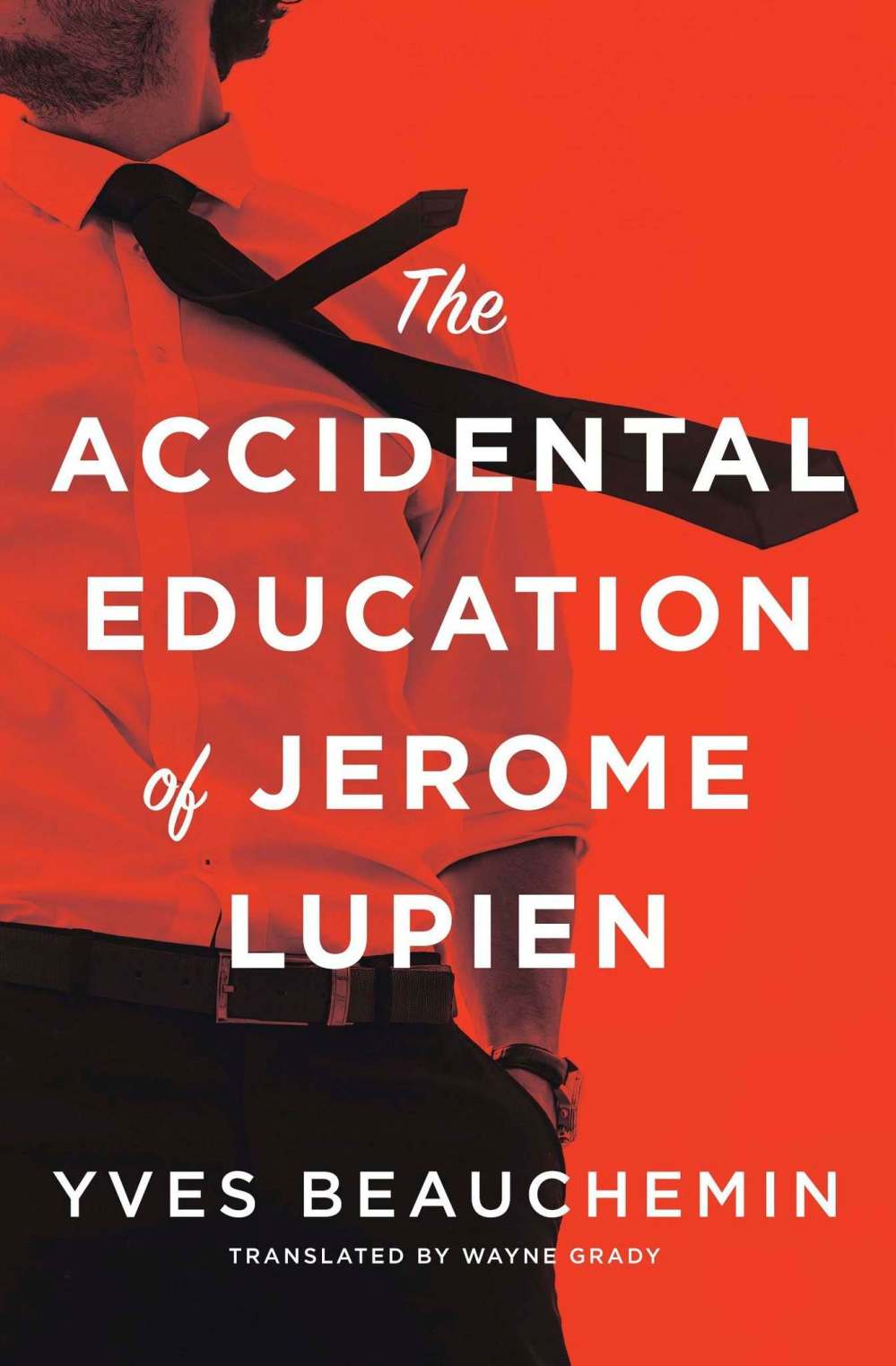
A recent university graduate with a degree in literature — charming, intelligent, oversexed, energetic, ambitious, but strikingly lacking direction and, above all, glaringly naive (a trademark Beauchemin concoction) — Jerome is propelled along a series of bizarre episodes, each of which educates him in yet another facet of humanity’s endless foibles, with most episodes set in and around Beauchemin’s beloved Montreal, with a few excursions farther afield. The cast of Jerome’s teachers — duplicitous or unwitting, salacious or seductive, cunning, sly or simply, comically badass — entertains readers and instructs Jerome; there is ample narrative drive herein to usher him along the winding avenue of his accidental instruction.
And yet, because The Alleycat set such a very high bar nearly 40 years ago, this latest offering feels a little more disjointed in comparison, a little less pungent, less consistently charged with Beauchemin’s characteristically scathing or deadpan wit. The sendups of corrupt politicians — indeed, the laying bare of corruption of every kind — all are here in generous abundance, and Jerome emerges at novel’s end with his accidental education on warm display.
But at times, one wishes for an energy less scattered, more consistently concentrated. Maybe the most glaring examples of these cumulative narrative missteps arise in the novel’s opening, wherein Jerome’s (hilarious) mishaps with a stolen Monster Moose’s antlers on an ill-fated hunting trip (or his being bilked shortly thereafter when he purchases a used car never delivered) are episodes funny enough in themselves, but episodes that simply vanish, less fully realized than they might have been, at best faintly resuscitated.
That is a pity. Beauchemin’s considerable skills as a narrator of improbable events deployed along a plot line ingeniously constructed remain on full display here. As do his sharp eye for broad but sharp description of buffoons spouting farrago and bravado, and his ear for telling declamations that immediately undercut their alleged intentions — everything we have learned to expect from the master.
In his way, Jerome is as attractive and ultimately as likeable a Beauchemin character as we’ve had to date. But it is impossible not to sense The Alleycat’s crapulous Egon Ratablavasky, or the hapless Florent Boissoneault, fretting in the wings. Beauchemin has become the victim of his own magisterial talents.

We’re happy to ride along on the flapping coattails of Jerome Lupien’s accidental education, yes. And Beauchemin’s Montreal — its distinctive streets and avenues, its buildings and bistros, its weather dingy and damp, balmy or blustery — is rendered as lovingly and as sharply as ever. But this reader would trade in the considerable charms and the warmly engaging trials of Jerome Lupien for the lucent lunacies of The Alleycat in a snap.
Neil Besner taught Canadian literature at the University of Winnipeg for 30 years.