Hair apparent
Debut graphic novel explores black women's lives through their hairstyles
Advertisement
Read this article for free:
or
Already have an account? Log in here »
To continue reading, please subscribe:
Digital Subscription
One year of digital access for only $1.44 a week*
- Enjoy unlimited reading on winnipegfreepress.com
- Read the E-Edition, our digital replica newspaper
- Access News Break, our award-winning app
- Play interactive puzzles
*Billed as $5.77 plus GST every four weeks. After 52 weeks, price increases to the regular rate of $19.95 plus GST every four weeks. Offer available to new and qualified returning subscribers only. Cancel any time.
To continue reading, please subscribe:
Add Free Press access to your Brandon Sun subscription for only an additional
$1 for the first 4 weeks*
- Enjoy unlimited reading on winnipegfreepress.com
- Read the E-Edition, our digital replica newspaper
- Access News Break, our award-winning app
- Play interactive puzzles
*Your next Brandon Sun subscription payment will increase by $1.00 and you will be charged $17.95 plus GST for four weeks. After four weeks, your payment will increase to $24.95 plus GST every four weeks.
Read unlimited articles for free today:
or
Already have an account? Log in here »
Hey there, time traveller!
This article was published 22/06/2019 (2681 days ago), so information in it may no longer be current.
Women’s hair is never just hair, and for black women this is even more true.
African and diasporic black artists and writers have been telling us this for decades. From comedian Chris Rock’s 2009 documentary for his daughters, Good Hair, to Chimamanda Ngozi Adichie’s epic 2013 novel Amerikanah and Solange’s 2016 song Don’t Touch My Hair, black women’s hair has recently become a flashpoint for the complex relationships between gender, race, class, family, culture, advertising, business and art.
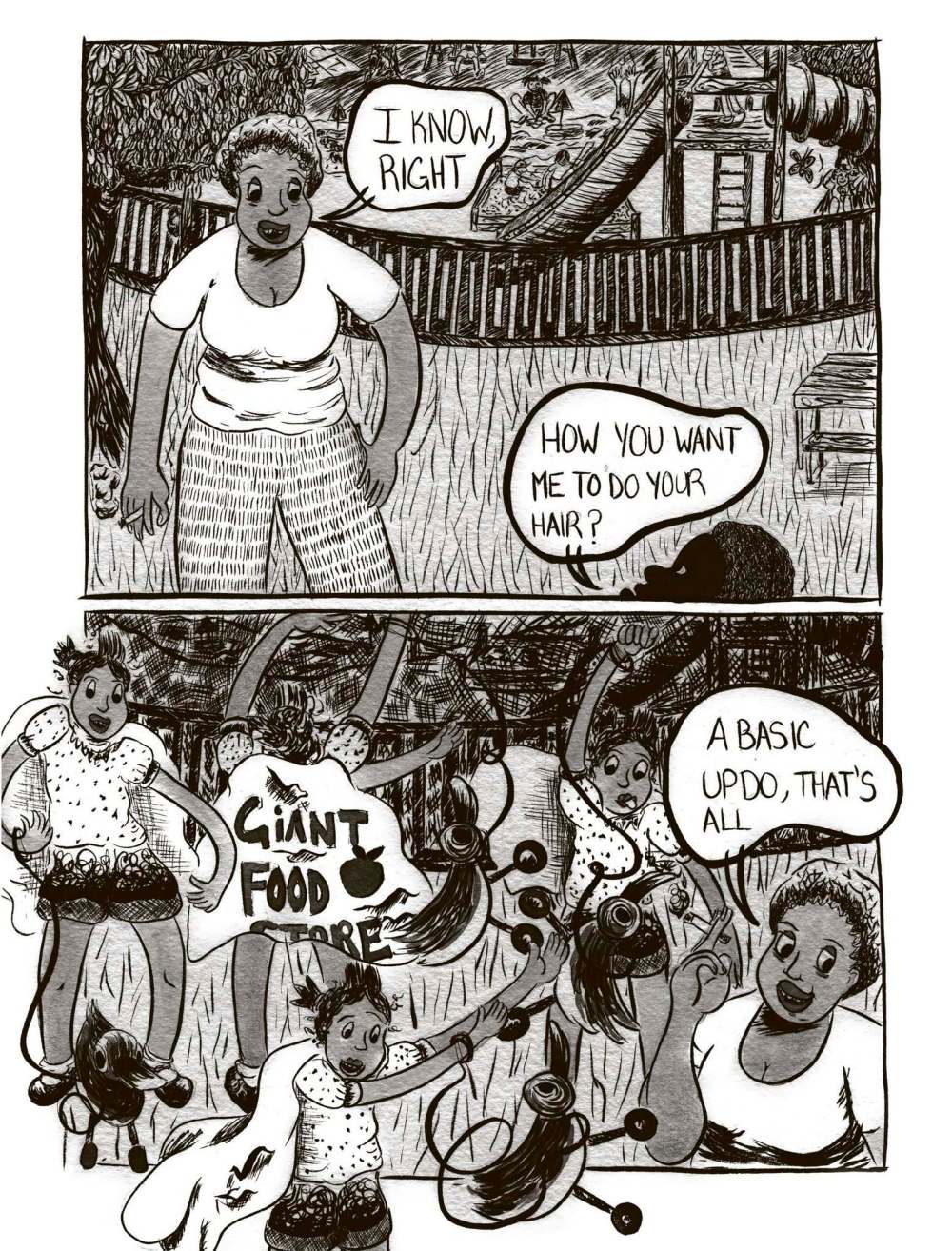
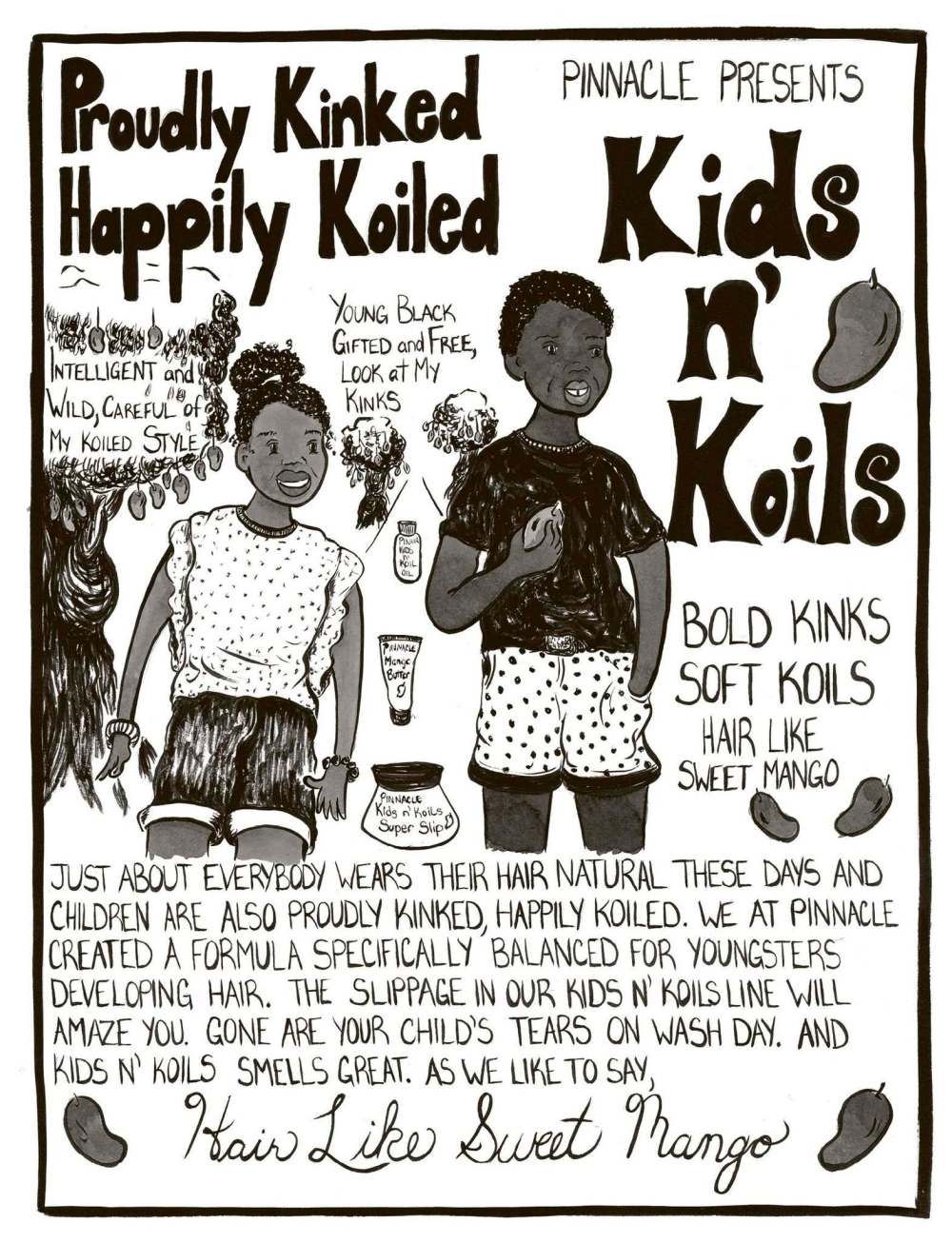
Hot Comb, the first book by U.S. cartoonist Ebony Flowers, is a sophisticated entry into this topic, by turns heartbreaking and joyous. Composed of eight short stories about African-American girls and women, Hot Comb takes us through such coming-of-age experiences as hair shame, chemical straightening, burned scalps, braiding, afros and ultimately hair acceptance.
Along the way, we meet black girls being bullied by their white peers, black women being exoticized by white men, black girls and women encouraging each other to have “good” hair, and black mothers ambivalent about letting their daughters start the spiral of straightening treatments. Flowers shows us the internalized racism that can lead to self-harm and depression, but also shows us the important bonding that takes place between girls and women in scenes of mothers braiding their daughters’ hair, “aunties” initiating teenagers into perms and friends encouraging each other to go natural. Read together, these stories tell a collective coming-of-age story that ends on a hopeful, liberating note of black women’s hair, body, and self-acceptance.
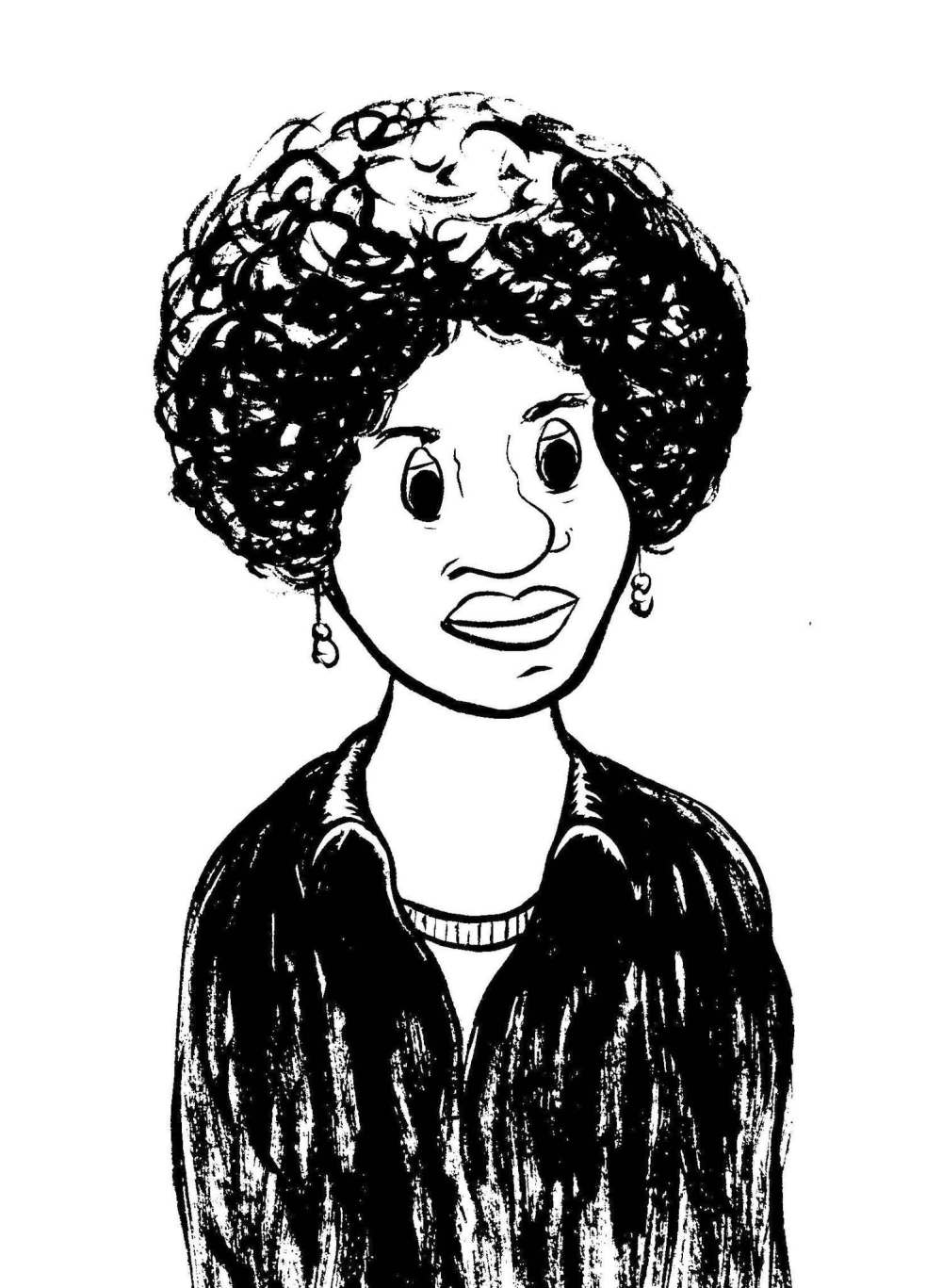
Flowers is a cartoonist, ethnographer and teacher who was born in Maryland and now lives in Denver. She wrote her PhD thesis in curriculum and instruction at the University of Wisconsin-Madison largely as a comic, and won a 2017 Rona Jaffe Award for emerging women writers. Fans of cartoonist Lynda Barry may not be surprised to learn that Flowers has studied and worked with her. Like Barry, Flowers focuses on girlhood and sees drawing as a way to both tap into creativity and develop new forms of teaching and scholarship.
Because she is a trained ethnographer, another comparison is to the early 20th-century African-American writer and anthropologist Zora Neale Hurston. Like Hurston, Flowers is an artist-folklorist, using her creative talents to capture the tones, rhythms and everyday lives of black women with an unflinching yet loving eye and ear.
The title comic is also the first and the longest, using first-person perspective in a coming-of-age graphic memoir about Ebony’s introduction to harsh chemical hair relaxing. Having moved from a predominantly white trailer park to a black neighbourhood in Baltimore, Ebony is suddenly made aware of her “bad” hair by other black girls.
Her mother finally relents to Ebony’s pleas to have a hair salon straightening perm. Ironically, when she returns to her neighbourhood with her new hairdo, the black boys at her school tell her she looks “dumb.”
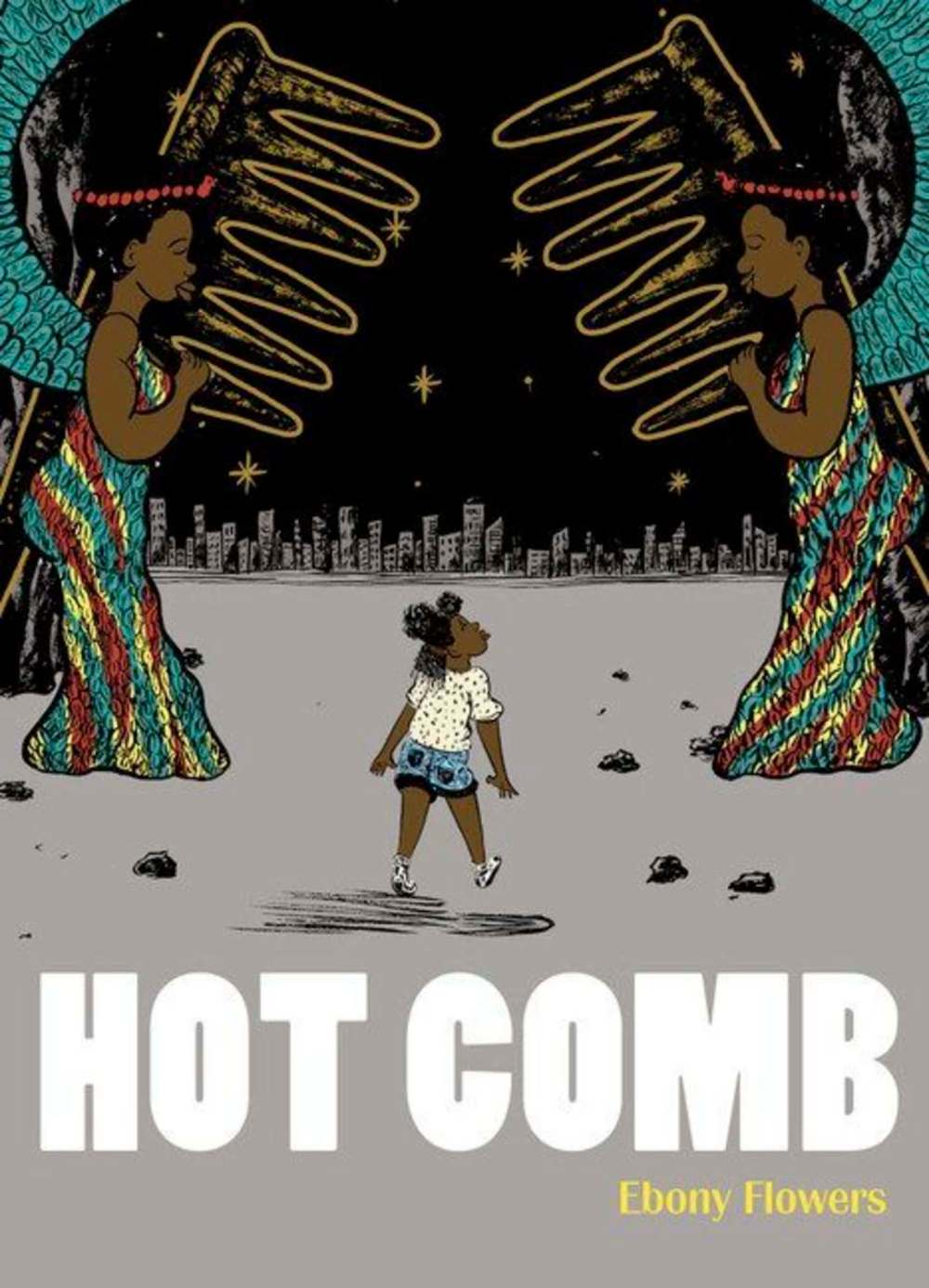
The final story, Last Angolan Saturday, is another standout. Moving from the U.S. to Angola, Flowers begins with three 20-something black friends doing each other’s hair and then deciding to go to the beach.

When they get stuck in traffic, we see them discussing local politics alongside the problems of finding someone in the U.S. who can match Angolan women’s elaborate cornrow designs. They eventually arrive at the beach, and the book ends with a glorious scene of the friends finding their voices.
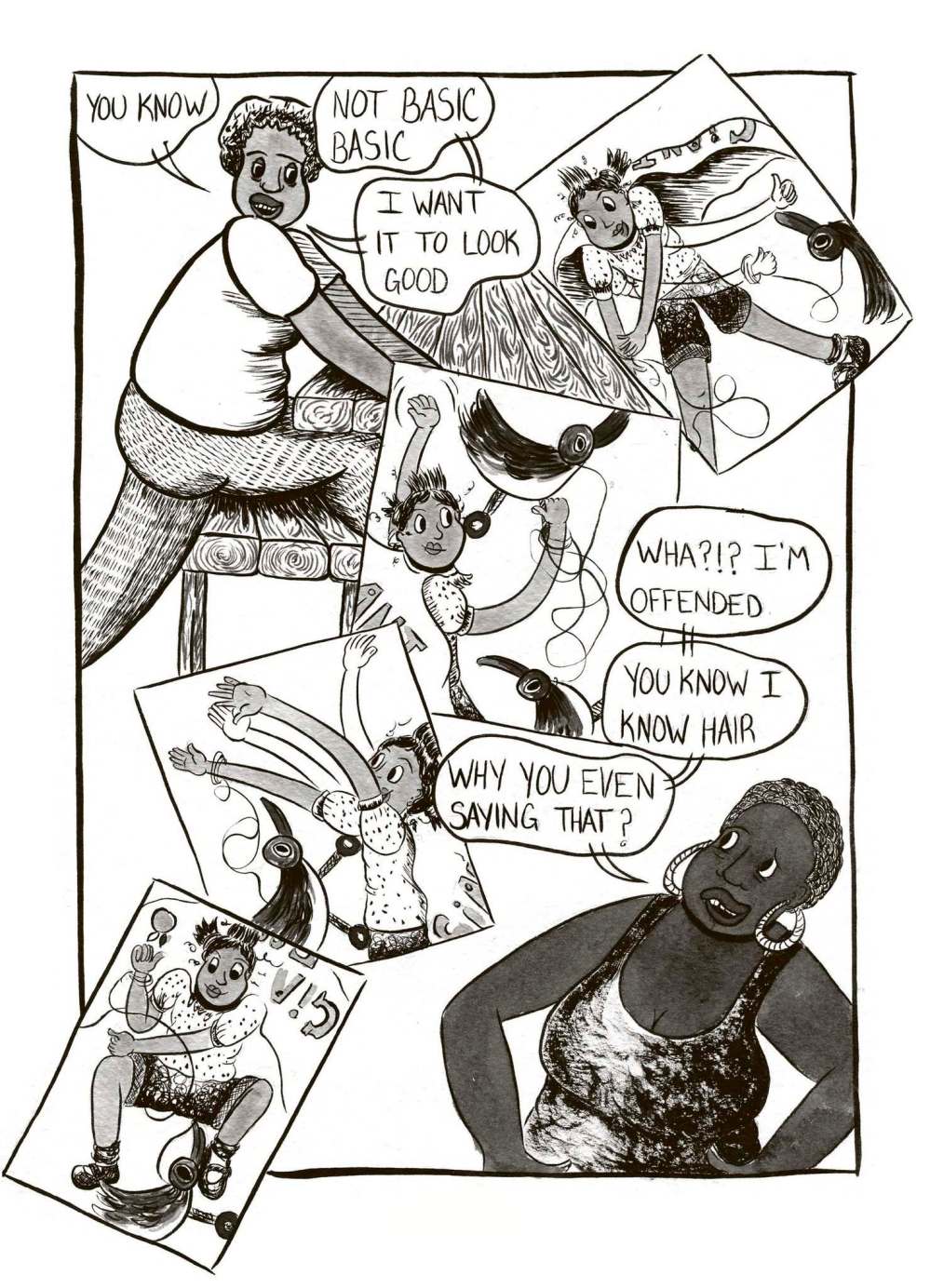
Flowers has a scribbly, sketchy, black-and-white style that works well for these intimate, honest and beguiling stories.
Throughout, Hot Comb provides a glimpse into a set of very specific gendered, racialized and generational experiences that are nevertheless relatable for any reader who has experienced growing pains, complex family dynamics and struggles with self-image and identity.
Hot Comb is a vibrant entry into the growing genre of coming-of-age comics that uses the intricate politics of hair to draw complex portraits of the lives of black girls and women.
Candida Rifkind is an associate professor in the department of English at the University of Winnipeg, where she teaches and researches comics, graphic narratives and Canadian literature and culture.