

Plotting the past
CBC's role in bringing Canadian history to the small screen explored
Advertisement
Read this article for free:
or
Already have an account? Log in here »
To continue reading, please subscribe:
Monthly Digital Subscription
$1 per week for 24 weeks*
- Enjoy unlimited reading on winnipegfreepress.com
- Read the E-Edition, our digital replica newspaper
- Access News Break, our award-winning app
- Play interactive puzzles
*Billed as $4.00 plus GST every four weeks. After 24 weeks, price increases to the regular rate of $19.95 plus GST every four weeks. Offer available to new and qualified returning subscribers only. Cancel any time.
Monthly Digital Subscription
$4.99/week*
- Enjoy unlimited reading on winnipegfreepress.com
- Read the E-Edition, our digital replica newspaper
- Access News Break, our award-winning app
- Play interactive puzzles
*Billed as $19.95 plus GST every four weeks. Cancel any time.
To continue reading, please subscribe:
Add Free Press access to your Brandon Sun subscription for only an additional
$1 for the first 4 weeks*
- Enjoy unlimited reading on winnipegfreepress.com
- Read the E-Edition, our digital replica newspaper
- Access News Break, our award-winning app
- Play interactive puzzles
*Your next Brandon Sun subscription payment will increase by $1.00 and you will be charged $17.95 plus GST for four weeks. After four weeks, your payment will increase to $24.95 plus GST every four weeks.
Read unlimited articles for free today:
or
Already have an account? Log in here »
Hey there, time traveller!
This article was published 27/07/2019 (2481 days ago), so information in it may no longer be current.
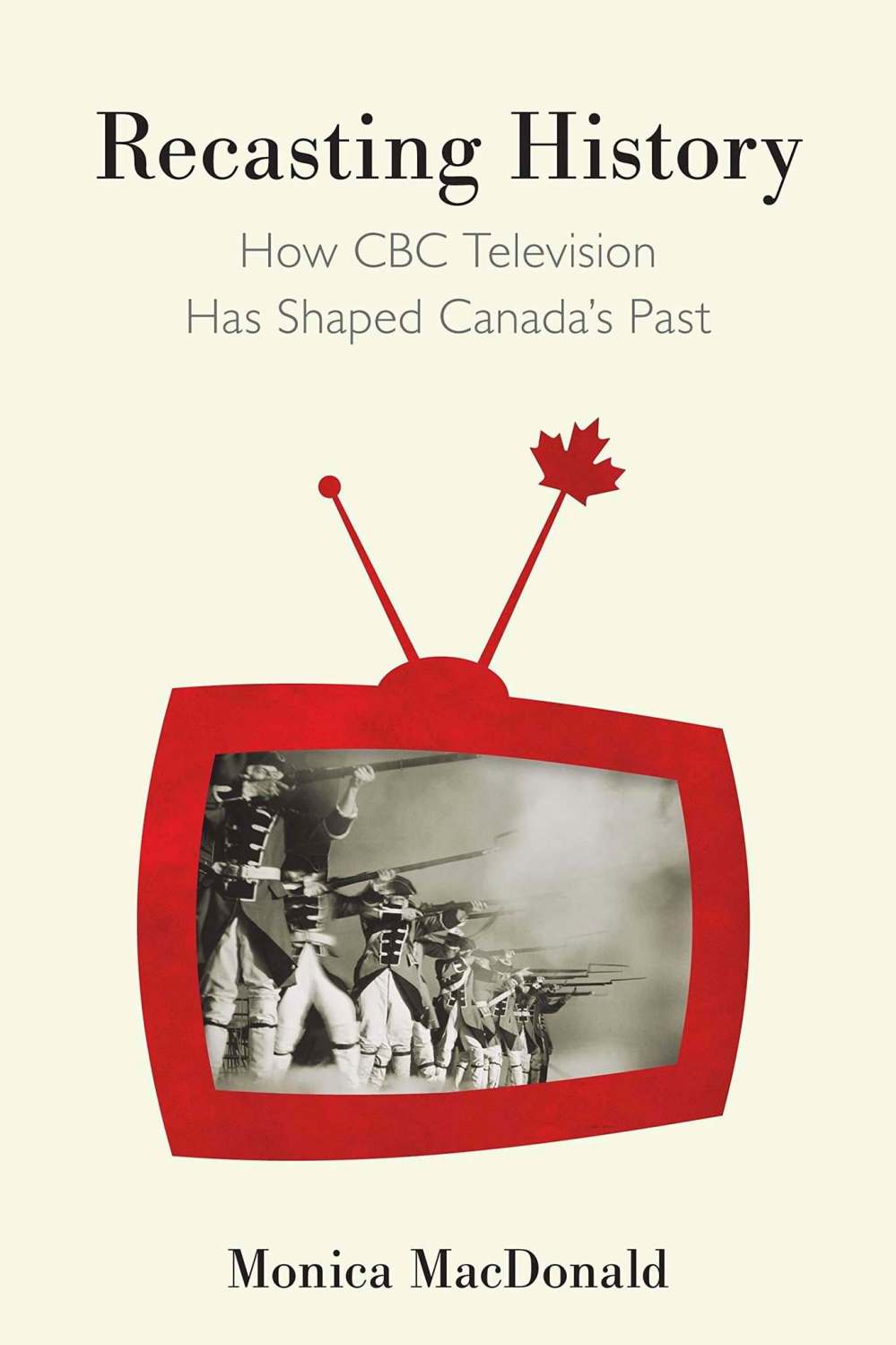
Since CBC Television went on air in 1952, it has promoted Canadian history via documentaries and docudramas.
Monica MacDonald, a historian with Halifax’s Canadian Museum of Immigration at Pier 21 and an adjunct history professor at Dalhousie University, has penned a nifty exposition-cum-analysis of the job it has done in presenting our history.
Her book traces the evolution of how Canada’s past was portrayed on the CBC, with a focus on major documentaries and docudramas (dramatized television based on historical events), including Explorations (1956-64), Images of Canada (1972-76), The National Dream (1974), The Valour and the Horror (1992) and Canada: A People’s History (2000-02).
CBC Television’s early productions leaned heavily on input from, and often on-camera appearances by, Canadian academic historians — Arthur Lower, Donald Creighton, Ramsay Cook, William Morton, Charles Stacey and the like.
But, according to MacDonald, television’s early bond with academe was tested, and then broken, with the rise of journalists as principal architects of as-seen-on-TV Canadian history. And this led to a sometimes self-righteous stance by journalists as the new auteurs of televised history.
MacDonald frames the divide this way: “By the 1970s, a major difference in the two professions was that most Canadian historians had abandoned the idea that complete objectivity was possible and understood that value judgments were part of their work. But in the Western world, at least, a professed commitment to objectivity continued to be the mantra of the journalism profession.”
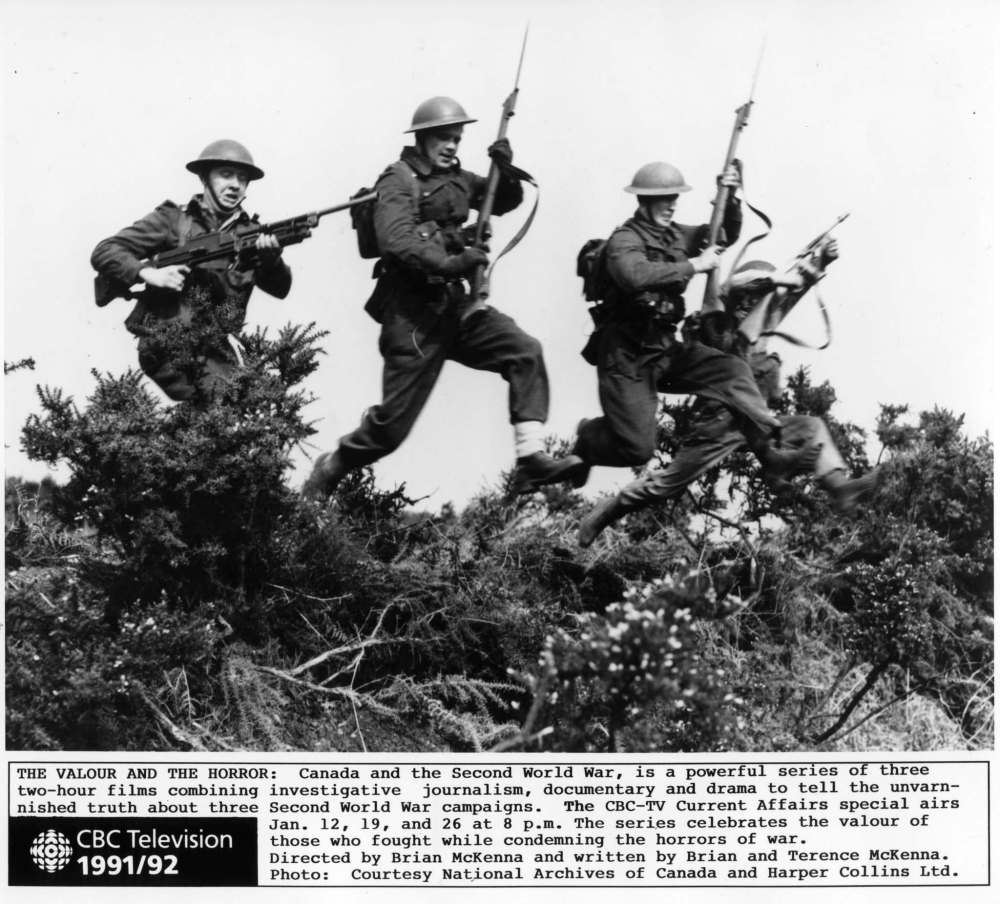
It’s this kind of journalistic hubris that led to the 1992 uproar surrounding former CBC producer Brian McKenna’s three-episode Second World War television documentary The Valour and the Horror.
The program used a mix of documentary techniques (interviews, archival film, photographs) and drama (actors portraying military figures) to depict Canadian soldiers’ defence of Hong Kong and subsequent imprisonment in Japanese forced-labour camps, Allied air bombing over Germany and the D-Day invasion of Normandy.
MacDonald gives the documentary a detailed and balanced critique.
But bottom line, even if she doesn’t come right out and say it: The Valour and the Horror, especially the second episode, Death by Moonlight: Bomber Command, maximized controversy and suppressed counter-argument. Not to mention, it discarded or manipulated historical fact wherever and whenever it impaired McKenna’s zest for narrative drama.
When faced with subsequent investigations by both the CBC ombudsman and a Senate subcommittee, McKenna clumsily fuelled the public, political and academic backlash.
“The historians screwed up in telling us about the war,” he said. “If you fail to tell the whole story, then you’re lying.”
MacDonald renders a mixed verdict on just how well CBC TV has captured our past.
And oddly, the history professor never ventures an opinion on how good television is as a medium for exploring her discipline.
Sure, it’s a great way to hook people on history.
But is it — no matter how much money and resources the people’s network throws at it — ever going to be able to match the history told in books? Or is the message is ever doomed to get lost in the medium?
Regardless, she has deftly outlined the major trends and players in our public broadcaster’s treatment of Canadian history.
Her treatment suggests CBC Television has, with some success, not only tried to portray a distinctively Canadian identity, but also define a Canadian sensibility.
Douglas J. Johnston is a Winnipeg lawyer and writer.