Shelf awareness
Value invested in books a reflection on ourselves
Advertisement
Read this article for free:
or
Already have an account? Log in here »
To continue reading, please subscribe:
Digital Subscription
One year of digital access for only $1.44 a week*
- Enjoy unlimited reading on winnipegfreepress.com
- Read the E-Edition, our digital replica newspaper
- Access News Break, our award-winning app
- Play interactive puzzles
*Billed as $5.77 plus GST every four weeks. After 52 weeks, price increases to the regular rate of $19.95 plus GST every four weeks. Offer available to new and qualified returning subscribers only. Cancel any time.
To continue reading, please subscribe:
Add Free Press access to your Brandon Sun subscription for only an additional
$1 for the first 4 weeks*
- Enjoy unlimited reading on winnipegfreepress.com
- Read the E-Edition, our digital replica newspaper
- Access News Break, our award-winning app
- Play interactive puzzles
*Your next Brandon Sun subscription payment will increase by $1.00 and you will be charged $17.95 plus GST for four weeks. After four weeks, your payment will increase to $24.95 plus GST every four weeks.
Read unlimited articles for free today:
or
Already have an account? Log in here »
Hey there, time traveller!
This article was published 24/08/2019 (2616 days ago), so information in it may no longer be current.
By now, it’s a familiar social-media meme: photos featuring rows of people in public places bent over their devices and ignoring one another, juxtaposed with black-and-white images from the past century of people on street corners or in buses, similarly secluded behind their newspapers.
This is essentially the major argument in Leah Price’s new book, What We Talk About When We Talk About Books: that we’ve always read this way. A highly “meta” work, it’s not so much a book about books, but rather what other people say about books, often in their own books.
A longtime Harvard University English professor and book historian, Price is the author of several previous titles, including 2017’s How to Do Things with Books in Victorian Britain, and founder of Rutgers University’s Initiative for the Book.

With What We Talk About…, Price offers an absorbing and fascinating exploration of our relationship with print from Gutenberg to the digital age, discovering in the process that — surprisingly — these eras share more commonalities than differences.
As a book historian, Price is not so much interested in the literary content of books as she is in their lives as material objects, and how people and societies have interacted with them.
More importantly, she contrasts these uses with the myths we tell ourselves about our own reading so that we may better understand contemporary debates over the future of the book.
With screens seemingly everywhere, Price notes there has arisen something of a moral panic about them: fears that our attention spans have shrunk and that we can no longer focus on long-form reading. She seeks to allay these fears, starting with the recognition that the book is itself a form of technology.
In examining the evidence left behind in libraries and other print collections over the centuries, she discerns from wear and other traces that we have always been prone to skim, to read selectively, to return only to particular passages or even to disassemble and recombine paper texts to suit our own tastes and interests.
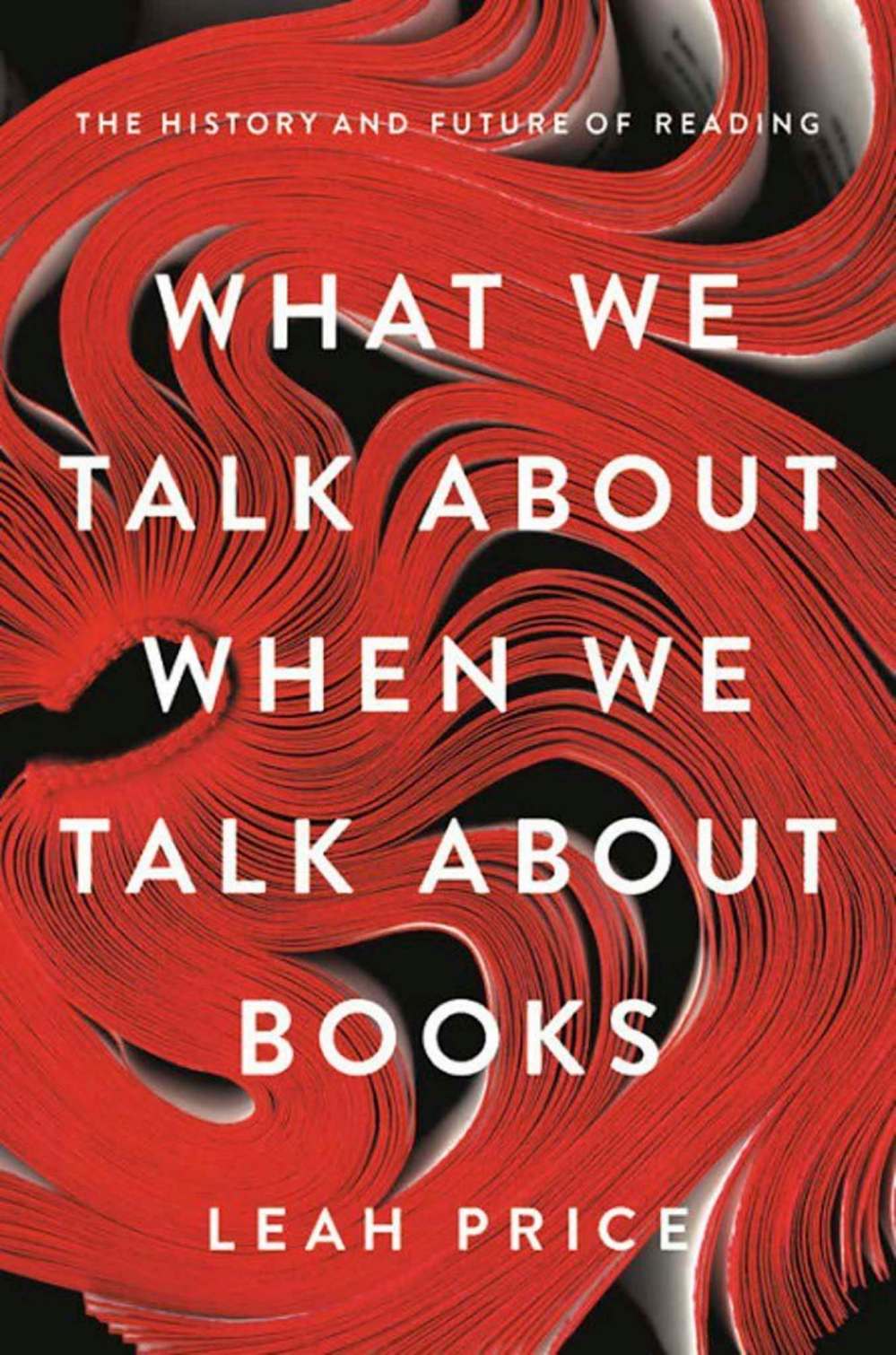
While we may imagine a golden age of the novel, in which our ancestors were absorbed for hours at a time in their salons with Jane Austen or Victor Hugo, Price instead points out that the publishing industry had instead long been dominated by demand for short-form, ephemeral products like pamphlets and broadsides — essentially the equivalent of blog posts.
Even as we may feel guilty about not reading more novels, Price finds that in previous centuries, novels were a source of moral panic. Doctors, clergy, teachers and even librarians warned of the many harms — from addiction to insomnia to insanity — that could ensue from reading too much fiction.
In our own era of bibliotherapy, our attitude towards reading has entirely shifted: reading is now hailed as curative, with the power to heal our minds, bodies and social relationships.
It is this view of books as means to other ends that Price finds both fascinating and troubling: she worries, for example, that reading one of the many books out there about how reading great literature can change your life is not the same thing as actually reading great literature.
Similarly, the push by “biblioactivists” to build community by distributing books fails to account for the fact that people love books for many different reasons, some of which may or may not include loving other people — or their books.

What Price reveals is that, when we talk about books, because we’ve always invested them with such complex personal and social meanings — all our values, fears, ideals and aspirations — what we’re really doing is talking about ourselves.
Michael Dudley is a librarian at the University of Winnipeg.