Adoption experience frays fraught family bonds

Advertisement

Advertise with us

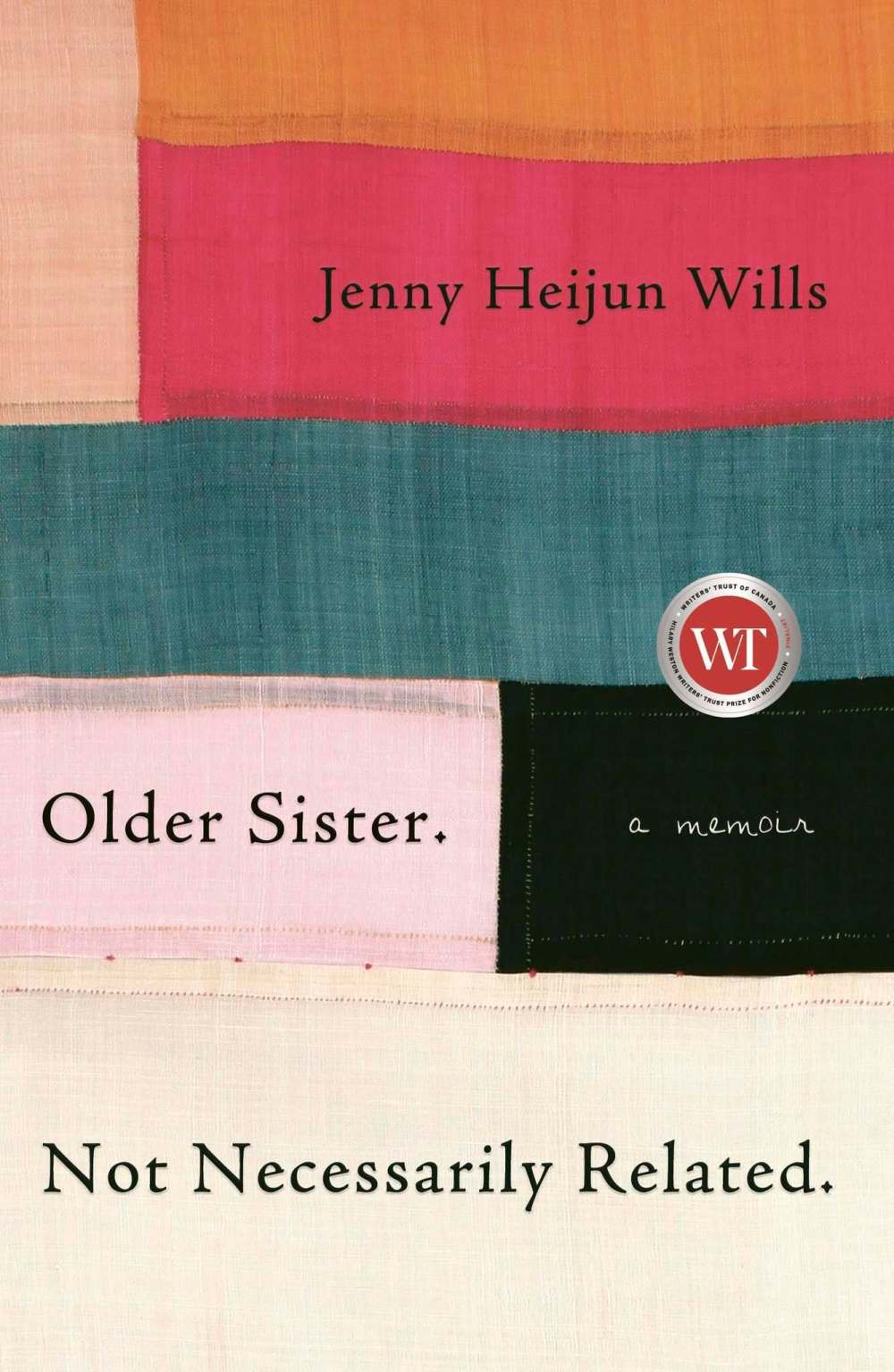
Artfully presented as a series of loosely chronological vignettes, Jenny Heijun Wills’ memoir Older Sister. Not Necessarily Related. chronicles her story as a transnational adoptee. Wills was born in Korea and adopted into a white Canadian family when she was six months old (she currently teaches at the University of Winnipeg), and Older Sister reveals the intricacies of her return to Korea to reconnect with her first family and piece together her personal history. The book was shortlisted for the Hilary Weston Writers’ Trust Prize for non-fiction, which will be awarded Nov. 5.

Read this article for free:


or

Already have an account? Log in here »

To continue reading, please subscribe:

Subscribe and receive a limited-edition Free Press branded hat or tote.

Digital Subscription

One year of digital access for only $205*

  • Enjoy unlimited reading on winnipegfreepress.com
  • Read the E-Edition, our digital replica newspaper
  • Access News Break, our award-winning app
  • Play interactive puzzles

*First annual payment billed as $205.00 + GST for one year. This annual subscription will automatically renew at $233.00 + GST every 52 weeks (10% off the regular annual price of $259.35). Offer available to new and qualified returning subscribers only. Cancel any time.

To continue reading, please subscribe:

Add Free Press access to your Brandon Sun subscription for only an additional

$1 for the first 4 weeks*

  • Enjoy unlimited reading on winnipegfreepress.com
  • Read the E-Edition, our digital replica newspaper
  • Access News Break, our award-winning app
  • Play interactive puzzles
Start now

*Your next Brandon Sun subscription payment will increase by $1.00 and you will be charged $17.95 plus GST for four weeks. After four weeks, your payment will increase to $24.95 plus GST every four weeks.

Hey there, time traveller!
This article was published 26/10/2019 (2535 days ago), so information in it may no longer be current.

Artfully presented as a series of loosely chronological vignettes, Jenny Heijun Wills’ memoir Older Sister. Not Necessarily Related. chronicles her story as a transnational adoptee. Wills was born in Korea and adopted into a white Canadian family when she was six months old (she currently teaches at the University of Winnipeg), and Older Sister reveals the intricacies of her return to Korea to reconnect with her first family and piece together her personal history. The book was shortlisted for the Hilary Weston Writers’ Trust Prize for non-fiction, which will be awarded Nov. 5.

“What is a life when all the stories come out of order and many… are hidden still?” she asks, pointing to both her own story and the form through which she tells it. Though all memoir writing is necessarily incomplete, Wills’s negotiations with selfhood hinge on not only her separation from her Korean family, but on the uncertainty of reassembling, in words, something she cannot name. She shoulders the weight of her expectations, and how her absence feeds her fear of erasure as a daughter, a sister and a Korean woman.

Even prior to the reunion, Wills navigates tangible bonds rooted in loss, narrating her intense experiences living in a guesthouse with others looking for their own family members where, she notes, “adoptee loss was concentrated.” Here kinship, support, rage, grief and violence all converge, as the guests face the precariousness of searching for relatives they might never find. Though the stakes are already devastatingly high here, they are even further compounded by larger issues surrounding culture, race, ethnicity, gender and class.
An entire page is devoted to the following four lines: “My question is, why? But I know there is no answer. At least not to me. Colonialism. White saviourhood. Orientalism. Impatience. Far-away birth mothers. No take-backs. Which is it?” Naming the many structures around which this narrative revolves is a deliberate, bold move on Wills’s part, but to simply call her story brave means acknowledging the many uncomfortable truths of which she speaks. “Do you know how much people are still willing to pay?” she asks, ever aware of the ways in which the transactional nature of her adoption does not account for her humanity, or that of her Ummah (mother).

Wills also uncovers how for her, the Korean language is yet another transactional barrier, as she sees it “blossom so effortlessly in the hands of non-Koreans” while she struggles to learn it, instead experiencing yet another type of distance between herself and her family. Notably, the devastating story of Wills’s birth as told, unprompted, by her Ummah, comes through a translator. Later, she mentions how she and her sister Bora “developed an intimacy without the burden of words,” often bonding over restaurant meals and homemade dinners.

The author’s relationship with food, though complicated in its own way, also provides solace and affirmation. Quiet passages about Korean food in particular resonate with the same visceral immediacy as more emotionally fraught moments. The act of passing food culture down through generations also eludes language — as Wills remarks, “there were no words to describe the way Ummah held a leaf of cabbage in her left hand, bisecting it down its spine mid-air with a cleaver.” She later notes, when cooking Korean food for friends, “the habitual food that (her) hands now knew without thinking was the food (she’d) learned to eat and cook and love as a grown woman. And that felt very real.”

By reconnecting with her Korean family as a grown woman, Wills also experiences new and habitual ways in which “performing gratitude and happiness, and hiding sorrow, also hurts.” Though these feelings are common within most family dynamics, they are also amplified when the author’s reappearance obliges her Korean family (and her biological father in particular) to renegotiate their respective identities as well.

While reflecting on that which families, in various incarnations, might owe to each other, Older Sister. Not Necessarily Related forges and mourns familial bonds in necessarily relatable and devastatingly exceptional ways.

Winnipeg’s Nyala Ali writes about race and gender in contemporary narratives.
Report Error Submit a Tip

More Stories

Puzzles Palace

1 minute read Monday, Jul. 27, 2026

To solve our puzzles, please subscribe with this special offer: |

Brandonmeat packer thriving on its own

Abiola Odutola 3 minute read Preview

Brandonmeat packer thriving on its own

Abiola Odutola 3 minute read Yesterday at 2:01 AM CDT

BRANDON — Canada Packers has strengthened its business and laid the foundation for future growth during its first year as an independent company, its president says.

The Brandon-based pork producer, separated from Maple Leaf Foods in October 2025, established its own leadership, strategy, systems, culture and identity while continuing operations across its hog production farms and regional hog barns in southern and eastern Manitoba.

The company’s first year was focused on building a successful standalone business while continuing to serve customers, communities and shareholders, president Dennis Organ said.

“Market conditions over the past year have been more challenging than we anticipated when we became a separate entity,” he said in an email. “Despite that, we continued to execute against our priorities, including increasing processing volumes, maintaining disciplined operations and strengthening the business.”

Read
Yesterday at 2:01 AM CDT

Moving drama at MTYP gives voice to boy who changed law

Holly Harris 4 minute read Preview

Moving drama at MTYP gives voice to boy who changed law

Holly Harris 4 minute read Yesterday at 2:37 PM CDT

The heroic true tale of Norway House Cree Nation-born Jordan River Anderson came home Friday night, as Manitoba Theatre for Young People presented Yvette Nolan’s Jordan.

The touring production, a collaboration with Geordie Theatre, runs weekends through Oct. 11, with additional stops in Toronto, Vancouver and Ottawa’s National Arts Centre.

Having several of Anderson’s family members witness the local première underscored the evening with poignancy. Elder and Pine Creek First Nation member Barbara Nepinak added her own dignified presence and prayers following MTYP artistic director Pablo Felices-Luna’s welcoming remarks.

The season-opener also marks the Winnipeg-raised playwright’s homecoming; the Algonquin playwright, director, dramaturg, actor and educator was a fixture in our local theatre community for many years before going on to serve as artistic director for Native Earth Performing Arts from 2003 to ‘11, among other contributions.

Read
Yesterday at 2:37 PM CDT

Gordon Bell rings in a century

Maggie Macintosh 13 minute read Preview

Gordon Bell rings in a century

Maggie Macintosh 13 minute read Friday, Oct. 2, 2026

Mischka Valencia had gotten used to the hum of heavy machinery at Gordon Bell High School.

“Ever since I’ve been here, it’s all been under construction,” the Grade 12 student said, standing on the sidelines of the brightly painted revamped outdoor basketball court. “I had no idea this was a court.”

The Filipina teenager landed in Winnipeg several months after the inner-city campus had transformed into a construction site.

It was the fall of 2023 and Mischka’s priorities were fitting in, befriending classmates and learning a third language via first-period French.

Read
Friday, Oct. 2, 2026

Province looks to seize notorious drug den

Erik Pindera 5 minute read Preview

Province looks to seize notorious drug den

Erik Pindera 5 minute read Yesterday at 12:00 PM CDT

Provincial justice officials are trying to seize a Dominion Street drug den that has been the source of trouble in the West End for years.

The owner of 982 Dominion St., 45-year-old Robert Edward Johnson, was most recently arrested in June along with several others after a lengthy Winnipeg Police investigation into thefts and illicit drug sales connected to the house.

“The residence has a reputation within the neighbourhood as being a location where individuals habitually attend for the purpose of purchasing and/or consuming controlled substances,” reads a statement of claim filed by the province’s director of civil forfeiture in the Court of King’s Bench last week.

“For several years, the residence has been associated with criminal activity, violence, and disorder, resulting in numerous police attendances and complaints from members of the surrounding community.”

Read
Yesterday at 12:00 PM CDT

Mayoral candidate Vogiatzakis criticized for living outside Winnipeg

Malak Abas 4 minute read Preview

Mayoral candidate Vogiatzakis criticized for living outside Winnipeg

Malak Abas 4 minute read Friday, Oct. 2, 2026

A mayoral hopeful took heat from other candidates Friday for living outside Winnipeg while running in the civic election.

Mike Vogiatzakis’s primary residence is in the Rural Municipality of St. Andrews, about 25 kilometres north of Winnipeg — a community with its own mayor and councillors.

But the funeral director said he owns a home in Winnipeg where he divides his time, and he would move to the city full-time if elected mayor.

“It doesn’t matter where a person lives. Why are we dividing St. Andrews and Manitoba and Winnipeg? I’ve met the criteria to run for mayor,” Vogiatzakis said Friday morning.

Read
Friday, Oct. 2, 2026