Holocaust survivor adopts activism

Advertisement

Advertise with us

Suzanne Berliner Weiss has dedicated her life to improving the welfare of others. It is an honourable and admirable pursuit — especially considering the tragedy and trauma that characterized Weiss’s early life.

Read this article for free:


or

Already have an account? Log in here »

To continue reading, please subscribe:

Subscribe and receive a limited-edition Free Press branded hat or tote.

Digital Subscription

One year of digital access for only $205*

  • Enjoy unlimited reading on winnipegfreepress.com
  • Read the E-Edition, our digital replica newspaper
  • Access News Break, our award-winning app
  • Play interactive puzzles

*First annual payment billed as $205.00 + GST for one year. This annual subscription will automatically renew at $233.00 + GST every 52 weeks (10% off the regular annual price of $259.35). Offer available to new and qualified returning subscribers only. Cancel any time.

To continue reading, please subscribe:

Add Free Press access to your Brandon Sun subscription for only an additional

$1 for the first 4 weeks*

  • Enjoy unlimited reading on winnipegfreepress.com
  • Read the E-Edition, our digital replica newspaper
  • Access News Break, our award-winning app
  • Play interactive puzzles
Start now

*Your next Brandon Sun subscription payment will increase by $1.00 and you will be charged $17.95 plus GST for four weeks. After four weeks, your payment will increase to $24.95 plus GST every four weeks.

Hey there, time traveller!
This article was published 26/10/2019 (2496 days ago), so information in it may no longer be current.

Suzanne Berliner Weiss has dedicated her life to improving the welfare of others. It is an honourable and admirable pursuit — especially considering the tragedy and trauma that characterized Weiss’s early life.

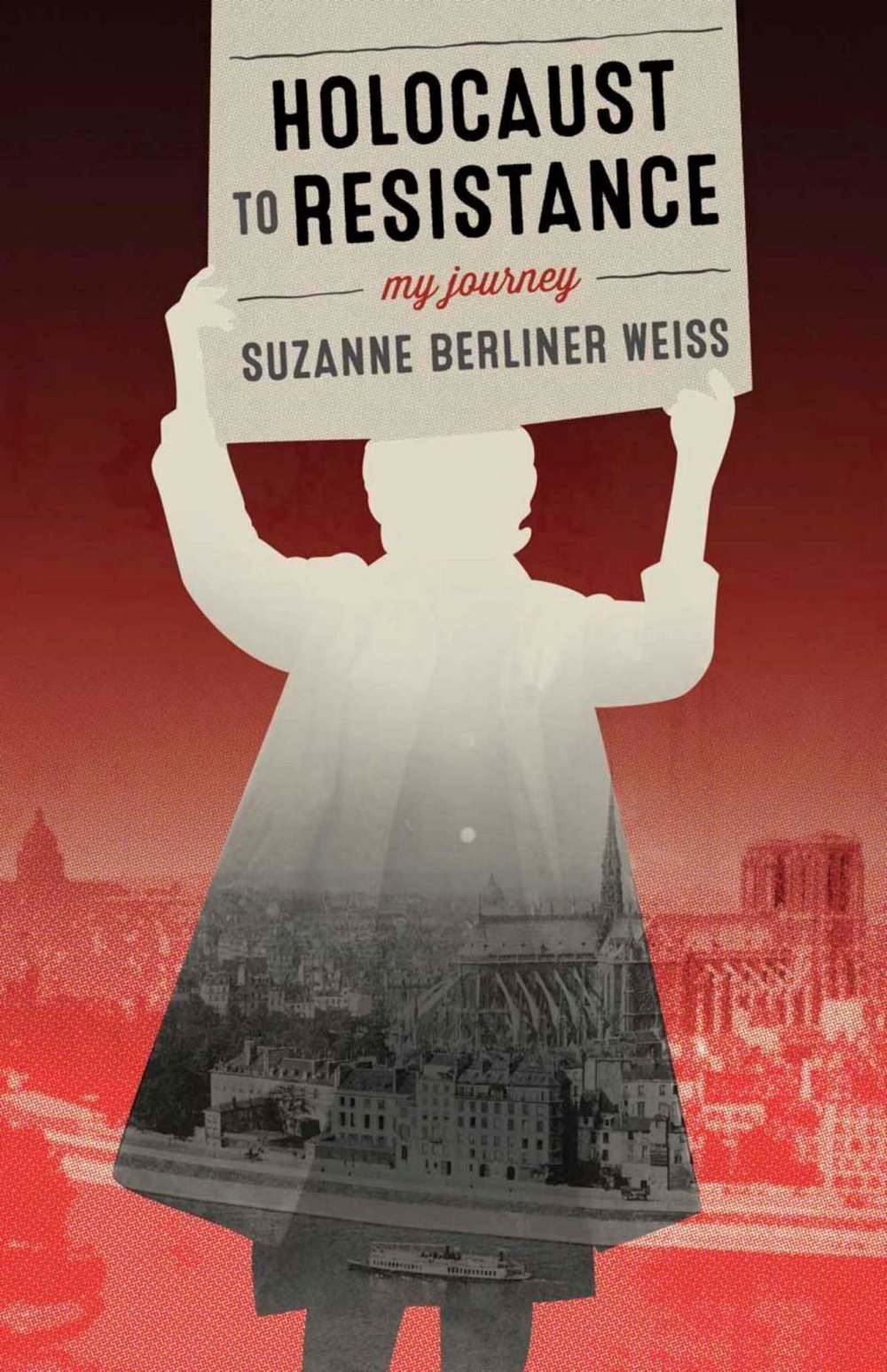
Weiss, who was born in France, spent years in the United States and now lives in Toronto, chronicles that past in her moving and motivating memoir Holocaust to Resistance: My Journey. Written with clarity and honesty, and few embellishments, the memoir explores Weiss’s life as a hidden child during the Holocaust, as a child adopted by an American couple after the Holocaust and as a socialist and activist throughout her adult life.

Weiss’s biological parents were progressive Polish and Ukrainian Jews living in France when Germany occupied the country. Determined to keep their young daughter alive, they arranged for her to be hidden with a rural Christian family. At war’s end, Weiss’s father came to fetch her but, mortally wounded, he left her in the care of a friend who later sent her to an orphanage. Weiss’s mother never appeared; she had been murdered in Auschwitz.
After living in a series of orphanages with other refugee children, Weiss was finally adopted by a well-meaning American Jewish couple and brought to the U.S. But that experience, too, was fraught with instability, insecurity and “obsessive unresolved disagreements” between Weiss and her adoptive parents. By the time she was a teenager, Weiss was determined to distance herself from her new family.

But she didn’t remain alone. Instead, Weiss settled into the arms of a different kind of family, finding the love, support and sense of belonging she had always craved in the people and politics of the Socialist Workers Party.

Immersed in the day-to-day workings of the party, Weiss travelled to Cuba on the eve of revolution, demonstrated against the war in Vietnam, rallied against nuclear arms proliferation and U.S. intervention in Nicaragua and fought for women’s rights, workers’ rights and black power.

“Freedom, equality, brotherhood, the right to democratically choose your future,” she writes. “Those were my hopes for the world.”

Weiss’s description of her early life is engaging and moving, but her examination of her involvement in these larger issues, and of the issues themselves, make this tell-all unique. While some may disagree with her politics, you can’t deny the basic sense of goodness that influenced them.

Weiss emphasizes that her early life was plagued by abandonment, fear and loneliness, yet she was able to marshal her personal losses — of freedom, family and the promise of her future — in the struggle for self-determination, equality and dignity for disenfranchised people worldwide.

Later in life, Weiss moved to Canada and undertook efforts to find out more about her birth parents, their own sense of righteousness and how their fate affected their daughter’s future.

She also renewed her commitment to activism. Today, in her late 70s, she continues to speak up and stand up for Indigenous land claims and the rights of the elderly, and against pipelines and climate change deniers.

Her Jewish history, as troubled as it was, demands she does so. There is no other way.

Sharon Chisvin is a Winnipeg writer.
Report Error Submit a Tip

More Stories

Polar bear killed by paddler near Hudson Bay coast

1 minute read Yesterday at 10:32 AM CDT

Manitoba wildlife officials are investigating after a polar bear was shot and killed near the mouth of the Seal River on Friday by a paddler, the province said. 

The incident occurred along the Hudson Bay coast roughly 50 kilometres west of Churchill.

Polar bears are designated as a threatened species in Manitoba and are protected under provincial legislation. The province does not allow a polar bear hunt.

Few details about the shooting have been released. Officials have not publicly identified the paddler involved or provided information about the circumstances leading up to the encounter.

The rural/urban immigration difference

Patrick MacKenzie and Enver Naidoo 5 minute read 2:00 AM CDT

Conversations about immigration often pretend that managing the numbers and where they go is as simple as turning a dial up or down. Like most things, the truth is more nuanced.

The Immigrant Employment Councils of Canada network’s 18-month engagement with over 1,100 employers, community and settlement service stakeholders made this apparent in many ways but, perhaps an underappreciated facet is the contrast between urban and rural immigration, and what challenges both immigrants and employers face in each context.

Rural and urban labour markets differ in structure, services and constraints, and a one-size solution will underdeliver everywhere.

This is why we have government programs such as the Rural Community Immigration Pilot, currently active in 14 areas across the country, as well as the provincial nominee program and provincial rural immigration pilots such as Manitoba’s West-Central Immigration Initiative.

Cryopreservation — now that’s playing the long game

Pam Frampton 5 minute read Preview

Cryopreservation — now that’s playing the long game

Pam Frampton 5 minute read 2:00 AM CDT

They say you can’t cheat death, but what if you could?

What if the promise of some future scientific breakthrough offered the possibility that you could be revived many years after your demise? Would you be willing to pay your money and take your chances?

This is the premise behind Tomorrow.bio, the Berlin-based cryopreservation company that keeps sending me intriguing emails about lifespan extension, biostasis and dewars — the latter being the liquid nitrogen tanks where long-term “patients” are stored.

Maybe Tomorrow.bio found out about the pair of columns I wrote about death for the Free Press in April 2025, in which I confessed my profound fear of the end that comes to us all.

Read
2:00 AM CDT

‘Buy Canadian’ takes on new meaning

Gabrielle Piché 6 minute read Preview

‘Buy Canadian’ takes on new meaning

Gabrielle Piché 6 minute read Yesterday at 6:30 PM CDT

The “Buy Canadian” push has re-emerged as the federal government rolls out tariffs on $27.6 billion worth of imports from the United States.

Premier Wab Kinew led the Manitoba charge Tuesday, hours after the federal government announced the retaliatory levies that will take effect Sept. 8.

“Whether you look at it as an affordability initiative, or you look at it as a way to support our economy here, buying local always makes sense,” Kinew said at an unrelated press conference. “It makes even more sense right now.”

Mark Carney’s government has responded to new 50 per cent tariffs imposed by the United States on $27.6 billion worth of Canadian products. Trade talks between the countries broke down late Friday.

Read
Yesterday at 6:30 PM CDT

Blue Bombers volunteer seriously injured in collision with e-scooter

Malak Abas and Zoe Pierce 7 minute read Preview

Blue Bombers volunteer seriously injured in collision with e-scooter

Malak Abas and Zoe Pierce 7 minute read Monday, Aug. 24, 2026

A longtime Winnipeg Blue Bombers volunteer was rushed to hospital and now faces months of recovery after being hit by an e-scooter while directing football fans after a home game last month.

Read
Monday, Aug. 24, 2026

Bombers give would-be boo birds their marching orders

Taylor Allen 3 minute read Preview

Bombers give would-be boo birds their marching orders

Taylor Allen 3 minute read Yesterday at 7:08 PM CDT

The Winnipeg Blue Bombers are being criticized by some fans online for booking the University of North Dakota’s marching band for Friday’s game against Montreal.

With the current state of Canada-U.S. relations, and Friday being designated as Canadian Armed Forces Appreciation Night, many view the club’s decision to invite a band from a pro-Trump state as a puzzling one.

“I’m a very proud Canadian,” said Bombers head coach Mike O’Shea after Tuesday’s practice.

“But I don’t think politics enter into this entertainment realm when you’re dealing with university kids that are coming up here to put on a show.”

Read
Yesterday at 7:08 PM CDT