Time-travelling foes make for fantastic fun

Advertisement
Read this article for free:
or
Already have an account? Log in here »
To continue reading, please subscribe:

Digital Subscription
One year of digital access for only $205*
- Enjoy unlimited reading on winnipegfreepress.com
- Read the E-Edition, our digital replica newspaper
- Access News Break, our award-winning app
- Play interactive puzzles
*First annual payment billed as $205.00 + GST for one year. This annual subscription will automatically renew at $233.00 + GST every 52 weeks (10% off the regular annual price of $259.35). Offer available to new and qualified returning subscribers only. Cancel any time.
To continue reading, please subscribe:
Add Free Press access to your Brandon Sun subscription for only an additional
$1 for the first 4 weeks*
- Enjoy unlimited reading on winnipegfreepress.com
- Read the E-Edition, our digital replica newspaper
- Access News Break, our award-winning app
- Play interactive puzzles
*Your next Brandon Sun subscription payment will increase by $1.00 and you will be charged $17.95 plus GST for four weeks. After four weeks, your payment will increase to $24.95 plus GST every four weeks.
Read unlimited articles for free today:
or
Already have an account? Log in here »
Hey there, time traveller!
This article was published 05/11/2019 (2537 days ago), so information in it may no longer be current.
History is written by the victors — and if you can meddle with history itself, that could literally be true.
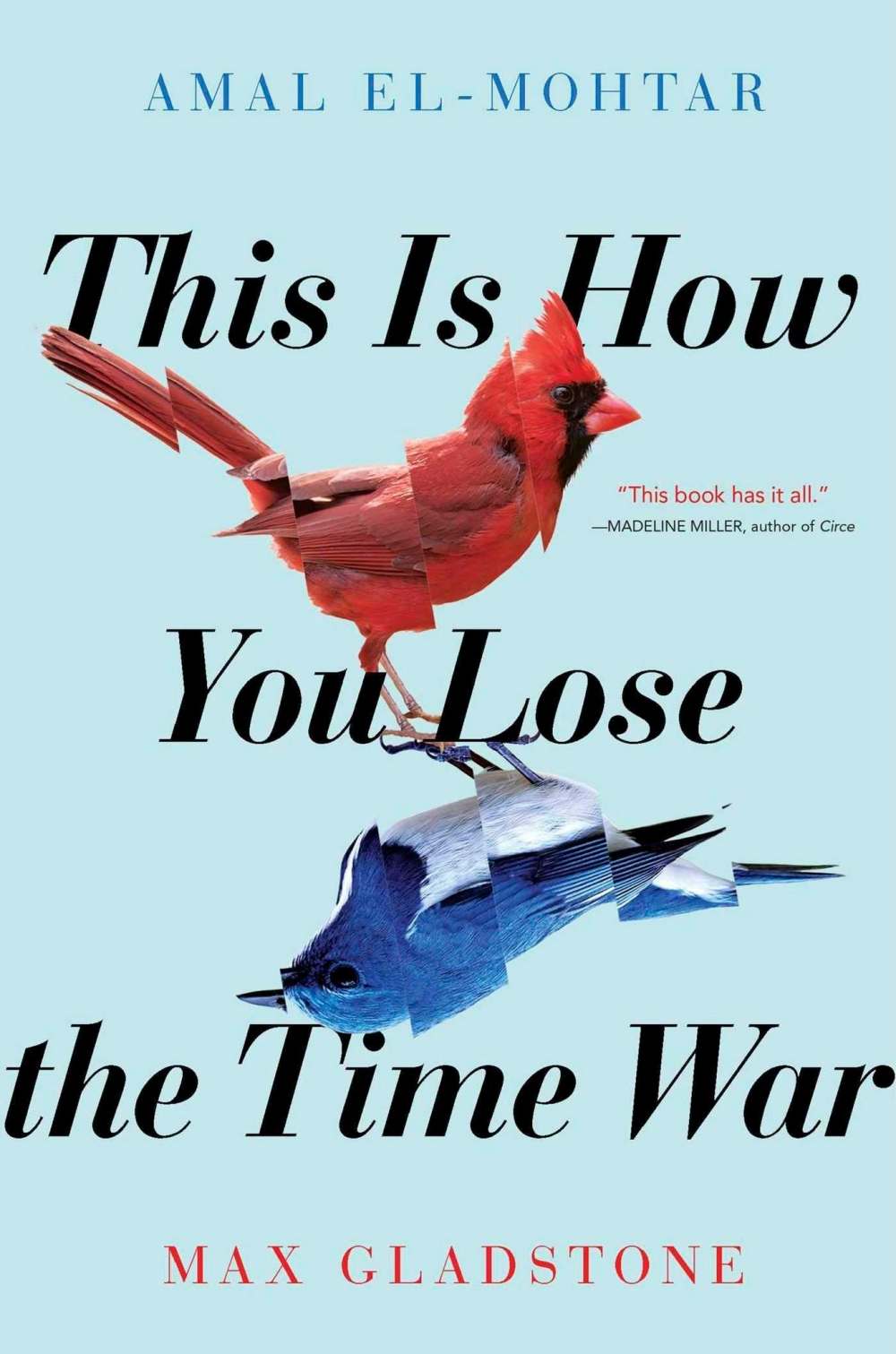
Ottawa author Amal El-Mohtar and U.S. author Max Gladstone take time travel in a beautiful, inventive direction, as two timeline-hopping adversaries strike up a correspondence and get to know each other from afar — even as they each try to destroy each other’s futures.
El-Mohtar is a speculative short-fiction writer whose Seasons of Glass and Iron won Hugo, Nebula and Locus awards. She’s also known for her poetry, including her collection The Honey Month.
Gladstone’s fantasy series The Craft Sequence has been nominated for the Hugo Award. He’s an acclaimed short-story writer as well, having been published in Uncanny magazine and at Tor.com.
Together, they have braided the twin stories of Blue, who manipulates timelines to plant probabilities for the ecological entity Garden, and Red, who does the dirty history-altering work of the Agency. Each hopes to nudge the right events, unnoticed by the other side. As Red muses, “A fugitive becomes a queen or a scientist or, worse, a poet. Or her child does, or a smuggler she trades jackets with in some distant spaceport.”
The authors’ presentation of this “time war” is no simple loop of rehashing the same event, but of greedy campaigns across multiple timelines to win over more to one side or the other. Real events such as the campaigns of Genghis Khan figure just as importantly as all the different incarnations of Atlantis and its ever more fanciful endings.
The problem for elites such as Blue and Red, as they taunt and sabotage each other, is that they realize the other is the only one in the wide universe who really understands them. Their secretive correspondence, designed to manifest just as Red or Blue realizes their efforts in a given pivotal event have been completely undermined by the other (delivered via the rings of a felled tree, or the bubbles of boiling water in a microwave), takes on an ever more intimate tone as they reveal more about themselves.
El-Mohtar and Gladstone revel in their epoch-spanning tale, as well as the correspondence framing (which may remind readers of El-Mohtar’s short story Pockets).

At one point, Red tries to improve her form by emulating the etiquette of 19th-century letter writers, who embedded meaning within both the text and subtext of their mannered missives. For a couple of operatives trading more and more privileged information without their superiors being aware, it’s not merely a matter of style, but of survival.
And it’s glorious fun to read, with poetic imagery and fragments of pop-culture asides. Blue trumpets a victory with a quote from Percy Bysshe Shelley’s Ozymandias, which becomes a running joke between the two rivals. When Red undoes one of Blue’s painstaking manipulations of history, she cracks, “Our glorious crystal future shines so bright, I gotta wear shades, as the prophets say.”
(Apparently the prophets also say, “Ontario sucks,” according to Blue, which suggests Canadian comedy troupe Three Dead Trolls in a Baggie has quite a legacy downthread, er, in the future.)
For a weighty epic, it’s a short book, and despite the many apocalypses engineered or attempted, it’s a delight to read. In all the possible timelines and futures out there, readers are lucky to live in the one where this novel exists.
David Jón Fuller is a Free Press copy editor who has probably watched Back to the Future and The Terminator and read The Time Machine too many times. Or has he?
Our newsroom depends on a growing audience of readers to power our journalism. If you are not a paid reader, please consider becoming a subscriber.
Our newsroom depends on its audience of readers to power our journalism. Thank you for your support.
Book review
This is How You Lose the Time War
- By Amal El-Mohtar and Max Gladstone
- Saga Press, 208 pages, $27
Our newsroom depends on a growing audience of readers to power our journalism. If you are not a paid reader, please consider becoming a subscriber.
Our newsroom depends on its audience of readers to power our journalism. Thank you for your support.
Advertisement Advertise With Us
Advertisement Advertise With Us