History of global empires explored

Advertisement

Advertise with us

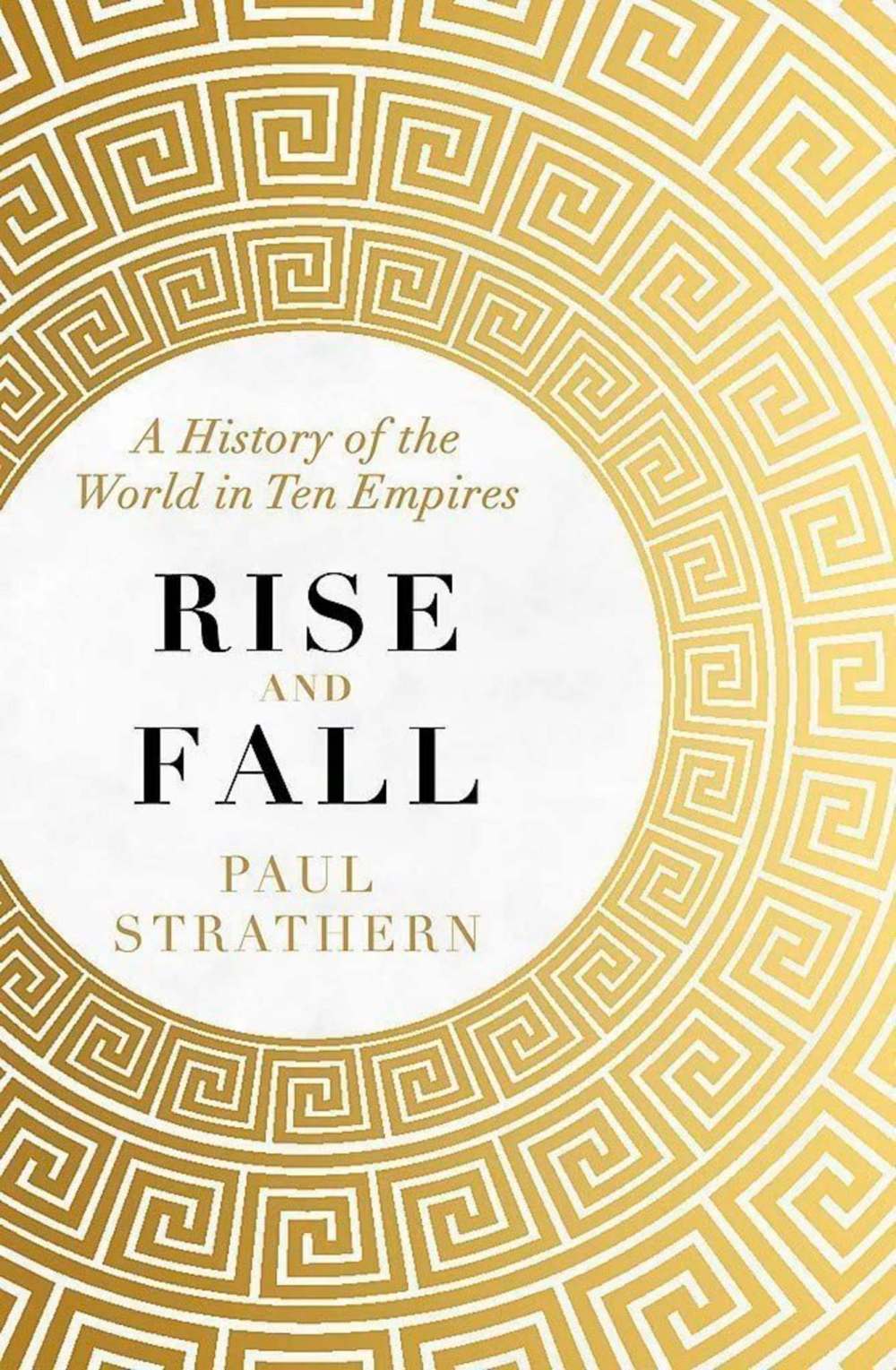
From thousands of years BC to the present, world history has been shaped by empires. British academic and author Paul Strathern depicts 10 such empires in a mixed bag of a book that contains some insights, along with factual errors.

Read this article for free:


or

Already have an account? Log in here »

To continue reading, please subscribe:

Subscribe and receive a limited-edition Free Press branded hat or tote.

Digital Subscription

One year of digital access for only $205*

  • Enjoy unlimited reading on winnipegfreepress.com
  • Read the E-Edition, our digital replica newspaper
  • Access News Break, our award-winning app
  • Play interactive puzzles

*First annual payment billed as $205.00 + GST for one year. This annual subscription will automatically renew at $233.00 + GST every 52 weeks (10% off the regular annual price of $259.35). Offer available to new and qualified returning subscribers only. Cancel any time.

To continue reading, please subscribe:

Add Free Press access to your Brandon Sun subscription for only an additional

$1 for the first 4 weeks*

  • Enjoy unlimited reading on winnipegfreepress.com
  • Read the E-Edition, our digital replica newspaper
  • Access News Break, our award-winning app
  • Play interactive puzzles
Start now

*Your next Brandon Sun subscription payment will increase by $1.00 and you will be charged $17.95 plus GST for four weeks. After four weeks, your payment will increase to $24.95 plus GST every four weeks.

Hey there, time traveller!
This article was published 18/01/2020 (2419 days ago), so information in it may no longer be current.

From thousands of years BC to the present, world history has been shaped by empires. British academic and author Paul Strathern depicts 10 such empires in a mixed bag of a book that contains some insights, along with factual errors.

Strathern’s narrative ranges widely over time and space, extending back to the Akkadian Empire of ancient history. He then considers the Roman Empire as well as empires in the Middle East, Asia and South America, before bringing his account up to more recent times with a look at British, Russian and American imperialism.

It is difficult to discern what the purpose of this book is, aside from displaying the author’s historical erudition. But Strathern does occasionally identify some themes in the history of empires.
Before the end of the 15th century, he writes, empire-building was motivated by the urge to conquer — a ruler’s desire to expand his sway over ever greater accumulations of territory.

The Ottoman Empire, Strathern says, was probably the last of these old-style empires.

By the end of the 15th century, trade and commerce displaced conquest as the primary motive of empire. The British Empire, for example, reflected and was shaped by this new incentive.

Strathern notes that empires that do not attempt to control every aspect of their subject peoples’ lives tend to be more stable and long-lasting.

He makes an interesting point about religion and science in the Abbassid Caliphate of the ninth century, showing how they were interrelated: “although religion and science were separate, they actually supported one another. Science was a religious quest, inspired by religious belief.”

And Strathern insightfully underscores the difference in intellectual life between the West and the Soviet bloc during the Cold War. While intellectuals in the Soviet empire tended to oppose communism, many Western intellectuals were more or less sympathetic to the ideology. This is one of the great paradoxes of 20th century intellectual history.

Unfortunately, this book is marred by factual errors. Strathern refers to “Thomas Dewey” when he means John Dewey, and “Robert Malthus” when he means Thomas Malthus.

He says the U.S. invaded Mexico in 1836; in fact the Mexican War began 10 years later.

He misrepresents the incident at Amritsar in India in 1919, in which British soldiers under Gen. Reginald Dyer fired on a mob. Strathern describes the mob as a “religious gathering of Sikhs.” In fact, the Sikhs made Dyer an honorary Sikh for his actions, which protected the national shrine of the Sikh religion from the Hindustani mob.

This is a reasonably engaging and competently written book, but it would have been even better if Strathern had devoted more attention to the big picture: themes in the history of the various empires he discusses, and comparing and contrasting their respective experiences.

Graeme Voyer is a Winnipeg writer.

Report Error Submit a Tip

More Stories

Provencher Park eyed for new aquatic centre

Malak Abas 4 minute read Preview

Provencher Park eyed for new aquatic centre

Malak Abas 4 minute read Updated: Yesterday at 6:49 PM CDT

Provencher Park may be the next site for a new aquatic centre.

Read
Updated: Yesterday at 6:49 PM CDT

Klein’s entrance adds spark to ho-hum mayoral race

Tom Brodbeck 5 minute read Preview

Klein’s entrance adds spark to ho-hum mayoral race

Tom Brodbeck 5 minute read Yesterday at 2:46 PM CDT

Until this week, Winnipeg’s mayoral race looked less like a democratic contest and more like a coronation.

Read
Yesterday at 2:46 PM CDT

Reimagining education in Manitoba

Jim Silver 4 minute read 2:00 AM CDT

There has been much talk lately about how Manitoba can strengthen its economy and improve its general well-being. Adding a third component to our education system, one that would be equal in funding and recognition to K-12 and post-secondary education, would do just that.

That third component, adult basic education, already exists, but with inadequate funding and little recognition.

Adult basic education includes adult learning centres that offer mature high school diplomas to those who have not previously completed high school, and adult literacy programs that bring adults up to high school entry level.

Adult basic education works well. Since 2003, some 25,000 Manitobans have earned their mature high school diplomas. Enough graduates move off employment and income assistance, saving the provincial government money, and into full-time employment, increasing the government’s tax revenue, so that over a 10-year period the government makes more than it spends on adult basic education. The system pays for itself.

Renewed spirit and life: Indigenous treatment centre expands with $21-M revamp

Scott Billeck 5 minute read Preview

Renewed spirit and life: Indigenous treatment centre expands with $21-M revamp

Scott Billeck 5 minute read Yesterday at 3:44 PM CDT

Don Robinson knows first-hand that many people don’t get sober by themselves.

In late June 1984, Robinson downed his last drink. His recovery began at Pritchard House in Winnipeg’s North End, a 22-bed treatment facility run by the Native Addictions Council of Manitoba.

“I didn’t get sober by myself,” said Robinson, a member of Bunibonibee Cree Nation who now works in grief and trauma counselling and traditional knowledge as an elder at Ka Ni Kanichihk Inc.

More than four decades later, Robinson was back at the council on Monday, crowded into a room at its newly renovated treatment centre at 160 Salter St. — a place he once turned to for help and where he helps others now.

Read
Yesterday at 3:44 PM CDT

Foreign workers at Manitoba hotel are owed $138K in unpaid wages and fees, labour board rules

Abiola Odutola 4 minute read Preview

Foreign workers at Manitoba hotel are owed $138K in unpaid wages and fees, labour board rules

Abiola Odutola 4 minute read Sunday, Aug. 30, 2026

BRANDON — The Manitoba Labour Board has ordered the Western Star All Suites Hotel to pay nearly $138,000 in unpaid wages and administrative fees after it dismissed the appeals involving three foreign workers employed by the company.

In a decision dated Aug. 25, the board ordered 6692452 Manitoba Ltd. (doing business as Western Star All Suites Hotel), 1638185 Alberta Ltd. and company director P.X. to pay a total of $137,915.79 to the Employment Standards Branch for wages owed to foreign workers S.J., J.B. and G.R.

The decision was edited to protect the personal information of the employees, who worked at a hotel, reportedly in Melita, at different times and also lived there during their employment.

The board stated the employees were owed wages after hearing evidence about long working hours, irregular payments, inadequate employment records and working conditions.

Read
Sunday, Aug. 30, 2026

Social problems cannot be simply swept away

Editorial 4 minute read Preview

Social problems cannot be simply swept away

Editorial 4 minute read 2:00 AM CDT

In the battle to alleviate homelessness, mental health issues and drug addiction, we just can’t seem to get the order of our response right.

Read
2:00 AM CDT