A vindictive verdict
Retired justice argues Riel's trial was rigged from the start
Advertisement
Read this article for free:
or
Already have an account? Log in here »
To continue reading, please subscribe:

Digital Subscription
One year of digital access for only $205*
- Enjoy unlimited reading on winnipegfreepress.com
- Read the E-Edition, our digital replica newspaper
- Access News Break, our award-winning app
- Play interactive puzzles
*First annual payment billed as $205.00 + GST for one year. This annual subscription will automatically renew at $233.00 + GST every 52 weeks (10% off the regular annual price of $259.35). Offer available to new and qualified returning subscribers only. Cancel any time.
To continue reading, please subscribe:
Add Free Press access to your Brandon Sun subscription for only an additional
$1 for the first 4 weeks*
- Enjoy unlimited reading on winnipegfreepress.com
- Read the E-Edition, our digital replica newspaper
- Access News Break, our award-winning app
- Play interactive puzzles
*Your next Brandon Sun subscription payment will increase by $1.00 and you will be charged $17.95 plus GST for four weeks. After four weeks, your payment will increase to $24.95 plus GST every four weeks.
Read unlimited articles for free today:
or
Already have an account? Log in here »
Hey there, time traveller!
This article was published 04/04/2020 (2319 days ago), so information in it may no longer be current.
He haunts us still. More than 130 years after he was hanged as a traitor for his armed rebellions, Louis Riel still stirs the passions of Canadians.
History has been kind to him. The House of Commons has recognized Riel as a founder of Manitoba. Manitobans celebrate a holiday in his name. The Manitoba NDP recently introduced a bill to name Riel as the province’s first premier.
So far this year, Riel has inspired a new play, another book and a major retrospective in the Free Press.
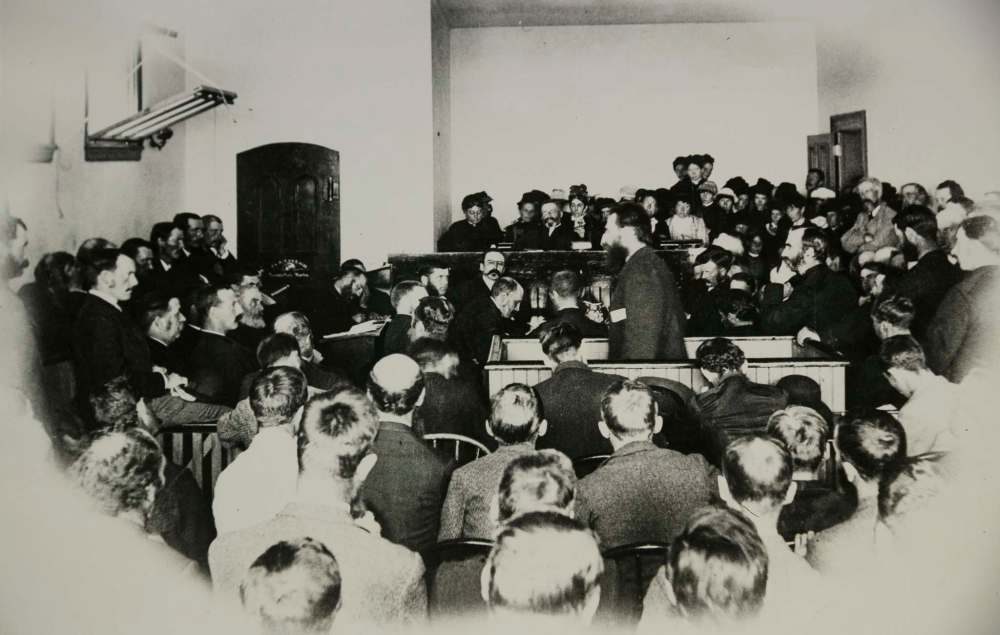
Roger Salhany’s contribution to this Riel renaissance is to take us inside the courtroom in Regina in which Riel met his demise.
Salhany, a retired justice of the Superior Court of Ontario, has written eight books on criminal procedure and has been a lecturer to judges, lawyers and others in the legal system.
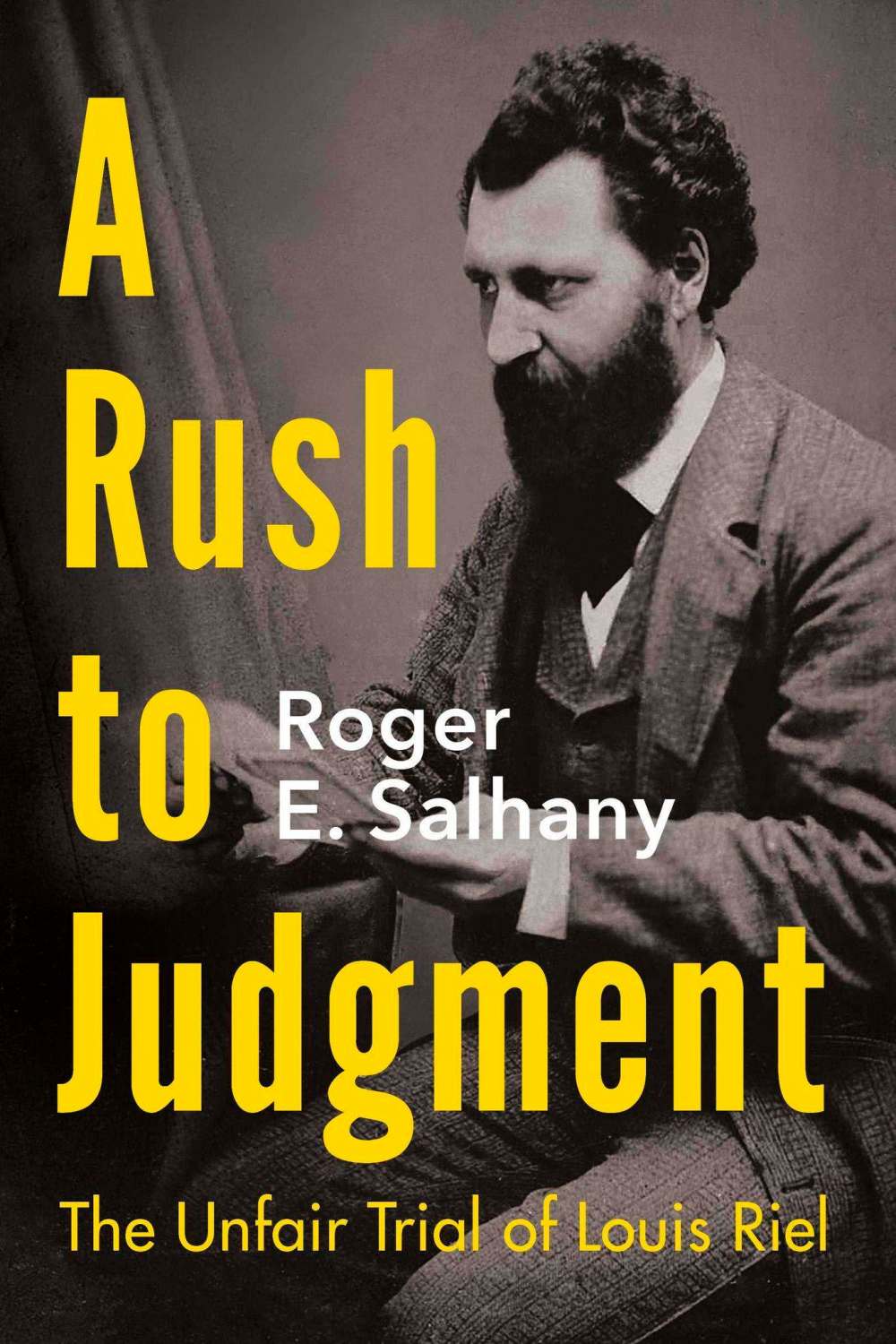
In A Rush to Judgment he’s on a mission to prove that Riel was unjustly convicted and sentenced to death for treason.
From the title to the final page, Salhany consistently adheres to his convictions. Through his detailed legal knowledge, he is able to trace what happened in the courtroom back 1,000 years through English common and statute law.
Sir John A. Macdonald, Canada’s first prime minister, is clearly depicted as the villain of the piece. Macdonald wanted to build a nation from sea to sea; Riel was in his way.
Riel was exiled to the U.S. after he led the Red River uprising in 1870, but was later induced to return to Saskatchewan to lead the Métis nation there.
After the group’s many petitions to Ottawa had been ignored, they took up arms in 1885. After three skirmishes with troops sent by Macdonald, Riel surrendered to prevent further bloodshed.
Macdonald seized the opportunity to make sure the Métis people and their charismatic leader could never spoil his plans again.
The prime minister interfered in every detail of the prosecution. The trial was held in Regina, so the jury would consist of six white English men, instead of in Winnipeg, where the 12-person jury would have had to include six Métis.
Riel was charged under a British statute from the 1300s, so a conviction would result in a mandatory death penalty.
Salhany comments extensively on the trial transcript to demonstrate that the judge and prosecutors appointed by Macdonald were in cahoots to deny Riel his basic legal rights every step of the way.
Riel’s defence lawyers were not given enough time to prepare and did not object sufficiently to the conduct by the Crown prosecutors. But they did provide the only defence possible to avoid the death sentence: Riel was insane.
Their problem: Riel kept saying he wasn’t.
Riel wanted the armed rebellion to be viewed as the only option for his people, after their peaceful petitions were ignored by Ottawa. “If he was found not guilty by reason of insanity, then the reason for the Métis resistance would have no meaning,” Salhany writes.
Only a sane person would put forward a defence of insanity to save his life. Only an insane person would reject it.
“The fact that his speech from the (prisoner’s) dock was a disavowal of his insanity was probably the strongest evidence of his insanity,” Salhany writes.
The jury found Riel guilty of treason, but “recommend the prisoner to the mercy of the Crown.” They clearly wanted Riel to be sentenced to life imprisonment instead of death, but under the rules rigged by Macdonald, the judge had no choice.
Appeals to higher courts were rejected or denied.
When Riel’s plea for clemency came before the federal cabinet, a medical report was doctored to take out the evidence supporting the claim of insanity. The cabinet denied clemency and Riel was hanged a few days later.
“He shall die though every dog in Quebec bark in his favour,” Macdonald said.
Salhany has shown convincingly that Macdonald and his henchmen hanged a man who was not criminally responsible for his actions.
No wonder he haunts us still.
Donald Benham is a freelance writer, educator and content creator.