History rewritten by hateful extremists

Advertisement
Read this article for free:
or
Already have an account? Log in here »
To continue reading, please subscribe:
Digital Subscription
One year of digital access for only $1.44 a week*
- Enjoy unlimited reading on winnipegfreepress.com
- Read the E-Edition, our digital replica newspaper
- Access News Break, our award-winning app
- Play interactive puzzles
*Billed as $5.77 plus GST every four weeks. After 52 weeks, price increases to the regular rate of $19.95 plus GST every four weeks. Offer available to new and qualified returning subscribers only. Cancel any time.
To continue reading, please subscribe:
Add Free Press access to your Brandon Sun subscription for only an additional
$1 for the first 4 weeks*
- Enjoy unlimited reading on winnipegfreepress.com
- Read the E-Edition, our digital replica newspaper
- Access News Break, our award-winning app
- Play interactive puzzles
*Your next Brandon Sun subscription payment will increase by $1.00 and you will be charged $17.95 plus GST for four weeks. After four weeks, your payment will increase to $24.95 plus GST every four weeks.
Read unlimited articles for free today:
or
Already have an account? Log in here »
Hey there, time traveller!
This article was published 20/06/2020 (2312 days ago), so information in it may no longer be current.
We often think of the past as being immutable, and that sense of what’s done being done carries over to the way we see history. It’s all in the past.
But as Amy S. Kaufman and Paul B. Sturtevant point out in their new book on how extremists leverage that sensibility to their own ends, it may be true that the past doesn’t change — whereas history, which is the story we tell ourselves about the past, can change a great deal.
And as they argue forcefully with wide-ranging examples, extremist ideologues can play on people’s fuzzy, or stereotypical (and inaccurate) ideas about a particular era to craft dangerous propaganda. These days, that seems to be particularly true for a period that was often looked down upon: the Middle Ages.
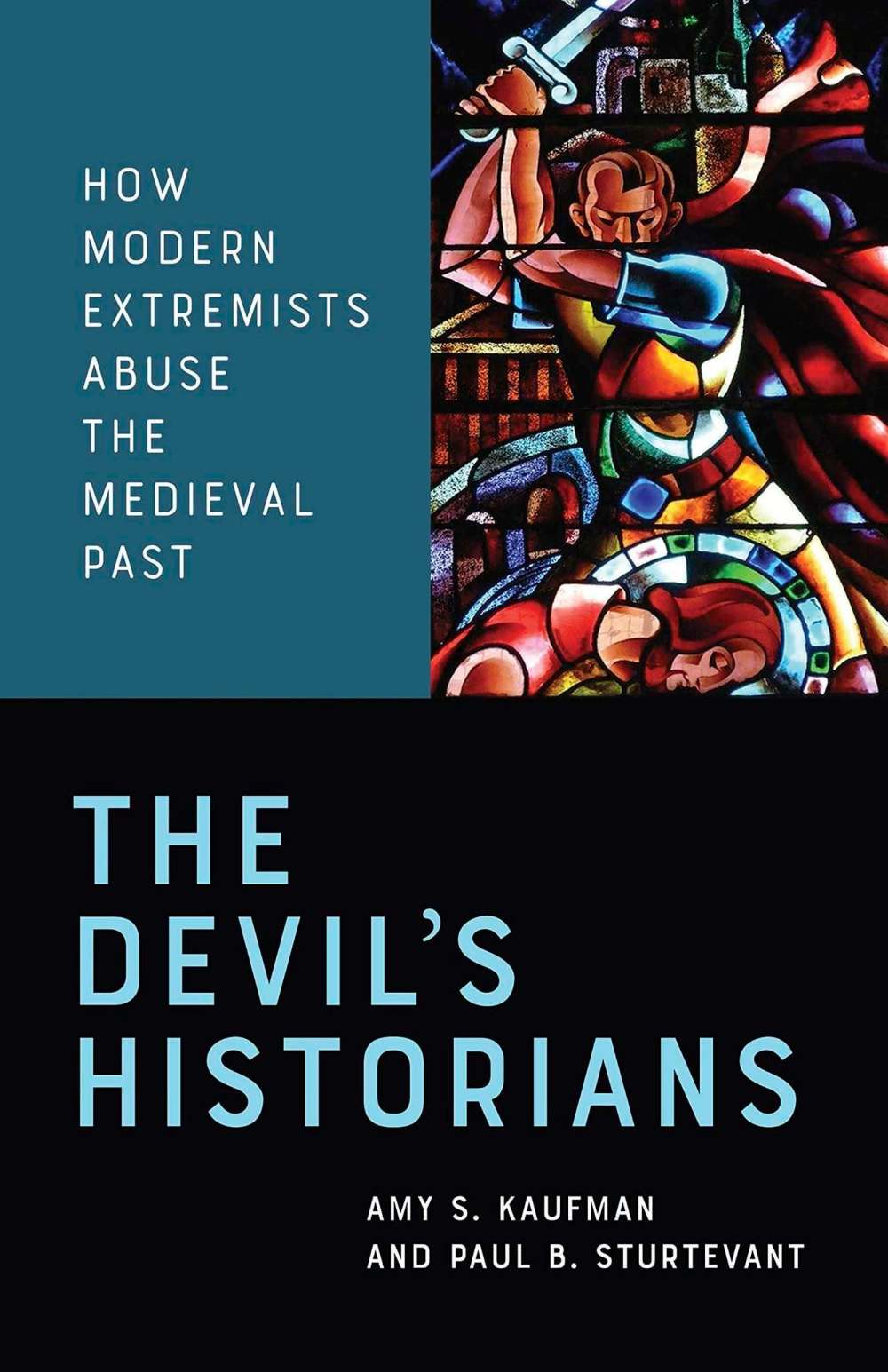
Writing in an accessible, engaging style, Kaufman — a scholar of medieval studies and pop culture — and Sturtevant — editor of The Public Medievalist — first explode many myths commonly held about the era, focusing on European history.
As they show, with many examples and sources, medieval Europe was not the sole domain of white Christian men, in which an all-powerful patriarchal Church held sway over everyone’s lives. In fact, over the many centuries dubbed the “Middle Ages” (named after the fact by Renaissance thinkers), European life was a mix of cultures, beliefs, traditions and people.
Women such as Eleanor of Aquitaine wielded formidable political power; Joan of Arc, though later martyred, commanded a military force; and non-Christian peoples including Jews, Muslims, and non-Abrahamic traditions of all kinds lived, traded and sometimes fought with each other. And while medieval conceptions of what we think of as race, gender and sexuality differ from ours, the authors show numerous examples of people from the time who were homosexual, transgender or far from the stereotypical “white” European of modern popular conception.
Why are our current myths about the Middle Ages a problem? As Kaufman and Sturtevant show, they make it easy for modern extremists — whether that be the Ku Klux Klan, Nazis or the Islamic State (IS), among others — to point to an apparently long, proud tradition for their hateful, xenophobic beliefs.
“Using the Middle Ages this way is not only wrong, it is also wrong,” they write. “By that, we mean it’s not just morally reprehensible — it’s also historically inaccurate.”

A supposed progenitor in the so-called “Aryan” race gave the Nazis a pretext for imagining they were superior to, and could therefore wipe out, anyone who was not descended from them. A romanticized, predominantly white and patriarchal vision of the Middle Ages underpinned the formation of the Ku Klux Klan. The Islamophobic England Defence League uses the cross of St. George on its emblem and wear pins featuring the saint as a crusader. Vladimir Putin erected a statue of Prince Vladimir the Great for nationalistic purposes while inciting hatred against immigrants. And recalling a “purer” time gives IS its framework for calling for a new caliphate.
Fortunately for modern society — and unfortunately for single-minded hateful groups — the medieval world was complex, nuanced, diverse and intellectually robust. The Devil’s Historians makes a compelling case for the era as fascinating and worth exploring, for the expert as well as the layperson.
And that kind of truthful, critical exploration of the era is clearly the best antidote against propagandists who would misrepresent it for dangerous, even fatal, purposes.
David Jón Fuller is a Winnipeg writer and copy editor.
Our newsroom depends on a growing audience of readers to power our journalism. If you are not a paid reader, please consider becoming a subscriber.
Our newsroom depends on its audience of readers to power our journalism. Thank you for your support.
Book review
The Devil’s Historians:
How Modern Extremists Abuse the Medieval Past
By Amy S. Kaufman and Paul B. Sturtevant
University of Toronto Press, 208 pages, $22
Our newsroom depends on a growing audience of readers to power our journalism. If you are not a paid reader, please consider becoming a subscriber.
Our newsroom depends on its audience of readers to power our journalism. Thank you for your support.

Advertisement Advertise With Us
Advertisement Advertise With Us