Ford story collection mines universal experiences in fresh, new ways
Advertisement
Read this article for free:
or
Already have an account? Log in here »
To continue reading, please subscribe:

Digital Subscription
One year of digital access for only $205*
- Enjoy unlimited reading on winnipegfreepress.com
- Read the E-Edition, our digital replica newspaper
- Access News Break, our award-winning app
- Play interactive puzzles
*First annual payment billed as $205.00 + GST for one year. This annual subscription will automatically renew at $233.00 + GST every 52 weeks (10% off the regular annual price of $259.35). Offer available to new and qualified returning subscribers only. Cancel any time.
To continue reading, please subscribe:
Add Free Press access to your Brandon Sun subscription for only an additional
$1 for the first 4 weeks*
- Enjoy unlimited reading on winnipegfreepress.com
- Read the E-Edition, our digital replica newspaper
- Access News Break, our award-winning app
- Play interactive puzzles
*Your next Brandon Sun subscription payment will increase by $1.00 and you will be charged $17.95 plus GST for four weeks. After four weeks, your payment will increase to $24.95 plus GST every four weeks.
Read unlimited articles for free today:
or
Already have an account? Log in here »
Hey there, time traveller!
This article was published 11/07/2020 (2283 days ago), so information in it may no longer be current.
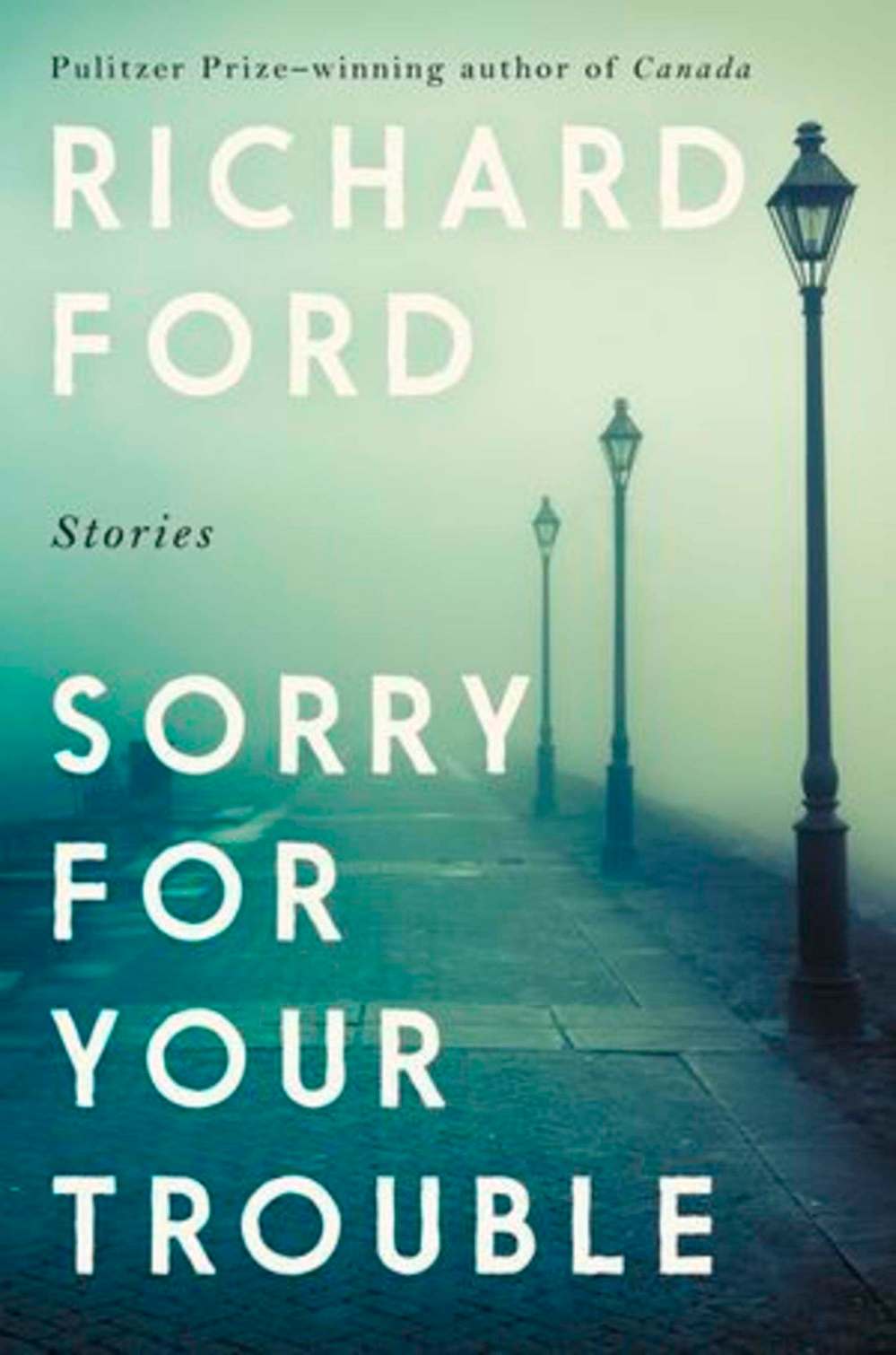
American writer Richard Ford, best known for his trilogy of Frank Bascombe novels (The Sportswriter, Independence Day and The Lay of the Land), has a fine new collection of short stories that feature his knack for insightful rumination.
Most of these nine stories, two of which are almost novella-length, show male protagonists trying to decide whether they are happy, figure out what it means to be happy and determine what the women in their lives mean to them.
In each of the first three stories, Ford marks the turning point with a kiss.
Middle-aged Sandy, in Nothing to Declare, is in a New Orleans bar with fellow lawyers when he sees a woman, Barbara, he hasn’t seen in 35 years. They had travelled to Iceland together. After a few drinks, they go for a walk. They kiss. This could lead to something more… but he has to see his wife later.
In Happy, Bobbi announces to the Thompsons that her husband has died — could she visit them at their summer place in Maine? Tommy, wife Janice and their friends Sam and Esther welcome her. She brings her husband’s ashes and her big dogs — and she drinks and turns nasty.
But before bedtime, she asks Tommy for a kiss. “He had always liked kissing her, had over the years kissed her many times. Innocently. Meaninglessly. This would be another such kiss. It would conclude things as well as they could be concluded.”
In Displaced, 16-year-old Henry craves a friend now that his father has died. His Irish neighbour, Niall, is 17 and worldly; he drives his dad’s taxi when called upon. One night, he takes Henry in the cab to a drive-in movie, gives him a drink of gin. After some chatting, Niall leans over and kisses Henry — on the lips. Ford perfectly captures Henry’s resulting confusion.
Jimmy Green — 1992 takes place in a Paris bar that is frequented by Americans. It is the night of the U.S. presidential election and Jimmy, who’s pulling for Bill Clinton, finds himself surrounded by Republicans. This is not the best place for Jimmy to be with a French woman he has just met.
The Run of Yourself finds Peter Boyce back in a Maine resort where, two years before, his wife Mae took her own life rather than suffer any longer with cancer. His divorced daughter Polly comes to visit and is angry with him for not showing more grief. She doesn’t “get” how he’s behaving. Peter is a rather dull fellow, yet in Ford’s capable hands he is also Everyman, trying to adapt to “the run of himself.”
Walter Hobbes, in Leaving for Kenosha, is another Everyman, separated from his wife, spending the day with his 12-year-old daughter Louise and trying to make sense of her smart-alec behaviour as well as his own stage in life.
Second Language has few dramatic scenes — Ford’s strength here is in telling, not showing. He examines the minds of Jonathan, a likable and wealthy middle-aged man, and Charlotte, a successful and beautiful woman, who meet after their lengthy marriages have ended. They marry, but Charlotte soon finds that Jonathan wants to “go more deeply,” to “learn” her like a second language, and she is not anxious to be learnt. She realizes “marriage would change her, and that she didn’t want.” She feels that “divorce would be a much better and easier state to maintain than marriage.”
In this engrossing collection, Ford once again offers fresh and clear views on some of life’s most universal experiences.
Dave Williamson is a Winnipeg author whose two most recent novels are Dating and Visiting Fellow.