A clash of narratives

Makhnovists, Mennonites bitterly divided on early 20th-century revolutionary

Advertisement

Advertise with us

No one likes to linger on violence — statues rise and fall depending on our collective need to rationalize or reveal the various violences of our past.

Read this article for free:


or

Already have an account? Log in here »

To continue reading, please subscribe:

Subscribe and receive a limited-edition Free Press branded hat or tote.

Digital Subscription

One year of digital access for only $205*

  • Enjoy unlimited reading on winnipegfreepress.com
  • Read the E-Edition, our digital replica newspaper
  • Access News Break, our award-winning app
  • Play interactive puzzles

*First annual payment billed as $205.00 + GST for one year. This annual subscription will automatically renew at $233.00 + GST every 52 weeks (10% off the regular annual price of $259.35). Offer available to new and qualified returning subscribers only. Cancel any time.

To continue reading, please subscribe:

Add Free Press access to your Brandon Sun subscription for only an additional

$1 for the first 4 weeks*

  • Enjoy unlimited reading on winnipegfreepress.com
  • Read the E-Edition, our digital replica newspaper
  • Access News Break, our award-winning app
  • Play interactive puzzles
Start now

*Your next Brandon Sun subscription payment will increase by $1.00 and you will be charged $17.95 plus GST for four weeks. After four weeks, your payment will increase to $24.95 plus GST every four weeks.

Hey there, time traveller!
This article was published 05/09/2020 (2171 days ago), so information in it may no longer be current.

No one likes to linger on violence — statues rise and fall depending on our collective need to rationalize or reveal the various violences of our past.

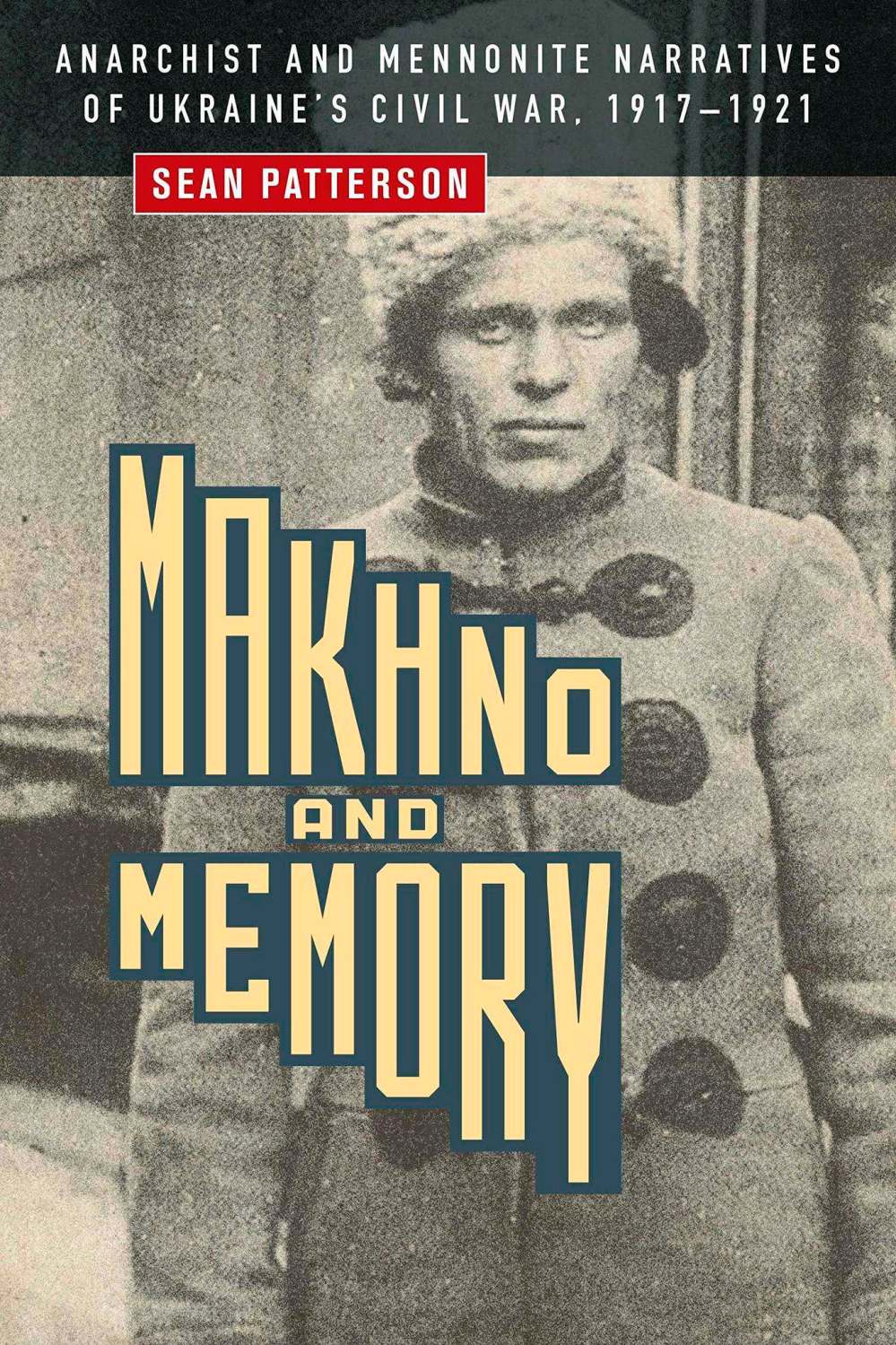
Sean Patterson, a PhD student at the University of Alberta and former Winnipegger, has written a work of social history attempting to tell and ultimately bring into conversation two narratives of violence that emerged from a particular place and time, Ukraine between 1917 and 1921, narratives centring a single individual — Nestor Makhno. For many anarchists, Makhno is a revolutionary folk hero fighting to overturn violent social conditions. For many Mennonites, Makhno is akin to the devil himself. For nearly a century, these accounts have been largely oblivious to each other.

Patterson frames the narratives within the larger history of the time, including: the earlier colonization of “New Russia” by Catherine the Great, who cleared local peasants bringing in foreigners including Mennonites; the impacts of the First World War, which saw the presence of the Austro-German army within Ukraine; and the rapid changes brought by the Russian Revolution, with various groups vying for power. It is within these massive sea changes that Mennonites and Makhnovists collide.

Supplied photo
Author Sean Patterson
Supplied photo Author Sean Patterson

From the Makhnovist perspective, Mennonites were simply one of a number of “German colonists” (they are never identified as Mennonites) whose privileges allowed for exploitation of surrounding peasants. Makhno himself was employed on what appeared to be a Mennonite estate, where he recalls an instance of being whipped for forgetting one of his chores.

Over time he not only saw more specific forms of violence, but also came to understand that entire social and economic structure as producing violence and injustice. Key to his revolutionary program was the seizure and redistribution of land and wealth; Patterson goes to great length to show that the violence enacted by Makhnovists was not based on any ethnic or religious prejudice, but rather on economic class. Indeed, Mennonites were invited to join the Makhnovist movement, and there are many stories of Makhnovists leaving poor or landless Mennonites in peace, as they considered them of the same class despite ethnic differences.

From the Mennonite perspective, Makhnovists were violence personified and often figured as a test of faith; these Mennonites figured themselves as a faithful remnant — Makhno tested their pacifist convictions, their adherence to worldly wealth, their ability to root out the “weed” of violence among them or simply their ability to suffer and remain faithful.

In practice, most Mennonites sought the ongoing privilege and protection of the Tsar, and responded to Makhnovist raids and expropriation of their land both by forming self-defense militias as well as supporting the presence of the Austro-German army which fought against Makhnovists. These responses only tended to escalate cycles of violence between the groups.

Patterson’s strength is in demonstrating that both narratives had their internal critics at the time. There were Makhnovists who grew concerned about the movement’s increasing violence and lack of clear leadership. There were Mennonites who came to see the boiling of peasant resentment connected to their accumulation of wealth through privilege and exploitation. The presence of these differences, though, were largely lost as Makhno gained either divine or demonic status as narratives and communities parted ways.

Supplied photo
Nestor Makhno poses for a photo in Huliaipole, his birthplace, in what is now Ukraine.
Supplied photo Nestor Makhno poses for a photo in Huliaipole, his birthplace, in what is now Ukraine.

Makhno and Memory is a tremendous case study in how groups tend to rationalize their place in violent times, legitimating their identity — in this case Makhnovists as freedom fighters and Mennonites as faithful in persecution. Individuals and events then become concentrated as symbols that can no longer communicate the breadth and complexity of the reality they represent.

Patterson does not tell us how to discern and evaluate these complexities — only that they must be considered if we hope to address past, and ongoing, realities of violence.

David CL Driedger is associate minister at First Mennonite Church in Winnipeg.
Supplied photo
In this photo taken circa 1919, a group of Makhnovists pose for a photo.
Supplied photo In this photo taken circa 1919, a group of Makhnovists pose for a photo.
Report Error Submit a Tip

More Stories

Could renewed interest in strategically critical rare earth elements finally make sub-sector profitable?

Joel Schlesinger 6 minute read Preview

Could renewed interest in strategically critical rare earth elements finally make sub-sector profitable?

Joel Schlesinger 6 minute read Yesterday at 3:00 AM CDT

Rare earth elements are among the most critical of mined resources for modern economies.

They’re essential in manufacturing specialized magnets used in a host of technologies from wind turbines and electric vehicles to hard drives, smartphones, television screens, and fibre optics. Most notably, however, rare earth minerals are increasingly vital to the defence industry.

These 17 elements — closely related chemically and usually found all together in mineral deposits — have indeed been growing in geopolitical importance as the United States, Canada and other Western nations recognize their dependence on production from China.

It is the world’s largest producer and processor of rare earths, including the most in-demand elements neodymium and praseodymium used to manufacture very light and powerful magnets for an array of technologies, including the most advanced weapons of modern warfare.

Read
Yesterday at 3:00 AM CDT

WRHA directs three care homes to accommodate surge of hospital patients

Malak Abas 5 minute read Preview

WRHA directs three care homes to accommodate surge of hospital patients

Malak Abas 5 minute read Friday, Aug. 14, 2026

The Winnipeg Regional Health Authority has directed three long-term care centres to make space for hospital patients, citing “exceptionally high demand for care across the health-care system.”

Read
Friday, Aug. 14, 2026

Corroded Arlington overpass yields way for new hope of spanning urban chasm

Melissa Martin 6 minute read Preview

Corroded Arlington overpass yields way for new hope of spanning urban chasm

Melissa Martin 6 minute read Yesterday at 2:00 AM CDT

It’s an interesting quirk of timing, perhaps, that the end of two of Winnipeg’s most unlovely features are coming into view in the same few weeks. The rail lines that split the city in half, and the bridge that was built to tie it back together. The original problem, and the solution.

And in the confluence of those two ends, we have an opportunity to dream of what a better Winnipeg can be.

At a news conference on Wednesday, former federal transport minister Lloyd Axworthy laid out a vision for a rail line bypass that would remove more than 120 railway crossings from Winnipeg, route them through Crown and Manitoba Hydro corridor land south of the city, and reclaim 250 acres in the urban core for greenspace and development.

The next step is to focus on how to make it happen. Nothing of this scope comes easy. This new bypass plan emerged from a two-year feasibility study that Premier Wab Kinew had tasked Axworthy with back in 2024. Now, Axworthy will helm a new 90-day feasibility study zooming in on that route specifically.

Read
Yesterday at 2:00 AM CDT

A clash of narratives

Reviewed by David CL Driedger 4 minute read Preview

A clash of narratives

Reviewed by David CL Driedger 4 minute read Saturday, Sep. 5, 2020

No one likes to linger on violence — statues rise and fall depending on our collective need to rationalize or reveal the various violences of our past.

Sean Patterson, a PhD student at the University of Alberta and former Winnipegger, has written a work of social history attempting to tell and ultimately bring into conversation two narratives of violence that emerged from a particular place and time, Ukraine between 1917 and 1921, narratives centring a single individual — Nestor Makhno. For many anarchists, Makhno is a revolutionary folk hero fighting to overturn violent social conditions. For many Mennonites, Makhno is akin to the devil himself. For nearly a century, these accounts have been largely oblivious to each other.

Patterson frames the narratives within the larger history of the time, including: the earlier colonization of “New Russia” by Catherine the Great, who cleared local peasants bringing in foreigners including Mennonites; the impacts of the First World War, which saw the presence of the Austro-German army within Ukraine; and the rapid changes brought by the Russian Revolution, with various groups vying for power. It is within these massive sea changes that Mennonites and Makhnovists collide.

From the Makhnovist perspective, Mennonites were simply one of a number of “German colonists” (they are never identified as Mennonites) whose privileges allowed for exploitation of surrounding peasants. Makhno himself was employed on what appeared to be a Mennonite estate, where he recalls an instance of being whipped for forgetting one of his chores.

Read
Saturday, Sep. 5, 2020

Manitoba family finalist for cattle producers environmental award

Aaron Epp 4 minute read Preview

Manitoba family finalist for cattle producers environmental award

Aaron Epp 4 minute read Yesterday at 2:00 AM CDT

A family in western Manitoba is one of seven finalists for a national environmental award honouring beef cattle producers.

Connor and Kyla English, alongside Connor’s parents, Brian and Leanne English, are nominated for the Canadian Cattle Association’s Environmental Stewardship Award. The 30-year-old award is presented to beef farmers and ranchers who explore innovative ways to protect, preserve and enhance their operations and the environment simultaneously.

This year’s recipient will be announced on Wednesday during a banquet at the Canadian Beef Industry Conference in Winnipeg.

The English family’s roots near Bradwardine — about 265 kilometres west of Winnipeg — date back to 1898. Today, Connor, Kyla, Brian and Leanne manage a herd of about 320 breeding cows on nearly 445 hectares (1,100 acres) of owned and rented pasture and forage land.

Read
Yesterday at 2:00 AM CDT

West Kildonan Industrial residents call for speed bumps after child hit by truck

Morgan Modjeski 3 minute read Preview

West Kildonan Industrial residents call for speed bumps after child hit by truck

Morgan Modjeski 3 minute read Updated: Yesterday at 3:09 PM CDT

Residents in the West Kildonan Industrial neighbourhood are calling on the city to install speed bumps in their area after a child was hit and dragged by a vehicle Thursday.

Katelyn Bemister lives near the area where the child — who was hospitalized as a result of the incident and has been upgraded to stable condition — was struck. She says people frequently speed in the area.

“They’re going really fast, and they’re not really paying attention at all to the pedestrians in the area,” says Bemister.

In video supplied to the Free Press by a resident, the child can be seen riding a bike down a sidewalk along the 500 block of North Point Boulevard.

Read
Updated: Yesterday at 3:09 PM CDT