Act of defiance
Fifty years on, essays on October Crisis offer insight into Trudeau's power play
Advertisement
Read this article for free:
or
Already have an account? Log in here »
To continue reading, please subscribe:

Digital Subscription
One year of digital access for only $205*
- Enjoy unlimited reading on winnipegfreepress.com
- Read the E-Edition, our digital replica newspaper
- Access News Break, our award-winning app
- Play interactive puzzles
*First annual payment billed as $205.00 + GST for one year. This annual subscription will automatically renew at $233.00 + GST every 52 weeks (10% off the regular annual price of $259.35). Offer available to new and qualified returning subscribers only. Cancel any time.
To continue reading, please subscribe:
Add Free Press access to your Brandon Sun subscription for only an additional
$1 for the first 4 weeks*
- Enjoy unlimited reading on winnipegfreepress.com
- Read the E-Edition, our digital replica newspaper
- Access News Break, our award-winning app
- Play interactive puzzles
*Your next Brandon Sun subscription payment will increase by $1.00 and you will be charged $17.95 plus GST for four weeks. After four weeks, your payment will increase to $24.95 plus GST every four weeks.
Read unlimited articles for free today:
or
Already have an account? Log in here »
Hey there, time traveller!
This article was published 24/10/2020 (2141 days ago), so information in it may no longer be current.
‘Just watch me.”
Pierre Trudeau’s defiant reply to a TV journalist is the clearest collective memory Canadians retain of the political crisis that traumatized the country in October 1970.
Terrorists from the Front de libération du Québec (FLQ) had kidnapped a British diplomat, James Cross, and a Quebec cabinet minister, Pierre Laporte, who was later killed.
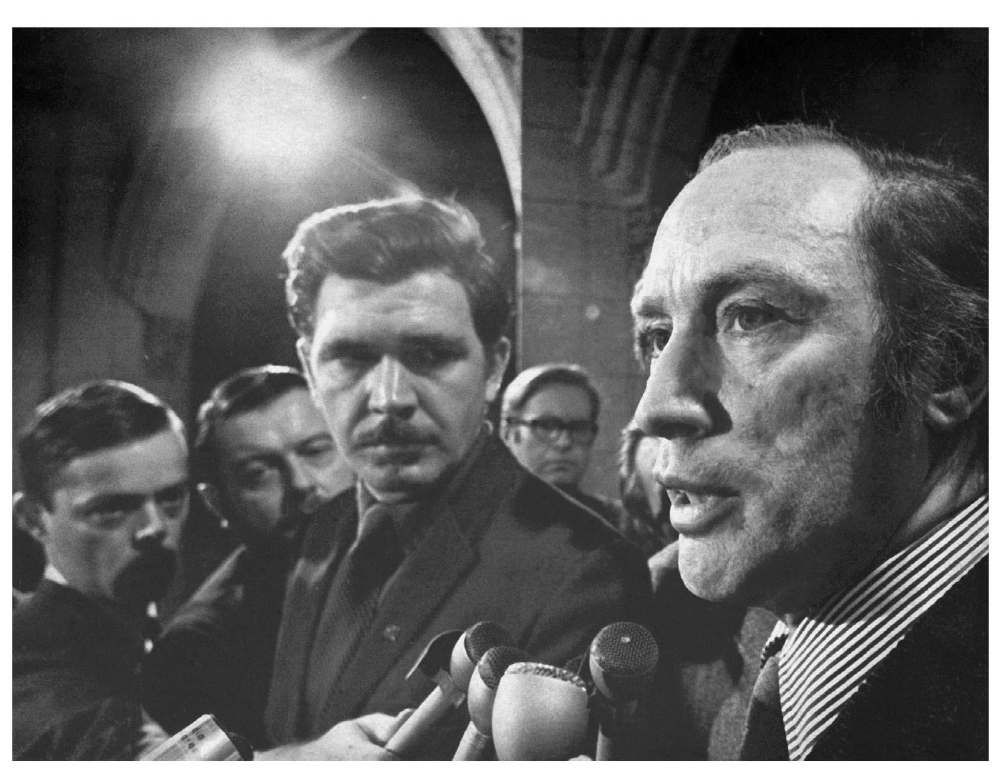
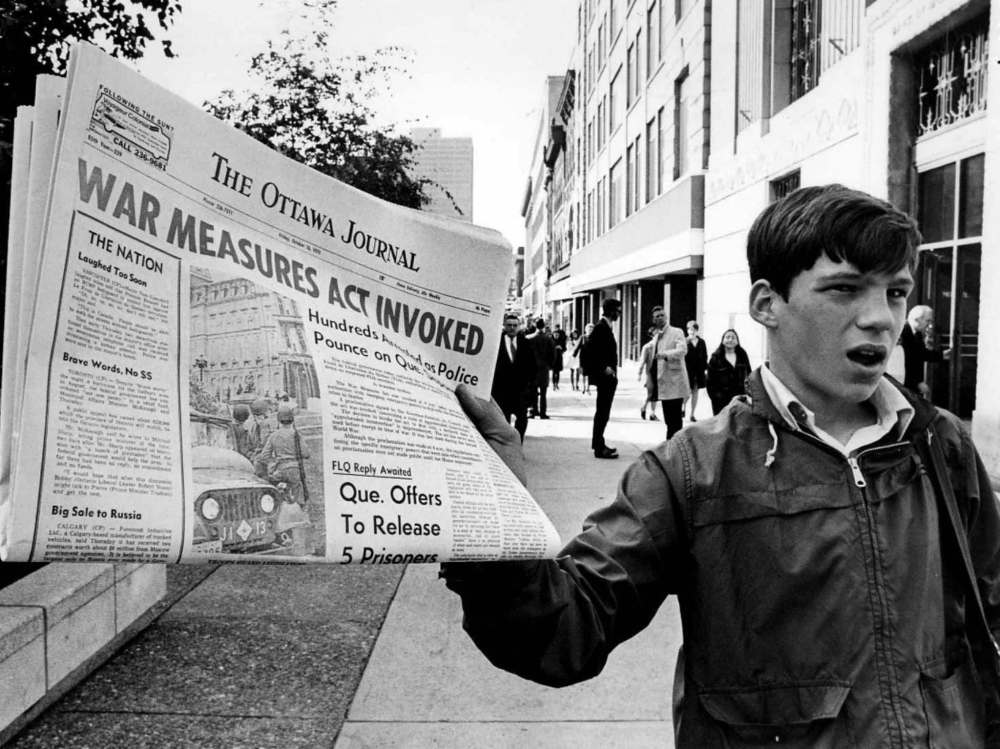
The prime minister had already called in the army. Three days later, he invoked the War Measures Act, suspending all civil liberties and leading to the arrest and arbitrary detention of hundreds of innocent Canadians.
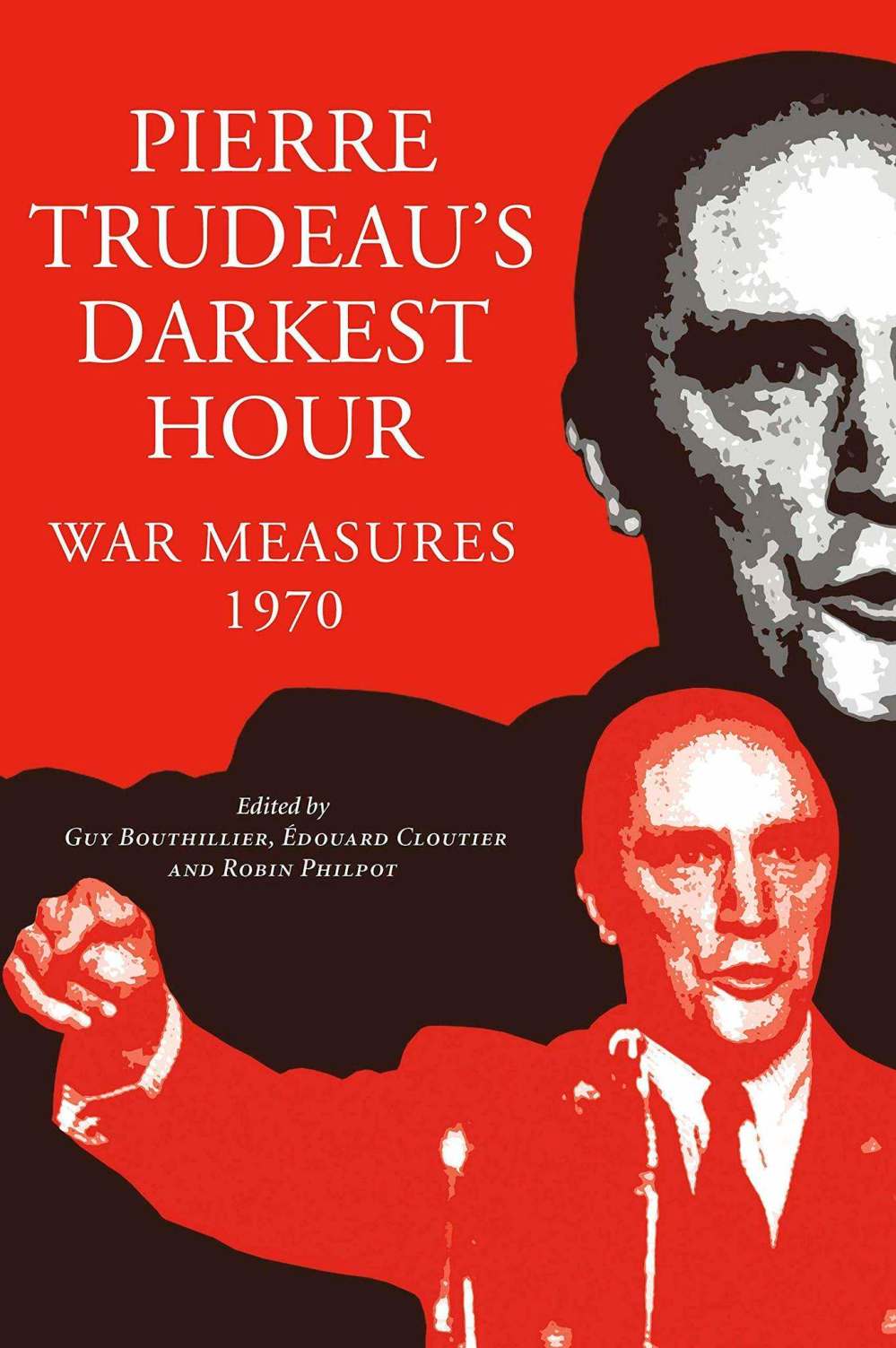
This anthology, edited by Guy Bouthillier, Édouard Cloutier and Robin Philpot, includes articles written in the heat of the moment and at various points in the decades since.
Bouthillier and Cloutier are honorary political science professors at the Université de Montreal. Philpot is publisher of Baraka Books and author of eight books in French and English.
The strongest piece is by legendary Montreal journalist Nick Auf der Maur, then the Quebec editor of the left-leaning Last Post magazine.
Auf der Maur was arrested by RCMP officers and jailed without charge. In his first-person account, published while the memory was still fresh, Auf der Maur takes us inside the jail to provide a chilling picture of what was happening.
A similar tale was told by Montreal poet and publisher Gaston Miron for a 10th anniversary story in the Montreal Gazette. His 14-month-old child was awakened by the police breaking down the front door at 4:30 a.m., just 30 minutes after the War Measures Act had been invoked.
“One day I was a human being with rights and obligations. Within hours, I was a number with no rights, being dehumanized,” Miron told the Gazette in 1980.
Peter Desbarats, then a CBC-TV journalist, describes how Montreal’s English-language newscast still went to air live, but the French edition was taped 90 minutes in advance “to be carefully screened before it goes out.”
Peter C. Newman, then the editor-in-chief of the Toronto Star, comes clean in a mea culpa about how he was manipulated by Trudeau into publishing a “meticulously concocted lie.”
Parti Québécois founder René Lévesque and Le Devoir editor Claude Ryan were plotting to overthrow the Quebec government, Trudeau told Newman. But the interview was not for attribution, allowing Trudeau to float a justification for the use of the War Measures Act, without having to be held accountable for his words.
Newman was so true to protecting his source’s identity that he waited more than 20 years, after Trudeau’s death, to reveal his own role in the deception. Too late for Ryan, whose supposed role in the coup was repeated as gospel truth in the Globe and Mail news story on his death, just before Newman owned up.
The introduction gives the dates of the kidnappings, but readers must plough through 87 pages of text before they learn other significant details. A brief, clear chronology at the outset would have been helpful.
The book lacks an index and includes only one photo and one cartoon from the era. Some photos of gun-toting soldiers in the streets of Montreal and Ottawa would have helped recreate the era for modern readers.
The chapters written in later years allow the perspective of time and the release of documents to prove that there was no “apprehended insurrection,” the official reason for invoking the War Measures Act.

The RCMP didn’t need or want the additional powers. In the end, good police work apprehended the kidnappers of both men and freed Cross.
Trudeau had been an outspoken civil libertarian before becoming prime minister, but the book concludes that in the heat of the moment, he used the provocation as an excuse to jail and hold political enemies without charge simply to teach them who’s boss.
As Canadians watch in horror at how fragile democracy and due process are proving to be in our southern neighbour, it behooves us to remember that it could, and did, happen here.
“Just watch me,” indeed.
Donald Benham is a freelance writer, educator and content creator.
History
Updated on Friday, November 20, 2020 11:17 PM CST: Fixes typo.