A deadly first
Mass shooting in 1960s Windsor gave rise to the notion of a 'spree killer'
Advertisement
Read this article for free:
or
Already have an account? Log in here »
To continue reading, please subscribe:
Digital Subscription
One year of digital access for only $1.44 a week*
- Enjoy unlimited reading on winnipegfreepress.com
- Read the E-Edition, our digital replica newspaper
- Access News Break, our award-winning app
- Play interactive puzzles
*Billed as $5.77 plus GST every four weeks. After 52 weeks, price increases to the regular rate of $19.95 plus GST every four weeks. Offer available to new and qualified returning subscribers only. Cancel any time.
To continue reading, please subscribe:
Add Free Press access to your Brandon Sun subscription for only an additional
$1 for the first 4 weeks*
- Enjoy unlimited reading on winnipegfreepress.com
- Read the E-Edition, our digital replica newspaper
- Access News Break, our award-winning app
- Play interactive puzzles
*Your next Brandon Sun subscription payment will increase by $1.00 and you will be charged $17.95 plus GST for four weeks. After four weeks, your payment will increase to $24.95 plus GST every four weeks.
Read unlimited articles for free today:
or
Already have an account? Log in here »
Hey there, time traveller!
This article was published 09/01/2021 (2004 days ago), so information in it may no longer be current.
On a hot Saturday night in June 1966 in Windsor, Ont., 18-year-old Matthew Charles Lamb stole his uncle’s shotgun, loaded it with cartridges and wandered down a nearby residential street.
Encountering a half dozen strangers slowly walking toward him, he unloaded the shotgun at them at point blank range. Two of his targets died; two others were severely wounded.
Later, his acts would see him labeled a “spree killer,” in criminal-justice parlance. But when he committed the murders, the term hadn’t yet been invented.
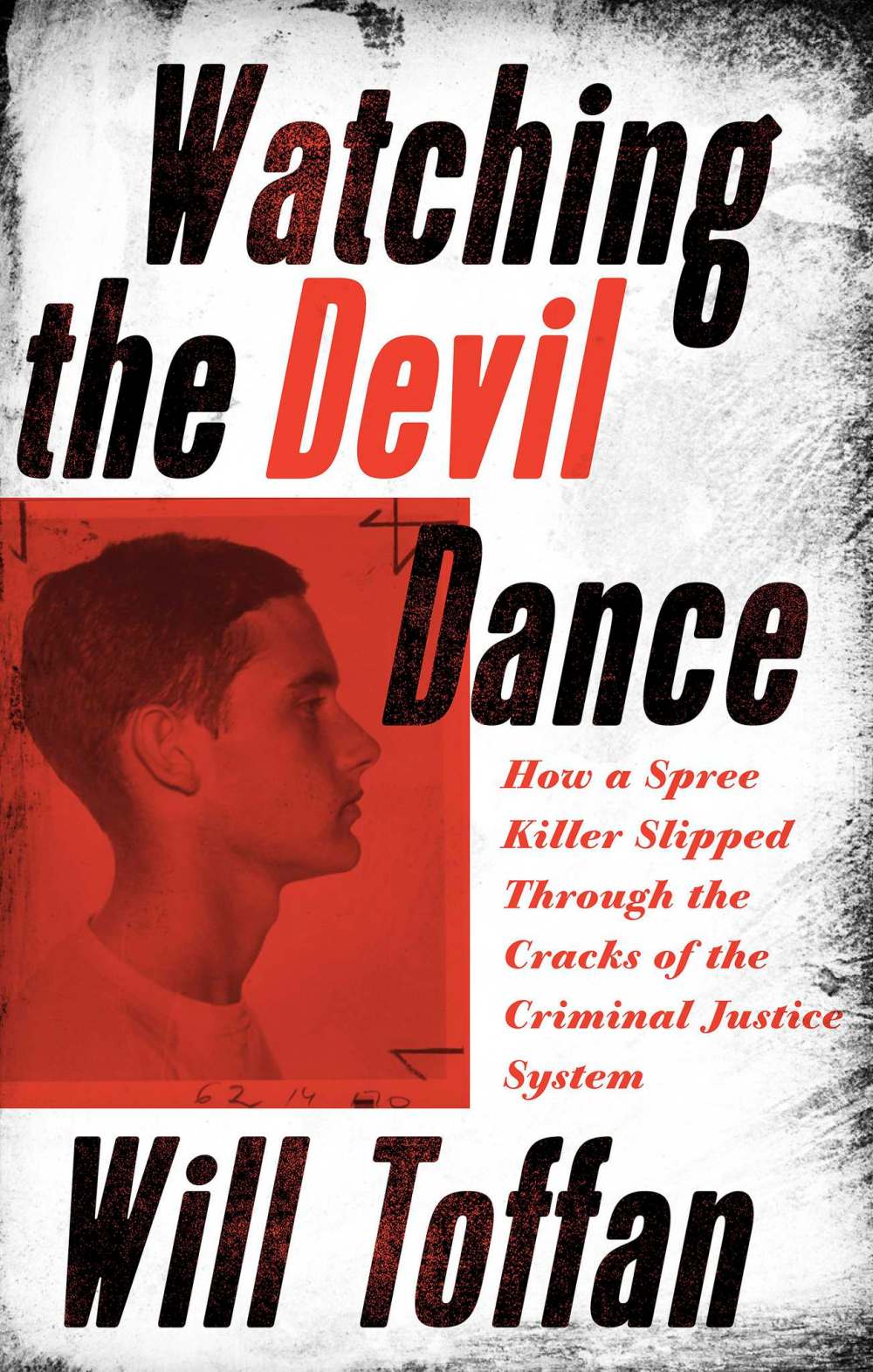
Author Will Toffan is a former RCMP officer and retired history teacher. This is his first book, and it’s an impressive debut.
Windsor is his hometown. And it shows. He nicely captures the time, place, rhythm and grit of the Canuck city that shared a 1960s auto-industry economy and culture with across-the-river Detroit.
He also has a personal connection to the homicides.
One of the murder victims, 20-year-old Edith Chaykoski, was a former next-door neighbour. He admits to having had a schoolboy crush on her, and his then 12-year-old self was devastated on learning of her death.
Lamb’s mid-1960s act of mass murder pales in comparison with the roster of contemporary mass killings — think Columbine, Las Vegas and the Sandy Hook Elementary School shooting in Newtown, Conn., to name a recent few.
But in 1966, his spree was a revelation, and according to Toffan a first in North America, beating our southern neighbour’s two earliest mass murders by a couple months.
In July of that year, Richard Speck murdered eight young Chicago nursing students in their dorm. And in August, Charles Whitman stabbed to death his wife and mother before climbing to the top of the bell tower of the University of Texas campus in Austin and shooting 45 people, killing 16.
Lamb’s homicidal stroll antedated both, and gave birth to a mini boom industry in Canadian criminal-defence law — beating a murder charge via raising the defence of “not guilty by reason of insanity.”
The book’s very title, Toffan explains, comes from an old police maxim about playing the criminal justice system by invoking the defence of not being criminally responsible due to insanity.
It refers to the phoney bizarre antics killers routinely exhibit, or describe, when interviewed by psychiatrists and clinical psychologists, so as to construct a not-criminally-responsible defence at trial.
Lamb, writes Toffan, was a master of the con “devil dance” performed for gullible mental-health professionals. His “manipulative verbal skills and hyper-physical displays of performance art” duped experts, whose courtroom testimony in turn sold the defence to a jury.
At trial, Lamb was acquitted of all charges, avoiding either a death sentence (capital punishment wasn’t abolished in Canada until 1976) or a lengthy prison term.
Instead, he was sent to a psychiatric facility, the Oak Ridge Facility for the Criminally Insane. Less than seven years later he was unconditionally released.
He was freed “because he had been sick and was no longer sick,” in the words of Oak Ridge’s former director of social therapy.
Toffan begs to differ. He views Lamb as a psychopath, a very clever one, who always fully appreciated the wrong of what he did when he killed.
(Lamb died in combat in 1976, killed by friendly fire while fighting black nationalist guerrilla groups as a soldier for Rhodesia’s apartheid regime. Rhodesia is now Zimbabwe.)
By any yardstick, this is an excellent true-crime book. Toffan develops context and provides understanding, especially of the law.
He also renders a gripping account of the murders, without ever sensationalizing the violence he recounts.
Douglas J. Johnston is a Winnipeg lawyer and writer.