

Burning questions
Newfoundland writer traces her Métis roots through Manitoba
Advertisement
Read this article for free:
or
Already have an account? Log in here »
To continue reading, please subscribe:
Digital Subscription
One year of digital access for only $1.44 a week*
- Enjoy unlimited reading on winnipegfreepress.com
- Read the E-Edition, our digital replica newspaper
- Access News Break, our award-winning app
- Play interactive puzzles
*Billed as $5.77 plus GST every four weeks. After 52 weeks, price increases to the regular rate of $19.95 plus GST every four weeks. Offer available to new and qualified returning subscribers only. Cancel any time.
To continue reading, please subscribe:
Add Free Press access to your Brandon Sun subscription for only an additional
$1 for the first 4 weeks*
- Enjoy unlimited reading on winnipegfreepress.com
- Read the E-Edition, our digital replica newspaper
- Access News Break, our award-winning app
- Play interactive puzzles
*Your next Brandon Sun subscription payment will increase by $1.00 and you will be charged $17.95 plus GST for four weeks. After four weeks, your payment will increase to $24.95 plus GST every four weeks.
Read unlimited articles for free today:
or
Already have an account? Log in here »
Hey there, time traveller!
This article was published 06/02/2021 (1947 days ago), so information in it may no longer be current.
Michelle Porter tells us in this creative and almost poetic biography of her great grandfather that “Curiosity started it all.”
“All my life I wanted to know why you — great-grandfather, Pépé, Bob — moved away from Manitoba. It was where your music was born; it was where all your relations lived. You left the Métis heartland for the woods of British Columbia, where nobody knew you or your wife or your daughters. I couldn’t understand it.”
A Prairie Métis author who now lives in Newfoundland, Porter holds degrees in journalism, folklore and geography. Her first book (of poetry), Inquiries, was a finalist for the Pat Lowther Memorial Award, and she was just given the 2020 Most Promising Author award by the Miramichi Reader.
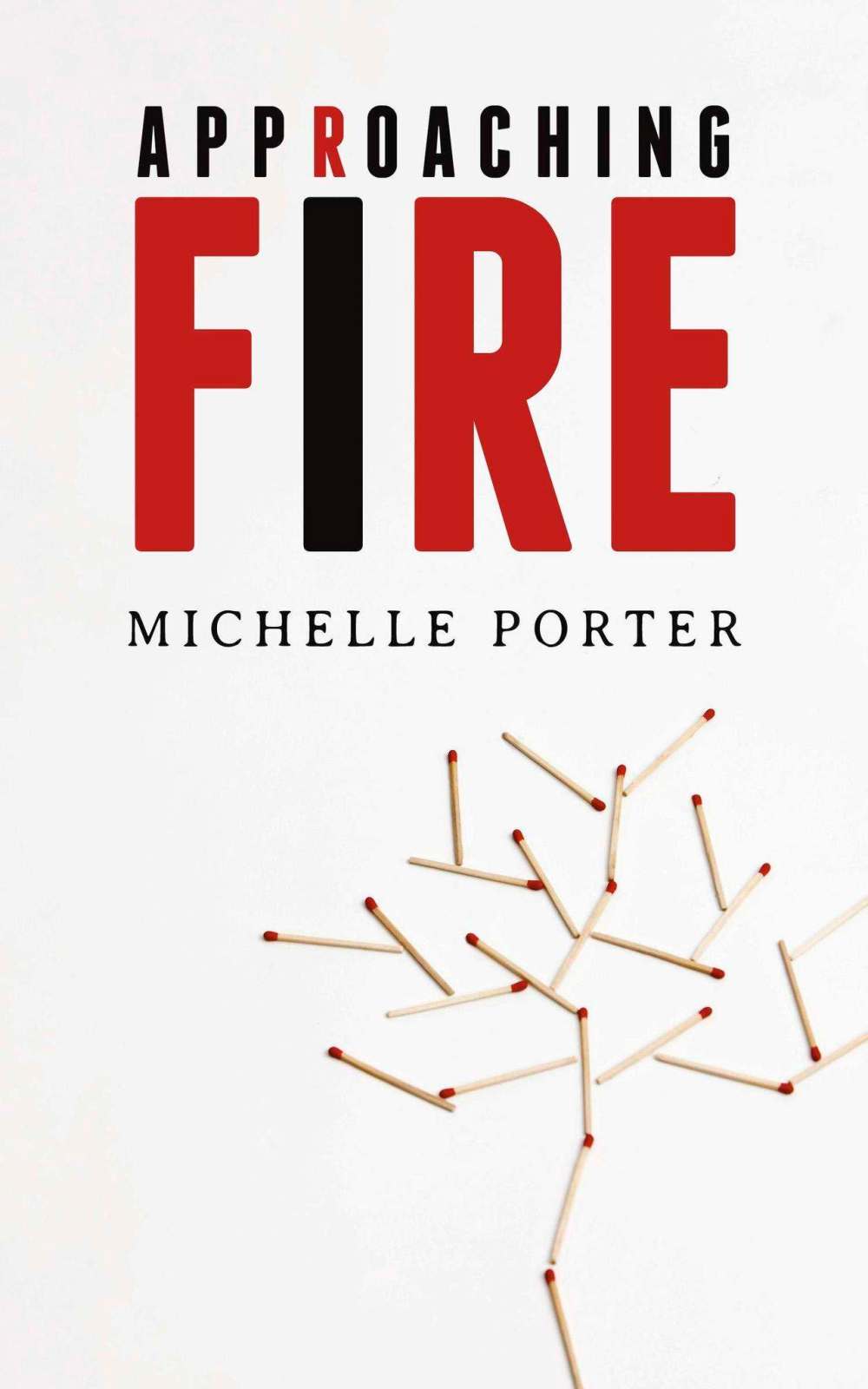
In Approaching Fire, a slim volume, Porter, who was born in Manitoba but did not live here for any length of time, goes in search of her great grandfather, Léon Robert Goulet. She tells us he was born in Lorette in about 1890.
Goulet, who also used the name Bob, was a fiddler back in the 1930s in Manitoba, performing at dances and concerts and on radio stations such as CKY in Winnipeg. Later he was accompanied by the Red River Echoes, which included his wife and two daughters.
Porter tells us Goulet also recorded 78s of his music with RCA Victor. One researcher is quoted as saying “he was likely the first fiddler in Manitoba, and one of the first in Canada, to release an album.”
Porter weaves together poetry, prose, intimate letters from her to her long-gone great grandfather, whom she calls Pépé, with family stories, old advertisements and newspaper clippings from the Winnipeg Free Press and the Winnipeg Tribune. In between, Porter inserts stories of raging fires from the time of her ancestors and the buffalo hunt to more recent fires.
She compares these actual fires to post-traumatic stress, to “unresolved debris” that passed down through the generations, threatening to burst into fire in mid-life in traumatised Métis children. Porter also likens these fires to the “inferno” that threatens to burn within herself.
Porter relates bits and pieces of information about Bob Goulet’s father, Maxime Goulet, who was elected to the Manitoba legislature at the age of 24 and later became the minister of agriculture.
She provides some details about Maxime’s father, Alexis Goulet, who she tells us was “one of a group of buffalo hunters who had organized to demand Métis rights to hunt and trade fairly.” She also writes of the tragic circumstances surrounding the death of Bob Goulet’s uncle, Elzéar Goulet, in 1870.
Porter writes of racial discrimination. In the 1930s, she tells us, “the word Métis was a dirty word,” and she describes how Métis land was taken away. She includes old advertisements for “Half-Breed Scrip” and many acres of land for sale.

She explores the issue of Métis identity, of trauma and of fire ecology. And she writes of her longing to learn more about her great grandfather as well as other female generations of her family. That she leaves for another time.
Porter’s writing is clear and easy to understand, although the descriptions of land burning can seem somewhat baffling at first, and she seems to leave us hanging about certain details.
This, however, is a creative, poetic and intelligent work which would find fans among those interested in the history of Manitoba, and especially of the Métis history here.
Cheryl Girard is a prairie writer.