

Chronicling work woes a laborious task
Advertisement
Read this article for free:
or
Already have an account? Log in here »
To continue reading, please subscribe:
Monthly Digital Subscription
$1 per week for 24 weeks*
- Enjoy unlimited reading on winnipegfreepress.com
- Read the E-Edition, our digital replica newspaper
- Access News Break, our award-winning app
- Play interactive puzzles
*Billed as $4.00 plus GST every four weeks. After 24 weeks, price increases to the regular rate of $19.95 plus GST every four weeks. Offer available to new and qualified returning subscribers only. Cancel any time.
Monthly Digital Subscription
$4.99/week*
- Enjoy unlimited reading on winnipegfreepress.com
- Read the E-Edition, our digital replica newspaper
- Access News Break, our award-winning app
- Play interactive puzzles
*Billed as $19.95 plus GST every four weeks. Cancel any time.
To continue reading, please subscribe:
Add Free Press access to your Brandon Sun subscription for only an additional
$1 for the first 4 weeks*
*Your next subscription payment will increase by $1.00 and you will be charged $16.99 plus GST for four weeks. After four weeks, your payment will increase to $23.99 plus GST every four weeks.
Read unlimited articles for free today:
or
Already have an account? Log in here »
Hey there, time traveller!
This article was published 27/02/2021 (1862 days ago), so information in it may no longer be current.
Sarah Jaffe doesn’t agree with the adage: Do what you love and you’ll never work a day in your life. “We work longer hours than ever, and we’re expected to be available even when technically off the clock,” says Jaffe. “The labor of love, in short, is a con.”
Given the pandemic challenges of work/life balance many are facing, Jaffe’s Work Won’t Love You Back: How Devotion to Our Jobs Keeps Us Exploited, Exhausted, and Alone might be the tonic you need. But at 432 pages, it’ll take a while to digest.
This is Jaffe’s second book. She also wrote Necessary Trouble: Americans In Revolt. A journalist with an interest in the politics of power, her work has appeared in the New York Times, the Nation, the Guardian and the Atlantic, among other publications. She is also co-host of the Belabored podcast.
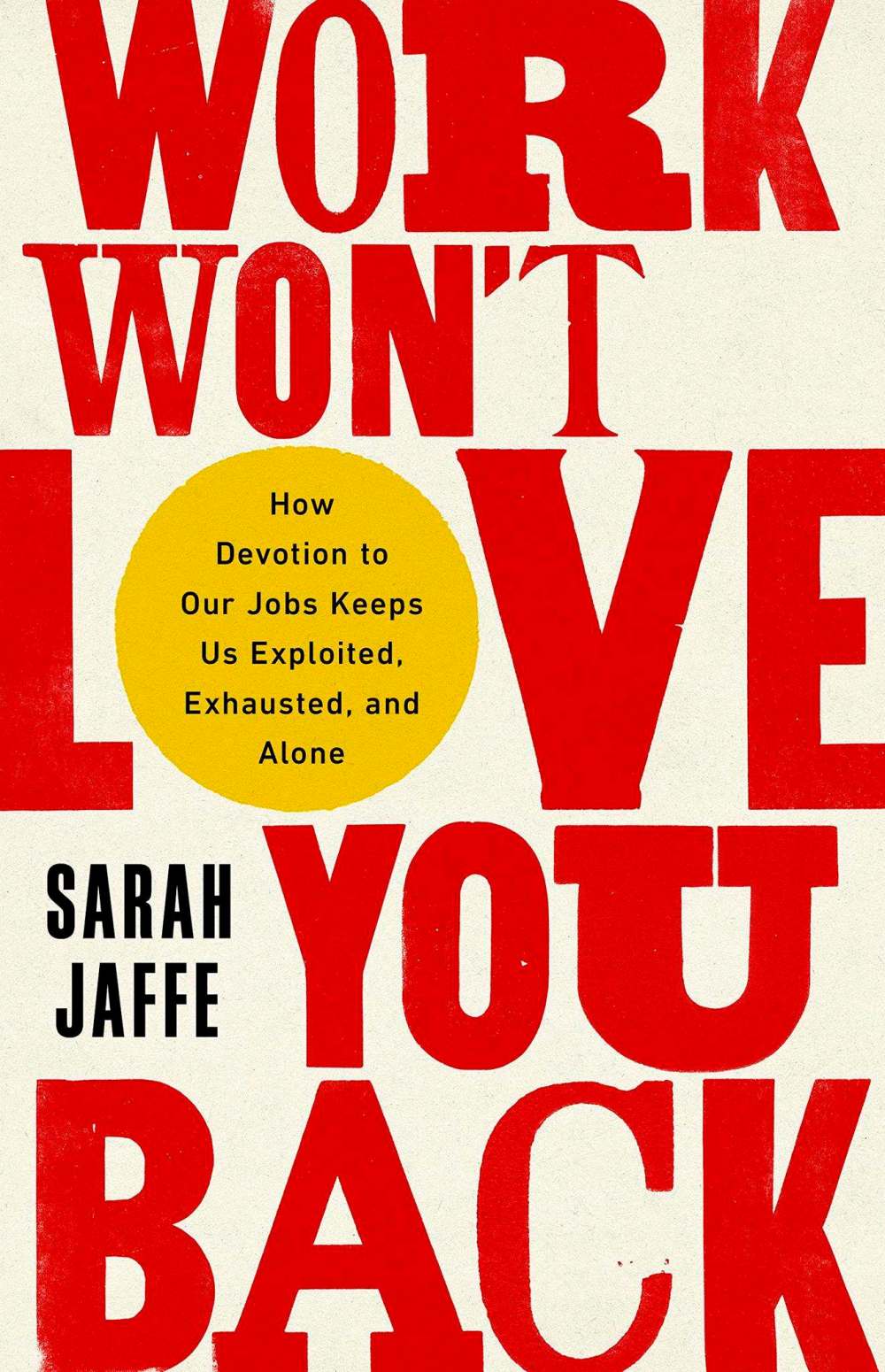
Intensely researched, Work Won’t Love You Back tackles the topic of work from a variety of perspectives, including teaching, art, sport and technology, among other occupations.
The book has two parts. The first half sets a foundation about how we got here, including historical context about society and the nature of work. The second half meanders. The extensive history of every occupation she chronicles tends to overshadow the personal (and appealing) experiences of interviewees.
Jaffe offers a sad commentary about the reality some workers face. For example, with the increased demand for delivery of consumer goods, she discusses the working conditions of Amazon and Target distribution centres. “The distribution center or warehouse job has become synonymous with misery these days,” says Jaffe. “Stories abound of workers having to urinate into bottles because they’re not allowed enough restroom breaks, being tracked around the facility via GPS, or popping Advil like candy to deal with aches and pains.”
The negativity Jaffe gleans from past and present issues makes for tough slogging. Gloom needs a counterpoint, and unionizing (her common solution) is not enough, given the myriad of historical information shared.
Fortunately, there are some positives. Jaffe is an astute writer and some of her most insightful observations relate to educators. “[Teachers] become a receptacle for all the blame when their teaching does not manage to overcome all the obstacles placed in their students’ way. They exist on the edge of a class boundary, not quite granted the respect given to doctors or lawyers, but not quite perceived as the working masses, either… Expected to do more with less every time budgets need tightening, and yet to take the blame every time those budget cuts do harm, teachers epitomize the trap that has all laborers of love in its grip.”
She also appreciates the work of artists. “The narrative that artists will create solely for the love of it — a fact that might be true if all humans had the stability and the free time and resources with which to do so — is used to justify a variety of exploitive practices rather than to call for an opening up of art worlds to all,” Jaffe writes. “Yet despite it all, art remains both essential and the deepest of pleasures.”
Work Won’t Love You Back provides an abundance of research, statistics, interviews and analysis. But this much information creates a lack of focus. Is Jaffe’s writing about work? Love? Feminism? Exploitation? Racism? Capitalism? Economics? Social activism? Unionism? Millennials?
Yes.
It would be an excellent read for those studying any of these topics. But for the average reader looking for tips on work/life balance, this is a tough book to love.
Deborah Bowers is a marketing & communications professional who enjoys her work to the extent that it provides intellectual challenge and financial reward. But love? That’s reserved for people.