Hand-wringing aplenty for head-transplant doc
Advertisement
Read this article for free:
or
Already have an account? Log in here »
To continue reading, please subscribe:

Digital Subscription
One year of digital access for only $205*
- Enjoy unlimited reading on winnipegfreepress.com
- Read the E-Edition, our digital replica newspaper
- Access News Break, our award-winning app
- Play interactive puzzles
*First annual payment billed as $205.00 + GST for one year. This annual subscription will automatically renew at $233.00 + GST every 52 weeks (10% off the regular annual price of $259.35). Offer available to new and qualified returning subscribers only. Cancel any time.
To continue reading, please subscribe:
Add Free Press access to your Brandon Sun subscription for only an additional
$1 for the first 4 weeks*
- Enjoy unlimited reading on winnipegfreepress.com
- Read the E-Edition, our digital replica newspaper
- Access News Break, our award-winning app
- Play interactive puzzles
*Your next Brandon Sun subscription payment will increase by $1.00 and you will be charged $17.95 plus GST for four weeks. After four weeks, your payment will increase to $24.95 plus GST every four weeks.
Read unlimited articles for free today:
or
Already have an account? Log in here »
Hey there, time traveller!
This article was published 06/03/2021 (1979 days ago), so information in it may no longer be current.
This is a tale that pits medicine and religion against each other over, of all things, human head transplants.
At the core is the elusive concept of the soul; defined as the spirit and essence of a person, the part of you that makes you who you are and that will live on after your death, it is difficult to get a firm grasp on.
If you are religious, it signifies the moral essence that determines whether you receive redemption or damnation after death.
But where, exactly, does the soul reside? Ancient anatomists and philosophers located it in the lungs or heart, philosopher Descartes put it in the pineal gland and generally it is thought to be in the brain.
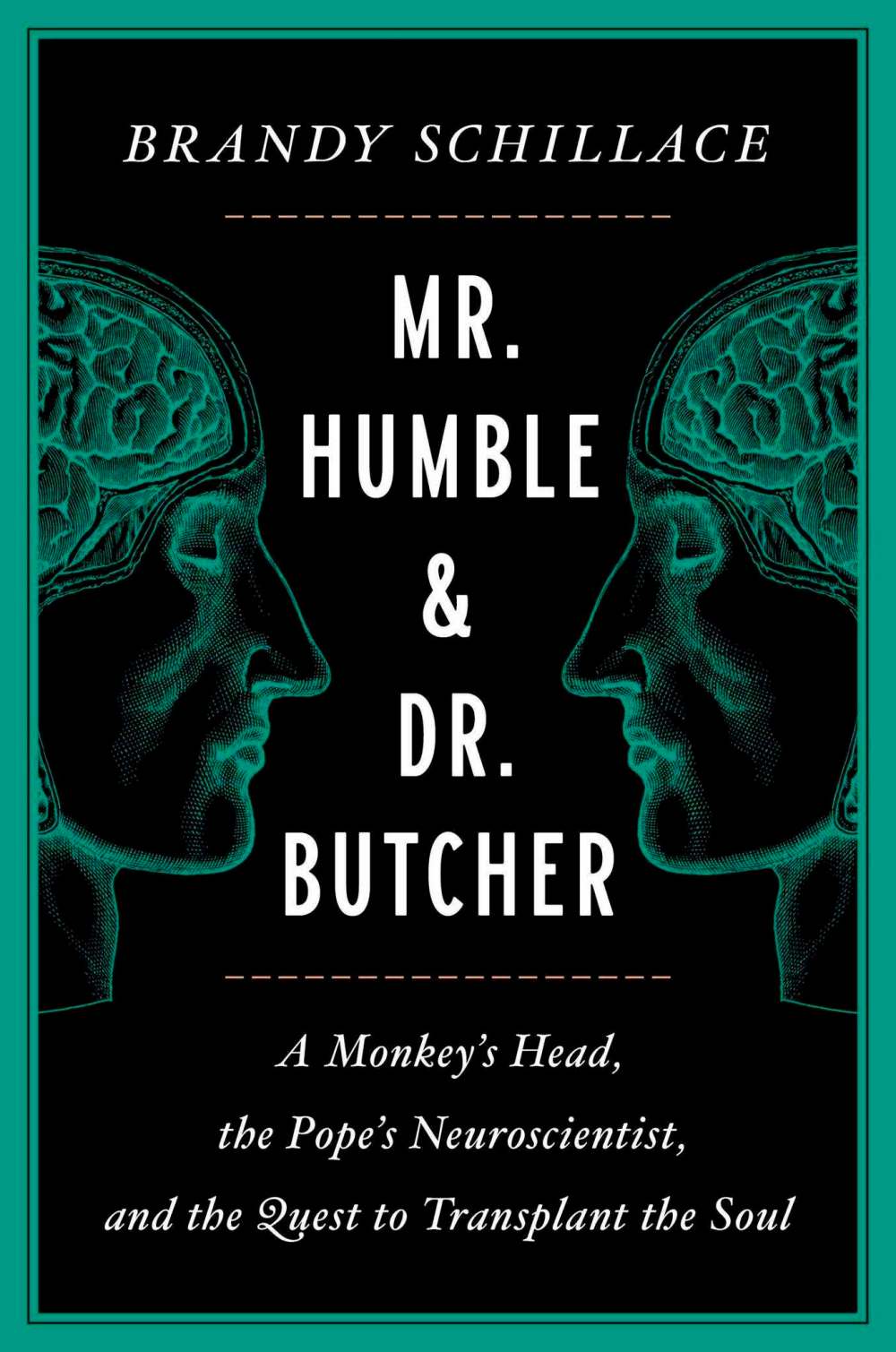
The exact location wasn’t really a problem until surgeons started mastering transplants, especially Dr. Robert J. White, whom author Brandy Schillace describes as a brilliant “doctor with two selves, two impulses and even two names” in her latest non-fiction book, Mr. Humble & Dr. Butcher.
White knew what a religious and moral minefield he was getting into when he began research into brain transplants, with the goal of transplanting the soul when the human body was dying.
White the surgeon, researcher and teacher was excited (consumed, if you will) by the idea of being able to transplant a head (brain/soul) from a body that was dying onto a body that was alive but whose brain was dead. While still in medical school, he wrote that the brain is the “physical repository for the soul.”
White, the devout Catholic who established the Vatican’s Commission on Biomedical Ethics in 1981 and served as an adviser to Pope John Paul II, was only too aware of the backlash his experiments would face.
Humble Bob, as neurosurgeon White ironically referred to himself, spent most of his career searching for a way to perfect the transplant, research that contributed to breakthroughs in brain cooling techniques for treatment of spinal cord injuries and head trauma, writes Schillace, a medical historian and editor of the journal Medical Humanities — a British Medical Journal publication.
American medicine in the 1950s was in a primitive state, especially as far as transplants went, and White became involved in a Cold War “inner space” race between U.S. and Soviet doctors to perform the first human head transplant.
After White performed the first transplant of one monkey’s head onto another’s body in 1970, his work drew attention from medical and religious observers, but also the ire of animal rights organizations that led to public showdowns and the nickname Dr. Butcher.
(Schillace’s reference to Dr. Jekyll and Mr. Hyde, and mention of the Dr. Frankenstein tale, in the book are clear but not belaboured, and not used to blacken White’s work.)
White embraced the battles with People for the Ethical Treatment of Animals (PETA) and other detractors of his work, but when PETA couldn’t shut down his research through public opinion it lobbied funding and regulatory bodies, which became more reluctant to support his work.
Schillace describes the nuances of White’s surgeries without too much gory detail, and her insights and easy-to-read prose make the book hard to put down.
White declared: “Who are you? What are you? You are not in that dead body. Let’s be practical. You are in the tissues of your brain, in the loci of the human spirit.”
He died in 2010, at age 84, without having the chance to prove he could transplant that soul. Others have continued White’s research, and Schillace ends her book with the line: “The quest to transplant the soul continues on.”
Chris Smith is a Winnipeg writer.