Self-driving cars no longer science fiction
Advertisement
Read this article for free:
or
Already have an account? Log in here »
To continue reading, please subscribe:

Digital Subscription
One year of digital access for only $205*
- Enjoy unlimited reading on winnipegfreepress.com
- Read the E-Edition, our digital replica newspaper
- Access News Break, our award-winning app
- Play interactive puzzles
*First annual payment billed as $205.00 + GST for one year. This annual subscription will automatically renew at $233.00 + GST every 52 weeks (10% off the regular annual price of $259.35). Offer available to new and qualified returning subscribers only. Cancel any time.
To continue reading, please subscribe:
Add Free Press access to your Brandon Sun subscription for only an additional
$1 for the first 4 weeks*
- Enjoy unlimited reading on winnipegfreepress.com
- Read the E-Edition, our digital replica newspaper
- Access News Break, our award-winning app
- Play interactive puzzles
*Your next Brandon Sun subscription payment will increase by $1.00 and you will be charged $17.95 plus GST for four weeks. After four weeks, your payment will increase to $24.95 plus GST every four weeks.
Read unlimited articles for free today:
or
Already have an account? Log in here »
Hey there, time traveller!
This article was published 13/03/2021 (2017 days ago), so information in it may no longer be current.
It is strange now to think that the internet — which has become so inseparable from almost every aspect of our daily lives — actually saw its origins as a military project in the early 1960s, funded by the Pentagon’s Defense Advanced Research Projects Agency, or DARPA.

In Alex Davies’ new book, Driven: The Race to Create the Autonomous Car, we are introduced to yet another DARPA-funded technology that may once again fundamentally change how we live: the autonomous (or driverless) car. In this informative story of inventiveness, resourcefulness and not a little malfeasance, Davies offers a clear-eyed appraisal of the revolutionary technologies that are already changing how we drive.
Having worked as a contributing editor at both Wired and Business Week specializing in emerging transportation technologies, Davies is well-suited to delve into the numerous and complex innovations necessary to train cars to replicate human senses and judgement, including Lidar (Light Detection and Ranging) and advanced artificial intelligence.
However, instead of engaging in a straight-up technical discussion of these developments, he instead relates them as a chronological story of intense competition between teams of independent inventors and, later, between powerful corporations such as Google and Uber.
And an exciting story it is: the “race” in the subtitle is no metaphor, but describes the “challenges” funded by DARPA (complete with millions of dollars in prize money) to stage a series of autonomous vehicle races, first in the Mojave Desert, and then in urban areas. The story of these competitions — and the often-colourful characters who competed in them — accounts for nearly half of the book’s length.
These figures include roboticist Red Whittaker from Carnegie Mellon University, whose team would go on to win the DARPA challenge in 2007; Canadian engineer Chris Urmson (whose 2015 TED talk on autonomous cars has been viewed more than 780,000 times), formerly with Google’s self-driving car project (later renamed Waymo), and who would go on to form his own vehicle company called Aurora; and Anthony Levandowsky, who also left Google, but not before downloading and secreting away nine gigabytes worth of data that he took to Uber — an action that saw him charged with over 30 counts of theft and sentenced to 18 months in prison.
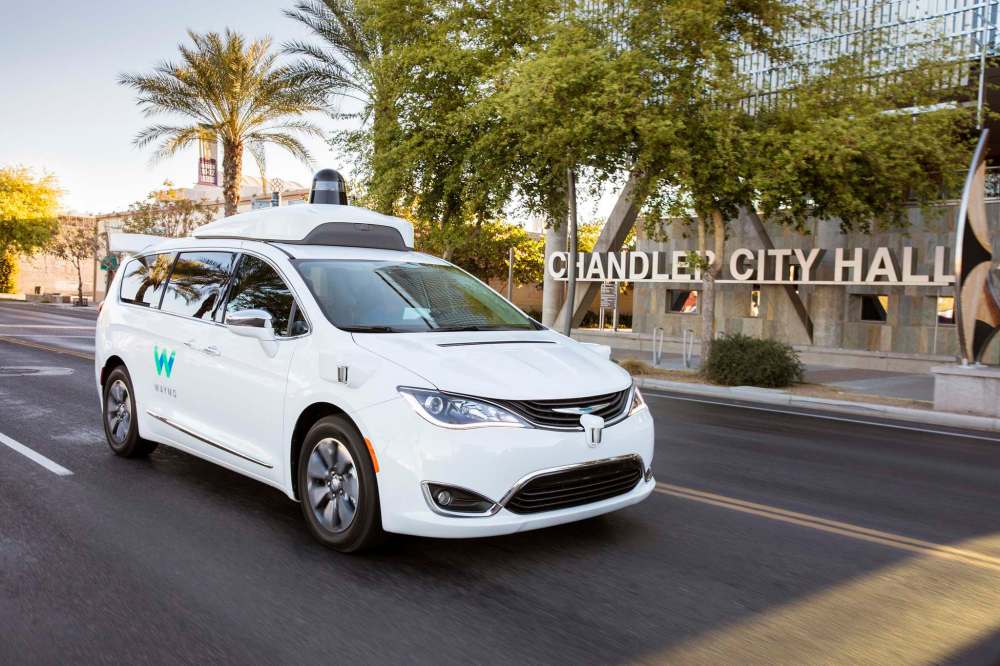
As Davies explains, the military’s interest in autonomous cars dates from the Clinton administration’s 2001 directive to replace, to the extent possible, soldiers in the field with drone ground vehicles. However, just as the internet’s military applications have long since faded from public consciousness, so too does this goal eventually disappear from the book’s narrative, to be replaced with a desire on the part of vehicle developers to meet the transportation needs of the visually impaired and the elderly, the potential of which was demonstrated in a 2016 test drive of Waymo’s Firefly vehicle through Austin, Texas, carrying a single blind occupant.
The other huge market for these vehicles is long-haul trucking, which primarily takes place on freeways at high speeds and currently suffers from both shortages of trained drivers as well as potentially deadly driver fatigue. To meet this demand, Levandowsky created an autonomous trucking company called Otto, which was purchased by Uber and then shuttered in 2018.
Davies is frank about the limitations of autonomous vehicles, but their benefits are also clear: while he does recount two tragic and completely avoidable deaths incurred in the development and testing of autonomous cars, he makes a compelling case for the vastly improved safety such vehicles would offer by assisting occupants in recognizing and avoiding hazards, potentially saving tens of thousands of lives every year.
While until very recently confined to works of science fiction, self-driving cars may soon be everywhere and seen as unremarkable as the internet is to us now. Driven is a fascinating and highly enjoyable ride into that future.
Michael Dudley is a librarian at the University of Winnipeg. He was recently startled to realize while driving on the freeway that his rental car was steering itself.