Hard time

Account of 1971 Kingston prison riot highlights dehumanizing conditions, many of which persist

Advertisement

Advertise with us

Prisons not only handcuff the body, they derail the mind.

Read this article for free:


or

Already have an account? Log in here »

To continue reading, please subscribe:

Subscribe and receive a limited-edition Free Press branded hat or tote.

Digital Subscription

One year of digital access for only $205*

  • Enjoy unlimited reading on winnipegfreepress.com
  • Read the E-Edition, our digital replica newspaper
  • Access News Break, our award-winning app
  • Play interactive puzzles

*First annual payment billed as $205.00 + GST for one year. This annual subscription will automatically renew at $233.00 + GST every 52 weeks (10% off the regular annual price of $259.35). Offer available to new and qualified returning subscribers only. Cancel any time.

To continue reading, please subscribe:

Add Free Press access to your Brandon Sun subscription for only an additional

$1 for the first 4 weeks*

  • Enjoy unlimited reading on winnipegfreepress.com
  • Read the E-Edition, our digital replica newspaper
  • Access News Break, our award-winning app
  • Play interactive puzzles
Start now

*Your next Brandon Sun subscription payment will increase by $1.00 and you will be charged $17.95 plus GST for four weeks. After four weeks, your payment will increase to $24.95 plus GST every four weeks.

Hey there, time traveller!
This article was published 27/03/2021 (1961 days ago), so information in it may no longer be current.

Prisons not only handcuff the body, they derail the mind.

Take the delicious luxury of choice: to sleep in, to eat hamburgers for dinner just because, to wear what we like, to turn the lights off or on, to disagree with authority, to go elsewhere. These are among the everyday freedoms disallowed behind bars, necessary prohibitions that nevertheless dehumanize the people caged there.

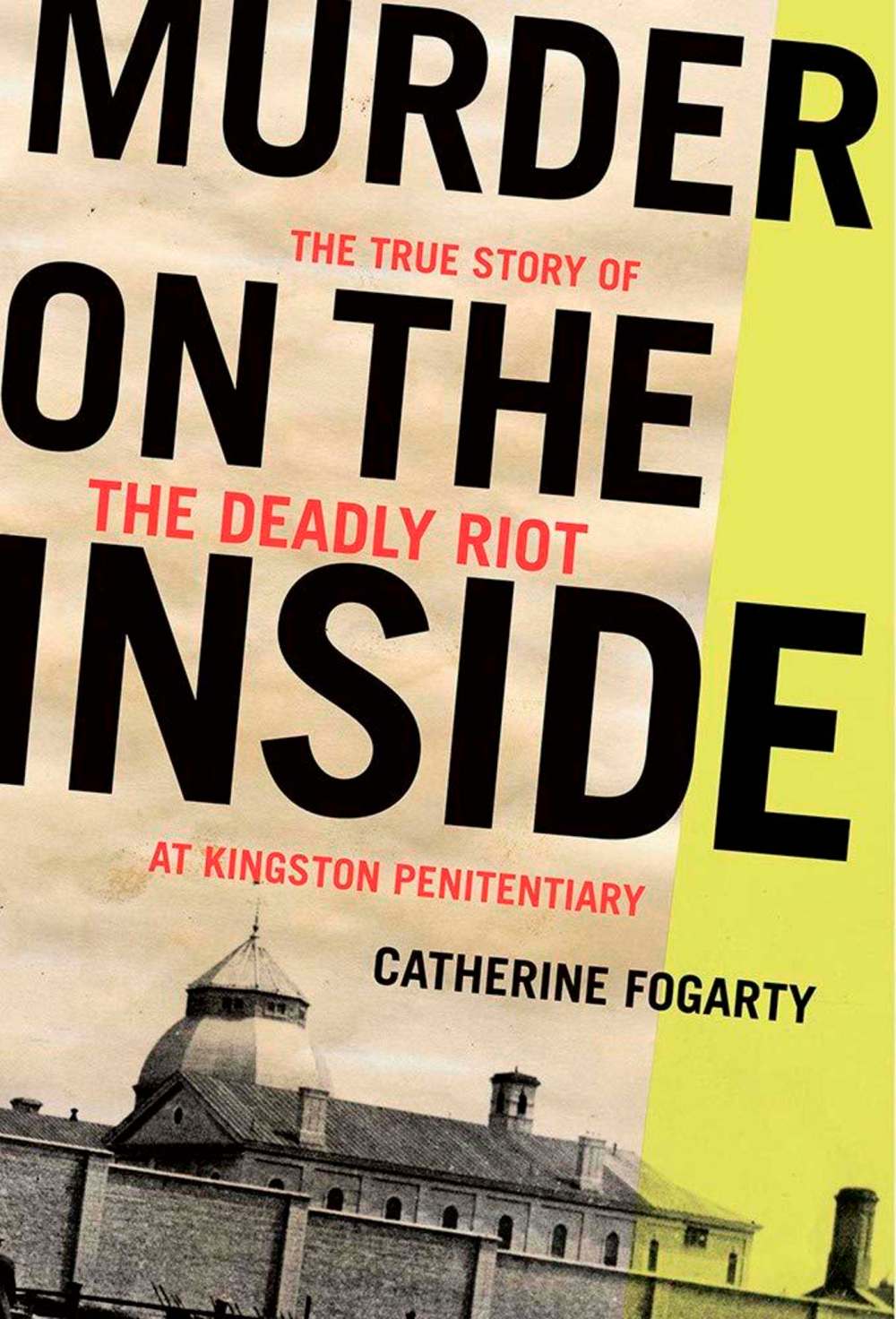
But the most important observation author Catherine Fogarty makes in this her first book (and a good one) is not about the notorious riot in 1971 in Kingston Penitentiary (KP) that she examines, but her conclusion that Canada’s prisons are still much better at housing and hurting people than helping them.

Fogarty writes that Canada’s Correctional Service is a secretive and untrusting organization that opposes change more than it introduces or accepts it and, as a result, pretty well rejects anything that would really humanize conditions in our prisons and make life in them less hopeless, rehabilitation a little more likely.

Fogarty’s latest information on our penal system is that inmate assaults on each other and staff are increasing, suicides are on the up and prison murders are at their highest in a decade.

Fogarty is founder of the Toronto-based TV production company Big Coat Media. March is the 50th anniversary of the bloody and savage riot at Kingston Pen, a prison so old it opened before Canada became a nation. KP closed for good in 2013 and was replaced, notes Fogarty, by a new and even more repressive human zoo named Millhaven.

The flagrant overuse of solitary confinement explained by Fogarty shockingly illustrates how much Canada’s prisons and jails continue to think punitively.

Peter Bregg / The Canadian Press files
Canadian Armed Forces troops arrive at the Kingston penitentiary on April 15, 1971, to help prison officials after inmates took control of the main cell block. The riot ended three days later and left two inmates dead.
Peter Bregg / The Canadian Press files Canadian Armed Forces troops arrive at the Kingston penitentiary on April 15, 1971, to help prison officials after inmates took control of the main cell block. The riot ended three days later and left two inmates dead.

Only six years ago, a federal prisoner spent 41/2 years in solitary under full 24-hour lighting. Eleven years ago, in 2010, a prisoner died in solitary after 162 days. Fifteen years ago, a provincial prisoner self-strangulated in solitary after almost three years there. (The United Nations believes that anything more than 15 consecutive days in solitary is torture.)

The famous writer Charles Dickens visited Kingston Pen some years after it opened in 1835 and described its solitary “as like being buried alive.”

It seems, as documented in Murder on the Inside, glaciers move faster in Canada than prison reform, and changes wanted by prisoners in federal lockups back in the 1970s sound eerily like the complaints being voiced today in one federal institution or another — lack of meaningful work, overcrowding, manhandling of prisoners by guards, the dehumanizing and degrading nature of life in a pen and the lack of preparation for freedom.

Fogarty’s chronicle of the KP riot is a comprehensive and action-packed explanation of what went right and wrong when 500 prisoners in the worn-out and under-staffed pen went rogue, kidnapped six guards, took control of a huge part of the institution for four agonizing days and did a million dollars in damage. And in a frenzy of frustration, a nasty cabal of prisoners savagely assaulted 16 fellow prisoners they hated: segregated sex offenders they chained together and nearly beat to death (one did later die, as did a second inmate).

Murder on the Inside is a shocking tale of sickening savagery and unrewarded heroics, and Fogarty details with growing confidence the unhealthy, sadistic straight-jacket life inside Kingston’s notorious maximum security prison 50 years ago, where the food was lousy, prisoners were locked in tiny cells for 16 hours a day, showered once a week, stood at attention when a guard addressed them (calling him “sir”) and never spoke without permission — if they did, it was off to solitary confinement. Fogarty saw that every day prisoners’ lives were so regimented, so predictable, so the same. Some grew violent, some retreated within as they felt their humanness slipping away.

The rioting prisoners didn’t get what they wanted. Canada’s solicitor-general, according to Fogarty, talked out of both sides of his mouth during negotiations with the prisoners and almost got the hostage guards killed. Guards at the Millhaven maximum security prison that had just opened took the rioting prisoners in after they surrendered — and allegedly beat them with clubs. For the first time in the history of Canada’s penal system, guards were charged with assaulting prisoners. They got off.

Prisoners at the time of the KP riot had a unique use of library books: they stacked them on the lid of their toilets so the rats couldn’t get up into their cells.

In 1973, Barry Craig spent time at the federal Prison for Women and the Collins Bay pen in Kingston while studying at Queen’s University on a fellowship in law awarded to him as a journalist.

Report Error Submit a Tip

More Stories

New lab a win for Winnipeg’s long game

Editorial 4 minute read Preview

New lab a win for Winnipeg’s long game

Editorial 4 minute read 2:01 AM CDT

It would be easy to overlook the announcement this week that the federal government was green-lighting a quarter-billion-dollar expansion of the National Microbiology Laboratory’s Canadian Science Centre for Human and Animal Health on Arlington Street.

Easy to overlook, in part, because it will take a decade to build the new 140,000-square-foot laboratory specializing in medical countermeasures.

But make no mistake, this latest investment from Ottawa galvanizes Winnipeg’s reputation as a global leader in the research of the world’s most infectious diseases. It also confirms that a wager made by Manitoba political leaders nearly 40 years ago is paying off in spades.

The existing NML was, to be frank, hastily conceived compensation for one of the most egregious examples of political pork-barrelling ever seen in Canada.

Read
2:01 AM CDT

The true costs of your pet — for everyone

Jerry Storie 5 minute read Preview

The true costs of your pet — for everyone

Jerry Storie 5 minute read Yesterday at 2:00 AM CDT

Pets are a problem, but few will discuss the downsides of pet ownership.

Read
Yesterday at 2:00 AM CDT

50 years of rare tall grass prairie celebrated

Aaron Epp 4 minute read Preview

50 years of rare tall grass prairie celebrated

Aaron Epp 4 minute read 7:11 PM CDT

Kristin Bestvater is always glad when she heads to Winnipeg’s St. James neighbourhood and visits the Living Prairie Museum.

“It’s beautiful,” Bestvater said of the 13-hectare site, which is one of the last remaining tall grass prairies in North America. “I don’t know how many other cities would have something like this.”

The Island Lakes resident and her nine-year-old son were among the hundreds of people who gathered at the museum on Saturday to celebrate its 50th anniversary.

Designated a park in 1974, it officially became the Living Prairie Museum in 1976 with the opening of an interpretive centre which houses a gallery of exhibits, a gift shop and an observation deck.

Read
7:11 PM CDT

Israel: the new political divide?

David McLaughlin 5 minute read Preview

Israel: the new political divide?

David McLaughlin 5 minute read 2:01 AM CDT

Abdul won and Avi is thrilled.

Federal NDP Leader Avi Lewis emerged from electoral hiding to tell us how it is “exhilarating to witness” a “wave of progressive populism” in the United States. He was referring to the upset winner of Tuesday’s heavily-watched Michigan Senate primary race, Abdul El-Sayed, who barely prevailed over his establishment opponent for the Democratic nomination.

Premier Wab Kinew’s favourite New Democrat (after himself) steadfastly hesitates to take a risk and run for a House of Commons seat in a byelection to kickstart Canada’s version of progressive populism. No hesitation, though, in Lewis immediately basking in the reflected glory of those international comrades and fellow travellers who do.

Writing about the state of Canada’s New Democrats feels like a hate crime — you hate wasting your time — and this is no exception. A better story is what’s driving this modest but undeniable political movement in U.S. politics and whether it might gain traction here in Canada.

Read
2:01 AM CDT

Hard time

Reviewed by Barry Craig 5 minute read Preview

Hard time

Reviewed by Barry Craig 5 minute read Saturday, Mar. 27, 2021

Prisons not only handcuff the body, they derail the mind.

Take the delicious luxury of choice: to sleep in, to eat hamburgers for dinner just because, to wear what we like, to turn the lights off or on, to disagree with authority, to go elsewhere. These are among the everyday freedoms disallowed behind bars, necessary prohibitions that nevertheless dehumanize the people caged there.

But the most important observation author Catherine Fogarty makes in this her first book (and a good one) is not about the notorious riot in 1971 in Kingston Penitentiary (KP) that she examines, but her conclusion that Canada’s prisons are still much better at housing and hurting people than helping them.

Fogarty writes that Canada’s Correctional Service is a secretive and untrusting organization that opposes change more than it introduces or accepts it and, as a result, pretty well rejects anything that would really humanize conditions in our prisons and make life in them less hopeless, rehabilitation a little more likely.

Read
Saturday, Mar. 27, 2021

Trucking operation linked to fatality in Brandon shut down by Alberta government

Malak Abas 5 minute read Preview

Trucking operation linked to fatality in Brandon shut down by Alberta government

Malak Abas 5 minute read Yesterday at 5:24 PM CDT

The Alberta government has shut down Conquer Transport Inc., the trucking company linked to a crash near Brandon in which a 49-year-old woman, who had the right of way, was killed.

Devin Dreeshen, Alberta’s transport minister, said the province launched an investigation into Conquer Transport after one of its semi-trucks ran a stop sign on May 27, 2026 at Highway 110 at Richmond Avenue East.

The semi hit an SUV driven by Xiaoyun Zhang, a Chinese immigrant who worked at the nearby pork processing plant. She died at the scene and the truck driver, 35-year-old Brijpal Panwar, has been charged with dangerous driving causing death.

“Our investigative team went out and … saw numerous non-compliance issues, whether it was hours of service with their drivers not being recorded properly, vehicle maintenance and inspections being insufficient, their safety program also being insufficient.”

Read
Yesterday at 5:24 PM CDT