Resiliency in times of uncertainty
Read this article for free:
or
Already have an account? Log in here »
To continue reading, please subscribe:

Digital Subscription
One year of digital access for only $205*
- Enjoy unlimited reading on winnipegfreepress.com
- Read the E-Edition, our digital replica newspaper
- Access News Break, our award-winning app
- Play interactive puzzles
*First annual payment billed as $205.00 + GST for one year. This annual subscription will automatically renew at $233.00 + GST every 52 weeks (10% off the regular annual price of $259.35). Offer available to new and qualified returning subscribers only. Cancel any time.
To continue reading, please subscribe:
Add Free Press access to your Brandon Sun subscription for only an additional
$1 for the first 4 weeks*
- Enjoy unlimited reading on winnipegfreepress.com
- Read the E-Edition, our digital replica newspaper
- Access News Break, our award-winning app
- Play interactive puzzles
*Your next Brandon Sun subscription payment will increase by $1.00 and you will be charged $17.95 plus GST for four weeks. After four weeks, your payment will increase to $24.95 plus GST every four weeks.
Read unlimited articles for free today:
or
Already have an account? Log in here »
Hey there, time traveller!
This article was published 24/04/2021 (1991 days ago), so information in it may no longer be current.
For the sixth year in a row, we’re showcasing Manitoba writers for National Poetry Month in partnership with the Winnipeg International Writers Festival. As always, we’re taking a page from the League of Canadian Poets, who have announced that this year’s theme is resilience.
As we read the submissions, co-editor Tamar Rubin and I asked ourselves: what does it mean to be resilient in the face of the second or third wave of COVID-19, with its job losses and mental health struggles?
What does it mean to be resilient in Treaty 1 territory and the homeland of the Métis Nation? What does it mean to be resilient in the face of climate change, when we keep on breaking records and there’s no such thing as normal weather?
We’re pleased to present wide range of poets that attempt to answer those questions or at least to document their responses.
Most of all, we’re happy to be reading and celebrating poetry in such uncertain times.
— Ariel Gordon
January
by Alison Wong
is an open palm and hanging rope, the gap
between monkey bars, step between
stones. The edge of a cliff I am watching get smaller as I fall.
January is butterflies in my stomach after finally
leaping off the diving board I’ve spent years toeing
the edge of.
I guess what I’m saying is:
I’ve finally met gravity in person.
It feels nice to set wheels into motion you can’t take back.
I am falling through open air,
going somewhere, which is the important part.
Alison Wong has performed spoken-word poetry at open mics in Winnipeg and Kingston and was a top-ten finalist for CBC’s 2019 First Page Writing Contest.
Un extrait de Polaroïds urbains
par Seream
Winnipeg mouillée
au déluge qui nous guette au printemps
Winnipeg animée
à minuit qui cherche les heures troubles de la nuit dans les
ruelles étroites aux briques colorées de hiéroglyphes urbains
Winnipeg amplifié
au drapeau symbole d’infini et je comprends pourquoi
Winnipeg créditée
sous les projecteurs quand Hollywood illumine
Winnipeg injectée
au prix de l’essence qui change tous les jours
Winnipeg résistée
sans les franco-manitobains et sans la langue française, ça ne
serait pas Winnipeg
Winnipeg centrée
au coeur du continent tout neuf
This poem appears in Mont Blanc-Winnipeg Express, published in April by Les Éditions du Blé.
Seream est un poète, performeur et comédien qui est arrivé au Manitoba de la Haute-Savoie en France avec sa famille en 2017. Il est directeur de la Maison Gabrielle-Roy.
Exist loudly
by Alero Tenumah
Tired of being in spaces with people who simply refuse
to acknowledge my existence.
Avoiding eye-contact will not make me disappear.
Refusing to shake my hand does not move me.
Refraining from saying my name does not deter me.
My presence may be an affront
But I owe it to my ancestors to sit comfortably at this table.
I will not dishonour them by shrinking or retreating.
They have sacrificed too much for me to play small.

Alero Tenumah immigrated to Canada more than 10 years ago and now calls Manitoba home. In her spare time she enjoys writing and cooking.
Return of the Swallows
by Carolyn Hoople Creed
Each year through April day-watch,
one question presses: will skies raked
with searchers’ pointed gazes unveil
the grace of swallowtail flight?
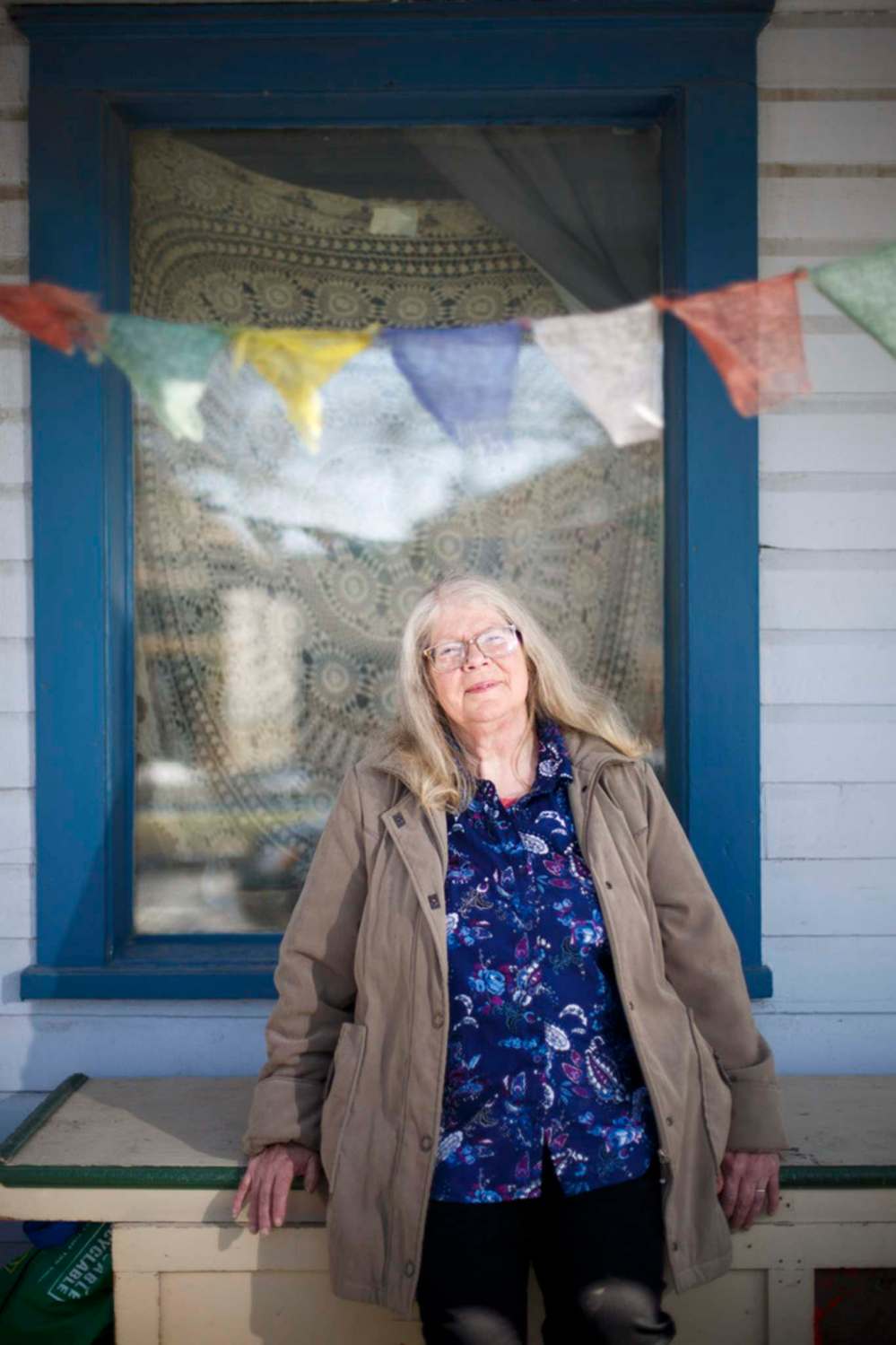
Carolyn Hoople Creed is a poet and Associate Professor at University College of the North.
open water long haul
by melanie brannagan frederiksen
a little storm a short mile
for the first time amy isn’t in the boat
with jack waiting to haul me up by my arms just as my head and throat fill
with lake ontario
the water i cough up tastes of loneliness
the lake its open invitation
especially when i burn with fury when muscles and lungs ignite with a shriek
like lightning announces
a little storm
the lake tastes of rage
singed seaweed on my tongue for months
a short mile
i need gathering to fight the winds and swells jack cheers me on and i haul myself forward imagining amy’s the one shouting when i haven’t heard her voice in four years
set my jaw so i don’t turn back mom on the dock
just a short mile
push on because i can’t be another daughter
leaving her waiting
melanie brannagan frederiksen is a writer, copy editor, and critic whose work has appeared in Prairie Fire, CV2, and Prairie Books NOW.
Guarding a piece of epidemic
by Delshan Anqele
I lived between two pandemics
War pandemic
Virus pandemic
In the end, we always run to tranquility
It is a matter of survival
A thin hair separates survival from death
The precautionary measures are what bother you
It slows down the world
As for life? The core issue —
It is an epidemic that will last forever

Delshan Anqele came to Canada from Syria in 2017. She published a collection of poetry in Arabic and is working on another. She recently started writing in English.
Oshki-ziigwan
by Özten Shebahkeget
taste dead snow in the wind, howling
away our cold lover
as another year blows in
watch winter’s skin go black and green,
the Red River on the run, and shotgun
shells in every color decorate mud
no word for resilience in this tongue,
just zhiibendamowin, like the trees
who resume their stretch for sun
and the moon wanes to a toenail
among winter stars, with no adieu,
as they bid the forest another see you
Oshki-ziigwan – Early spring
Zhiibendamowin – Patience
Özten Shebahkeget is a member of Northwest Angle 33 First Nation and an MFA candidate at the University of Saskatchewan who lives in Winnipeg.
spring murmurations
by Tazi Rodrigues
we woke up to rain. winter eased
its grip on city, let elms fall into
spring, their canopies relaxing over roads
sewn in all winter long. thunder rang and
rolled down the trees, pooled against mosses,
and we woke up to rain –
its glisten along the edges of the
kitchen table, water dripping from the countertops.
briefly it shone like starlings:
glimmered in the bare morning light that
stuttered into the room, holding us in glow,
moved through the apartment trailing glass.
briefly it shone
& the starlings, nestled in the next-door neighbour’s
roof, sung into the rain, dizzied by their
reflections as each drop fell against the windows.
the roads, long congealed by snow and lockdown,
spilled like sap, like thunder song – spilled
into floodplain houses, into us
as we drank coffee at the table. your fingers
detached first, then my knees: we joined the torrent.
we woke up to rain. we woke up to rain.

Tazi Rodrigues is a writer and early-career biologist. Her work has recently appeared in Vallum, CV2, and The Scrivener Review.
Five Haiku
by Harvey Jenkins
toast and cup-of-soup
five more days before
CERB to arrive
hospital sounds
hearing everything
but the diagnosis
subterranean
I think of cherry blossoms
during my shift
slippery patch of ice
only a crow sees
my glasses fly
home-built ice rink
this time we hold each other
and wobble clock-wise
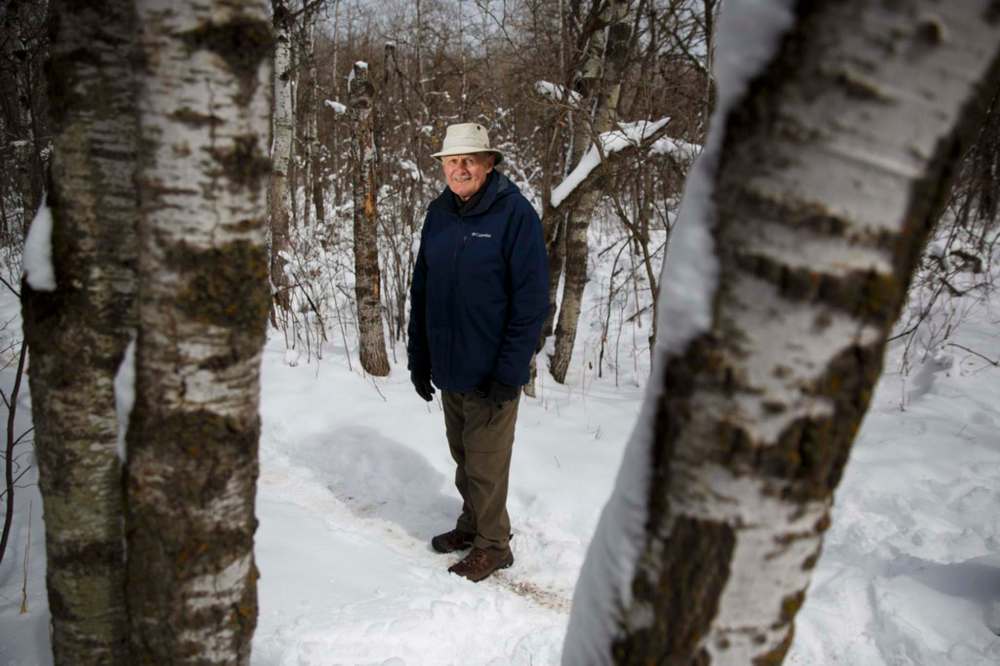
Harvey Jenkins completed the 800 km Santiago de Compostela pilgrimage in 2010 and published the book Haiku Moments on the Camino: France to Finisterre.
Cousin Told Me
by Libby Jeffrey
Cousin told me how
He held his niece once
Under the country night sky
Tents and trailers of family
Nestled between woods of spruce.
Wondering if the moon meant
As it did to him as to her
He stepped away, blocking the sight
By a treetop this late summer night.
Indeed, so she fussed,
Give it back.
Give me back my country nightlight
Uncle stay here til the dew falls and
Keep us safe teach me the bird calls
Show me how to see how to drink it all in.
And how she said it
changed his vision.
But from the moon’s view
All she really did say
Was one simple fuss
Which Cousin told me
He heard in his way.

Libby Jeffrey is an emerging writer in Treaty 1 Territory, Winnipeg. In 2020, she published her debut Babybytes: Becoming a Mom as the World Locked Down.
Small town, big shine
by James Scoles
Small town, big shine
Tough luck at this little
box office: the film has
been shredded and the
lights are dim. But see
the usher still sweeping
her light? Not looking
for rule-breakers, just
wrinkles in the dark.
James Scoles is the author of The Trailer (Signature Editions). He teaches creative writing and literature at the University of Winnipeg.
the shore is the mending site
by Noah Cain
because the river we travel reflects
forest and sky and boulders hide
beneath the moving gleam
emulate the canoe
while more rigid vessels ricochet downstream
powering past minor crashes, a serious wreck
strands them without the materials of repair
emulate the canoe
made from what it travels through
patched with birch bark
bound with boiled spruce roots
sealed with the resin that oozes
from scars in scaly bark

Noah Cain teaches high school English at Lord Selkirk Regional Comprehensive Secondary School. His work has appeared in CV2, Teacher Voice Anthology, and The Temz Review.