Churchills’ turbulent relationship recounted

Advertisement

Advertise with us

On the night that his wife was giving birth to their son, Randolph Churchill was in bed with another man’s wife.

Read this article for free:


or

Already have an account? Log in here »

To continue reading, please subscribe:

Subscribe and receive a limited-edition Free Press branded hat or tote.

Digital Subscription

One year of digital access for only $205*

  • Enjoy unlimited reading on winnipegfreepress.com
  • Read the E-Edition, our digital replica newspaper
  • Access News Break, our award-winning app
  • Play interactive puzzles

*First annual payment billed as $205.00 + GST for one year. This annual subscription will automatically renew at $233.00 + GST every 52 weeks (10% off the regular annual price of $259.35). Offer available to new and qualified returning subscribers only. Cancel any time.

To continue reading, please subscribe:

Add Free Press access to your Brandon Sun subscription for only an additional

$1 for the first 4 weeks*

  • Enjoy unlimited reading on winnipegfreepress.com
  • Read the E-Edition, our digital replica newspaper
  • Access News Break, our award-winning app
  • Play interactive puzzles
Start now

*Your next Brandon Sun subscription payment will increase by $1.00 and you will be charged $17.95 plus GST for four weeks. After four weeks, your payment will increase to $24.95 plus GST every four weeks.

Hey there, time traveller!
This article was published 08/05/2021 (1961 days ago), so information in it may no longer be current.

On the night that his wife was giving birth to their son, Randolph Churchill was in bed with another man’s wife.

This was typical of Randolph, the only son of Britain’s wartime prime minister Winston Churchill.

British journalist Josh Ireland depicts the troubled relationship between Winston and Randolph in a highly readable work of popular narrative history.
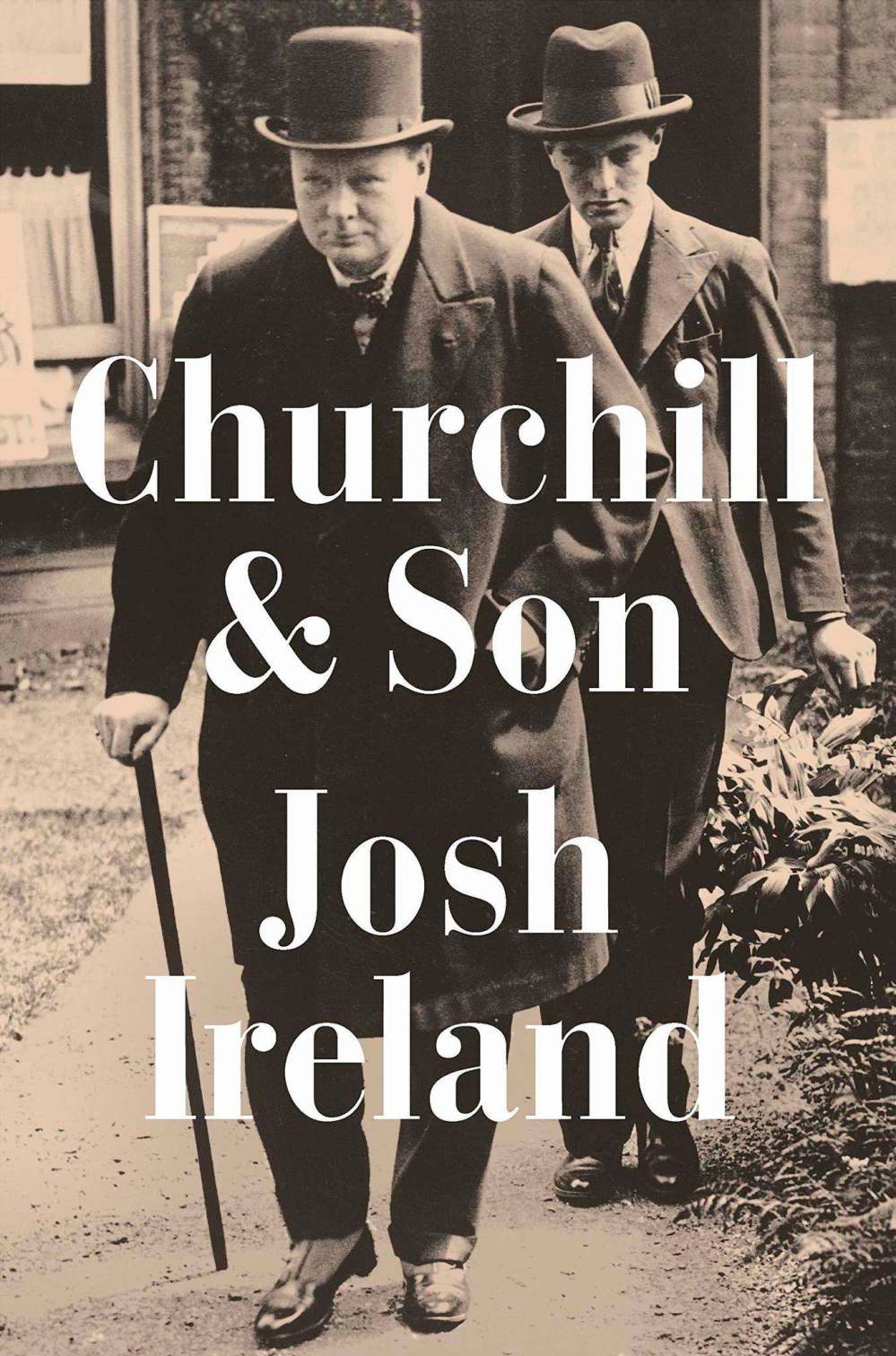
The roots of the Winston-Randolph relationship extend to Winston’s own childhood. His father, British politician Lord Randolph, ignored Winston, and did not even know how old his son was.

Winston was determined that his own son would not be neglected. But Winston’s political career and devotion to the aristocratic life — hunting, playing polo, dining with friends — pulled him away from the family home. He spent only “short bursts of time” with his children — Randolph had three sisters, and a fourth had died in childhood — while their mother Clementine was so devoted to Winston’s career that the children were an afterthought.

Randolph as a child was bored and behaved badly. He craved attention, which he found he could get by being naughty. He needed firm but loving discipline, but did not get it. Instead, Winston spoiled him.

Winston entertained grandiose visions of a political dynasty that he would found with his son. There was one problem with these visions: Randolph himself, who had grown into a lazy, arrogant and rude young man. He was a playboy, a spendthrift, a ne’er-do-well, addicted to gambling and alcohol.

As Ireland writes, Randolph “was louder and ruder and funnier than anybody else, he drank more, gambled more, ate more, and slept with more women than anyone he knew.”

Randolph accepted the political dreams and ambitions that his father had instilled in him. But he eschewed patient, diligent application to achieve his goals. Rather, he thought that charm, charisma and after-dinner witticisms were the key to success.

In 1930, Randolph was invited to make a lecture tour of the United States. He was paid a considerable sum but, by the time the tour was over, he had spent all that he had earned. Moreover, he had incurred debts that would take decades to pay off.

Randolph, it should be said, had some redeeming qualities. He had a genuine gift for public speaking, and a memory that enabled him to recite lengthy passages of classic literature. He had a capacity for kindness. And in the Second World War, he ardently wanted to serve in combat, and did, earning a medal for bravery. He died of a heart attack in 1968 at age 57.

This is a story of frustrated ambition and squandered potential. Above all, it is a study of personality. The author vividly portrays the character of Winston and Randolph, showing how their respective personalities interacted in a relationship that could be, in turn, loving and volatile. Ireland evokes this turbulence in an outstanding account.

Graeme Voyer is a Winnipeg writer.

Report Error Submit a Tip

More Stories

Former Bombers linebacker Gauthier enjoying career as electrician

Taylor Allen 6 minute read Preview

Former Bombers linebacker Gauthier enjoying career as electrician

Taylor Allen 6 minute read Friday, Sep. 18, 2026

Most professional football players don’t ride off into the sunset on their own terms.

Shayne Gauthier was well aware of that, but it didn’t make it sting any less when the Winnipeg Blue Bombers informed the veteran linebacker that they weren’t bringing him back for 2026.

“I was really hoping to play one more (season) because it would have been my 10th season, so, I’d say it didn’t really end the way I wanted,” Gauthier recently told the Free Press.

“It left a little sour taste in my mouth, but that’s part of pro sports. If everybody got the ending that they wanted, then it wouldn’t really work.”

Read
Friday, Sep. 18, 2026

Winnipeg Jets at Edmonton Oilers

0 minute read Yesterday at 3:22 PM CDT

Not falling back means time loop remains unclosed

Jen Zoratti 4 minute read Yesterday at 2:01 AM CDT

I demand restitution. Where’s my hour?

In the traditional fall-back, spring-forward time change set up — you know, ol’ trusty that’s been effect for lo these 63 years — we lost an hour in the spring that we got back in the fall.

That was the social contract: you commit to feeling like you’re on cold medication for a week in March because you know a glorious extra hour of sleep will be returned to you in November. (Unless, of course, you have little kids, but look: we all make our choices.)

Well, that transaction, flawed as it was, isn’t happening this year. That hour you sacrificed to the sun gods in the spring? Gone. Not coming back. We’ve sprung forward and we shan’t be falling back — not in November, and (possibly) not ever. The scale shall remain unbalanced and the loop shall remain unclosed as Manitoba has adopted permanent daylight time.

Family account spiced with magic realism, geopolitical intrigue and a ghost story

Reviewed by Zilla Jones 4 minute read Preview

Family account spiced with magic realism, geopolitical intrigue and a ghost story

Reviewed by Zilla Jones 4 minute read Yesterday at 2:01 AM CDT

Tom Lin’s second novel Babylon, South Dakota moves beyond a historical account of an immigrant family’s struggle, delightfully blending and bending genres.

Lin is a Chinese-born novelist whose family emigrated to the U.S. when he was four years old. His debut novel, The Thousand Crimes of Ming Tsu, won the 2022 Andrew Carnegie Medal for Excellence in Fiction, making him the youngest ever recipient of that award. He earned a PhD in English from the University of California Davis and is currently an assistant professor of English and creative writing at the University of Iowa.

Babylon, South Dakota takes place in an unspecified time period that can be understood to be during the Mao era — likely the 1950s or ’60s. A young Chinese couple, the Hsuis, immigrate to the rural community that gives the book its title. They take the names Saul and Mei and settle on a 160-acre homestead left to them by a distant relative.

Saul’s dream is to breed and sell chrysanthemums from seeds he brought from China, while Mei wants to raise livestock. They speak no English, know nothing of life in the United States, are unprepared for the harshness of winter and the isolation of the farm and bring nothing with them except some gold, which Mei hides around the house for emergencies. Their only link to the outside world is a discarded and marginally functioning TV set, which Saul rescues and rigs up.

Read
Yesterday at 2:01 AM CDT

Near-future U.S. the setting for surreal dual-world storyline

Reviewed by Morley Walker 4 minute read Preview

Near-future U.S. the setting for surreal dual-world storyline

Reviewed by Morley Walker 4 minute read Yesterday at 2:01 AM CDT

It’s not every day you encounter a seriously intended literary novel that attempts to dramatize a mind-bending physics theory like quantum entanglement.

But then the B.C.-born-and-raised Emily St. John Mandel is not your everyday Canadian literary writer.

In her late 40s, she has lived in the U.S. for her entire writing career. She is best known for her 2014 dystopian novel Station Eleven, about a Shakespearean acting troupe navigating a pandemic-ravaged America.

Her new outing, her seventh, Exit Party, shares DNA with detective and sci-fi genres more than with conventional literary fiction.

Read
Yesterday at 2:01 AM CDT

Gillingham in lead with decided voters

Nicole Buffie 6 minute read Preview

Gillingham in lead with decided voters

Nicole Buffie 6 minute read Friday, Sep. 18, 2026

A cloud of uncertainty is hanging over Winnipeg as October’s municipal election nears.

Three months after a poll showed more than 40 per cent of Winnipeggers wanted to see someone other than current mayor Scott Gillingham elected, a new Abacus Data poll indicates more than half of Winnipeg voters are undecided heading into next month’s civic election.

Of decided voters, 55 per cent favour Gillingham compared to 23 per cent for former councillor and provincial cabinet minister Kevin Klein and 11 per cent for funeral director Mike Vogiatzakis.

Of all respondents, just over 50 per cent said they were unsure while 13 per cent said they will not vote.

Read
Friday, Sep. 18, 2026