On the job
History and future of work in Canada chronicled
Advertisement
Read this article for free:
or
Already have an account? Log in here »
To continue reading, please subscribe:

Digital Subscription
One year of digital access for only $205*
- Enjoy unlimited reading on winnipegfreepress.com
- Read the E-Edition, our digital replica newspaper
- Access News Break, our award-winning app
- Play interactive puzzles
*First annual payment billed as $205.00 + GST for one year. This annual subscription will automatically renew at $233.00 + GST every 52 weeks (10% off the regular annual price of $259.35). Offer available to new and qualified returning subscribers only. Cancel any time.
To continue reading, please subscribe:
Add Free Press access to your Brandon Sun subscription for only an additional
$1 for the first 4 weeks*
- Enjoy unlimited reading on winnipegfreepress.com
- Read the E-Edition, our digital replica newspaper
- Access News Break, our award-winning app
- Play interactive puzzles
*Your next Brandon Sun subscription payment will increase by $1.00 and you will be charged $17.95 plus GST for four weeks. After four weeks, your payment will increase to $24.95 plus GST every four weeks.
Read unlimited articles for free today:
or
Already have an account? Log in here »
Hey there, time traveller!
This article was published 15/05/2021 (1915 days ago), so information in it may no longer be current.
In 1949, a two-masted schooner named the Amanda, carrying 31 Latvian refugees fleeing the Soviet Union, ran into serious trouble.
Its sails were shredded in an Atlantic gale and its engine failed. The ship and its passengers were rescued by U.S. and Canadian ships.
The Liepins family aboard the Amanda settled in Canada. The father made a good living with his carpentry skills, and the three children became professionals.
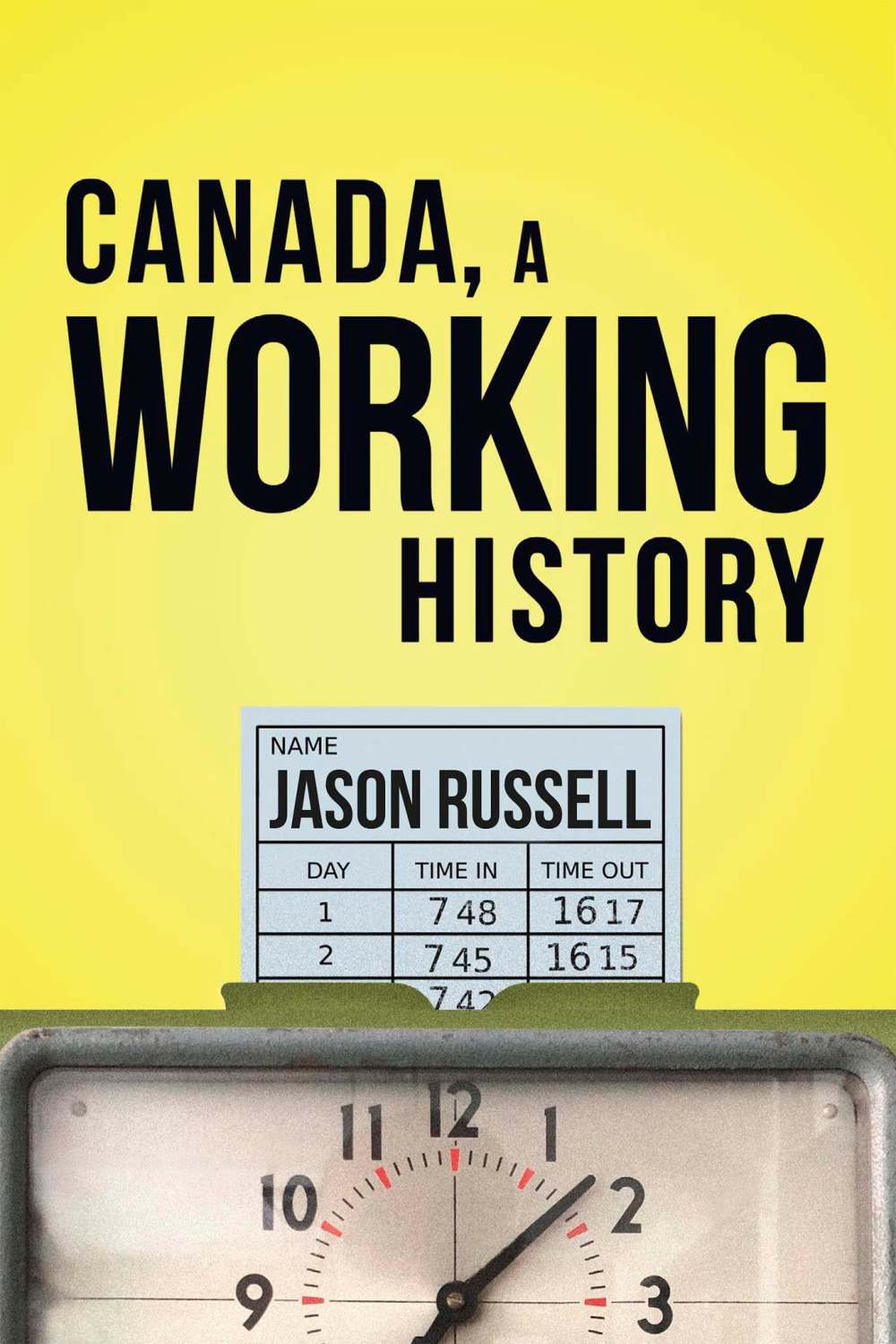
Canada, A Working History chronicles the changing nature of work and those who performed it from pre-Confederation times to now.

Author Jason Russell tells the story of the Liepins family as an example of how immigrants and refugees changed the nature and composition of the Canadian workforce after the Second World War.
Russell has a Ph.D. in history from York University and is a professor at State University of New York in Buffalo. In this book, Russell clearly draws on the research he developed for his four previous books on Canadian business, labour and education issues.
His anecdote about the Liepins family is notable for its detail and human scale in a book that has few other such stories. The book is dedicated to the author’s son, who has Liepins as his middle name, perhaps explaining the source of the information.
The book has almost no other anecdotes in which we see or hear a specific person being affected by the history Russell is recounting.
Even events such as the Winnipeg General Strike, which the author acknowledges as a seminal moment in Canadian labour history, rate no more than passing mention.
Having said that, Russell does provide some good macro-economic details, including the average salaries for most eras. He diligently points out the wage gap between men and women that has existed in every era and continues to this day.
The book would be even stronger with some additional detail about what life was like for Canadian workers in different eras. What did those average salaries buy in terms of housing and food?
Russell does discuss how being able to afford automobiles, radio, movies and TV improved the living standard of working-class families, while the portrayals of their lives in the new media influenced how they thought of themselves and their place in society.
The author tries his best to balance the many American influences in popular culture with some Canadian content. A paragraph about Archie Bunker and All in the Family is followed by one about Relic and The Beachcombers.
Some of Russell’s best work comes in the final section of the book, when he looks at current trends and what they might portend for the future of work in Canada.
Canadians are already used to seeing jobs disappear due to automation, such as robots replacing factory workers on assembly lines or self-checkouts reducing the number of cashiers in grocery stores.
But that is just the tip of the iceberg, Russell warns.
Technology, the gig economy and heartless employers are combining to create the “precariat” — a term coined in 2011 by author Guy Standing to describe workers whose employment is precarious.
Their working conditions — low wages and no job security — preclude the kind of happy social compact Russell outlines in which previous generations of workers could afford to buy houses, vehicles and vacation homes.
Russell agrees with Standing that the creation of an unstable, hungry working class could lead to populist revolts, citing the election of Donald Trump and the advent of Brexit as prime examples.
“Populists have not stormed the gates of power in Canada, as they have in America and Britain,” Russell wrote, before the January 6 insurrection that saw the U.S. Capitol under attack by an unruly mob.
Just as previous governments introduced universal health care, the Canada Pension Plan and Old Age Security to take the rough edges off capitalism, Russell concludes that the time is now to implement a basic income.
“A basic income provides dignity and also confers citizenship rights in a society in which being able to consume is valued,” he says.
Ensuring that all Canadians have a decent place to live and nutritious food to eat would be the best chapter to write next in Canada’s working history.
Donald Benham is a freelance writer and educator and a board member of Basic Income Manitoba.