

Originsof mass delusion detailed
Advertisement
Read this article for free:
or
Already have an account? Log in here »
To continue reading, please subscribe:
Monthly Digital Subscription
$1 per week for 24 weeks*
- Enjoy unlimited reading on winnipegfreepress.com
- Read the E-Edition, our digital replica newspaper
- Access News Break, our award-winning app
- Play interactive puzzles
*Billed as $4.00 plus GST every four weeks. After 24 weeks, price increases to the regular rate of $19.95 plus GST every four weeks. Offer available to new and qualified returning subscribers only. Cancel any time.
Monthly Digital Subscription
$4.99/week*
- Enjoy unlimited reading on winnipegfreepress.com
- Read the E-Edition, our digital replica newspaper
- Access News Break, our award-winning app
- Play interactive puzzles
*Billed as $19.95 plus GST every four weeks. Cancel any time.
To continue reading, please subscribe:
Add Free Press access to your Brandon Sun subscription for only an additional
$1 for the first 4 weeks*
*Your next subscription payment will increase by $1.00 and you will be charged $16.99 plus GST for four weeks. After four weeks, your payment will increase to $23.99 plus GST every four weeks.
Read unlimited articles for free today:
or
Already have an account? Log in here »
Hey there, time traveller!
This article was published 05/06/2021 (1755 days ago), so information in it may no longer be current.
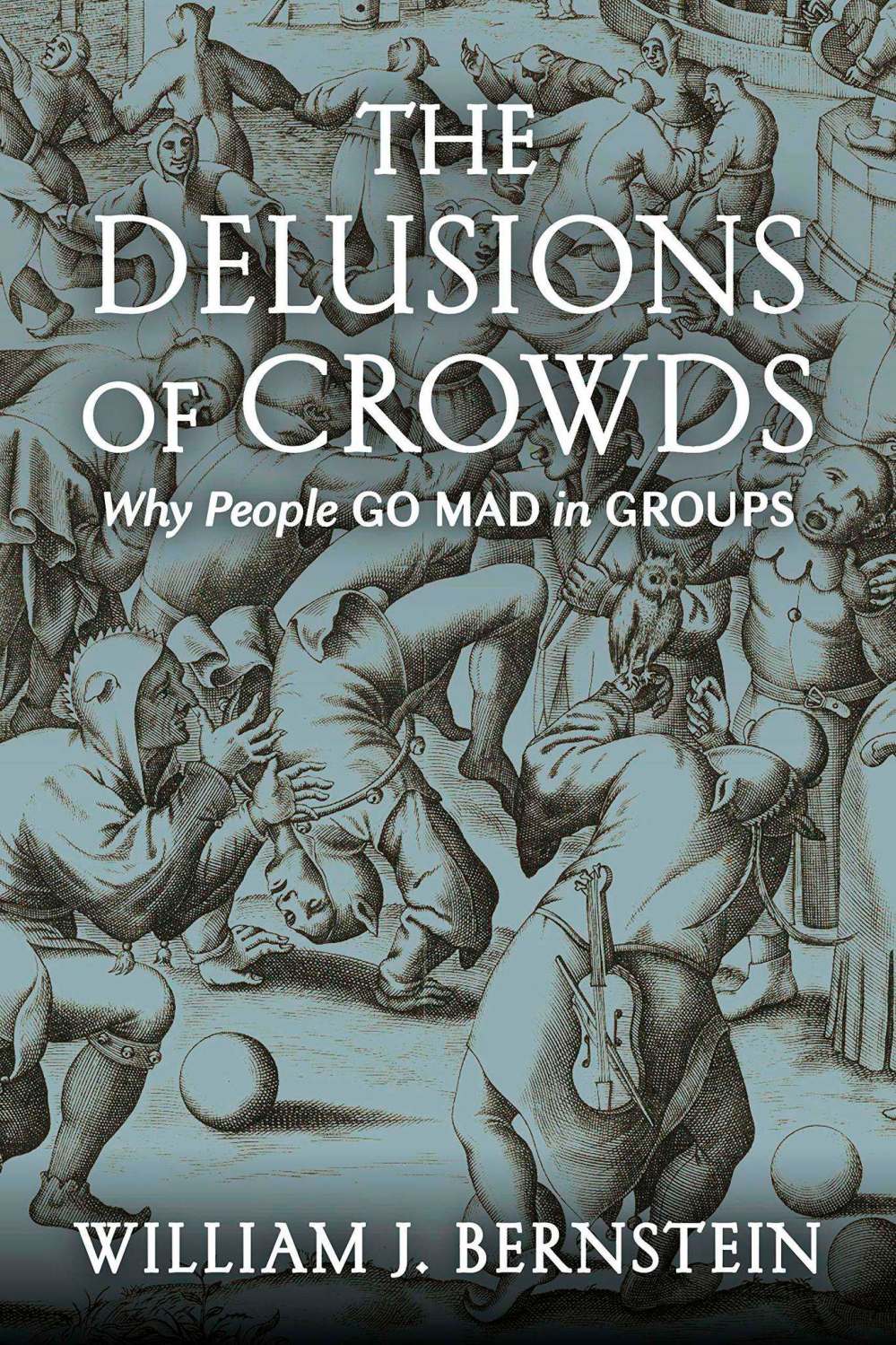
Popular get-rich-quick schemes and messianic delusions share billing in this history of financial and religious mass manias over five centuries.
William J. Bernstein gives fleeting attention to outbreaks of mass political delusion. Instead, he focuses on how false beliefs about wealth or salvation gain traction in a group or society. And when people toss critical thinking out the window there are lots of parallels in the pursuit of riches and the flight from avenging angels, he maintains.
Bernstein is an American financial theorist. He’s the author of seven books, many about investment strategies. He’s also a bit of a polymath. He holds a PhD in chemistry and is also an MD who practised as a neurologist until his retirement.
Most of the great incidents of financial and market lunacy surface here — the early 18th-century South Sea Bubble, the 1929 stock market crash, the late 1990s Enron scandal, the dot-com meltdown of tech stocks in 2000-01. And all are nicely told, detailed and just-enough didactic, and with occasional whiffs of drama.
The religious manias make for even juicier, albeit bloodier, reading. Both 16th-century German Anabaptists and the 21st-century Islamic State get chapters that mark religious hysteria as one of the the mind’s most savage creations.
Much of the book is devoted to made-in-the-U.S.A. movements. Bernstein devotes a lot of analysis to contemporary American fundamentalist “dispensationalist” groups who hold that Armageddon is around the corner, and that they’ll ascend to heaven just as the world is about to be annihilated by nuclear war.
He traces their beliefs back to 19th-century Baptist preacher William Miller, who prophesied, based on his interpretation of scripture, that the world would end Oct. 22, 1844. Hundreds of thousands of Americans bought into his “end time” prediction, and gave away all their money and property in the belief they’d have no need for worldly goods in heaven.

A more recent adherent of end-times theology surfaced in Waco, Texas, in David Koresh and his Branch Davidian sect. In 1993, the 51-day siege of the cult’s compound by the the FBI and the Bureau of Alcohol, Firearms and Tobacco ended in a fire that left 76 Branch Davidians dead, including Koresh.
Bernstein cites research that goes a long way to explaining why it’s hard to disabuse Trumpian true believers of their conviction that Joe Biden “stole” the U.S. presidential election. “Psychologists have accumulated experimental data that dissect the human preference of rationalization over rationality,” he writes. “When presented with facts and data that contradict our deeply held beliefs, we generally do not reconsider and alter those beliefs appropriately. More often than not, we avoid contrary facts and data, and when we cannot avoid them, our erroneous assessments will occasionally even harden, and, yet more amazingly, make us more likely to proselytize them.”
Bernstein doesn’t make this connection to the Donald and his faithful, but it’s glaringly there to be made. Moreover, there were religious overtones to the riot in Washington, D.C., on Jan. 6. Some insurrectionists that stormed the U.S. Capitol believed — and still believe — Trump is an agent of either God or Jesus Christ (or both).
Bernstein has marshalled a lot of history. Better yet, he’s packaged it in a narrative that’s at once learned and engaging.
Douglas J. Johnston is a Winnipeg lawyer and writer.