Warrior mentality

Thomas-Müller chronicles turmoil and triumphs in brave new memoir

Advertisement

Advertise with us

According to Free Press columnist Niigaan Sinclair, there is a stark difference between settler and First Nation understandings of what it means to be a warrior. For white settlers, we tend to associate the notion with power, violence and fame; for the Anishinaabe, specifically, warrior is associated with terms like honour, protection, love, gift and heart.

Read this article for free:


By clicking the button above, an account will be created and you will begin to receive some of our recommended newsletters. You may opt out of any newsletter by visiting your Email and Communication Preferences page or by clicking "unsubscribe" at the bottom of any email.

or

Already have an account? Log in here »

To continue reading, please subscribe:

Digital Subscription

One year of digital access for only $1.44 a week*

  • Enjoy unlimited reading on winnipegfreepress.com
  • Read the E-Edition, our digital replica newspaper
  • Access News Break, our award-winning app
  • Play interactive puzzles

*Billed as $5.77 plus GST every four weeks. After 52 weeks, price increases to the regular rate of $19.95 plus GST every four weeks. Offer available to new and qualified returning subscribers only. Cancel any time.

To continue reading, please subscribe:

Add Free Press access to your Brandon Sun subscription for only an additional

$1 for the first 4 weeks*

  • Enjoy unlimited reading on winnipegfreepress.com
  • Read the E-Edition, our digital replica newspaper
  • Access News Break, our award-winning app
  • Play interactive puzzles
Start now

*Your next Brandon Sun subscription payment will increase by $1.00 and you will be charged $17.95 plus GST for four weeks. After four weeks, your payment will increase to $24.95 plus GST every four weeks.

Hey there, time traveller!
This article was published 16/10/2021 (1832 days ago), so information in it may no longer be current.

According to Free Press columnist Niigaan Sinclair, there is a stark difference between settler and First Nation understandings of what it means to be a warrior. For white settlers, we tend to associate the notion with power, violence and fame; for the Anishinaabe, specifically, warrior is associated with terms like honour, protection, love, gift and heart.

Hearing and seeing Clayton Thomas-Müller for the first time in 2015, I was astounded by his courage, audacity and intellect. At a rally in Winnipeg, he took then-NDP leader Tom Mulcair to task, pulling the rug out from under his inability to take a stand on climate change. Mulcair was on the verge of potentially winning the first ever federal election for the NDP, but at the packed rally, Thomas-Müller stopped him in his tracks, revealing the leader’s superficiality and lack of social democratic roots. Mulcair was unable to articulate in any real way a plan for ensuring environmental justice for Canadians.

Standing up for Indigenous rights, the biosphere and justice has been the heart of Thomas-Müller’s work for decades. In his latest memoir, Life in the City of Dirty Water, he painfully and bravely reveals his journey through catastrophic pain, unbelievable odds and a reconnection to land, language and culture through his work defending Mother Earth.
RUTH BONNEVILLE / WINNIPEG FREE PRESS files
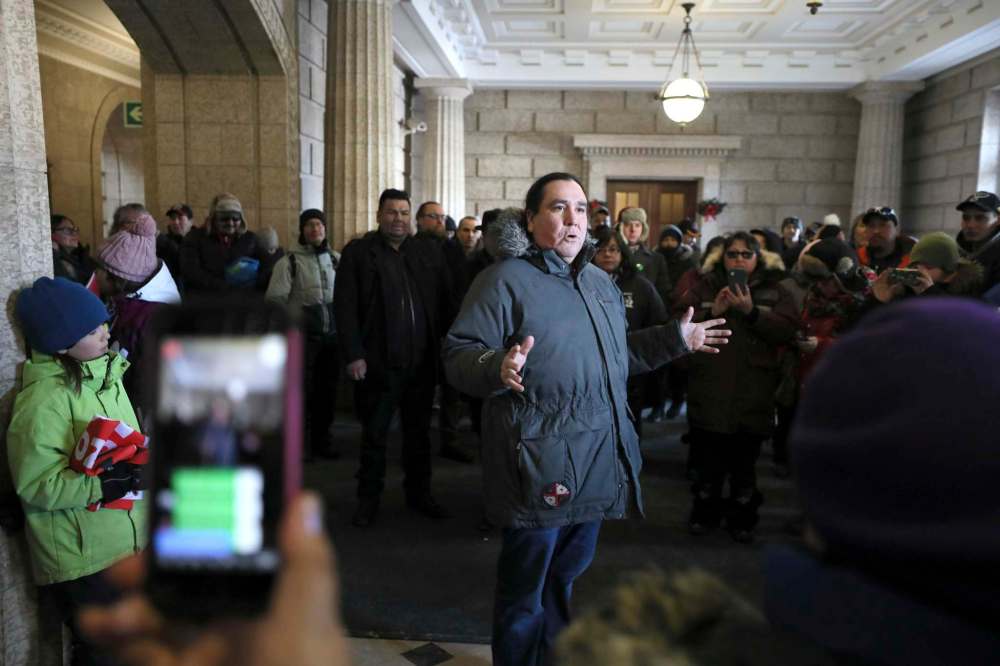
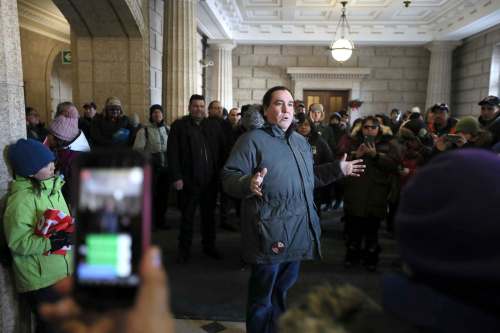
In this 2019 photo, Clayton Thomas-Müller talks to the media inside the Legislative Building. Standing up for Indigenous rights, the biosphere and justice has been at the heart of Thomas-Müller’s work for decades.
RUTH BONNEVILLE / WINNIPEG FREE PRESS files In this 2019 photo, Clayton Thomas-Müller talks to the media inside the Legislative Building. Standing up for Indigenous rights, the biosphere and justice has been at the heart of Thomas-Müller’s work for decades.

Written in almost two parts — one consisting of childhood recollections, written in the voice of a child, and the other as he begins to engage in resistance to colonial and neoliberal forces — the memoir begins with his account of how his family was systematically ripped from the land. (Thomas-Müller grew up a member of the Treaty #6 based Mathias Colomb Cree Nation, also known as Pukatawagan, located in Northern Manitoba, and now lives in Winnipeg.)

Every step of his journey seemed to be coated with a certain degree of violence, isolation and anger. The genocidal policies of the Canadian state fundamentally changed his life forever and, as Thomas-Müller states, “My culture was slipping through my fingers.”

But after bouncing from home to home, prairie city to prairie city, and escaping a life within the Manitoba Warriors, Thomas-Müller begins connecting with various social justice organizations, including the Aboriginal Council of Winnipeg, where he begins to learn to be an activist and an organizer, is mentored by elders and where his eyes begin to open up to a larger world. For Thomas-Müller, “You can’t be an Indian and not be political.”

And so following his escape from the streets of Winnipeg and youth correction centers, Thomas-Müller begins to work for Indigenous and youth organizations throughout Turtle Island and beyond, learning to support community action while fiercely engaging with the hegemonic and corporate forces which collude to govern and extract jointly. Not deterred by the constant struggle of being outgunned, Thomas-Müller develops a keen and focused path: “…a warrior is defined by the struggle… It is his purpose.”

As he recounts his entry into his life as a land and water defender, Thomas-Müller connects more and more with the land, his Cree culture and his own healing. His honesty about his mistakes and the pain he has caused others is a beautiful cautionary tale for all of us — that life is not a binary transition from bad to good, or vice versa. The human condition is complex, in a state of flux.

Throughout the memoir Thomas-Müller admits to and confronts his rage: “I was angry. I was hard.” His anger manifested itself from a tough childhood marshalled from a loss of connection with his land, language and people coupled with generations of trauma.

And the anger was, and is, inevitable. “I saw violence and broken lives when I looked around downtown Winnipeg,” Thomas-Müller writes. “I saw communities systemamtically robbed all over Turtle Island. I saw the land itself raped and plundered. Who wouldn’t be angry?”

But as he grew and has grown, elders, his partner and now his two sons have helped focus his tremendous work with 350.org and communities all over the world. As he explains, “anger is not enough if what you want is justice.”
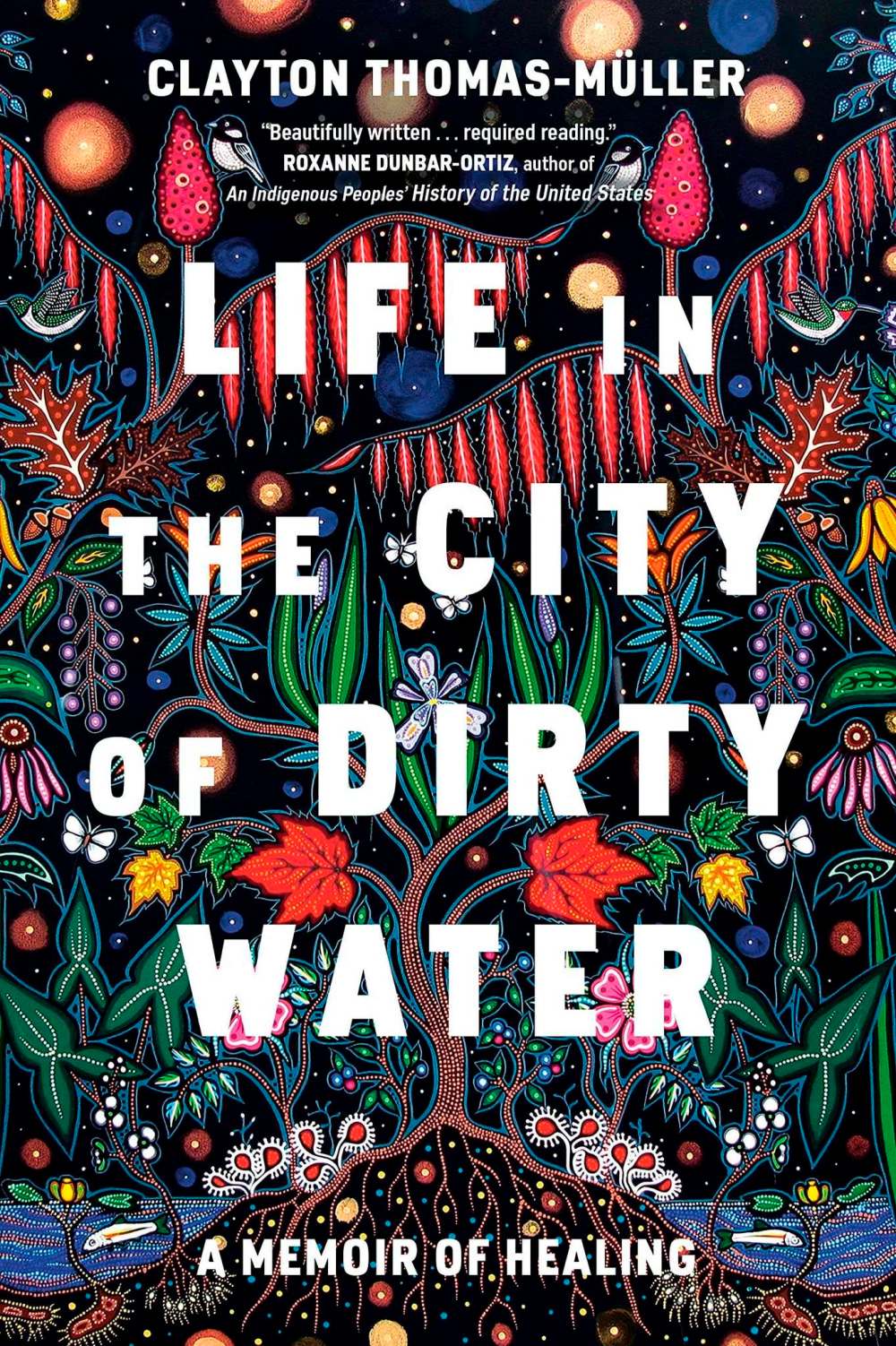
His memoir is an artefact of transformation — a transformation of a hardened youth who endured more tragedy and danger than most of us can imagine into a defender of people, land and the notion that all species and systems are connected.

For Thomas-Müller, this transformation is still ongoing, one in which, he writes, “I convert my anger into love.”

And it is this love that situates him back on the land, back dancing and connecting back to what it means to be Cree. Despite the anger, violence and isolation, Thomas-Müller continues to embody what it means to be a warrior: “Warriors are not defined by fighting. They are defined by fighting for.”

Matt Henderson is assistant superintendent of Seven Oaks School Division.
Report Error Submit a Tip

More Stories

Thomas-Müller chronicles turmoil and triumphs in brave new memoir

Reviewed by Matt Henderson 5 minute read Preview

Thomas-Müller chronicles turmoil and triumphs in brave new memoir

Reviewed by Matt Henderson 5 minute read Saturday, Oct. 16, 2021

According to Free Press columnist Niigaan Sinclair, there is a stark difference between settler and First Nation understandings of what it means to be a warrior. For white settlers, we tend to associate the notion with power, violence and fame; for the Anishinaabe, specifically, warrior is associated with terms like honour, protection, love, gift and heart.

Hearing and seeing Clayton Thomas-Müller for the first time in 2015, I was astounded by his courage, audacity and intellect. At a rally in Winnipeg, he took then-NDP leader Tom Mulcair to task, pulling the rug out from under his inability to take a stand on climate change. Mulcair was on the verge of potentially winning the first ever federal election for the NDP, but at the packed rally, Thomas-Müller stopped him in his tracks, revealing the leader’s superficiality and lack of social democratic roots. Mulcair was unable to articulate in any real way a plan for ensuring environmental justice for Canadians.

Standing up for Indigenous rights, the biosphere and justice has been the heart of Thomas-Müller’s work for decades. In his latest memoir, Life in the City of Dirty Water, he painfully and bravely reveals his journey through catastrophic pain, unbelievable odds and a reconnection to land, language and culture through his work defending Mother Earth.

Written in almost two parts — one consisting of childhood recollections, written in the voice of a child, and the other as he begins to engage in resistance to colonial and neoliberal forces — the memoir begins with his account of how his family was systematically ripped from the land. (Thomas-Müller grew up a member of the Treaty #6 based Mathias Colomb Cree Nation, also known as Pukatawagan, located in Northern Manitoba, and now lives in Winnipeg.)

Read
Saturday, Oct. 16, 2021

Dozens, if not hundreds, of wounds inflicted on man, murder trial told

Dean Pritchard 3 minute read Preview

Dozens, if not hundreds, of wounds inflicted on man, murder trial told

Dean Pritchard 3 minute read Tuesday, Oct. 20, 2026

The body of a Winnipeg man beaten to death in a North End drug house was outside a Flora Avenue church for nearly a week before it was discovered, a court has been told.

Read
Tuesday, Oct. 20, 2026

Katie Zacharia and the telling of lies

Pam Frampton 5 minute read Preview

Katie Zacharia and the telling of lies

Pam Frampton 5 minute read Yesterday at 2:00 AM CDT

U.S. President Donald Trump’s new press secretary made her debut last week and was almost universally panned and parodied, lasting just five days before being fired.

Read
Yesterday at 2:00 AM CDT

You’re facing double trouble with infatuation

Maureen Scurfield 4 minute read Yesterday at 2:00 AM CDT

DEAR MISS LONELYHEARTS: I started enjoying the company of women in my running group so much that I ran more and more, and dropped 35 pounds over the summer and early fall. And in the summer I became attracted to a bisexual woman in the group.

At first, we claimed we were “doing OK” with the men we married. But now, feelings of all kinds are accelerating between us.

I must say I’ve suspected my husband has had another woman in recent years, but now it doesn’t bother me the same way. I finally understand wanting two people at one time. I tell myself I’m not “cheating” on anybody — because I’m not cheating on my husband with another man. But that’s not even fooling me, anymore. I’m feeling a lot more emotion for my female love interest.

So now what? I don’t want to disrupt my whole family, so should I keep it a secret for everyone’s sake? I must say the female object of my affection isn’t thinking of leaving her husband and family. I could be wrong, but I suspect she’s just having a fun time experimenting.

Exchange welcomes new gallery

Jen Zoratti 4 minute read Preview

Exchange welcomes new gallery

Jen Zoratti 4 minute read Yesterday at 5:49 PM CDT

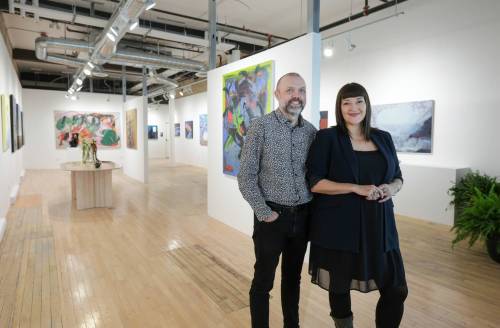
Co-owned by Laura Porath and Mike Page, Lucent Gallery + Design Studio celebrates its grand opening, Thursday.

Read
Yesterday at 5:49 PM CDT

A vote for public education

Shannon D. M. Moore and Melanie Janzen 4 minute read 2:00 AM CDT

On Wednesday, Oct. 28, Manitobans will head to the polls for municipal elections. Alongside their choices for mayors, reeves and councillors, voters will also have an opportunity to elect their school trustees.

In 2021, people across Manitoba rejected the government’s attempts to eradicate locally elected school boards and to centralize school governance. By defeating Bill 64, Manitobans demonstrated their commitment to maintaining locally elected school boards and to the ideals of public education.

School trustees are locally elected representatives who help govern their public school divisions. They make decisions about the direction and priorities of their school divisions, oversee budgets and help establish policies and programs that shape students’ educational experiences. Trustees also help determine how resources are allocated, advocate for the needs of students and communities and provide a link between local residents and the provincial government. They can raise — and address — concerns about class sizes, staffing, student supports, accessibility, school facilities and the resources educators need to do their jobs.

Despite the important role trustees play in communities across the country, school board elections in Canada have historically received little public or media attention. Low voter turnout for municipal elections (25 to 35 per cent), combined with ballot drop-off for the section on school trustees, single-digit turnouts for standalone school board elections and the number of trustees who run unopposed are all emblematic of the perception that school board elections are low stakes.