Franzen’s new opus a pastoral pleasure
Advertisement
Read this article for free:
or
Already have an account? Log in here »
To continue reading, please subscribe:

Digital Subscription
One year of digital access for only $205*
- Enjoy unlimited reading on winnipegfreepress.com
- Read the E-Edition, our digital replica newspaper
- Access News Break, our award-winning app
- Play interactive puzzles
*First annual payment billed as $205.00 + GST for one year. This annual subscription will automatically renew at $233.00 + GST every 52 weeks (10% off the regular annual price of $259.35). Offer available to new and qualified returning subscribers only. Cancel any time.
To continue reading, please subscribe:
Add Free Press access to your Brandon Sun subscription for only an additional
$1 for the first 4 weeks*
- Enjoy unlimited reading on winnipegfreepress.com
- Read the E-Edition, our digital replica newspaper
- Access News Break, our award-winning app
- Play interactive puzzles
*Your next Brandon Sun subscription payment will increase by $1.00 and you will be charged $17.95 plus GST for four weeks. After four weeks, your payment will increase to $24.95 plus GST every four weeks.
Read unlimited articles for free today:
or
Already have an account? Log in here »
Hey there, time traveller!
This article was published 13/11/2021 (1778 days ago), so information in it may no longer be current.
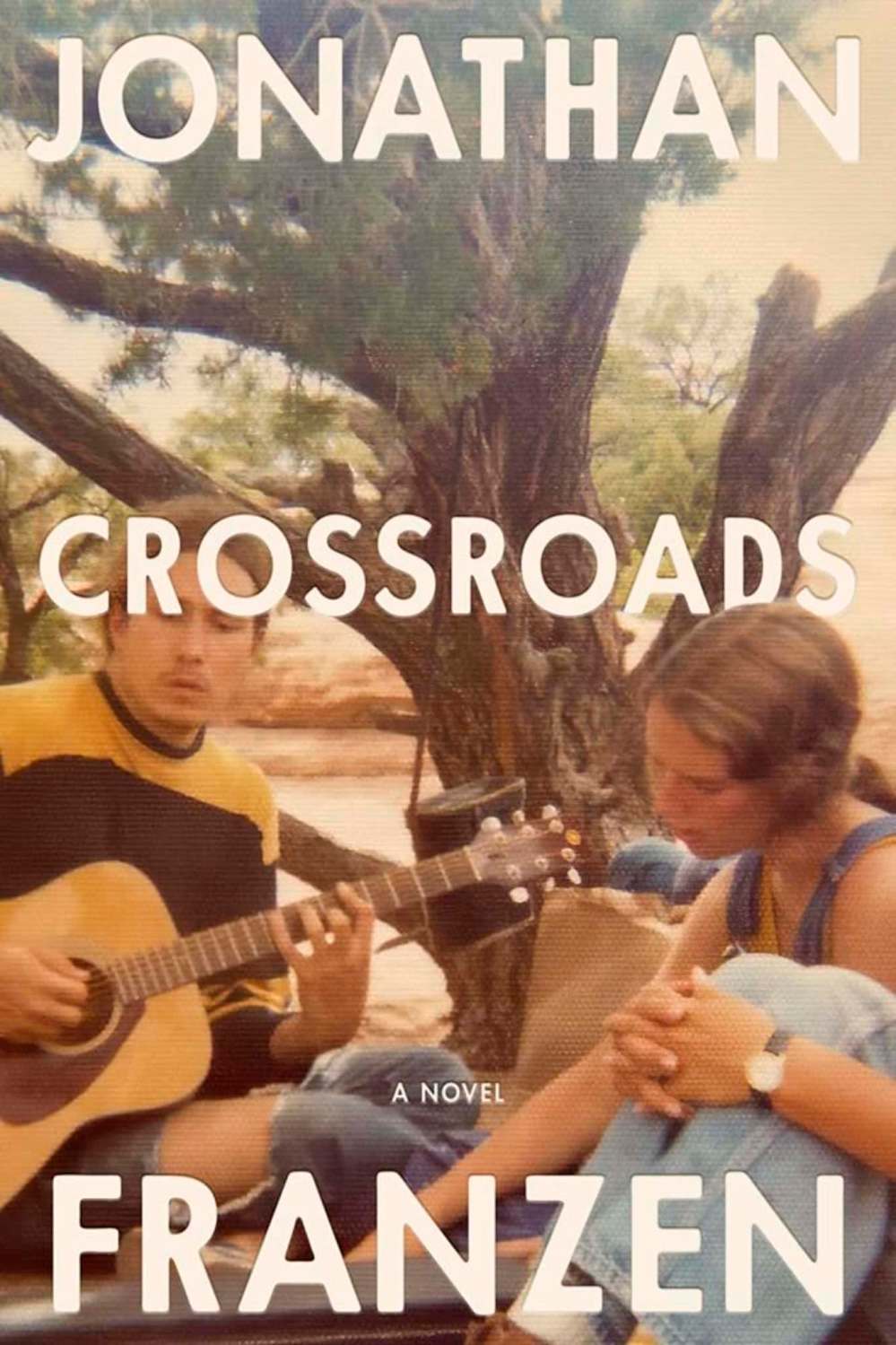
Few would bet on a nearly 600-page novel set in 1971 among a family of middle-American Protestant believers being a barn burner.
In truth, literary master Jonathan Franzen’s absorbing new opus, Crossroads, does not boast a propulsive plot, heart-stopping action or even glistening prose.
But it does create a complex world of multi-dimensional characters grappling with believable problems and moral dilemmas, the kind that flesh-and-blood people deal with every day.
Toward the end, an actual barn does burn down, and this event is consequential. But to explain how and why would be to give away too much.
Suffice it to say that the Hildebrandts, church-going residents of the Chicago suburb of New Prospect, Ill., could be Franzen’s best conceived and sympathetically portrayed family of the several memorable ones that have populated his six novels to date.
Franzen’s Lambert clan in 2001’s The Corrections and the Berglunds in 2010’s Freedom were filtered through the lens of social satire. But here, frustrated pastor Russ Hildebrandt, his weight- and secret-obsessed wife Marion and their rebellious and confused children are portrayed without ironic condescension.
Marion, for example, remembers her husband’s youthful “vision of a nation transformed by a vigorously Christian ethics” as evidence of his essential goodness.
In fact, all the Hildebrandts worry about the notion of personal goodness and “badness.” That latter clumsy noun appears dozens of times to signify everything from incompetence to evil.
Franzen depicts a world of American Christianity that is neither simplistic nor stereotypical. At a time when the religious masses in flyover country are derided by the coastal cultural elite, he has the courage to depict the Hildebrandts as decent and well-meaning, despite their various flaws.
He narrates in alternating chapters from the points of view of five of the six nuclear family members — both parents and three of the four kids. Their world is a liberal socially active church community in which Russ is a professionally frustrated assistant pastor, and its youth group, called Crossroads, attempts to steer teens through the political upheaval of the Nixon era.
But this just scrapes the surface of a story that involves youthful passion, adult betrayals — Crossroads contains lots of sex — drug addiction, mental illness and much else to boot.
The plot moves forward but takes long detours into backstory. Manitoba readers might see parallels to their own experience in Franzen’s depiction of Russ’s Mennonite roots in rural Indiana and his Christian outreach among the Navajo tribes of Arizona.
You just have to look at the nomination lists for this year’s literary prizes to see how untrendy Franzen’s subject matter has become. This novel fits squarely in the American Protestant tradition of Nathaniel Hawthorne, Henry James, Sinclair Lewis and John Updike.
Its only downside is that Franzen has preconceived his epic tale as needing three novels that will eventually bring it into the current day. Even after 580 pages, when Crossroads winds up, it’s still just 1974.
Interestingly, this first volume contains no reference to the trilogy’s alleged George Eliot-inspired subtitle, A Key to All Mythologies. Most early reviews have mentioned it and not a few have mocked it as pretentious.
But what an author says in an interview and what he puts on the page are different things.
Franzen averages five years between books. If he does prove true to his word, it will be another 10 before we have the full story of the Hildebrandts laid out.
It might be wiser to wait a decade and binge it Netflix-style.
Morley Walker is a retired Free Press journalist.