Language, identity flow through essays

Advertisement

Advertise with us

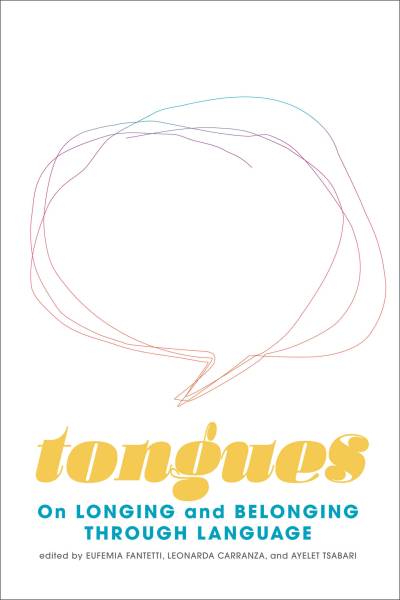
In this collection of personal essays, 26 Canadian writers explore their relationship with language. The language in question could be Arabic, Farsi, Spanish, Italian, Cantonese, Norwegian, Punjabi, Anishinaabemowin, English, French, sign language or a dialect spoken by only a few. Or it could be their connection to the range of English words used to describe race or gender. But in most cases they are writing about their relationship with their mother tongue or the mother tongue of their parents.

Read this article for free:


or

Already have an account? Log in here »

To continue reading, please subscribe:

Subscribe and receive a limited-edition Free Press branded hat or tote.

Digital Subscription

One year of digital access for only $205*

  • Enjoy unlimited reading on winnipegfreepress.com
  • Read the E-Edition, our digital replica newspaper
  • Access News Break, our award-winning app
  • Play interactive puzzles

*First annual payment billed as $205.00 + GST for one year. This annual subscription will automatically renew at $233.00 + GST every 52 weeks (10% off the regular annual price of $259.35). Offer available to new and qualified returning subscribers only. Cancel any time.

To continue reading, please subscribe:

Add Free Press access to your Brandon Sun subscription for only an additional

$1 for the first 4 weeks*

  • Enjoy unlimited reading on winnipegfreepress.com
  • Read the E-Edition, our digital replica newspaper
  • Access News Break, our award-winning app
  • Play interactive puzzles
Start now

*Your next Brandon Sun subscription payment will increase by $1.00 and you will be charged $17.95 plus GST for four weeks. After four weeks, your payment will increase to $24.95 plus GST every four weeks.

Hey there, time traveller!
This article was published 15/01/2022 (1699 days ago), so information in it may no longer be current.

In this collection of personal essays, 26 Canadian writers explore their relationship with language. The language in question could be Arabic, Farsi, Spanish, Italian, Cantonese, Norwegian, Punjabi, Anishinaabemowin, English, French, sign language or a dialect spoken by only a few. Or it could be their connection to the range of English words used to describe race or gender. But in most cases they are writing about their relationship with their mother tongue or the mother tongue of their parents.

All these writers excel in English and earn their living writing, translating or teaching in English. Indeed, the quality of the writing here is as impressive as the range of experiences. While a few of the essays in Tongues explore issues of particular interest to writers, such as a debate on the use of italics for non-English words or the challenges of translating Anishanaabemowin to English when the languages have developed in such different contexts, most of the essays focus the experiences of first-generation Canadians.

The subtitle of the book, On Longing and Belonging Through Language, is a good summary of the themes. Language isn’t simply a means of communication; it’s about identity and connection as well. Often the cost of perfecting your second language is the deterioration of your first. The phenomena of first-language attrition may not seem important when you are young, but eventually the fallout registers.

Tongues
Tongues

In the opening essay Tongue-Tied, Kamal Al-Solayee, the director of journalism at UBC, tells of leaving his Yemeni family for the U.K. at age 18. He knew he could never be comfortable as a gay man in the Arabic-speaking world. Now, 30 years later, he tells how little Arabic he spoke on a recent trip home. “In my mind, regaining a forgotten language has always been a drama in which I was the leading man and my family the supporting cast. It feels more and more like a one-person show, a one-sided expression of longing and memory.”

Leonarda Carranza, one of the book’s co-editors, tells how she too “fell hard for English” at the age of seven, when her family came to Canada from El Salvador. “It was a messy, toxic love, born out of racial injury, self-doubt and insecurity.” Her first day of school she knew not a word of English, but in a few years became a good student, proud to have shed her Spanish accent and ashamed of her mother’s lack of English. Only much later did she realize that she owed her own fluency in Spanish to her mother’s determination to speak to her children in their mother tongue.

Adam Pottie, who is deaf but not fluent in sign language, describes the ups and downs of writing a play produced in sign language: “I had so much to learn and unlearn if I wanted to be part of this world. And I wanted to, more than anything.” Sahar Golshan, a first-generation Canadian who speaks neither of her parental languages, studied Farsi for five years so that she can finally speak with her paternal grandfather. Winnipeg’s Jenny Heijun Wills, adopted by an English-speaking Canadian family in infancy, despairs of ever having a fluent conversation with her biological family in Korea.

A different take on language and belonging is explored by Logan Broeckaert. In Gender Fluent she explains that “as a masc person with a female body… it was important for me to find a language that didn’t sit heavily on my tongue.” Learning to use gender-neutral language took time, and so did finding ways to combine it with gendered language. But, like learning any language, she found it was a matter of practice and eventually came automatically.

Rowan McCandless, another Winnipeg writer, recounts a question posed by her doctor: “What are you?” With a white mother and a black father whose family has lived in Nova Scotia for generations, how should she describe herself? The racism of the question itself is an education in what not to say, ever.

This whole collection is an education for readers and a good introduction to some Canadian writers whose works they might like to read.

Faith Johnston once asked an optometrist in Ottawa where he was from. When he answered Golden Lake, she felt like diving under the table.

Report Error Submit a Tip

More Stories

Today’s horoscope

Georgia Nicols 4 minute read Preview

Today’s horoscope

Georgia Nicols 4 minute read 2:00 AM CDT

MOON ALERT: There are no restrictions to shopping or important decisions today. The new moon is in Virgo.

ARIES (March 21-April 19)

Discussions with partners and close friends will intensify in the next few weeks and financial discussions will favour you. In fact, money might come your way. The new moon is perfect for making resolutions to improve your health.

TAURUS (April 20-May 20)

Read
2:00 AM CDT

EU envoy says a ‘unique’ new partnership with Canada forming ahead of Carney’s speech

Dylan Robertson, The Canadian Press 5 minute read Preview

EU envoy says a ‘unique’ new partnership with Canada forming ahead of Carney’s speech

Dylan Robertson, The Canadian Press 5 minute read Updated: Yesterday at 3:49 PM CDT

OTTAWA - The European Union's ambassador to Canada says the bloc is crafting a new partnership with Ottawa unlike anything that currently exists.

"What we have in mind is something different from what we have with other countries," Geneviève Tuts said in a Wednesday interview. "That will be something unique."

Prime Minister Mark Carney said last month he was pursuing even deeper ties with Europe after signing a defence-industrial pact in addition to the existing strategic partner agreement and a free-trade deal.

"This fall, we will begin discussions with the European Union — the world’s second-largest economy — to build a much stronger and deeper security and economic partnership," Carney said on Aug. 22.

Read
Updated: Yesterday at 3:49 PM CDT

Language, identity flow through essays

Reviewed by Faith Johnston 4 minute read Preview

Language, identity flow through essays

Reviewed by Faith Johnston 4 minute read Saturday, Jan. 15, 2022

In this collection of personal essays, 26 Canadian writers explore their relationship with language. The language in question could be Arabic, Farsi, Spanish, Italian, Cantonese, Norwegian, Punjabi, Anishinaabemowin, English, French, sign language or a dialect spoken by only a few. Or it could be their connection to the range of English words used to describe race or gender. But in most cases they are writing about their relationship with their mother tongue or the mother tongue of their parents.

All these writers excel in English and earn their living writing, translating or teaching in English. Indeed, the quality of the writing here is as impressive as the range of experiences. While a few of the essays in Tongues explore issues of particular interest to writers, such as a debate on the use of italics for non-English words or the challenges of translating Anishanaabemowin to English when the languages have developed in such different contexts, most of the essays focus the experiences of first-generation Canadians.

The subtitle of the book, On Longing and Belonging Through Language, is a good summary of the themes. Language isn’t simply a means of communication; it’s about identity and connection as well. Often the cost of perfecting your second language is the deterioration of your first. The phenomena of first-language attrition may not seem important when you are young, but eventually the fallout registers.

In the opening essay Tongue-Tied, Kamal Al-Solayee, the director of journalism at UBC, tells of leaving his Yemeni family for the U.K. at age 18. He knew he could never be comfortable as a gay man in the Arabic-speaking world. Now, 30 years later, he tells how little Arabic he spoke on a recent trip home. “In my mind, regaining a forgotten language has always been a drama in which I was the leading man and my family the supporting cast. It feels more and more like a one-person show, a one-sided expression of longing and memory.”

Read
Saturday, Jan. 15, 2022

Cultivating compassion in young people

Jordan Laidlaw 5 minute read 2:00 AM CDT

We live in the unenviable era of rising American imperialism and the emergence of a precarious new world order.

As U.S. President Donald Trump escalates his annexation threats over Canada, Greenland and Venezuela; deteriorates decades-long relations with NATO; and offers concessions to totalitarian North Korea; we must remain steadfast and vigilantly united against these ominous — and markedly unusual — sociopolitical developments.

We have so much to learn from our past. As historical patterns suggest, these threats are not idle nor mere political rhetoric. Rather, these threats should be treated with utmost seriousness. As Winston Churchill so famously uttered, “Those that fail to learn from history are doomed to repeat it.”

As a Canadian public educator, I hold the vehement conviction that we need to instruct our youth on the societal dangers of imperialism, while simultaneously exploring the “contentious” concepts of sharing and acceptance.

Vote for your local trustees

John R. Wiens 4 minute read 2:00 AM CDT

It’s the start of a new school year, but not just any school year. It’s also school board election year.

Grieving families, local leaders want review of Interlake intersection after teens die in crash

Chris Kitching 8 minute read Preview

Grieving families, local leaders want review of Interlake intersection after teens die in crash

Chris Kitching 8 minute read Tuesday, Sep. 8, 2026

A two-vehicle crash that killed four teenage friends in the Interlake Sunday night prompted outpourings of grief in several communities and calls for safety improvements at the intersection, which was also the site of a death in July.

Recent high school graduates Maya Borsa and Chloe Vermette, both 18, were identified by their families as victims of the collision at Highway 8 and Provincial Road 229, just west of Winnipeg Beach.

“(Chloe) was a very bubbly, loving personality. Always giving, always caring. Her friends meant the world to her,” said her mother, Veronique Vermette, who struggled to comprehend the tragedy when she went to the scene Monday. “We sat in the rain for hours, and it blew my mind that four lives were taken.”

The teens’ parents are waiting for RCMP to provide more information about the cause of the crash. Chloe, who graduated from Windsor Park Collegiate in Winnipeg in July, was driving one of the vehicles, her mother said.

Read
Tuesday, Sep. 8, 2026