A dire prognosis

Nurse’s story highlights perils and selflessness of First World War service

Advertisement

Advertise with us

Some books have the power to reach across a century with startling relevance.

Read this article for free:


or

Already have an account? Log in here »

To continue reading, please subscribe:

Subscribe and receive a limited-edition Free Press branded hat or tote.

Digital Subscription

One year of digital access for only $205*

  • Enjoy unlimited reading on winnipegfreepress.com
  • Read the E-Edition, our digital replica newspaper
  • Access News Break, our award-winning app
  • Play interactive puzzles

*First annual payment billed as $205.00 + GST for one year. This annual subscription will automatically renew at $233.00 + GST every 52 weeks (10% off the regular annual price of $259.35). Offer available to new and qualified returning subscribers only. Cancel any time.

To continue reading, please subscribe:

Add Free Press access to your Brandon Sun subscription for only an additional

$1 for the first 4 weeks*

  • Enjoy unlimited reading on winnipegfreepress.com
  • Read the E-Edition, our digital replica newspaper
  • Access News Break, our award-winning app
  • Play interactive puzzles
Start now

*Your next Brandon Sun subscription payment will increase by $1.00 and you will be charged $17.95 plus GST for four weeks. After four weeks, your payment will increase to $24.95 plus GST every four weeks.

Hey there, time traveller!
This article was published 29/01/2022 (1714 days ago), so information in it may no longer be current.

Some books have the power to reach across a century with startling relevance.

Anna Stamers was a young New Brunswick woman whose nursing career took her from her civilian career to three years at war in England and France, and eventually her death.

Her expectations measured against the harsh reality draws comparisons with today’s COVID nursing.
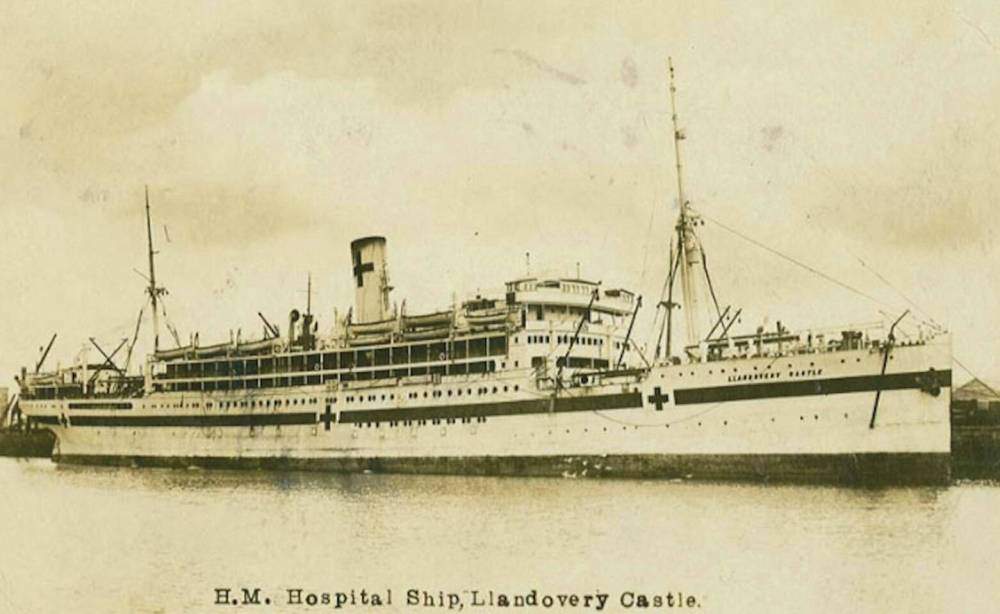
Nova Scotia Archives
The HM Llandovery Castle.
Nova Scotia Archives The HM Llandovery Castle.

The hard decisions that triage imposes, burnout and life-threatening situations are all to be found in Asleep in the Deep, a historical study by Dianne Kelly. In addition, there are broader issues dealt with reflecting the author’s background in history and bureaucracy. This could also be because this is Volume 28 of the New Brunswick Military Heritage Series.

Canada granted military nurses the title and rank of Nursing Sister. This brought them more respect and the right to vote, but didn’t prevent battles with doctors over procedures, duties and responsibilities, and it didn’t stop bureaucratic bungling — attempting to nurse wounded soldiers in tents when faced with strong winds and steady driving rain — since politicians ignored their requests for improved conditions.

Stamers herself remains a figure of respect rather than a fully rounded character. Author Kelly only had one letter she wrote to quote from. All other descriptions come from other nurses’ diaries, letters and histories relating to the Canadian Army Medical Corps.

In total, 2,800 Canadian nurses served in the First World War and 2,500 went overseas.

Military nursing was a world away from civilian hospital care for, as one nurse wrote, “Military Nursing follows no law, abides by no rule, is governed by no precedent that is not honoured in the breach and disregarded coolly when the occasion, expediency and necessity require.”
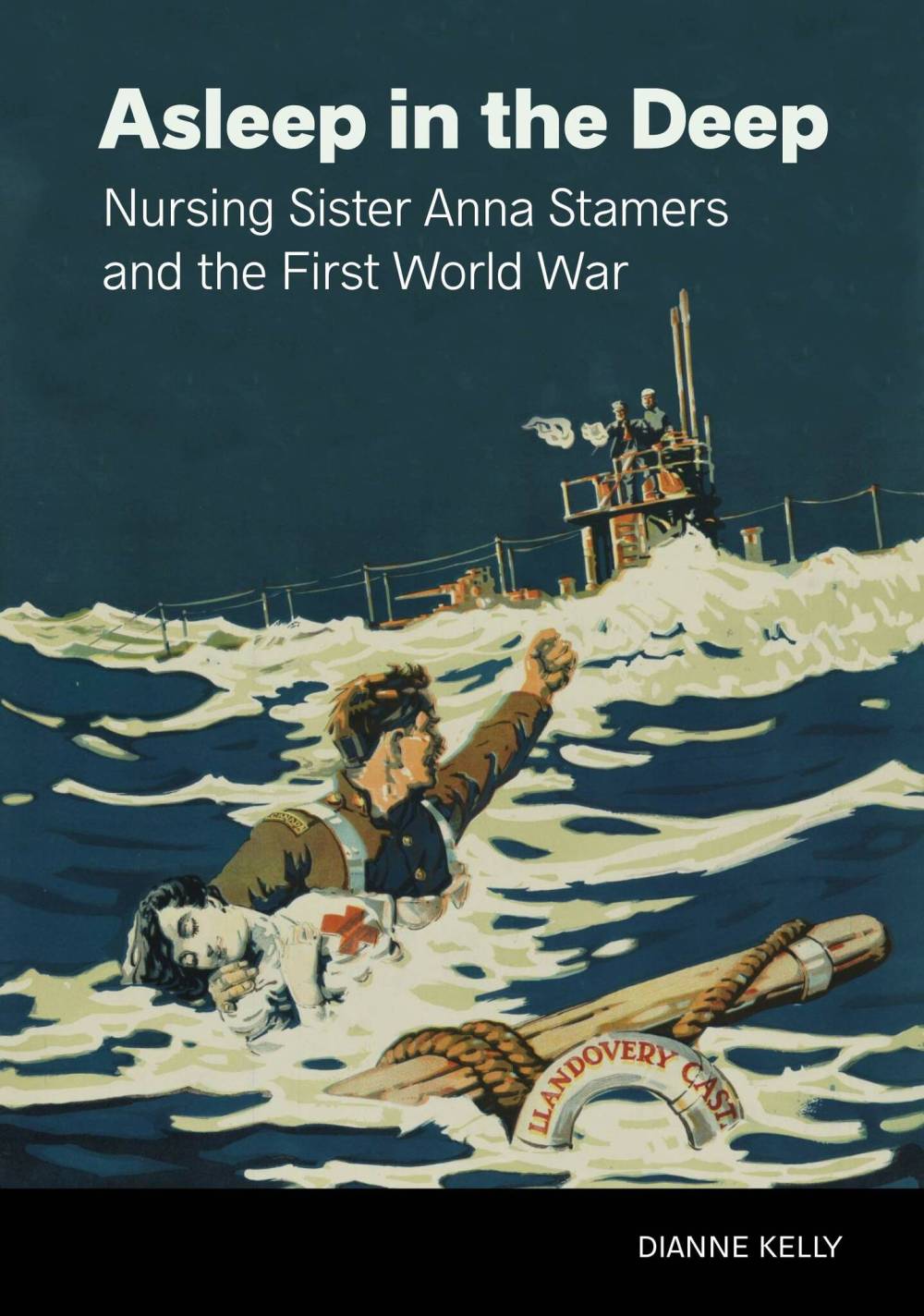
Asleep in the Deep
Asleep in the Deep

Some were broken by what they saw and encountered, and were rotated out of the war zones to less threatening demands. As Kelly asks and then answers, “Why should Anna’s story be told one hundred years after the event? Perhaps because the enormity of the suffering and sacrifice of those who served in the First World War is staggering.”

The title Asleep in the Deep refers to how Nursing Sister Anna Stamers died; the author holds back the details until the end of the book, seemingly to remind us she should be remembered for her service, not how she died.

Travelling on the Canadian hospital ship the Llandovery Castle back to England on June 27, 1918, a German submarine, in contravention of international law, sank it with a torpedo near southern Ireland. The German commander then had his sub surface, questioned survivors whether any American pilots were aboard (Germany was still hoping to win the war before the Americans got involved) and, although told there were no pilots on board, proceeded to have his crew shell the lifeboats, attempting to ram several others.

In all, 234 crew members died, including 14 nursing sisters. It was the most significant Canadian naval disaster of the First World War.

The commander was never brought to trial, although two of his junior officers were; their defence of following orders resurfaced after the Second World War at the Nuremberg trials.
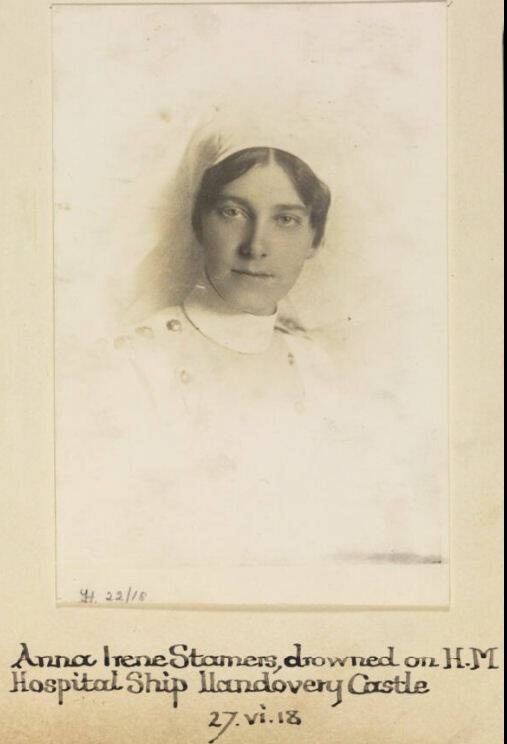
Anna Stamers.
Anna Stamers.

Just as disturbing, the German commander also served on a submarine in the Second World War.

Ron Robinson had the good fortune to be born in Canada in 1946.

Report Error Submit a Tip

More Stories

Alberta’s gopher museum closed until further notice as owners find new facility

Daniela Germano, The Canadian Press 3 minute read Preview

Alberta’s gopher museum closed until further notice as owners find new facility

Daniela Germano, The Canadian Press 3 minute read Tuesday, Oct. 6, 2026

A quirky Alberta roadside attraction that has delighted travellers for decades with its stuffed rodents in tiny costumes is closed until further notice. 

The World Famous Gopher Hole Museum, located in Torrington, a hamlet about 120 kilometres north of Calgary, made the announcement online earlier this week.

Laural Kurta, museum director, said she was forced to close the doors because the two historical buildings that house the exhibits need to be replaced. 

"We have done every patch repair, staple, spackle, everything we could possibly do, and it is just at its end," Kurta said in an interview Tuesday. 

Read
Tuesday, Oct. 6, 2026

Can’t cut your way to being a better city

Molly McCracken 5 minute read 2:00 AM CDT

The powers that be in Winnipeg have pushed for cheap property taxes for decades. As a result, the city doesn’t have enough money to balance the books, let alone maintain infrastructure, deliver services and respond to challenges like homelessness and the toxic drug crisis.

Winnipeg’s fiscal problem stems from decades of keeping property-tax increases below inflation and relying on inadequate revenues to fund a growing city. The result? Today, Winnipeg spends less money per person on city services than it did in 2001.

A look at the books at city hall is stark. Winnipeg has run a deficit almost every year since the COVID-19 pandemic because of climate-change-driven heavy ice and snowstorms, higher fuel costs and increased policing overtime. During this time, city council tried to cut and freeze public service spending where it could; as a result, community services have been cut to the bone.

Departments responsible for what makes a city a good place to live have been squeezed. Since 1999, community services — responsible for libraries, recreation, swimming lessons and aspects of Winnipeg’s poverty-reduction work — has 149 fewer staff positions, an 18 per cent reduction, even as the city’s population has grown 35 per cent, or by 220,000 people.

Ladies and gentlemen of voting age, please turn your attention to the centre ring…

Dan Lett 5 minute read Preview

Ladies and gentlemen of voting age, please turn your attention to the centre ring…

Dan Lett 5 minute read Wednesday, Oct. 7, 2026

If there’s one thing that we in the news business wish for any election, it’s that the campaign is competitive and voters have multiple, viable options when it comes time to cast their ballots.

That is certainly what I wished for in this year’s Winnipeg mayoral election: a ballot with two or more competent candidates — including incumbent Scott Gillingham — that offered contrasting visions for the future of the city.

Unfortunately, this time we didn’t get competent or viable. Instead, we got a clown show stuffed with candidates for mayor who have demonstrated a stunning capacity for self-inflicted wounds.

It all started when mayoral candidates Kevin Klein and Mike Vogiatzakis both alleged they had been asked by each other’s campaign to step down to give the remaining candidate a better shot at defeating Gillingham.

Read
Wednesday, Oct. 7, 2026

Release police HQ report: Klein

Joyanne Pursaga 5 minute read Preview

Release police HQ report: Klein

Joyanne Pursaga 5 minute read Yesterday at 8:49 PM CDT

Mayoral candidate Kevin Klein is lobbying the province to release the final report from the public inquiry into the Winnipeg Police Service headquarters before the upcoming municipal election.

Klein wrote to the provincial government to request that the information be shared promptly and before Winnipeg voters go to the polls on Oct. 28.

A Thursday CBC report stated the document is finished, “has been sent to the printer” and submitted to the province but isn’t expected to be publicly released until after Winnipeg’s Oct. 28 municipal election.

“It’s all about accountability. The report is done. People have waited (many) years,” said Klein.

Read
Yesterday at 8:49 PM CDT

Letters, Oct. 9

7 minute read 2:01 AM CDT

Manitoba Hydro at it again

As a former resident of Windsor Park, I often ride my bicycle through the neighbourhood or walk the shaded pathway from Elizabeth Road to Cottonwood Drive. It’s a favourite walkway for residents with dogs as well. While passing the pathway at Elizabeth Road the other day I was dismayed to see crews clear-cutting the mature trees between the pathway and the CPKC tracks that stretch the length of Archibald Street.

At first I thought that the crews were clearing out the dense bushes and trees at the start of the pathway. I made a note to return to see if that was all that was going to be done. (When) I drove by the trees had been clear-cut to the end of the first street and access point to it, much to my dismay and horror. I parked my car and went to speak with a worker doing the tree removal.

I was informed that it was a Hydro corridor and that the work would clear-cut every tree between Elizabeth Road and Cottonwood Road. Perhaps the plan is to continue on through Southdale and Island Lakes. At a time of diminishing tree canopies around Winnipeg and the drive to plant a million trees, this decision is outrageous and lacks respect for our current climate situation and neighbourhood esthetics.

Dog feces vandalism shuts down food pantry

Kelly-Anne Riess 4 minute read Preview

Dog feces vandalism shuts down food pantry

Kelly-Anne Riess 4 minute read Yesterday at 6:54 PM CDT

A few shelves set up beneath a West End community notice board were meant to offer a place where neighbours could leave food for anyone who needed it.

Read
Yesterday at 6:54 PM CDT