Deliberating desire
Scandal, open marriage, obsession and more run through bracingly smart debut

Advertisement
Read this article for free:
or
Already have an account? Log in here »
To continue reading, please subscribe:

Digital Subscription
One year of digital access for only $205*
- Enjoy unlimited reading on winnipegfreepress.com
- Read the E-Edition, our digital replica newspaper
- Access News Break, our award-winning app
- Play interactive puzzles
*First annual payment billed as $205.00 + GST for one year. This annual subscription will automatically renew at $233.00 + GST every 52 weeks (10% off the regular annual price of $259.35). Offer available to new and qualified returning subscribers only. Cancel any time.
To continue reading, please subscribe:
Add Free Press access to your Brandon Sun subscription for only an additional
$1 for the first 4 weeks*
- Enjoy unlimited reading on winnipegfreepress.com
- Read the E-Edition, our digital replica newspaper
- Access News Break, our award-winning app
- Play interactive puzzles
*Your next Brandon Sun subscription payment will increase by $1.00 and you will be charged $17.95 plus GST for four weeks. After four weeks, your payment will increase to $24.95 plus GST every four weeks.
Read unlimited articles for free today:
or
Already have an account? Log in here »
Hey there, time traveller!
This article was published 26/02/2022 (1684 days ago), so information in it may no longer be current.
This morally complicated, deliberately provocative campus novel kicks off with an attention-getting prologue: A beautiful, unconscious, half-naked 40-year-old man is zip-tied to a chair. The woman watching him is an English professor, which becomes clear when she describes the moment before the man wakes as “a perfect example of liminality.” Her students love that term, she thinks.
Debut novelist Julia May Jonas, a Brooklyn-based playwright who teaches theatre at Skidmore College, follows up this suspended moment with a cutting, clever, often very funny first-person narrative that suggests how — and why — a 58-year-old academic might end up tying a man to a chair.
In the weeks leading up to this incident, Jonas’s unnamed narrator, who teaches at a small college in upstate New York, is reluctantly drawn into the turmoil of contemporary university politics. Her husband John, the department chair, has been accused of engaging in sexual relationships with his students.

She isn’t particularly mad at John — decades ago they came to “an arrangement” — but she’s vexed by his accusers. They were adults, she argues, the relationships were consensual, and they all happened several years back when there were no university rules forbidding them. She laments that “young women have apparently lost all agency in romantic entanglements.”
As she navigates the scandal, the narrator is caught up in her own obsessive desire for the department’s new hire, experimental novelist Vladimir Vladinski, who has just come to the college with his wife, Cynthia Tong, an adjunct lecturer and memoirist.
Jonas’s narrator is occasionally unlikable, often unreliable and almost always gloriously angry. Through this supple and satirical voice, Jonas explores the subject of middle-aged female rage and desire, which has been deftly handled recently by writers such as Claire Messud and Rachel Cusk.
There is lots of allusive literary chat. Vladimir’s name can’t help but call up Nabokov, the author of Lolita. (Ruth Bader Ginsburg’s favourite professor, the narrator points out to her feminist lawyer daughter.) A female narrator with no name recalls Daphne du Maurier’s Rebecca, which our narrator just happens to be teaching.

The narrator feels for today’s young people, so pressured by dire economic and social realities, so filled with passion for justice. But she also worries they might be missing something, “being so completely obsessed with whether or not people were represented well, wanting every piece of literature to be some utopian screed of fairness.” She gets impatient when one student dismisses swathes of 19th-century women’s literature as “white lady privilege.”
One of the twisty pleasures of the novel is that we must constantly guess which opinions Jonas agrees with and which are being thrown out as examples of the narrator’s blind spots. As we get more information, we wonder if her marriage is more conventional than she realized, if the “glorious, fizzing confidence” of her youth, when she was so eager for the approval of her older male profs, was perhaps something else. And while she seems skeptical of her students’ references to “internalized sexism,” we see how stringently she polices her own desires — for food, for drink, for sex — how she tamps down her own ambition, how she feels disgust at her “low breasts, rumpled thighs, the loose skin of [her] stomach.”
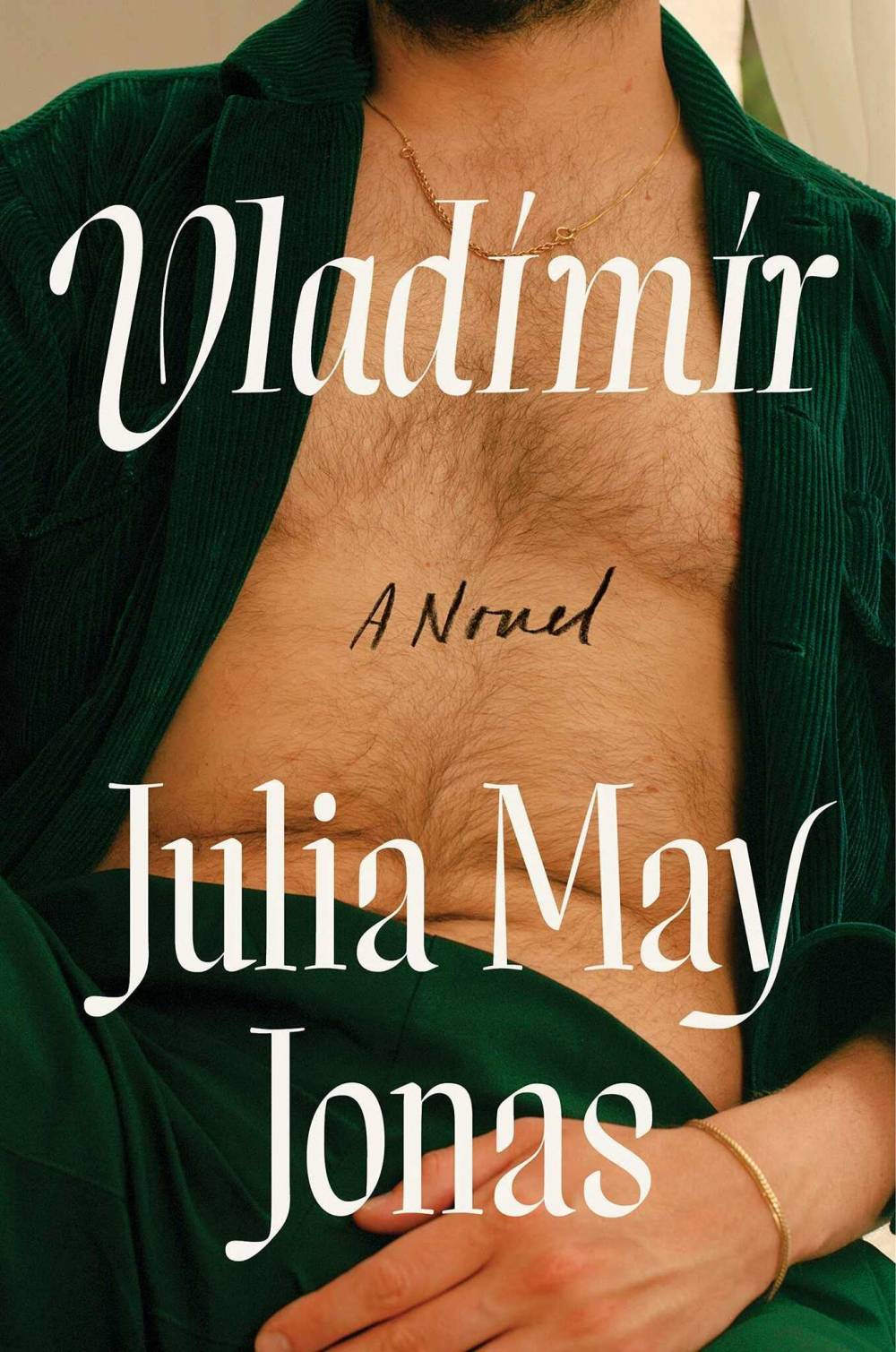
Vladimir is bracingly smart at the paragraph-to-paragraph level — there are trenchant observations about everything from hipster salads to motherhood to literary jealousy on practically every page. That quick intelligence doesn’t quite carry through the novel as a whole, which suffers from some plotting problems in the last third and loses some of its tautness.
Still, this is the kind of buzzy, bitchy novel that will be much talked about.
Onetime English major Alison Gillmor also likes the term “liminality.”
Studying at the University of Winnipeg and later Toronto’s York University, Alison Gillmor planned to become an art historian. She ended up catching the journalism bug when she started as visual arts reviewer at the Winnipeg Free Press in 1992.
Our newsroom depends on a growing audience of readers to power our journalism. If you are not a paid reader, please consider becoming a subscriber.
Our newsroom depends on its audience of readers to power our journalism. Thank you for your support.
Studying at the University of Winnipeg and later Toronto’s York University, Alison Gillmor planned to become an art historian. She ended up catching the journalism bug when she started as visual arts reviewer at the Winnipeg Free Press in 1992.
Our newsroom depends on a growing audience of readers to power our journalism. If you are not a paid reader, please consider becoming a subscriber.
Our newsroom depends on its audience of readers to power our journalism. Thank you for your support.
Advertisement Advertise With Us
Advertisement Advertise With Us