Setting the scene

Riveting account of French inventor’s disappearance a cinematic whodunit

Advertisement

Advertise with us

Thomas Alva Edison, the Wizard of Menlo Park, is widely recognized as the genius behind many culture-changing inventions, among them the incandescent light bulb, the phonograph and motion pictures. So, it may come as a surprise that The Man Who Invented Motion Pictures: A True Tale of Obsession, Murder, and the Movies is not about him. It’s about Louis Le Prince, and it’s truly a fascinating story.

Read this article for free:


or

Already have an account? Log in here »

To continue reading, please subscribe:

Subscribe and receive a limited-edition Free Press branded hat or tote.

Digital Subscription

One year of digital access for only $205*

  • Enjoy unlimited reading on winnipegfreepress.com
  • Read the E-Edition, our digital replica newspaper
  • Access News Break, our award-winning app
  • Play interactive puzzles

*First annual payment billed as $205.00 + GST for one year. This annual subscription will automatically renew at $233.00 + GST every 52 weeks (10% off the regular annual price of $259.35). Offer available to new and qualified returning subscribers only. Cancel any time.

To continue reading, please subscribe:

Add Free Press access to your Brandon Sun subscription for only an additional

$1 for the first 4 weeks*

  • Enjoy unlimited reading on winnipegfreepress.com
  • Read the E-Edition, our digital replica newspaper
  • Access News Break, our award-winning app
  • Play interactive puzzles
Start now

*Your next Brandon Sun subscription payment will increase by $1.00 and you will be charged $17.95 plus GST for four weeks. After four weeks, your payment will increase to $24.95 plus GST every four weeks.

Hey there, time traveller!
This article was published 30/04/2022 (1603 days ago), so information in it may no longer be current.

Thomas Alva Edison, the Wizard of Menlo Park, is widely recognized as the genius behind many culture-changing inventions, among them the incandescent light bulb, the phonograph and motion pictures. So, it may come as a surprise that The Man Who Invented Motion Pictures: A True Tale of Obsession, Murder, and the Movies is not about him. It’s about Louis Le Prince, and it’s truly a fascinating story.

Le Prince was born in France in 1841, studied in Germany, worked on his inventions in Leeds, England and, when he disappeared mysteriously in 1890, had a wife and children living in New York waiting for his triumphant return. He had, so he told his wife, perfected his motion picture machinery, patented it in several European countries and had arranged to show it soon after he arrived stateside. He was never heard from again.

The intrigue surrounding Le Prince’s disappearance has long been the subject of careful conjecture and crazed conspiracy theories. To solve the mystery, Paul Fischer weaves together what is in essence a forensic biography of the little-known inventor, his competitors, his era and the progress of Le Prince’s experimental efforts. It is a masterfully crafted and captivating story.
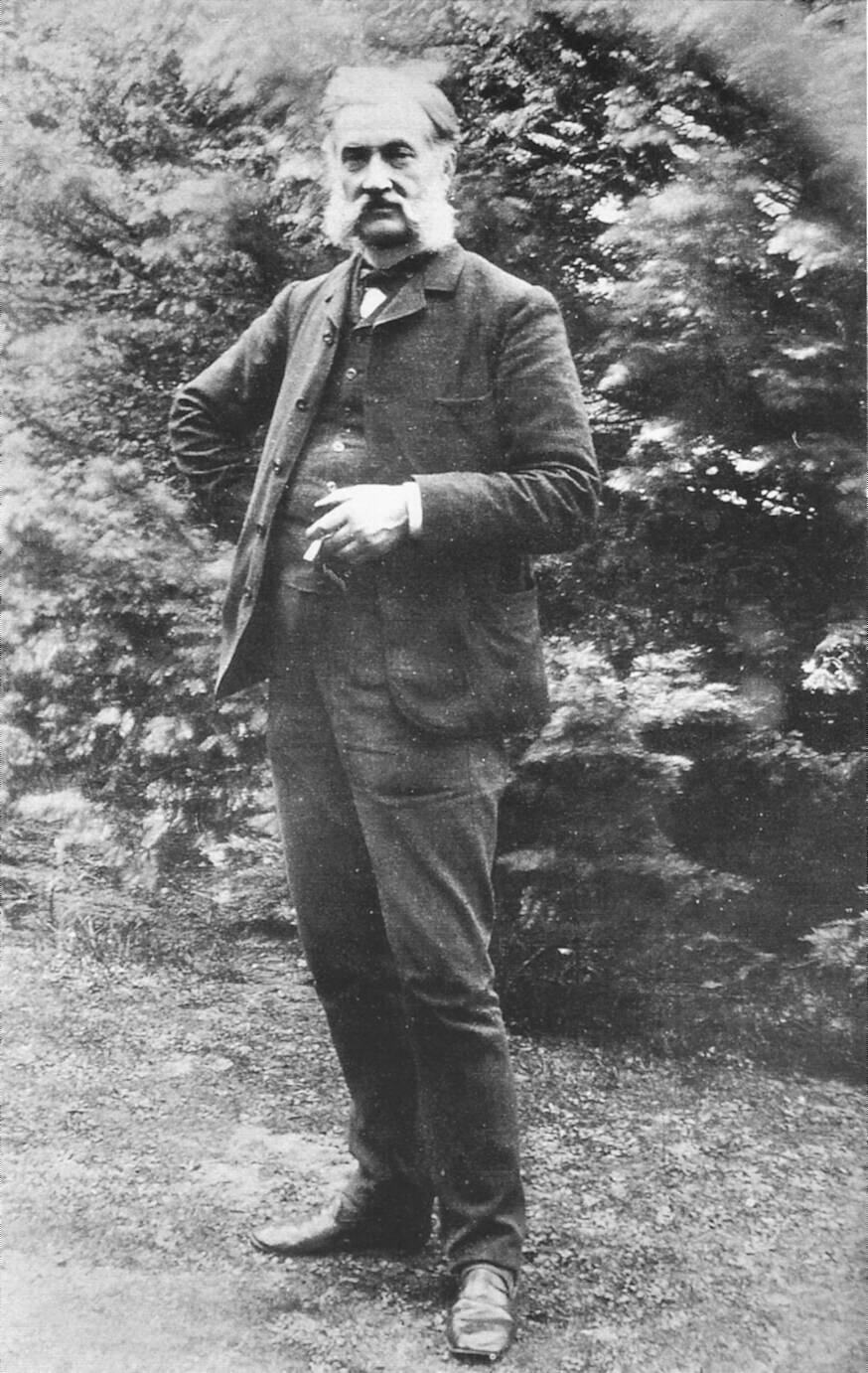
File photo
After Louis Le Prince disappeared in 1890, it took his family seven years to have him officially declared dead.
File photo After Louis Le Prince disappeared in 1890, it took his family seven years to have him officially declared dead.

Fischer is the author of 2015’s A Kim Jong-Il Production: The Extraordinary True Story of a Kidnapped Filmmaker, His Star Actress, and a Young Dictator’s Rise to Power. That book is, as advertised, truly extraordinary; it was an Amazon Best of the Year selection in non-fiction and a Library Journal Top Ten Book of the Year. His new book is not quite as sensational, but it is equally as well written and credible.

Many would-be inventors were attempting to create motion picture machines in the last decade and a half of the 19th century. In fact, Edison seems to have been less interested than others. He would usually come up with ideas and assign their testing and product development to his underlings.

On October 8, 1888, Edison asked his lawyers to seek a caveat — a sort of pre-patent — on what he called his kinetoscope. It was an idea that was very thin on details; it married his phonograph and the process of a series of still photographs that Eadweard Muybridge used to study motion. Edison assigned his assistant, W.K.L. Dickson, the task of working out the details.

Six days after Edison sought his caveat, Le Prince assembled his family and friends in his garden to capture on paper-based Kodak film their cavortings in his garden. He shot the film via a mahogany box with dual lenses and brass fittings that he called a “taker” or “receiver.” The next day he showed the developed film through his “deliverer.” Fragments of that film and another street scene still exist as the first motion pictures ever made successfully.

Trouble was, once Le Prince disappeared, it took his family seven years to have him officially declared dead and for them to claim his patents. Meanwhile, on May 28, 1891, Edison’s kinetoscope was announced as complete. It was not in any way like the ideas proposed in the caveat of 1888, and very suspiciously similar to Le Prince’s invention. Le Prince’s wife Lizzie had no chance in a lawsuit.

Thus the myth began that Edison invented the movies — and the conspiracy theory that Edison had something to do with Le Prince’s disappearance.
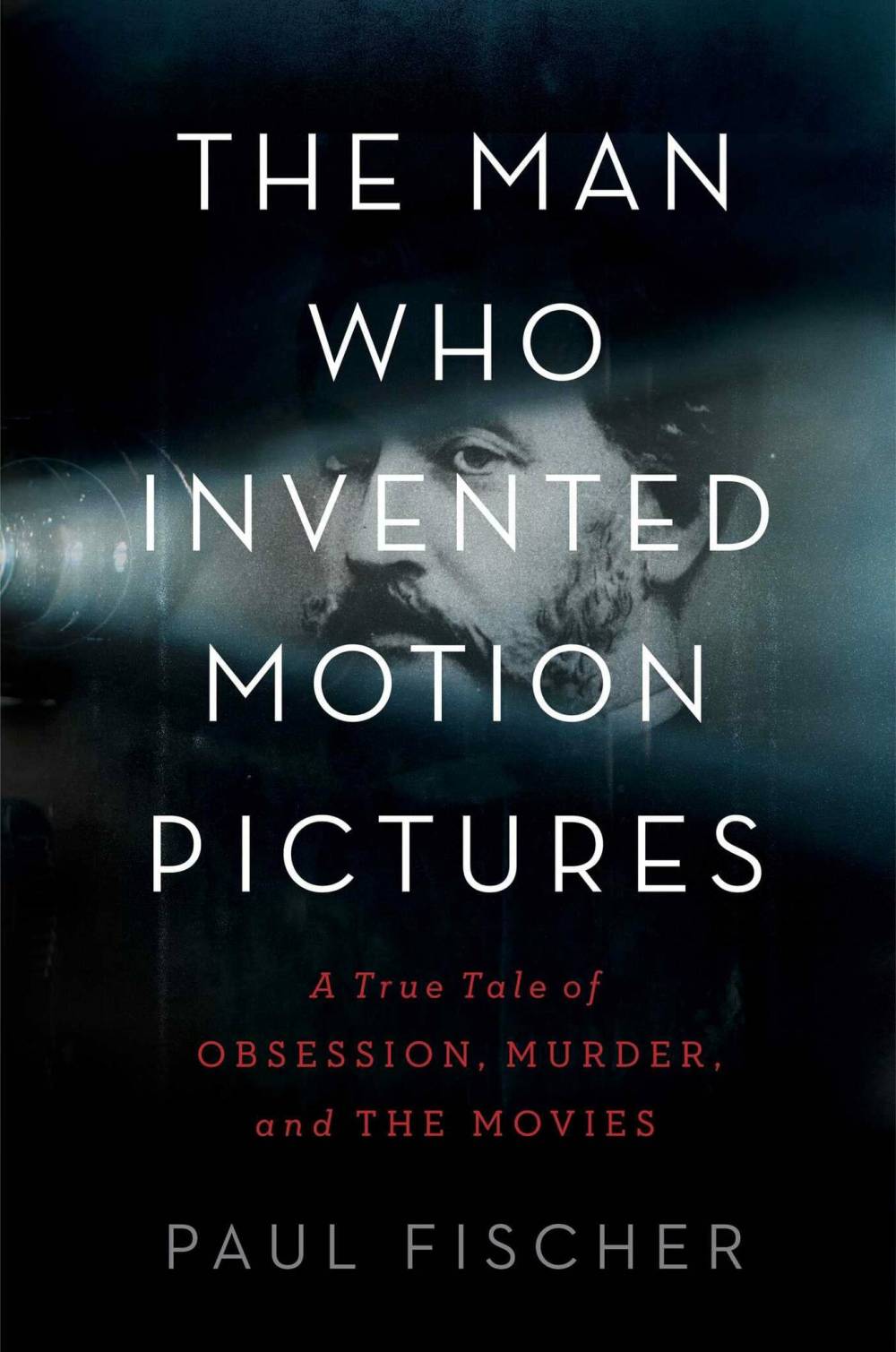
The Man Who Invented Motion Pictures

Fischer’s is not the first biography of Le Prince. What distinguishes his book is the vivid portraits of the people involved, the clear descriptions of steps taken by the several inventors, Fischer’s reliance on the unpublished memoirs of Lizzie Le Prince (a truly heroic character) and his entirely reasonable solution to Le Prince’s cold-case disappearance.

Even if you’re not interested in the origin of what many think was the most important invention of its time, The Man Who Invented Motion Pictures is a great book worth reading.

Gene Walz taught film courses at the University of Manitoba for nearly 40 years.
Report Error Submit a Tip

More Stories

Canada-U.S. trade relationship is broken, but the damage can — and will — be repaired

Tom Brodbeck 5 minute read Preview

Canada-U.S. trade relationship is broken, but the damage can — and will — be repaired

Tom Brodbeck 5 minute read Thursday, Sep. 17, 2026

Canada needs to get serious about diversifying its trade beyond the United States. But at the same time, Canadians should expect relations with the U.S. to normalize after Donald Trump is no longer in the White House.

For generations, Canada-U.S. trade was considered almost a fact of geography. The two countries share the world’s longest undefended border, deeply integrated supply chains and a century of commercial relationships.

Canadian manufacturers depend on American customers. American manufacturers depend on Canadian suppliers. Energy, agriculture, automotive production and countless other industries operate across the border as though it barely exists.

That isn’t going to change dramatically, even in the midst of a bitter trade war unleashed by the U.S. president.

Read
Thursday, Sep. 17, 2026

Desperate Poilievre wants Canadians to believe the sky is falling when it’s just cloudy outside

Tom Brodbeck 5 minute read Preview

Desperate Poilievre wants Canadians to believe the sky is falling when it’s just cloudy outside

Tom Brodbeck 5 minute read Yesterday at 12:47 PM CDT

Pierre Poilievre has a problem.

Canadians just don’t seem to be paying much attention to him anymore.

So, naturally, the Conservative Opposition leader has decided to turn up the volume.

At a recent party caucus retreat in Penticton, B.C., Poilievre delivered the familiar message: Canada is in trouble, Canadians are hurting and the Liberal government is making everything worse.

Read
Yesterday at 12:47 PM CDT

Near-future U.S. the setting for surreal dual-world storyline

Reviewed by Morley Walker 4 minute read Preview

Near-future U.S. the setting for surreal dual-world storyline

Reviewed by Morley Walker 4 minute read 2:01 AM CDT

It’s not every day you encounter a seriously intended literary novel that attempts to dramatize a mind-bending physics theory like quantum entanglement.

But then the B.C.-born-and-raised Emily St. John Mandel is not your everyday Canadian literary writer.

In her late 40s, she has lived in the U.S. for her entire writing career. She is best known for her 2014 dystopian novel Station Eleven, about a Shakespearean acting troupe navigating a pandemic-ravaged America.

Her new outing, her seventh, Exit Party, shares DNA with detective and sci-fi genres more than with conventional literary fiction.

Read
2:01 AM CDT

Grieving child builds backyard rocket ship

Harriet Zaidman 4 minute read 2:01 AM CDT

I Built a Rocket Ship (Kids Can Press, 32 pages, hardcover, $22) by Winnipegger Anna Lazowski is a tender story for children ages 4-8 about a little girl trying to make sense of her mother’s death. The child engages in conversation with her late mom, agreeing and disagreeing about things said as she carries objects (and of course, the cat) to the backyard. There, she is building a rocket ship she will pilot into the skies to find her mom again.

Jennica Lounsbury’s varied perspectives show the range of emotions the little girl experiences.

● ● ●

Northwoods Lullaby by Mary Casanova (University of Minnesota Press, 32 pages, hardover, $25) is a bedtime book for readers up to age eight, perfect to bring a busy, happy day to a close. Just like children who are listening to adults reading the book, all the animal babies are being tucked into their nests and burrows by loving parents: “Thump and scamper,/nimble clover./ Soon it’s time to rest. Baby loon/ nestles in/as Papa floats along.”

Letters, Sept. 19

8 minute read 2:01 AM CDT

Addicted to gambling

Re: Sweeney’s sexist U.S. gambling site ad not the real problem, Sept 17

Dan Lett’s analysis of the issue was very good. Something I would like to elaborate about the Canadian context is that provincial governments are not just betting on sports gaming to be big money, they’re actively encouraging problem gambling.

Take the Alberta-based ad in which a gambler is encouraged to spend their time gambling on their phone whenever there’s a break in the action at a baseball game. Every half-inning, every pitching change, should be spent gambling rather than being in the moment. The Ontario ads aren’t much better, just more subtle in how they normalize problematic gambling behaviour.

His blissful kiss is well worth the risk

Maureen Scurfield 4 minute read Yesterday at 2:00 AM CDT

DEAR MISS LONELYHEARTS: The best kisser I ever met knocked me off balance. My little joke was, “That’s why we have to go home now and lie down in a hurry!” We’ve been seeing each other for almost six months. This man can convince me to do almost anything — so much fun!

But, now he’s been transferred out of province for bigger money at a new company.

He’s leaving soon and he could have asked me to move with him, as his trucking partner, but he didn’t! Other women will soon have their hands on him, believe me!

I’m already 27 and I don’t want to date any more guys — just him. Now what can I do? I feel sadder every day.