Slanted and enchanted
Klosterman’s musings on the 1990s sure to, like, totally incite debate

Advertisement
Read this article for free:
or
Already have an account? Log in here »
To continue reading, please subscribe:
Digital Subscription
One year of digital access for only $1.44 a week*
- Enjoy unlimited reading on winnipegfreepress.com
- Read the E-Edition, our digital replica newspaper
- Access News Break, our award-winning app
- Play interactive puzzles
*Billed as $5.77 plus GST every four weeks. After 52 weeks, price increases to the regular rate of $19.95 plus GST every four weeks. Offer available to new and qualified returning subscribers only. Cancel any time.
To continue reading, please subscribe:
Add Free Press access to your Brandon Sun subscription for only an additional
$1 for the first 4 weeks*
- Enjoy unlimited reading on winnipegfreepress.com
- Read the E-Edition, our digital replica newspaper
- Access News Break, our award-winning app
- Play interactive puzzles
*Your next Brandon Sun subscription payment will increase by $1.00 and you will be charged $17.95 plus GST for four weeks. After four weeks, your payment will increase to $24.95 plus GST every four weeks.
Read unlimited articles for free today:
or
Already have an account? Log in here »
Hey there, time traveller!
This article was published 07/05/2022 (1630 days ago), so information in it may no longer be current.
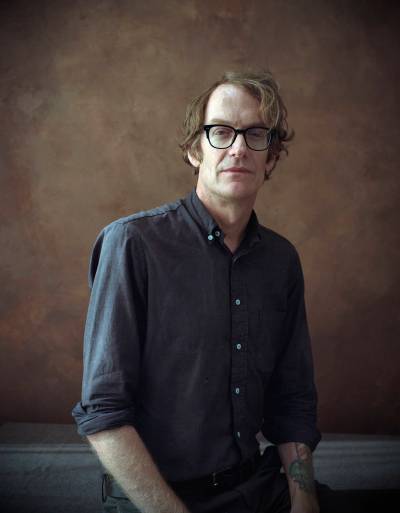
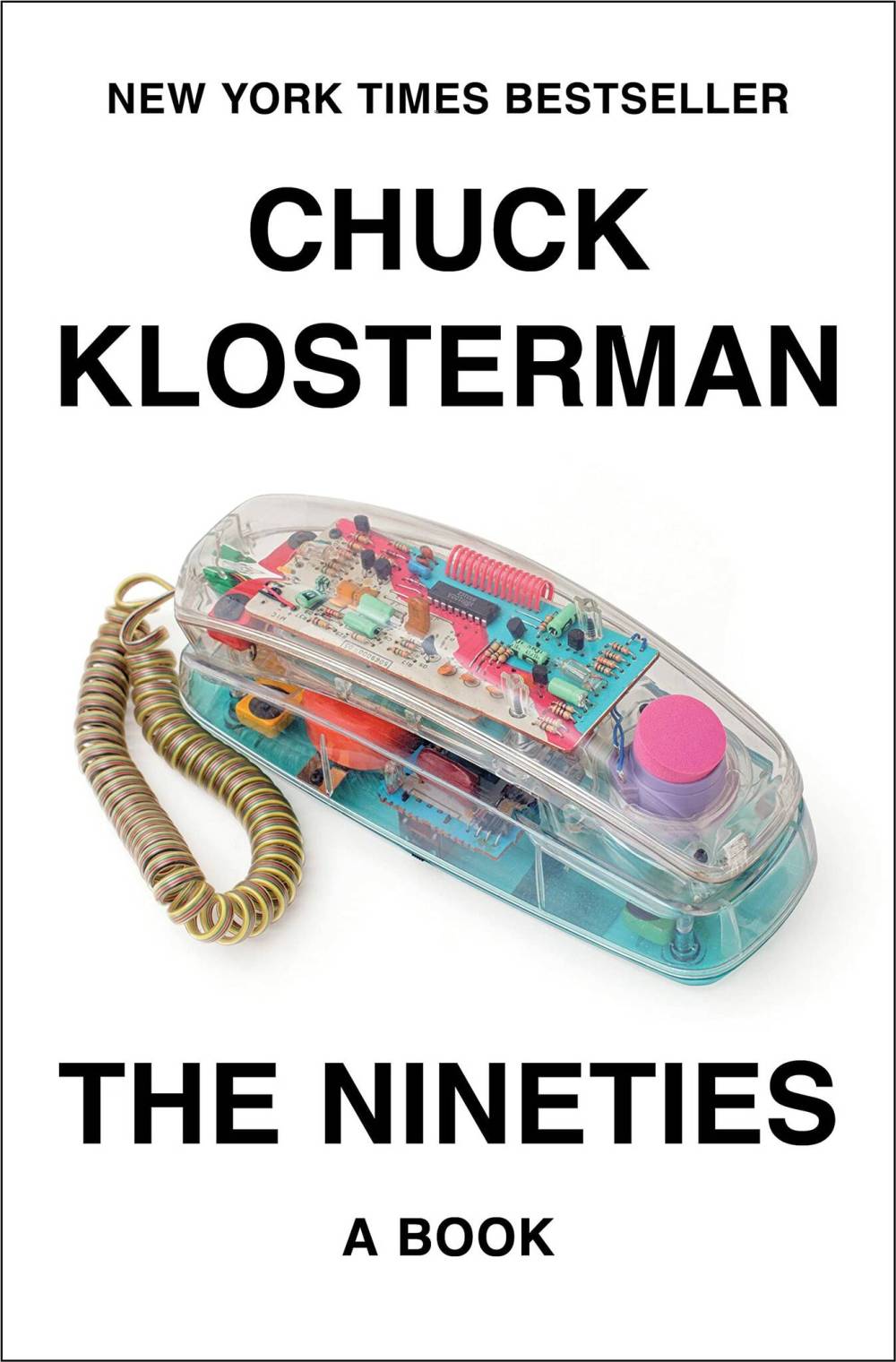
Chuck Klosterman is quick to acknowledge his biases. On page 8 of The Nineties, his new non-fiction tome, the American author and pop-culture critic dedicates a lengthy, amusing footnote to his “service as a demographic cliché”: Born in North Dakota in 1972, he is a white heterosexual cis male “whose experience across the ’90s was comically in line with the media caricature of generation X…” backwards baseball caps, cardigans and all.
If you’re a reader whose experiences also slot you into that demo, The Nineties will make you feel seen in a way that is uncommon for those in the overlooked cohort of people born between 1965 and 1980: this is your book.
That’s not to say Klosterman’s freewheeling journey through the last decade to have a monolithic mainstream culture (before the internet splintered it irrevocably) can’t be enjoyed by anyone. It’s erudite and funny and pulls together theories using a dazzling array of cultural references, but it will certainly be appreciated best by those who were in their 20s when Nirvana’s Smells Like Teen Spirit came along, readers who twig that there’s a chapter named for a Ben Folds song.
It is impossible to encompass all the ways, both meaningful and trite, our world changed between 1990 and 2000 (or thereabouts — Klosterman has his theories about the bookends), but the Fargo Rock City author sure gives it the old college try, and it’s largely a delight to parse his arguments.
Particularly pungent are his explorations of the alleged characteristics of generation X, as illustrated by the film Reality Bites (“The concept of ‘selling out’ — and the degree to which that notion altered the meaning and perception of almost everything — is the single most ’90s aspect of the ’90s,” he writes) and a chapter that uses The Matrix, Timothy McVeigh, O.J. Simpson, the Clarence Thomas trial, Fox News and Columbine to talk about television’s effect on our construction of reality.
Of course there are pitfalls in attempting to sum up the zeitgeist of an entire decade, and Klosterman falls into several of them.
The Nineties is overwhelmingly American in focus; though Canadians are obviously inundated with U.S. news and politics, the chapters on presidential elections and baseball may fall short of feeling universally applicable.
There are also blind spots where Klosterman perhaps ascribes more impact to an event than might be widely felt. For instance, an anecdote about basketball great Michael Jordan’s season with the Birmingham Barons AA baseball team feels freighted with an awful lot of relevance to a sports-agnostic reader (such as this one) who barely remembers it even happening.
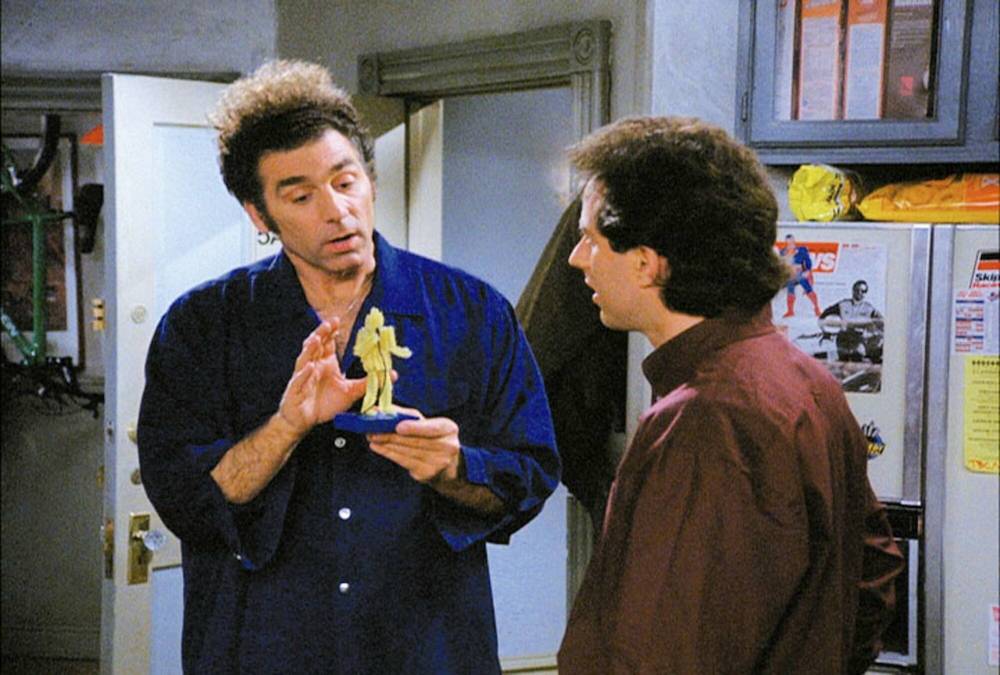
Klosterman also makes sweeping generalizations that initially seem true but that don’t bear up under scrutiny. In his intro, in trying to pinpoint the way the era differed from what came before or after, he mentions that if you missed an episode of Seinfeld, you just missed it, unless you caught it in reruns, adding “but of course this limitation was not something people worried about, because caring that much about any TV show was not a normal thing to do. And even if you did, you would pretend you did not, because this was the ’90s.”

Feigned apathy was certainly a thing, but even the most too-cool-for-school gen-Xer was deeply invested in television; we would no more have missed an episode of Twin Peaks than we would have given up our Doc Martens.
Some of the examples he uses to prove his point are facile and don’t hold up: Crash Test Dummies’ Mmm Mmm Mmm Mmm does not fit into the category of “songs where “the lead singer did not sing or rap but instead monotonously and nonsensically talked over atmospheric background music”; it could be strenuously argued that the Flaming Lips’ She Don’t Use Jelly is not a “novelty song.”
But that’s kind of the joy of books like this — they inspire vehement disagreement and passionate defences in equal measure. No one who writes the sentence “So much time and effort had been invested in the Star Wars obsession that the film was mentally reimagined as something it never was: a movie about human emotion, made for adult humans” isn’t spoiling for a fight.
Of course, the stereotypical gen-X reader might just shrug it off and say, “Well, whatever, never mind.”

Jill Wilson is a Free Press copy editor born in 1971 whose picture appeared on the front of this newspaper’s arts section in 1994 in an article about the then-new generation known as X.
Jill Wilson is the editor of the Arts & Life section. A born and bred Winnipegger, she graduated from the University of Winnipeg and worked at Stylus magazine, the Winnipeg Sun and Uptown before joining the Free Press in 2003. Read more about Jill.
Jill oversees the team that publishes news and analysis about art, entertainment and culture in Manitoba. It’s part of the Free Press‘s tradition, since 1872, of producing reliable independent journalism. Read more about Free Press’s history and mandate, and learn how our newsroom operates.
Our newsroom depends on a growing audience of readers to power our journalism. If you are not a paid reader, please consider becoming a subscriber.
Our newsroom depends on its audience of readers to power our journalism. Thank you for your support.
Advertisement Advertise With Us
Advertisement Advertise With Us