Double trouble

Real-life story of FBI agent turned Russian spy has hallmarks of a gripping thriller

Advertisement

Advertise with us

Robert Hanssen was only in it for the money.

Read this article for free:


or

Already have an account? Log in here »

To continue reading, please subscribe:

Subscribe and receive a limited-edition Free Press branded hat or tote.

Digital Subscription

One year of digital access for only $205*

  • Enjoy unlimited reading on winnipegfreepress.com
  • Read the E-Edition, our digital replica newspaper
  • Access News Break, our award-winning app
  • Play interactive puzzles

*First annual payment billed as $205.00 + GST for one year. This annual subscription will automatically renew at $233.00 + GST every 52 weeks (10% off the regular annual price of $259.35). Offer available to new and qualified returning subscribers only. Cancel any time.

To continue reading, please subscribe:

Add Free Press access to your Brandon Sun subscription for only an additional

$1 for the first 4 weeks*

  • Enjoy unlimited reading on winnipegfreepress.com
  • Read the E-Edition, our digital replica newspaper
  • Access News Break, our award-winning app
  • Play interactive puzzles
Start now

*Your next Brandon Sun subscription payment will increase by $1.00 and you will be charged $17.95 plus GST for four weeks. After four weeks, your payment will increase to $24.95 plus GST every four weeks.

Hey there, time traveller!
This article was published 28/05/2022 (1589 days ago), so information in it may no longer be current.

Robert Hanssen was only in it for the money.

His spying, described by the U.S. Department of Justice as “possibly the worst intelligence disaster in U.S. history,” was strictly mercenary.

Unlike other famous betrayal-of-the-West spies such as Brits Kim Philby and Anthony Burgess, the FBI counter-intelligence agent who spied for the Soviets and Russians shared no ideological kinship with his foreign spymasters.
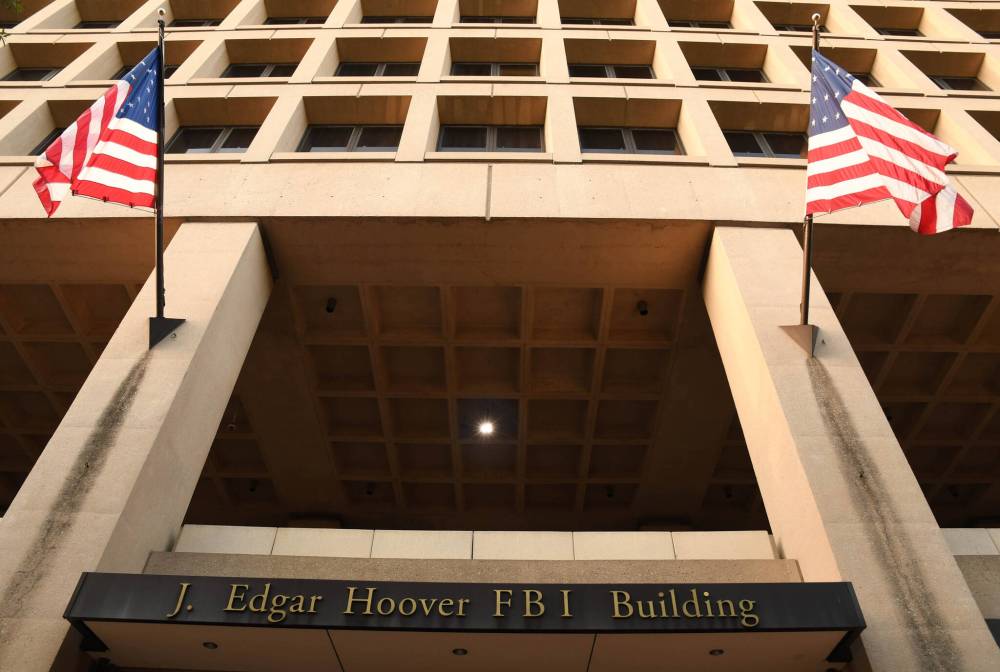
Andrew Cline / TNS
While at the FBI in 1979, Robert Hanssen approached the Soviet Intelligence Directorate offering his services. For the next 22 years he sold them classified documents from within the bureau.
Andrew Cline / TNS While at the FBI in 1979, Robert Hanssen approached the Soviet Intelligence Directorate offering his services. For the next 22 years he sold them classified documents from within the bureau.

The ultra-conservative and Catholic family man had five kids in private schools, an expensive wife and chronic cash-flow problems.

His politics were somewhat to the right of Genghis Khan. He opposed abortion rights and was known to disparage “homosexuality, Jews, Democratic politicians and policies,” writes author Lis Wiehl. But Hanssen solved his financial problems by becoming a double agent for the godless Communists he publicly disdained.

The Soviets made no overture to him.

In 1979, three years after joining the FBI, Hanssen approached the Soviet Intelligence Directorate and offered his services. Being himself a counterintelligence agent, he knew precisely who to contact and how to anonymously betray his country.

The Soviet Union, and latterly Russia, paid him more than US$1.4 million in cash and diamonds over a 22-year period. Calculatedly, and masterfully, off and on from 1979 to 2001, Hanssen sold classified documents to the KGB and its Russian successor, the SVR, that detailed U.S. strategies in the event of nuclear war, developments in military-weapon technology and American counter-intelligence programs.

When he was finally arrested in February 2001, Hanssen plea bargained out of the death penalty (espionage is a capital crime in the U.S.) and was sentenced to 15 consecutive sentences of life in prison without parole. Now 78 years of age, he serves time in what’s known as a federal “supermax” prison near Florence, Colo.

Wiehl is a former federal prosecutor and former University of Washington law professor. She’s also a regular legal analyst for CNN and other U.S. news outlets.

Wiehl is also the daughter of a respected former FBI agent, a fact that didn’t hurt her gaining entrée to interviews with many of the bureau’s official — and now mostly retired — players in Hanssen’s story.

A Spy in Plain Sight

Her narrative moves along at a nice clip without sacrificing fidelity to fact or detail. At times it even has the feel of a thriller — remarkable for a work of non-fiction.

The book is also a broad and devastating critique of not only the FBI but also the American intelligence and counterintelligence community generally.

Wiehl weaves into Hanssen’s story other recent “penetrations that are shredding America’s intelligence capacity.”

Among her most notable inclusions are CIA officer-turned-spy-Russian-spy Harold James Nicholson, and CIA counterintelligence branch chief for Soviet operations Aldrich Ames, who fed classified information to the very enemy he was supposed to be watching.

There’s also a sad career story that parallels Hanssen’s career as a spy.

Due to the sheer volume of their failed, compromised and blown espionage ventures, both the FBI and CIA knew American intelligence had a mole buried deep in one of their organizations.

Early on, they decided that mole was a CIA counterintelligence officer named Brian Kelley, on whom they “focused brutally and resolutely.”

“His family members were grilled ruthlessly, his house secretly searched,” Wiehl writes. “Kelley himself is stripped of his entry badge and placed under semi house arrest.”
The Associated Press files
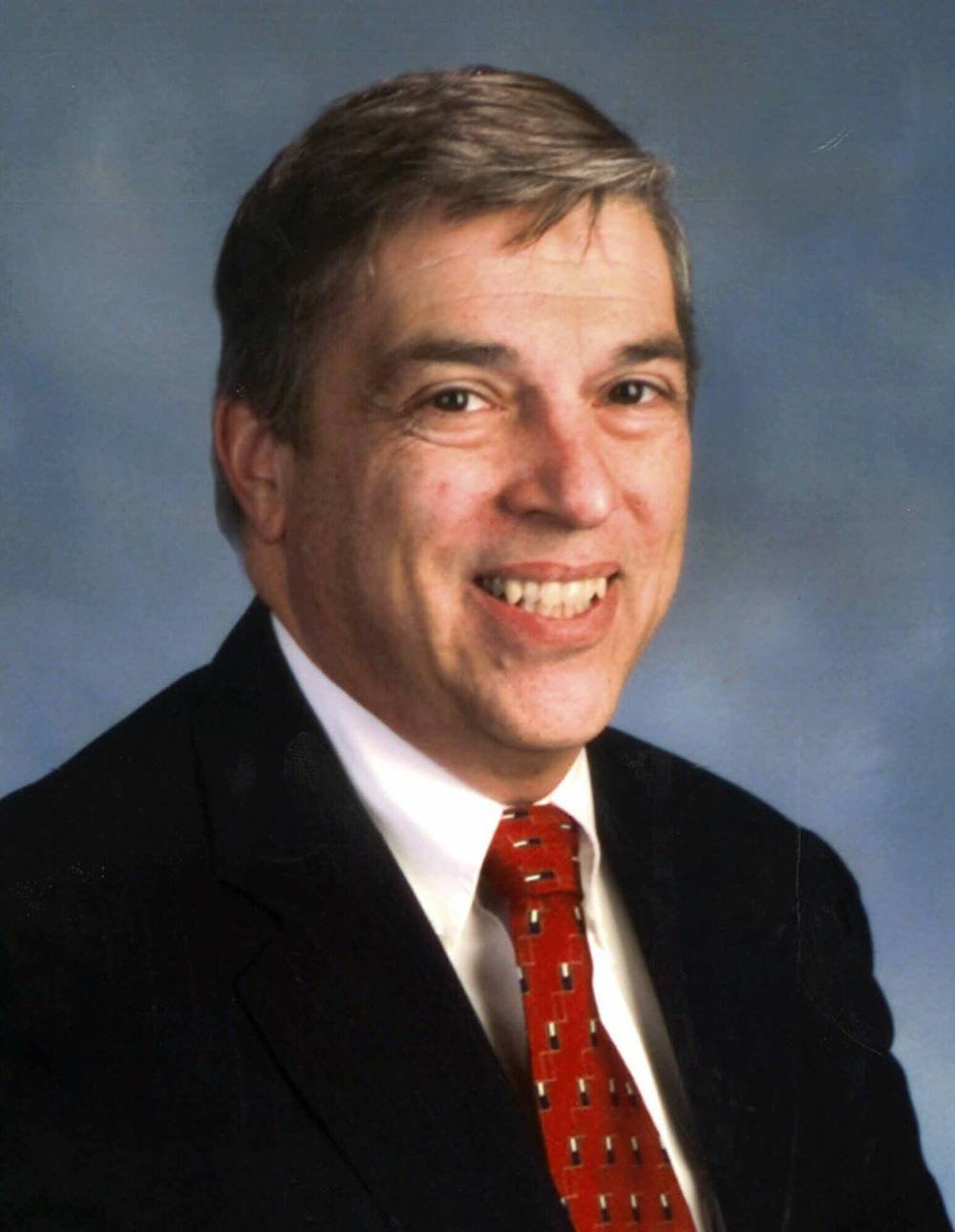
Hanssen was sentenced to prison in 2002.
The Associated Press files Hanssen was sentenced to prison in 2002.

The collective mania to gather sufficient evidence to charge the innocent Kelley gave Hanssen diversionary cover to ply his trade for as long as he did.

And only belatedly did Kelley receive a half-hearted apology from the powers that be for the violations he, his reputation and his family suffered.

Wiehl’s book is a superior tale of real-life espionage — a tale that frequently furnishes the suspense of a good spy novel.

Douglas J. Johnston is a Winnipeg lawyer and writer.

Report Error Submit a Tip

More Stories

Clock ticks down on destruction of records documenting residential school abuses

Marsha McLeod 13 minute read Preview

Clock ticks down on destruction of records documenting residential school abuses

Marsha McLeod 13 minute read Yesterday at 12:49 PM CDT

In less than a year, a private company is set to destroy the largest cache of records detailing the widespread abuse of Indigenous children at residential schools in Canada.

The destruction, which was ordered by an Ontario court in 2014 and later upheld by the Supreme Court, is set to take place on Sept. 19, 2027.

This countdown is igniting emotional conversations that seek to balance the immense historical value of the records alongside the confidentiality survivors were promised as part of the process of providing detailed testimony about abuses they’d suffered.

The records were created as part of the Indian Residential Schools Settlement Agreement, a class-action settlement stemming from survivors who began suing the federal government in the late 1990s over the harm they’d been subjected to at residential schools.

Read
Yesterday at 12:49 PM CDT

Khan should’ve taken high road: Goertzen

Carol Sanders 5 minute read Preview

Khan should’ve taken high road: Goertzen

Carol Sanders 5 minute read Yesterday at 6:39 PM CDT

The veteran Progressive Conservative who championed Obby Khan’s leadership bid says the former Blue Bomber dropped the ball by dissing his Tory teammates before he stepped down.

“I wouldn’t recommend it, and I didn’t recommend it,” Kelvin Goertzen (Steinbach) said in an interview Friday.

Khan resigned as PC leader and quit the caucus Monday saying some members were secretly plotting his ouster, even after he won a confidence vote on Sept. 25.

On Tuesday, Khan lashed out in a CJOB interview, naming the alleged plotters, saying constituents deserved to know which of their elected representatives “lacked moral integrity.” Khan told the Free Press he was “deeply emotionally hurt,” and felt stabbed in the back.

Read
Yesterday at 6:39 PM CDT

Health minister warns $1.2 billion in annual federal funding set to expire in March

Scott Billeck 4 minute read Preview

Health minister warns $1.2 billion in annual federal funding set to expire in March

Scott Billeck 4 minute read Thursday, Oct. 1, 2026

Manitoba’s health minister is warning of possible cuts to health care with $1.2 billion in annual funding from Ottawa set to expire next year.

“We’re very concerned that what would be the largest cut to health care in a generation is right in front of us,” Health Minister Uzoma Asagwara said Thursday at the Manitoba legislature. “It means that services that Manitobans depend on will be in jeopardy and be at risk.

“Any reductions, any cuts from Canada, will have direct impacts on the health outcomes of Manitobans.”

Asagwara, who serves as the provincial and territorial health minister lead, chaired a virtual meeting Tuesday with provincial and territorial health ministers to discuss federal funding for health care, mental health care and substance use services, which is scheduled to expire March 31, 2027.

Read
Thursday, Oct. 1, 2026

Gordon Bell rings in a century

Maggie Macintosh 13 minute read Preview

Gordon Bell rings in a century

Maggie Macintosh 13 minute read Updated: Yesterday at 8:06 PM CDT

Mischka Valencia had gotten used to the hum of heavy machinery at Gordon Bell High School.

“Ever since I’ve been here, it’s all been under construction,” the Grade 12 student said, standing on the sidelines of the brightly painted revamped outdoor basketball court. “I had no idea this was a court.”

The Filipina teenager landed in Winnipeg several months after the inner-city campus had transformed into a construction site.

It was the fall of 2023 and Mischka’s priorities were fitting in, befriending classmates and learning a third language via first-period French.

Read
Updated: Yesterday at 8:06 PM CDT

Six high school hockey programs ceased operations following new Hockey Manitoba policy

Joshua Frey-Sam 7 minute read Preview

Six high school hockey programs ceased operations following new Hockey Manitoba policy

Joshua Frey-Sam 7 minute read Updated: Yesterday at 8:19 PM CDT

She lived the best of both worlds.

For the last three years, the 17-year-old wore a sweater for two different hockey programs — her high school team and AAA club in the Manitoba Female Hockey League — and was preparing to flourish in both colours again this winter.

Recently, however, the blue-liner was disappointed to learn she is no longer eligible to play her Grade 12 season with her school owing to a new policy imposed by Hockey Manitoba that bans players from participating in the Manitoba Women’s High School Hockey League if they are rostered on a U18 AAA team.

The rule applies to all athletes who play for both Winnipeg-based and rural AAA teams.

Read
Updated: Yesterday at 8:19 PM CDT

Free Press staff 2 minute read 2:01 AM CDT

Advance voting for civic and school board elections begins next week.

Voters can cast early ballots for the Oct. 28 election in certain locations from Monday through Oct. 23.

Eligible voters can use their address to search for a convenient location.

Early votes can be cast at the council building at city hall (510 Main St.) every day, except weekends and Thanksgiving, from Monday to Oct. 23.