Double trouble
Horowitz’s rewarding new Bond novel takes 007 behind the Iron Curtain
Advertisement
Read this article for free:
or
Already have an account? Log in here »
To continue reading, please subscribe:

Digital Subscription
One year of digital access for only $205*
- Enjoy unlimited reading on winnipegfreepress.com
- Read the E-Edition, our digital replica newspaper
- Access News Break, our award-winning app
- Play interactive puzzles
*First annual payment billed as $205.00 + GST for one year. This annual subscription will automatically renew at $233.00 + GST every 52 weeks (10% off the regular annual price of $259.35). Offer available to new and qualified returning subscribers only. Cancel any time.
To continue reading, please subscribe:
Add Free Press access to your Brandon Sun subscription for only an additional
$1 for the first 4 weeks*
- Enjoy unlimited reading on winnipegfreepress.com
- Read the E-Edition, our digital replica newspaper
- Access News Break, our award-winning app
- Play interactive puzzles
*Your next Brandon Sun subscription payment will increase by $1.00 and you will be charged $17.95 plus GST for four weeks. After four weeks, your payment will increase to $24.95 plus GST every four weeks.
Read unlimited articles for free today:
or
Already have an account? Log in here »
Hey there, time traveller!
This article was published 04/06/2022 (1576 days ago), so information in it may no longer be current.
In the nearly 60 years since Ian Fleming’s death in 1964 — after having written 14 James Bond novels — other authors have, with the permission of the Fleming estate, produced an additional 36 adventures for the enduringly popular superspy.
While a few books returned Bond to the late 1960s (Sebastian Faulks’ Devil May Care, and William Boyd’s Solo), the majority of the “continuation” novels are set when they were written — in the 1980s and ‘90s, (first by John Gardner and then Raymond Benson) and feature a permanently middle-aged Bond. The character has also been both “rebooted” for the 21st century (Jeffrey Deaver’s 2011 Carte Blanche) and taken back to the 1930s in nine “Young Bond” young adult novels by Charlie Higson and Steve Cole.
Anthony Horowitz’s continuation Bond novels stand apart, owing to their author’s ingenious (and audacious) decision to set them within the timeline of Fleming’s original books. Set in 1950, Forever and a Day (2018) told Bond’s “origin story” prior to 1954’s Casino Royale, while Trigger Mortis (2015) was set after the 1959 novel Goldfinger and portrayed Bond in the middle of his career.

In this exciting if sombre new thriller, Horowitz picks up Bond’s story two weeks after the events in Fleming’s final novel The Man with the Golden Gun (1965), making it function as a direct sequel both to that and 1964’s You Only Live Twice.
Horowitz is the bestselling screenwriter and novelist whose credits include numerous mysteries as well as the young adult Alex Rider spy novels. Television viewers will most likely recognize him as the creator of the beloved series Foyle’s War, which ran between 2002-2015 and featured intricately plotted mysteries that related in some way to actual historical events during and after the Second World War.
This skill at weaving together plot and history serves him well here, with Britain still reeling from the 1961 trial of double agent George Blake, and Bond facing a Soviet plot set in the waning months of the rule of then-premier Nikita Khrushchev. Horowitz’s depictions of the depressing ruins of the still bombed-out East Berlin are also especially evocative.

The “mind” of the title belongs to Bond himself. In the opening pages of Golden Gun it was revealed that he had been the victim of Soviet brainwashing (following the events of You Only Live Twice), and sent to assassinate M. (the head of MI6), but was thwarted at the last moment and sent for psychiatric treatment. Here Horowitz has the agency deciding to pretend that the plot had, in fact, succeeded, so that Bond might be able to return to Russia so he can infiltrate a newly-discovered hardline security operation — Stalnaya Ruka, or Steel Hand.
To further convince the Soviets, Bond undergoes additional (and harrowingly described) brainwashing — which he resists thanks to his treatments in England — before being teamed up with military psychiatrist Katya Leonova and travelling to Moscow for further orders. Along the way the two develop a romantic relationship, which for Bond is tempered by the fact that he has to lie to her about his devotion to communism. From there Bond is sent to East Berlin for his assignment, which is only revealed to him (and the reader) in the book’s tense climax.
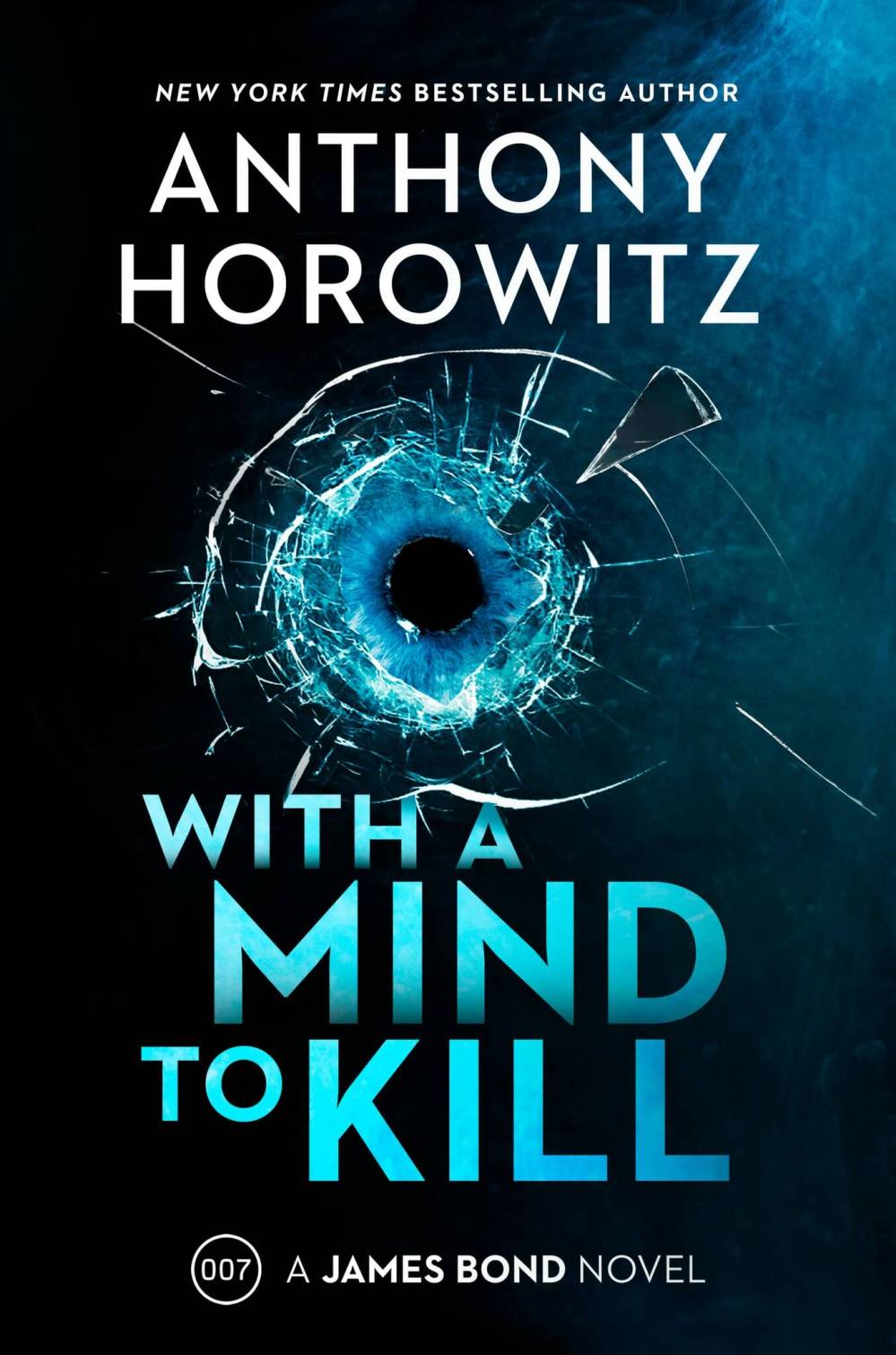
The relevance of the title goes beyond Bond’s brainwashing. Horowitz is much less concerned with action as he is with Bond’s inner life, and so has the aging spy pondering his long and dangerous career, and its costs to both himself and the many women in his life.
The unexpected and stunning finale — reminiscent of John le Carré’s The Spy Who Came in from the Cold — may be controversial among some readers, yet the numerous references and callbacks to Fleming’s previous novels and characters clearly come from Horowitz’s deep love of the series, and will both reward longtime fans and intrigue new ones.
Michael Dudley is a librarian at the University of Winnipeg.