Step by step

MacDonald’s mindful musings mull precarious, precious nature of walking

Advertisement

Advertise with us

This small volume of poetry and prose by Winnipeg-raised, Waterloo-based writer/professor Tanis MacDonald bursts with ideas about moving through space on one’s own terms.

Read this article for free:


By clicking the button above, an account will be created and you will begin to receive some of our recommended newsletters. You may opt out of any newsletter by visiting your Email and Communication Preferences page or by clicking "unsubscribe" at the bottom of any email.

or

Already have an account? Log in here »

To continue reading, please subscribe:

Digital Subscription

One year of digital access for only $1.44 a week*

  • Enjoy unlimited reading on winnipegfreepress.com
  • Read the E-Edition, our digital replica newspaper
  • Access News Break, our award-winning app
  • Play interactive puzzles

*Billed as $5.77 plus GST every four weeks. After 52 weeks, price increases to the regular rate of $19.95 plus GST every four weeks. Offer available to new and qualified returning subscribers only. Cancel any time.

To continue reading, please subscribe:

Add Free Press access to your Brandon Sun subscription for only an additional

$1 for the first 4 weeks*

  • Enjoy unlimited reading on winnipegfreepress.com
  • Read the E-Edition, our digital replica newspaper
  • Access News Break, our award-winning app
  • Play interactive puzzles
Start now

*Your next Brandon Sun subscription payment will increase by $1.00 and you will be charged $17.95 plus GST for four weeks. After four weeks, your payment will increase to $24.95 plus GST every four weeks.

Hey there, time traveller!
This article was published 25/06/2022 (1585 days ago), so information in it may no longer be current.

This small volume of poetry and prose by Winnipeg-raised, Waterloo-based writer/professor Tanis MacDonald bursts with ideas about moving through space on one’s own terms.

In 33 short pieces, 10 re-published here and originally appearing elsewhere, MacDonald wanders through wilderness (parks and managed forests, she confesses), cityscapes and time. She ponders the risks and dangers from nature and humankind, the pain and physical limitations that challenge her body, and the trauma she experiences as an assault survivor, soothed by walking. Alongside the discomfort, the collection offers beauty, awe, defiance and even humour.

But MacDonald’s central observation, what unites many of these compositions, is that for women, people of colour, disabled people, First Nations peoples and wildlife (what she terms our “non-human neighbours”), movement through space is precarious. There are stares, catcalls and stalking. She reminds us there can be worse, as for members of the Muslim Pakistani-Canadian Afzaal family, mowed down by a racist driver while on a stroll last June in London, Ont.
John Roscoe photo
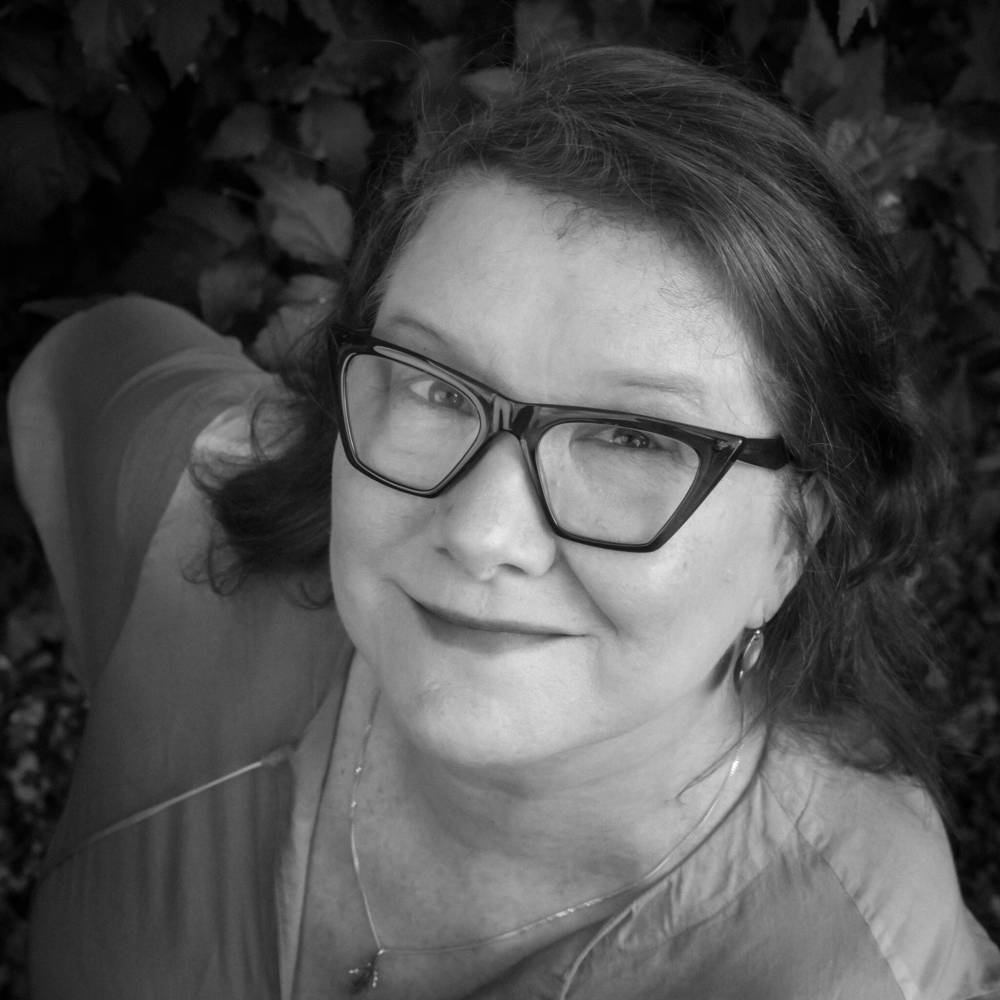
Author Tanis MacDonald acknowledges that for many groups, moving through space can be precarious.
John Roscoe photo Author Tanis MacDonald acknowledges that for many groups, moving through space can be precarious.

The similarity of the title’s “straggle” to “struggle” is likely no coincidence.

The word, as an idea, appears just once in the text as “straggler,” juxtaposed against the “speed-obsessed 21st century.” Implying more than just tardiness, it speaks of separation from the group. MacDonald’s experiences in these pieces are largely from the perspective of solitude and anonymity. While they are personal, they are frequently supported by references from a broad range of insightful, contemporary writers and artists, many from Canada. This is a feminist account. And a humane one.

It is also elegant. MacDonald tells us that prose and poetry are cousins, and that one informs the other. This refers to craft, but it is also delightful when her ideas are expressed in parallel through these related forms.

In the essay We, Megafauna, MacDonald notes that deer learn to manipulate a vanishing point when encountering humans in the woods. “[D]eer would coalesce to solidity from a mix of branches and leaves and a patch of sunlight, and then just as quickly melt out of view as though their molecules had seeped into the undergrowth,” she writes. This creaturely skill is evident in the short lyrical item The Deer in the Painting (in reference to a canvas by Winnipeg artist Clarence Tillenius), where a doe “slips like smoke between the trees, an appearing act… slight of hoof, sleight of hand.”

Similarly, MacDonald articulates the pain of sciatica in two essays and a poem: “the lit match of sciatica flaring down my thigh” (We, Megafauna); “the bark of my sciatica” (Ricochet: An Arcade); and “…The glass in/my right hip is sciatica/shattered like Attica” (This Limp Goes to Eleven). She muses, “…I know Long John Silver takes/no wasted steps.”

Winnipeggers will respond to local references. Who cannot smile at the vision of Jubilee Ave., “where the Bridge Drive-Inn still stands” or of a white snowy owl above Corydon and Waverley, “an optical illusion emerging from the light snow being driven by the wind across the wide street”?

Not all scenes are positive. There is a “serial masturbator” in the Assiniboine Forest. In the same woods, a woman successfully fights back and foils a male attacker. Readers may recall these incidents (still, the forest remains a joy). As another somber observation, MacDonald notes that the Assiniboine Park Zoo’s bison enclosure displays “animals who would be numerous on the very land that the zoo occupies if colonialism hadn’t destroyed most of the animals and the environment.”
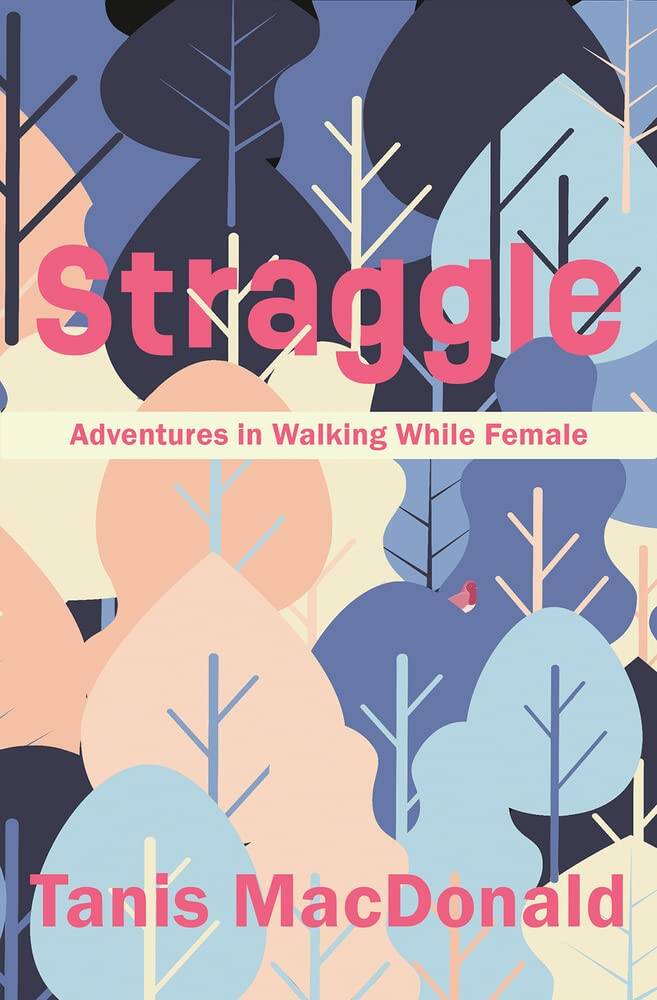
Straggle
Straggle

MacDonald is mindful of being from a settler background and the effects of colonialism on First Nations peoples. She lives near Ose’kowáhne, “a grateful guest on traditional Haudenosaunee territory.” She says in her introduction, “Wherever I walk, I know it’s my responsibility to consider the history of colonization and not just be blinded by the beauty of the land.” Colonization arises in several of the pieces, where MacDonald considers blood and theft and alternative, more respectful, ways of negotiating the world.

This contemplative rendition on walking stands apart from what has come before it — books on fitness, pilgrimage, adventure. It is about walking the best one can in the circumstances. It is relatable and triumphant.

Gail Perry is a long-distance walker who strives to be present.

Report Error Submit a Tip

More Stories

Police probe Perimeter Highway collision

1 minute read Yesterday at 3:22 PM CDT

Traffic investigators are probing a collision between two eastbound semi-trucks on the south Perimeter Highway at Provincial Road 330 on Sunday morning.

The Winnipeg Police Service was called to the collision at about 7:30 a.m., where Winnipeg Fire Paramedic Service personnel were already on the scene.

Traffic investigators met with the drivers and learned that one of the trucks was safely pulled over on the shoulder, waiting for mechanical assistance, when a second semi ran into the parked semi. The trailer of the parked vehicle was damaged and the driver was left with minor injuries.

The driver of the second semi remained at the scene.

Property tax hike included in Gillingham’s costed platform

Joyanne Pursaga 5 minute read Preview

Property tax hike included in Gillingham’s costed platform

Joyanne Pursaga 5 minute read Updated: Yesterday at 6:49 PM CDT

Mayoral candidate Scott Gillingham says property taxes will rise another 3.5 per cent in 2027, with no set cap on potential increases in each of the following three years, if he is re-elected as mayor on Wednesday.

A new property tax target would instead be determined by city council for the following three budget years, with a goal to keep annual hikes “close to inflation,” respect affordability and protect essential services, Gillingham said while releasing a costed election platform Monday.

“To say today we’re going to set a (property tax hike) target, set an amount without knowing where the inflationary rates would go would be irresponsible,” he said.

In his 2022 election campaign, Gillingham promised to raise taxes by 3.5 per cent per year. However, the city instead imposed a 5.95 per cent property tax hike in 2025, Winnipeg’s largest single-year increase since the 1990s.

Read
Updated: Yesterday at 6:49 PM CDT

Trump says he expects trade war with Canada to end ‘pretty soon’

The Canadian Press 3 minute read Preview

Trump says he expects trade war with Canada to end ‘pretty soon’

The Canadian Press 3 minute read Updated: Yesterday at 4:07 PM CDT

OTTAWA - U.S. President Donald Trump says he expects his constantly evolving trade war with Canada to end "pretty soon" as Prime Minister Mark Carney suggests Washington could be moving closer to Ottawa's demands.

Trump told a rally in Port Huron, Michigan, on Sunday that Canada had been "ripping off" the U.S. on trade and he had no choice but to impose levies on Canadian goods.

He said the trade dispute would be settled "pretty soon" and that Canada was "willing to give us anything at this moment."

At a news conference Monday, Carney was asked if there had been any movement on the trade file in the past week.

Read
Updated: Yesterday at 4:07 PM CDT

Jets players glad to have Hellebuyck trade behind them

Mike McIntyre 6 minute read Preview

Jets players glad to have Hellebuyck trade behind them

Mike McIntyre 6 minute read Saturday, Oct. 24, 2026

Relief? Regret? Rage?

How are the Winnipeg Jets feeling following Friday’s Connor Hellebuyck trade — particularly those with deep roots and strong bonds with the franchise goaltender who now finds himself a member of the New Jersey Devils?

“It was a bit of a cloud hanging over our heads,” captain Adam Lowry admitted on Saturday. “It’s nice we can look forward now. We don’t have to keep talking about it. We’ve got guys that want to be here.”

That was a bit of a common theme around the room following an outdoor practice at Princess Auto Stadium ahead of Sunday’s Heritage Classic game against the Montreal Canadiens.

Read
Saturday, Oct. 24, 2026

Prime Minister Carney says it’s time to move ‘beyond’ the Indian Act

By Alessia Passafiume and Kyle Duggan, The Canadian Press 9 minute read Preview

Prime Minister Carney says it’s time to move ‘beyond’ the Indian Act

By Alessia Passafiume and Kyle Duggan, The Canadian Press 9 minute read Updated: Yesterday at 7:09 PM CDT

OTTAWA - A historic meeting between Prime Minister Mark Carney, premiers and First Nations was meant to build bridges between communities and work out issues related to major projects development, the respecting of rights, health and public safety amid rising tensions.

But it ended with calls from Manitoba Premier Wab Kinew to abolish the controversial Indian Act, and agreement from Carney something must be done about the legislation from 1876 that governs First Nations -- something protestors outside the Ottawa venue were warning about before the announcement was even made, and something likely to generate heated debate.

Carney said he will instruct his ministers to work with First Nations to move Canada beyond the Indian Act, which he said could mean reforming it or abolishing it altogether. He said changes would only be made in partnership with First Nations leadership.

The Indian Act gives Ottawa sweeping powers over First Nations communities and people, including by defining who qualifies for recognition, what reserves can and can't do, dismantles traditional forms of governance and, at one point, outlawed ceremonial practices. 

Read
Updated: Yesterday at 7:09 PM CDT

Lula’s historic Brazilian election victory

Peter McKenna 5 minute read Preview

Lula’s historic Brazilian election victory

Peter McKenna 5 minute read 2:01 AM CDT

This was supposed to go down as one of the closest presidential elections in Brazilian history — until it wasn’t. In the end, 80-year-old leftist President Luiz Inácio (Lula) da Silva of the Workers Party bested (by some four million votes) Flávio Bolsonaro, the hard-right Liberal Party leader and senator, by a lopsided 3.5 per cent of the popular vote.

Speaking of Brazilian history, it rarely happens that the second-place finisher in the first round ends up winning the second, run-off contest in such a decisive manner. More significant, Lula has now won an unprecedented (non-consecutive) fourth term as an elected Brazilian president.

While Bolsonaro has waffled on making a concession speech (like his father in 2022), the writing on the wall shows clearly that he lost badly. He has evidently taken issue with a ruling by a justice of the Supreme Court that extended polling hours country-wide by an additional two hours in light of high voter turnout and other interruptions.

Flávio’s supporters, many galvanized around the “never Lula” camp, were desperate for change — even if it meant the kind of change that could turn Brazil on its head. So Lula resorted to one of the oldest political tricks in the campaign handbook — namely, using fear of an anti-democratic Bolsonaro to swing voters to his side (along with a host of last-minute announcements involving financial incentives to Brazilians). With a right-leaning Congress, voters were understandably worried that Flávio would go about systematically dismantling Brazil’s democratic ethos and institutions.

Read
2:01 AM CDT