Family ties
Cook’s thoughtful teenager bonds with grandfather in new novel
Advertisement
Read this article for free:
or
Already have an account? Log in here »
To continue reading, please subscribe:
Digital Subscription
One year of digital access for only $1.44 a week*
- Enjoy unlimited reading on winnipegfreepress.com
- Read the E-Edition, our digital replica newspaper
- Access News Break, our award-winning app
- Play interactive puzzles
*Billed as $5.77 plus GST every four weeks. After 52 weeks, price increases to the regular rate of $19.95 plus GST every four weeks. Offer available to new and qualified returning subscribers only. Cancel any time.
To continue reading, please subscribe:
Add Free Press access to your Brandon Sun subscription for only an additional
$1 for the first 4 weeks*
- Enjoy unlimited reading on winnipegfreepress.com
- Read the E-Edition, our digital replica newspaper
- Access News Break, our award-winning app
- Play interactive puzzles
*Your next Brandon Sun subscription payment will increase by $1.00 and you will be charged $17.95 plus GST for four weeks. After four weeks, your payment will increase to $24.95 plus GST every four weeks.
Read unlimited articles for free today:
or
Already have an account? Log in here »
Hey there, time traveller!
This article was published 02/07/2022 (1569 days ago), so information in it may no longer be current.
Méira Cook’s new novel about seven months in the life of Charlie Minkoff and his grandfather, Oscar, is not a straightforward read. It challenges conventional ideas about adolescence, parenting and the experience of intersex children. And, occasionally, its long whimsical interchanges may try the reader’s patience.
A Winnipeg writer and academic, Cook has won numerous prizes for poetry and for her first two novels, both set in South Africa where she grew up. In her new novel she has shifted her setting to Winnipeg, and her writing has taken a more satirical bent.
We meet Charlie Minkoff as he turns 13 and starts high school. He has never met his father and has no friends. Charlie knows he’s a boy and has consented to hormone therapy, but his chubbiness and high voice make others wonder. Ever since grade two he has realized “he would never again inhabit a world where other people’s eyes were not the mirrors in which he saw himself.”

Charlie’s mother Jules gives him little direction. Absent every evening because of her work as a bartender, she channels her anger over various losses into her installation art. When Charlie was five, Jules fell through the ice on a nearby river and lost her voice, so all her communication with him is in writing.
But despite all his problems, Charlie emerges as the most mature and thoughtful teenager you will ever meet. He attends classes. He does his homework. He shops for groceries and feeds and walks his needy little dog, Gellman. He even takes out the garbage for two elderly residents of the decrepit building where he and Jules live.
For an assignment in his Ancestry Studies class, Charlie interviews his 90-year-old zeide, Oscar, who survived the Holocaust as a child. When Charlie realizes that Oscar regrets never having had a Bar Mitzvah, he immediately contacts an orthodox rabbi to arrange the ceremony, and on the rabbi’s suggestion Charlie agrees to a joint Bar Mitzvah with his grandfather.
In the months leading to this event, Charlie’s regular Friday visits to his grandfather turn into kibitzy debates on the power of God and the role of free will. Despite a life that many would describe as a tragedy, Oscar remains an optimist and a firm supporter of “Free Willy.” He has a lot to say, and usually manages to have the last word. “Progess,” he believes, “is not an escalator leading from the Garden of Eden straight to heaven.”
How much control do we have in our lives? That is the question here. At the time of Charlie’s birth, both Jules and Oscar rejected surgery to remove his intersex traits. Charlie’s choices may be constricted, but they are his to make. And that is true of all the important characters here, including Heloise (Weeza), Jules’ best friend since childhood.
Weeza’s is one of the strongest of the many voices in the novel. She is a long-distance truck driver and a lesbian and is proud of both choices. Her long emails while on the road are gritty and funny and very real. “I f–king love my life — hemorrhoids, the artery-hardening cuisine, all of it. Nothing like schlepping other people’s junk across the continent to free you from wanting anything of your own, to free you from want.”
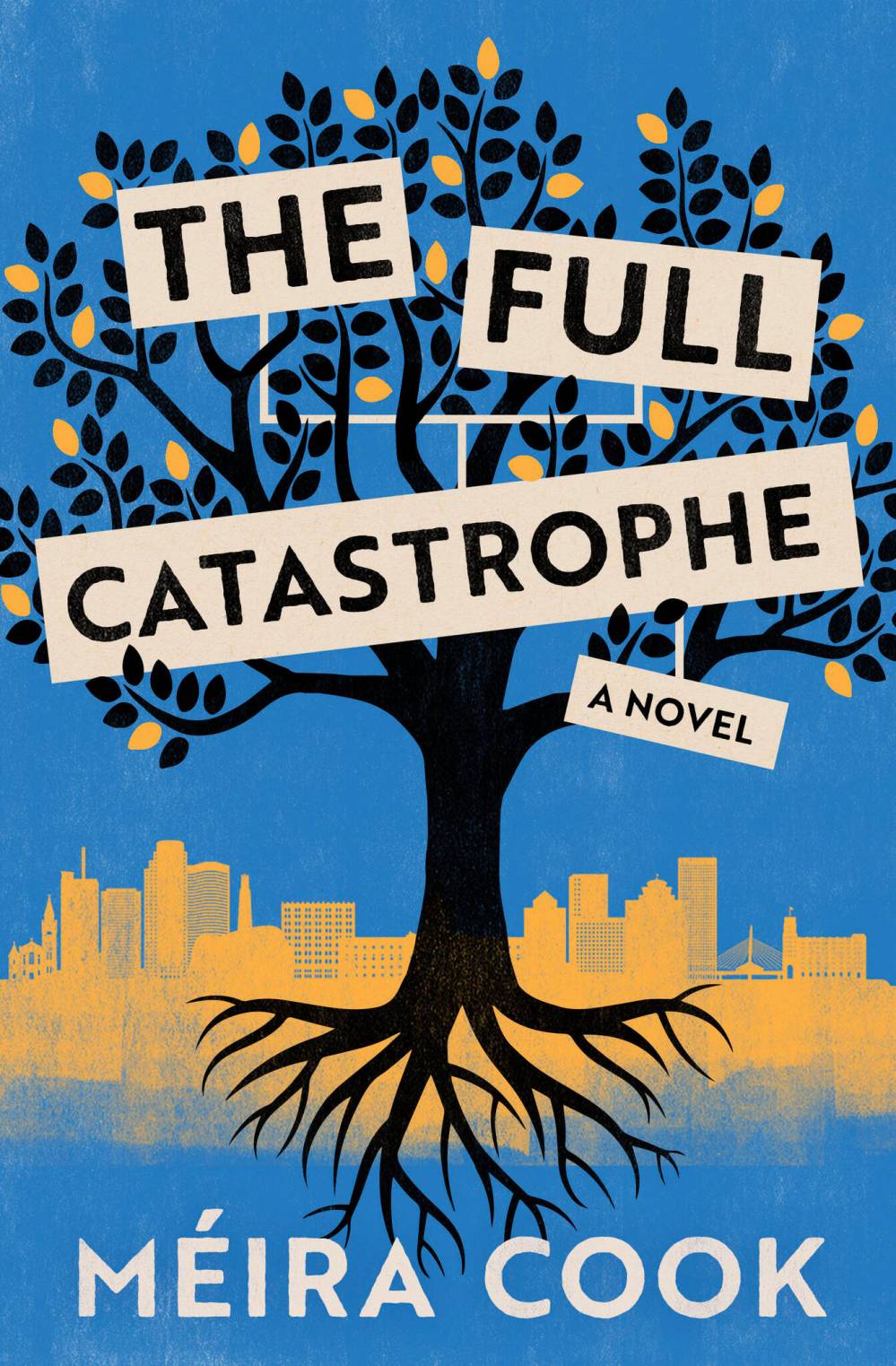
The novel ends, post-Bar Mitzvah and pre-pandemic, with Charlie on a road trip with Weeza. Nothing goes as planned for either of them, but when push comes to shove, they each make some wise decisions. On the elevator to heaven (or on the way to finding his own life), Charlie has advanced a step or two, at least.
Faith Johnston is a Winnipeg writer.