Anatomy of a scandal
New volume examines downfall of WE Charity, co-founders Craig and Mark Kielburger
Advertisement
Read this article for free:
or
Already have an account? Log in here »
To continue reading, please subscribe:

Digital Subscription
One year of digital access for only $205*
- Enjoy unlimited reading on winnipegfreepress.com
- Read the E-Edition, our digital replica newspaper
- Access News Break, our award-winning app
- Play interactive puzzles
*First annual payment billed as $205.00 + GST for one year. This annual subscription will automatically renew at $233.00 + GST every 52 weeks (10% off the regular annual price of $259.35). Offer available to new and qualified returning subscribers only. Cancel any time.
To continue reading, please subscribe:
Add Free Press access to your Brandon Sun subscription for only an additional
$1 for the first 4 weeks*
- Enjoy unlimited reading on winnipegfreepress.com
- Read the E-Edition, our digital replica newspaper
- Access News Break, our award-winning app
- Play interactive puzzles
*Your next Brandon Sun subscription payment will increase by $1.00 and you will be charged $17.95 plus GST for four weeks. After four weeks, your payment will increase to $24.95 plus GST every four weeks.
Read unlimited articles for free today:
or
Already have an account? Log in here »
Hey there, time traveller!
This article was published 30/07/2022 (1534 days ago), so information in it may no longer be current.
Philosopher and theologian Ivan Illich wrote a provocative speech, as he was apt to do, in 1968 entitled “To Hell with Good Intentions.” Speaking to the Conference of InterAmerican Student Projects, Illich attacked the notion of rich North Americans dropping in on impoverished communities in the global South in the name of development but shrouded in self-fulfilling experiences and the spread of global capitalism.
Illich fiercely argued that those part of international volunteer programmes “are ultimately — consciously or unconsciously — ‘salesmen’ for a delusive ballet in the ideas of democracy, equal opportunity and free enterprise among people who haven’t the possibility of profiting from these.” A condemnation of ill-conceived development projects.
BORIS MINKEVICH / WINNIPEG FREE PRESS FILES In this 2017 photo, WE co-founder Craig Kielburger (right) revs up the crowd at Bell MTS Place.
This is the knock on WE Charity — the brain-child and passion of Craig and Mark Kielburger, who created a monster of a charity and social enterprise that caught the eye of Oprah Winfrey, Bill Gates, the Dali Lama and the world. It inspired the massive WE Day celebrations, where learners were packed into arenas, pumped up by inspirational speakers and exposed to massive corporate donors.
But in the spring of 2020 during the global pandemic, the reign of this goodwill giant came to a grinding halt through the Liberal governments’ Canadian Student Service Grant (CSSG) programme, a COVID-19 relief programme designed to connect young Canadians with paid volunteer opportunities. WE was given the half billion-dollar contract, which would eventually result in the resignation of then-finance minister Bill Morneau and the collapse of WE and the international reputation of the brothers.
What We Lost: Inside the Attack on Canada’s Largest Children’s Charity
By Tawfiq S. Rangwala
Optimum Publishing, 448 pages, $27
Buy on mcnallyrobinson.com
WE’s relationship with the Trudeaus, the Kielburgers’ own blunderings and the relentless pursuit of journalists and opposition MPs would be its ultimate demise, while the PM himself was able to once again wriggle free. The Kielburgers seem to have been the latest “roadkill” left in Justin Trudeau’s wake.
This is the explanation provided by former WE board member Tawfiq S. Rangwala in What WE Lost: Inside the Attack on Canada’s Largest Children’s Charity. Stepping down from the U.S. WE Charity board in 2021 to write the book, Rangwala is an old family friend of the Kielburgers and felt compelled to defend the brothers and the organization against what he refers to as “tallest poppy syndrome.” According to Rangwala, “The bottom line is that for a subset of Canadians who watched the Kielburgers with a mix of amazement and jealousy, the CSSG controversy and ensuing avalanche of criticism provided the aha moment they had long hoped for….”
What WE Lost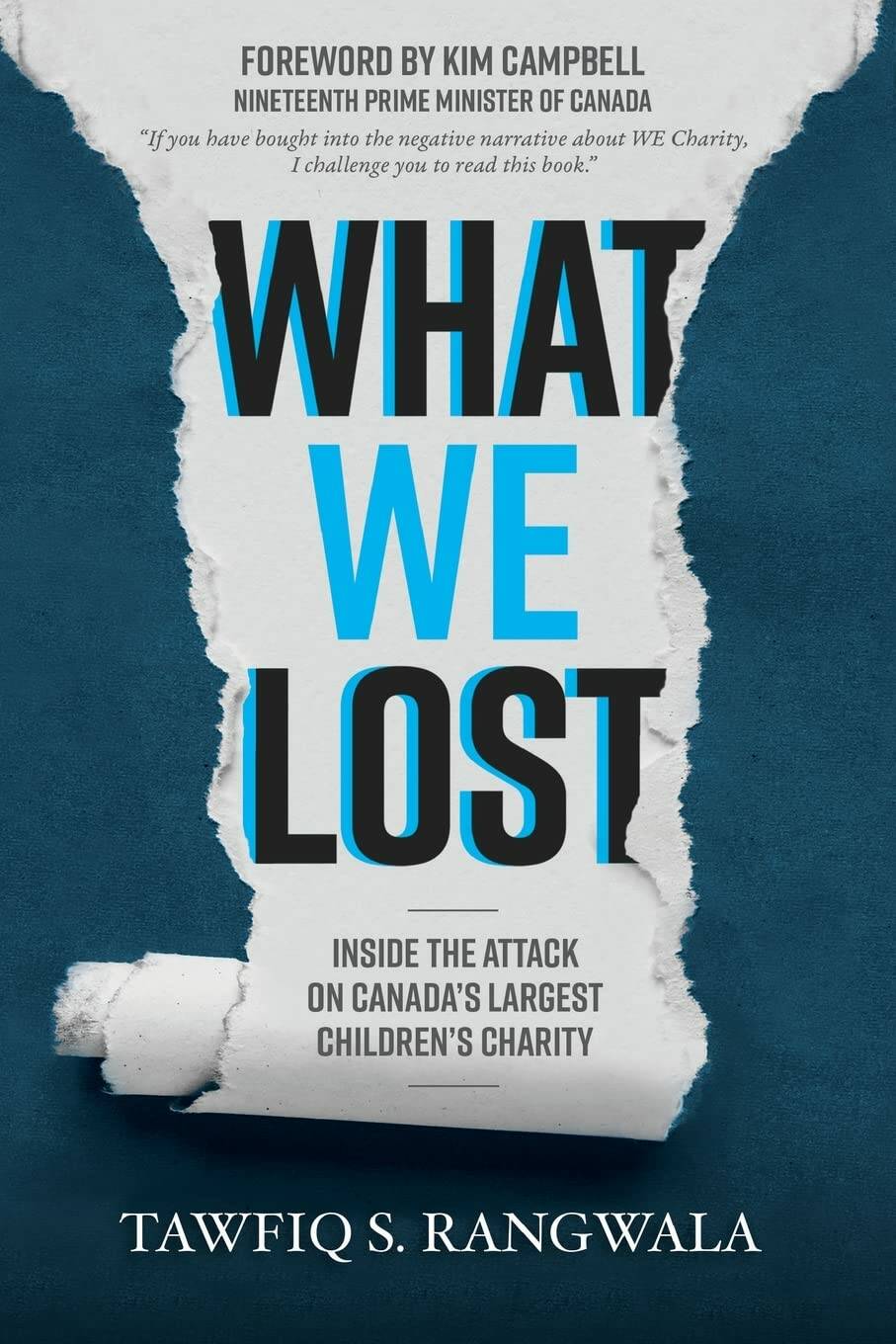
What is clear from What WE Lost is that the Kielburgers are not sinister monsters. At best, they are two brothers who thought they could instill systemic change through courting the super elite of the world — an elite whose wealth is often sustained by imbalance and inequity. Rangwala’s account seems unable to penetrate this paradox, as he perpetually speaks of courting the world’s elite: “And you do not recruit captains of industry like Facebook COO Sheryl Sandberg, KPMG Global chairman Bill Thomas, and Virgin Group founder Richard Branson to champion your cause unless you are focused and on message.” This is where Canadian cynicism might rest.
At worst, the Kielburgers were fame-seeking kids who saw no problem hobnobbing with DOW Chemical, The Hershey Company, Boeing and the like in order to build a name for themselves. But the former seems to come through the pages of both this insider account and in the results stemming from parliamentary inquiries.
The most significant tension revealed by Rangwala’s account is the serious lack of reflection as it relates to WE itself, its mission and its ultimate raison d’être. While the charity’s one-off events make folks feel pretty good about themselves, there is a much larger question. The author, time and again, emphasizes the Kielburgers’ innate talent at courting the most elite and richest in the world. If the dream is to ensure equity and sustainability throughout this country and the world, could we not begin by ensuring that those with the most pay their fare share?
GEOFF ROBINS / THE CANADIAN PRESS FILES Author Tawfiq Rangwala emphasizes Marc (left) and Craig Kielburger had an innate talent at courting the world’s rich and elite.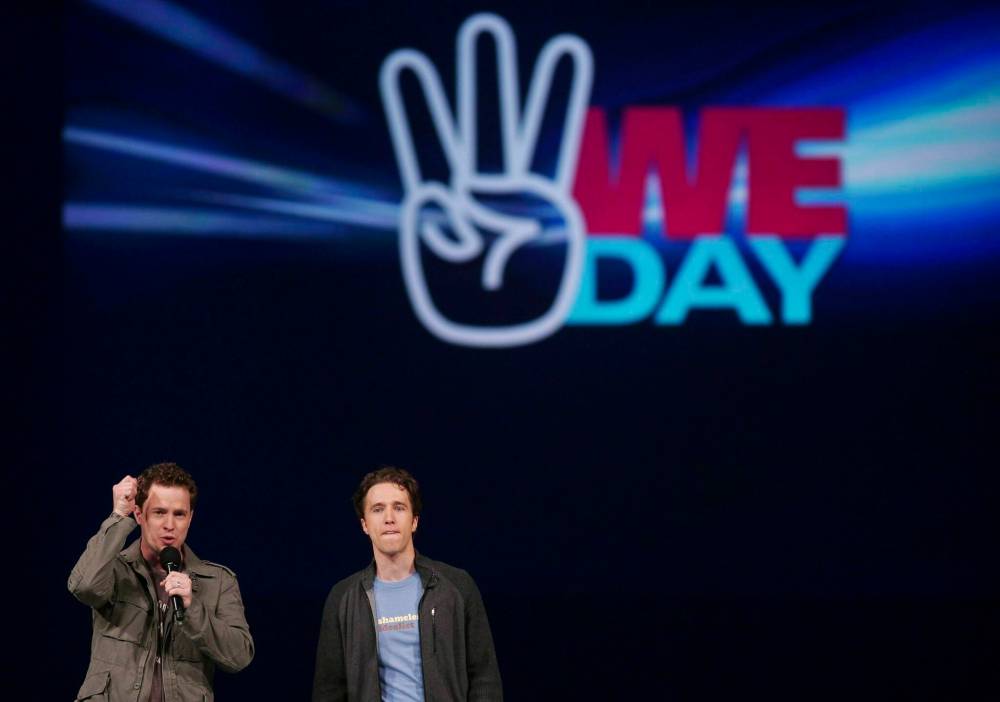
And even Rangwala makes an attempt to address the WE model: “Questions were raised as to whether the organization focused on the appeal of helping the less fortunate without addressing the underlying privilege that allowed benefactors to do so.” In the comparisons he makes between WE and other NGOs such as Oxfam and CARE, philanthropy is touted by the author as the means to “take on the underlying challenges of poverty.”
What WE Lost also makes significant claims against the media — specifically Mark Kelly, The Fifth Estate and the CBC — and key opposition members, including Charlie Angus and Pierre Poilievre. Rangwala, a lawyer by trade, builds the case that the attack on WE by the media and MPs was unwarranted, falsified and at times absurd. Several of these claims have been taken to the next level and are pending.
And whether The Fifth Estate or Rangwala’s stories come together to formulate some degree of truth, the central issue of the book rests in the author’s poignant question: “Why were people so quick to accept that WE and the Kielburgers were up to no good….?” Despite their elite backing, how could they have not been able to protect themselves from the court of public opinion?
The answer? Their inability to protect themselves within the delusive ballet may have been their undoing, while their trust in political friends sealed WE’s legacy/infamy in the annals of Canadian international development history.
Matt Henderson is assistant superintendent of Seven Oaks School Division.