Moving meditations
Love, sorrow permeate Gunnars’ reflective writing across genres
Advertisement
Read this article for free:
or
Already have an account? Log in here »
To continue reading, please subscribe:

Digital Subscription
One year of digital access for only $205*
- Enjoy unlimited reading on winnipegfreepress.com
- Read the E-Edition, our digital replica newspaper
- Access News Break, our award-winning app
- Play interactive puzzles
*First annual payment billed as $205.00 + GST for one year. This annual subscription will automatically renew at $233.00 + GST every 52 weeks (10% off the regular annual price of $259.35). Offer available to new and qualified returning subscribers only. Cancel any time.
To continue reading, please subscribe:
Add Free Press access to your Brandon Sun subscription for only an additional
$1 for the first 4 weeks*
- Enjoy unlimited reading on winnipegfreepress.com
- Read the E-Edition, our digital replica newspaper
- Access News Break, our award-winning app
- Play interactive puzzles
*Your next Brandon Sun subscription payment will increase by $1.00 and you will be charged $17.95 plus GST for four weeks. After four weeks, your payment will increase to $24.95 plus GST every four weeks.
Read unlimited articles for free today:
or
Already have an account? Log in here »
Hey there, time traveller!
This article was published 13/08/2022 (1442 days ago), so information in it may no longer be current.
As her community of readers has known for over 30 years, there is nothing quite like Kristjana Gunnars’ project in contemporary Canadian writing. Beginning in 1989 with The Prowler, to this day the best-known of these short books, Gunnars published five works over the next 10 years with Red Deer Press. Assembled under one cover for the first time, thanks to Coach House Press, these form a rich meditation among genres — chiefly fiction, memoir, poetry and prose.
Retrospectively, it is now plain to see that Gunnars’ writing has always been in progress and will remain always unfinished, calling resonantly across these five works. Together they give us a luminous composite discussion of a woman reading, thinking, writing and loving; of her recursive encounters with other books, other writers and thinkers and her own past; and of lovers who advance and retreat with her, towards and away from a hard-won and a hard-lost autonomy.
The host of writers and thinkers that Gunnars conjures with — always interrogating them, quoting them, reconsidering them — constitutes a formidable pantheon that accompanies her on her constant travels across Scandinavia, Germany and France, and in North America, from Quebec to Winnipeg, from Edmonton to B.C. to Oregon. Everywhere, Gunnars’ memory and imagination meld natural and interior terrains with a spare and beautiful lucidity.
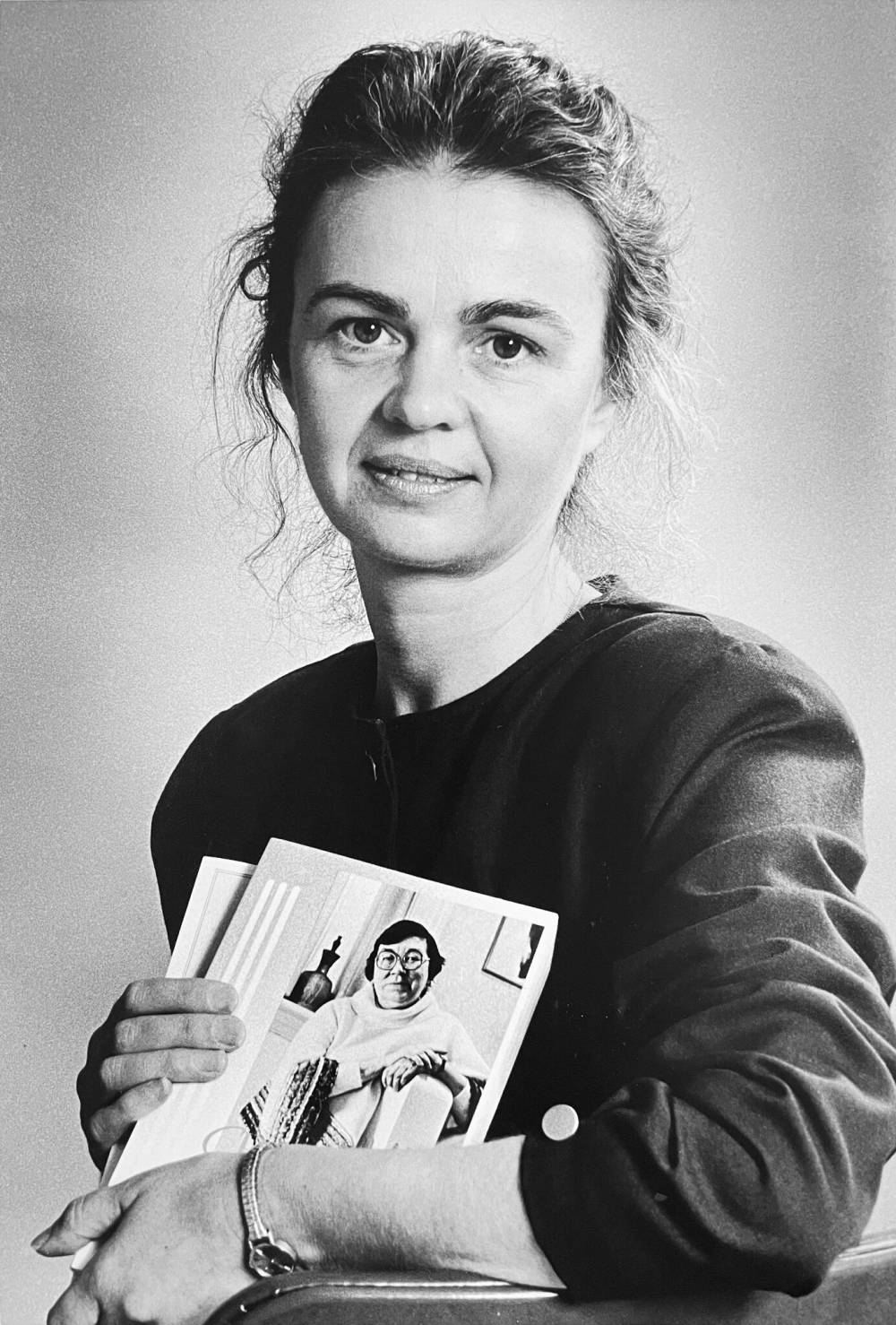
Winnipeg Free Press files
In this 1988 photo, Kristjiana Gunnars is seen holding an essay collection on Margaret Lawrence which she edited. The following year she would publish her novel The Prowler, among the collected writing in the new volume of her work published by Coach House Press.
The writers and thinkers appear everywhere; they are Gunnars’ natural interlocutors. They do not intrude; they animate, they intercede in Gunnars’ meditations. Clarice Lispector (the Brazilian genius), Roland Barthes, Jacques Derrida, Virginia Woolf, Northrop Frye, Marcel Proust, Anais Nin, Gustave Flaubert, Soren Kierkegaard, Linda Hutcheon, Hélène Cixous, Martin Heidegger, Julia Kristeva, Stanley Fish, Herman Hesse, Italo Calvino, Annie Dillard, Alain Robbe Grillet, Toni Morrison and many more — never are these or other figures out of place. It is Gunnars’ vocation to summon them and their thought with a remarkable and quiet fluency.
Skilfully substituting the intuitive and associative coherence of thinking and memory for chronology and plot, Gunnars advises her readers very early on that she is embarked, simply, on writing: “It is a relief not to be writing a story. Not to be imprisoned by character and setting. By plot, development, nineteenth-century mannerisms. A relief not to be writing a poem, scanning lines, insisting on imagery, handicapped by tone. A relief just to be writing.”
Gunnars remembers her stark postwar childhood in Iceland (the landscape of The Prowler). She presents the collection’s warmest portrait in her memory of her scientist father in Oregon and his death (in Zero Hour); gives us her interlude in the B.C. interior (The Substance of Forgetting); her summer in Germany, where reading Proust distracts her from her goal of writing a book about Mavis Gallant (The Scent of Light); and, finally, in Night Train to Nykøbing, her arresting account, across time and distance, of a months-long separation from a lover.
All of Gunnars’ journeys are equally marked by the crowded anonymity of airports and train stations on one hand, and by the solitude afforded by seascape, forest and patterns of clouds on the other. At times, principally in Scandinavia, her family gathers to welcome her home; but these interludes are subsumed in the more richly meditative and largely solitary writer’s life that governs the narrative.

Gunnars’ relief “not to be writing a story” allows compelling contradictions to populate her meditations. Here is a beautiful one from The Prowler that might serve as the collection’s subtitle: “Because I am full of love, I am full of sorrow.”

Neil Besner’s most recent book is the memoir Fishing With Tardelli.
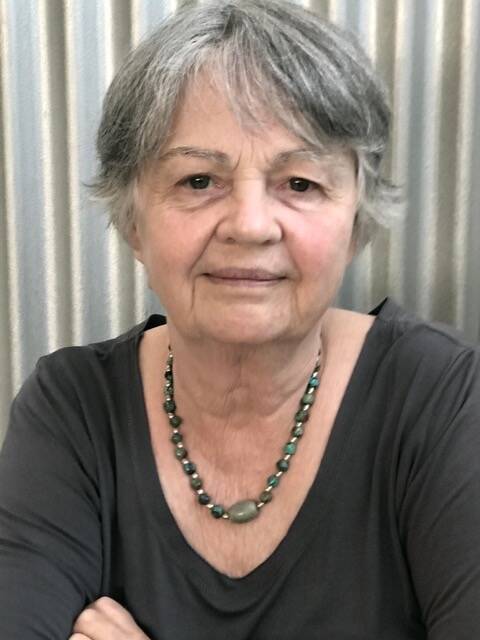
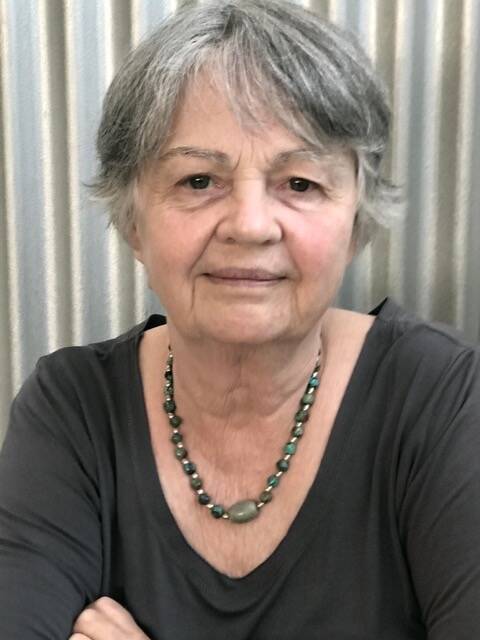
Supplied photo Kristjiana Gunnars
Supplied photo Kristjiana Gunnars