Promising bits in disjointed, dystopian novel
Advertisement
Read this article for free:
or
Already have an account? Log in here »
To continue reading, please subscribe:

Digital Subscription
One year of digital access for only $205*
- Enjoy unlimited reading on winnipegfreepress.com
- Read the E-Edition, our digital replica newspaper
- Access News Break, our award-winning app
- Play interactive puzzles
*First annual payment billed as $205.00 + GST for one year. This annual subscription will automatically renew at $233.00 + GST every 52 weeks (10% off the regular annual price of $259.35). Offer available to new and qualified returning subscribers only. Cancel any time.
To continue reading, please subscribe:
Add Free Press access to your Brandon Sun subscription for only an additional
$1 for the first 4 weeks*
- Enjoy unlimited reading on winnipegfreepress.com
- Read the E-Edition, our digital replica newspaper
- Access News Break, our award-winning app
- Play interactive puzzles
*Your next Brandon Sun subscription payment will increase by $1.00 and you will be charged $17.95 plus GST for four weeks. After four weeks, your payment will increase to $24.95 plus GST every four weeks.
Read unlimited articles for free today:
or
Already have an account? Log in here »
Hey there, time traveller!
This article was published 25/11/2022 (1413 days ago), so information in it may no longer be current.
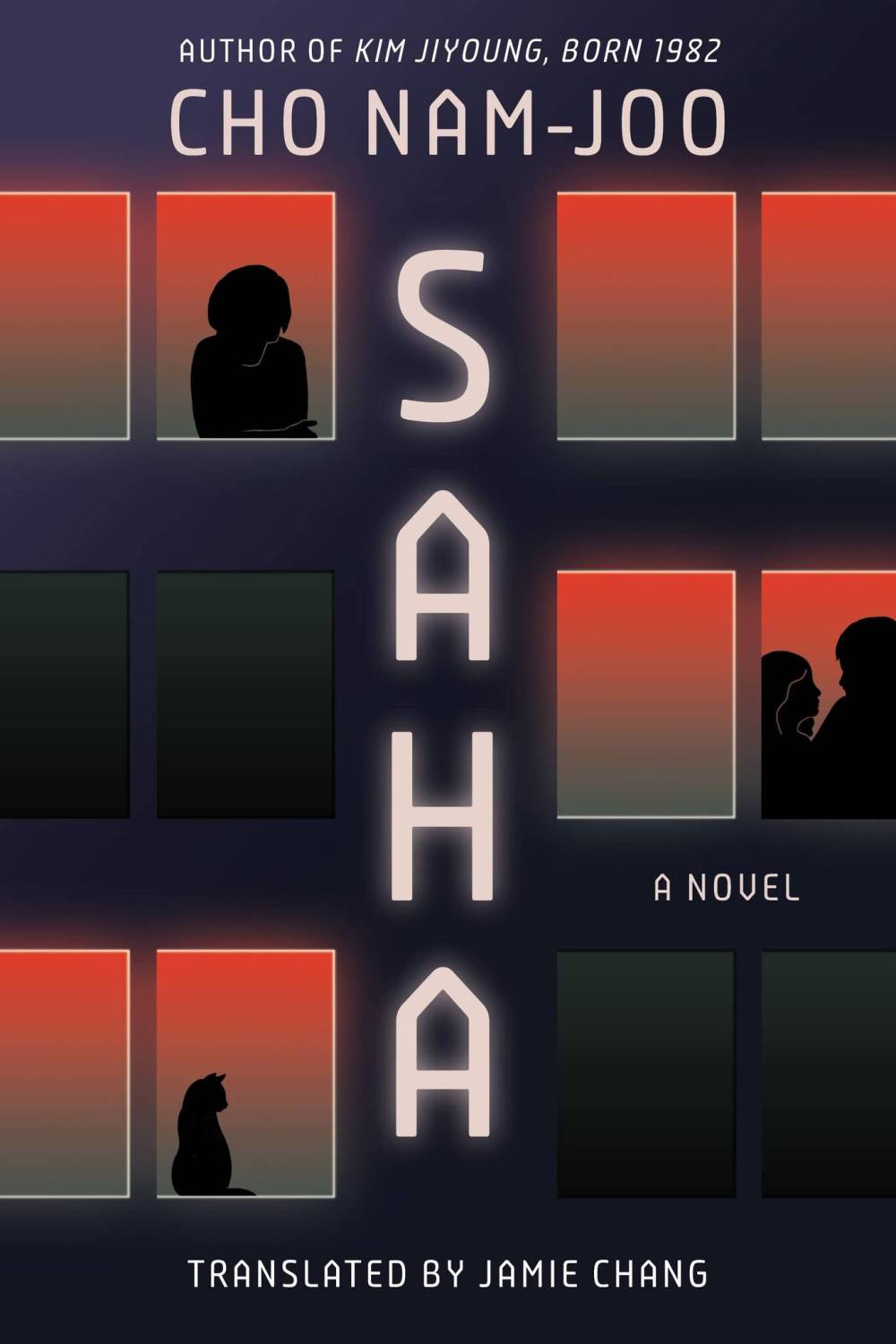
In her head-scratching new novel, South Korean writer and former television scriptwriter Cho Nam-Joo tosses aside conventional narrative to create a dystopian fiction that is moody, intriguing but not wholly satisfying.
Translated by Jamie Chang, Saha is Nam-Joo’s second novel. Her first, titled Kim-Jiyoung, Born 1982, was an acclaimed international bestseller noted for its strong feminist themes. Here she takes on class systems, capitalism and government oppression.
Saha is set in Town, an independent island-set city-state owned by a mysterious unnamed corporation. Town’s society is hierarchical, with residents categorized as Citizens, L2s and Sahas.
Saha
Sahas are the lowest of the low and live in a derelict apartment complex called Saha Estates. There are other low-class people in Town, but they all eventually seem to end up at this one complex that runs on broken solar panels.
The story begins with a murder just outside Saha Estates. Su, a Saha resident, is found dead in her car and her boyfriend, Do-kyung, is the main suspect. Do-kyung goes missing and his sister, Jin-Kyung, believing he is innocent, is desperate to find out what really happened.
But this is no simple murder mystery. As intriguing as the opening pages are, what seems like it should be the central storyline soon takes a back seat to a series of interlocking vignettes about the lives of the impoverished Saha residents.
The disjointed stories often jump back and forth in time in an almost stream-of-consciousness way, and often the mystery that kicked it off is forgotten.
The novel’s structure — or seeming lack of one — can be frustrating, but some of the vignettes make up for it.
The story of Yonhwa, a woman who enters a marriage as a job only to be abused, is particularly heartbreaking.
Su’s story is also tragic, even before her murder. A Citizen doctor, she cares for the Saha residents but is ultimately banished because of it.
The story of Woomi, a woman who has a natural immunity to a mysterious COVID-like respiratory illness that killed many Town residents, is intriguing enough to make its own book.
But as interesting as some of the individual stories are, they don’t add up to much, making Saha a tough read. As soon as you start to care about a character, the narrative seems to move elsewhere.
One of the biggest problems is how little we learn about the biggest mystery — the corporation that runs Town. But ultimately it might not matter, as Nam-Joo may just want us all to know that letting any corporation get to the point where it can control an entire society is about as terrifying as it gets.
Overall, this bleak read has some interesting ideas, but it would be nice to care about it all a bit more.
Alan MacKenzie is a Winnipeg-based writer and communications professional.