In Conversation with Sarah Klassen
Nonagenarian Manitoba writer’s historical novel owes a debt to her mother, time spent teaching in Ukraine
Advertisement
Read this article for free:
or
Already have an account? Log in here »
To continue reading, please subscribe:
Digital Subscription
One year of digital access for only $1.44 a week*
- Enjoy unlimited reading on winnipegfreepress.com
- Read the E-Edition, our digital replica newspaper
- Access News Break, our award-winning app
- Play interactive puzzles
*Billed as $5.77 plus GST every four weeks. After 52 weeks, price increases to the regular rate of $19.95 plus GST every four weeks. Offer available to new and qualified returning subscribers only. Cancel any time.
To continue reading, please subscribe:
Add Free Press access to your Brandon Sun subscription for only an additional
$1 for the first 4 weeks*
- Enjoy unlimited reading on winnipegfreepress.com
- Read the E-Edition, our digital replica newspaper
- Access News Break, our award-winning app
- Play interactive puzzles
*Your next Brandon Sun subscription payment will increase by $1.00 and you will be charged $17.95 plus GST for four weeks. After four weeks, your payment will increase to $24.95 plus GST every four weeks.
Read unlimited articles for free today:
or
Already have an account? Log in here »
Hey there, time traveller!
This article was published 14/01/2023 (1380 days ago), so information in it may no longer be current.
Sarah Klassen is a Manitoba writer who recently celebrated her 90th birthday. For many years Klassen was an English teacher in the Winnipeg public school system, but she also taught at summer institutes in Lithuania and Ukraine.
Her books include eight poetry collections, the most recent being The Tree of Life (2020). Previous works of fiction include the story collections The Peony Season and A Feast of Longing as well as the novel The Wittenbergs. Her poetry has won National Magazine, Gerald Lampert and Canadian Authors Association awards, while her fiction has won Margaret McWilliams and High Plains Book awards.
Her latest book is The Russian Daughter, a historical novel published by CMU Press. Set in a Mennonite village in what is now Ukraine during the years of the Russian Revolution, it focuses on the adoption of a Russian baby by a childless Mennonite couple.

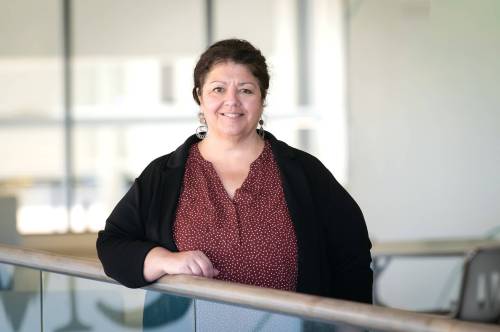
MIKE DEAL / WINNIPEG FREE PRESS
Poet Sarah Klassen
Klassen will be launching The Russian Daughter in person and online on Thursday, Jan. 19, via McNally Robinson Booksellers.
Winnipeg Free Press: What do you want people to know about The Russian Daughter?
Sarah Klassen: Much of my writing, including this novel, owes a debt to my mother. The poems in my first published book, Journey to Yalta (1988) were written in response to her stories about a journey her family undertook to find healing for her mother in the Yalta sanitarium. The backstories embedded in my first novel, The Wittenbergs (2013), retell incidents from my mother’s life. After that book was published, I wanted to write a second novel, but what should I write? I remembered a story my mother told my one winter night about a childless couple in her village who made two attempts to adopt. Both ended badly. There was so much drama in this unfortunate narrative, I thought all I had to do was write it down. I started writing and characters and plot took shape, changed shape, and the story became very different from the original.
WFP: Is this a pandemic book? Which is to say, did you write it entirely during the pandemic? Also, did the pandemic change your writing process at all?
SK: I worked sporadically on this novel before, during and after the pandemic, while at the same time working on other projects. Sometimes, during the pandemic years, creative energy was diluted. Sometimes, it was redirected. (I began drawing.) Also, I grew older. All of this slowed down the completion of the novel.
WFP: Tell me about the differences between writing literary fiction set in the here and now and writing historical fiction.
SK: The amount and quality of research required distinguishes historical novels from other writing, but their success is equally determined by inventiveness in portraying characters, in storytelling and in language choices. As in literary work, the imagination is involved. Because my story is set in Russia in the early 20th century, I couldn’t lose sight of relevant political events and historical figures of that time. From Mennonite history at MBCI, from my mother’s stories and my own reading, I had gleaned a general knowledge of that era: the First World War, the Russian Revolution, the Romanov family, and so on. Lots of facts and anecdotes were floating in my brain, a resource available to me as I wrote. I went online to verify facts, figures and locations, but apart from that there was very little research. Although I aimed to keep the narrative more or less moored in history, I occasionally took liberties with times and locations because my main focus was always the Albrecht family.

WFP: Is there any relevance of the novel’s situation, set during the Russian Revolution, for today’s readers?
SK: Today’s readers, barraged with media reports of unspeakable destruction of cities, infrastructure and human life in Ukraine, might stop to think how all this reflects/reprises the suffering caused a century ago by war, anarchy and hunger in that same geographic location. The weapons and ideologies may be different, the shape of suffering may be different, but it’s sobering to think that — as for the inhabitants of my fictional Friedental — the possibility of a peaceful outcome often seems out of reach.
WFP: You taught in Ukraine. How does that affect your watching of the war in that country now?
SK: In summer of 2000, and again in 2003, I taught at a four-week English language institute in Kharkiv, Ukraine’s second largest city. I saw its streets, parks and buildings, statues of Gogol and Pushkin. Most of my students were Russian. Thinking of them I wonder: What losses have they suffered this past year? Have any of them left Kharkiv? Where do their loyalties lie? What decisions did they have to make?
In summer 2018, I joined the last possible heritage cruise along the Dnieper River. The boat docked at places that have now become painfully familiar: Kherson, Zaporizhia, Dnipro. From Zaporizhia we boarded buses and travelled along terrible roads to visit ancestral villages, all of them renamed and populated by Ukrainians. Here and there, buildings remain of the once-flourishing Mennonite colonies: a dilapidated factory, a church used as a centre for seniors, a girls’ school. A village like the one in my novel no longer existed in 2018. The people eking out a living in primitive villages knew Mennonites only as tourists. I wonder: What have they suffered? How many of them have had to flee?
WFP: What are you reading right now? What are you writing?

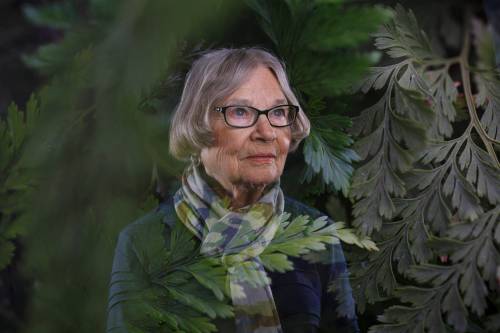
GWEN MACDONALD PHOTO
Author Sarah Klassen
SK: I’m reading The Great Passion, by James Runcie. The novel is set in Leipzig where Johann Sebastian Bach is composing the St. Matthew Passion. The Oratorio takes shape in the midst of Bach’s large and diverse family and the St. Thomas boys’ school where he teaches. Family dynamics, schoolboy antics and rivalries, the loneliness and longings of Stefan, the young narrator, all inform the story. The storytelling is unhurried, the language suffused with music — choral, vocal, instrumental. The book is well-researched and wise.
Right now I’m writing my mother’s story. So far, she has grown up in eastern Ukraine — then called Russia, now under siege — immigrated with her family to Manitou, Man., married my father and moved to Winnipeg. She is 26. I don’t plan to publish this story, but I will make copies for my mother’s grandkids.
Ariel Gordon is a Winnipeg/Treaty 1 Territory writer whose next book will be out in fall 2023.